Date: 10. November 2026
Time to read: 2 min
On 10 November, Slovenia celebrates Science Day. This national holiday highlights the importance of research and knowledge for the advancement of society. The date coincides with UNESCO’s World Science Day for Peace and Development and the anniversary of the death of Žiga Zois, a key figure in the Slovenian Enlightenment, a businessman, mineralogist and patron of the arts and sciences who made a significant contribution to Slovenian science and culture.
A scientific law that made it possible to determine the temperature of stars and the Sun, a method that accelerated the development of organic chemistry, a vision that paved the way for space exploration, and modern breakthroughs in medicine and artificial intelligence. These are just some of the achievements of Slovenian researchers, whose curiosity and expertise have long enabled them to transcend national boundaries and the limitations of their time.
-
 Slovenian excellence in space exploration spans from the visionary ideas of Herman Potočnik Noordung to the international achievements of today’s researchers and scientists. Photo: Sripfoto/Getty Images

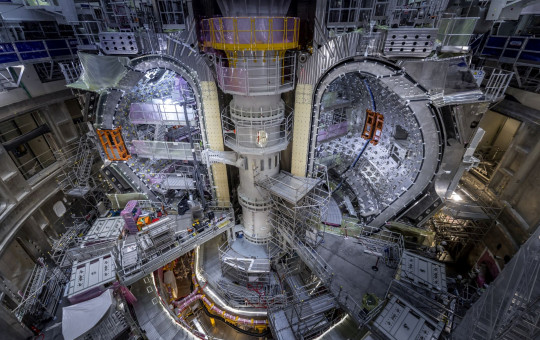
Slovenia’s involvement in international research networks is also reflected in its full membership of the European Organization for Nuclear Research (CERN) and the European Space Agency. These memberships open up opportunities for cooperation with numerous other organisations and countries, as well as new business and educational opportunities. Slovenian experts are also involved in ITER, the world’s largest international fusion energy research project, which holds the promise of a new, sustainable source of energy.
From new treatments to tackling environmental challenges
The National Institute of Chemistry and the National Institute of Biology are among Slovenia’s leading research institutions. The National Institute of Chemistry has achieved outstanding results in synthetic biology, gene and cell therapies, artificial proteins and battery technology.
One of its most notable medical achievements is the development of a new approach to treating cancer through immunotherapy. The treatment uses specific proteins to strengthen the patient's immune response and stimulate the destruction of cancer cells.
The researchers have also developed effective organic cathode materials for use in batteries, paving the way for safer batteries containing less lithium and fewer other metals.
-
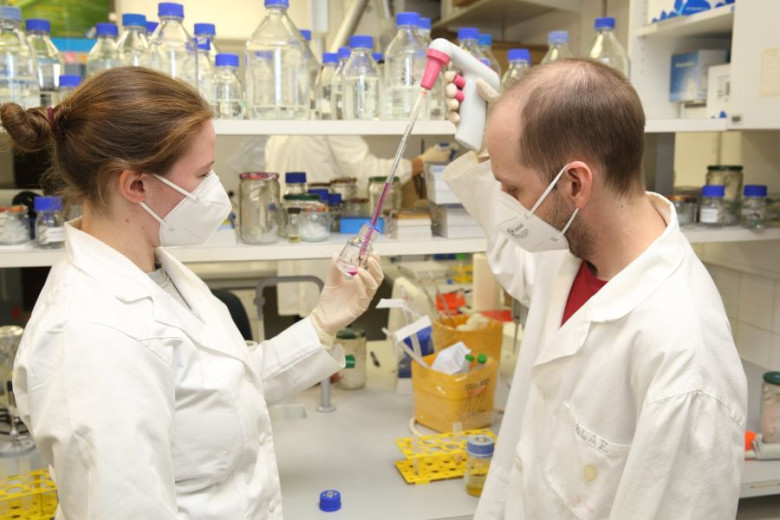 Researchers at the Department of Synthetic Biology and Immunology at the National Institute of Chemistry study the functioning of biological systems and develop technologies for advanced therapeutic and diagnostic approaches. Photo: Archives of the National Institute of Chemistry
Researchers at the National Institute of Biology, which is internationally recognised for its research into the effects of chemicals, nanoparticles and cyanotoxins on genetic material, are advancing our understanding of living systems and applying this knowledge to tackle environmental, health, food-related and societal challenges. As part of an international research team, its researchers discovered a previously unknown ecosystem beneath deep-sea hydrothermal vents on the East Pacific Rise.
Together with researchers from the University of Ljubljana, they also developed a sustainable biotechnological method of protecting potato crops against the Colorado potato beetle.Their work clearly demonstrates how cutting-edge fundamental research can help address real-world societal and environmental challenges.
-
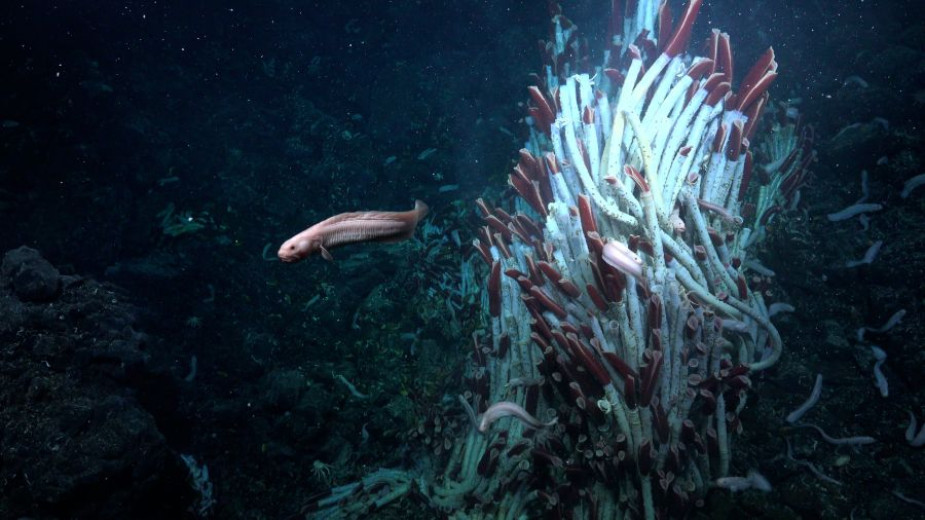 As part of an international research team, National Institute of Biology researchers contributed to the discovery of an ecosystem beneath hydrothermal vents, revealing previously unknown life in volcanic cavities beneath the seafloor. Photo: CC-BY-NC-SA Schmidt Ocean Institute
Slovenian satellites and space exploration
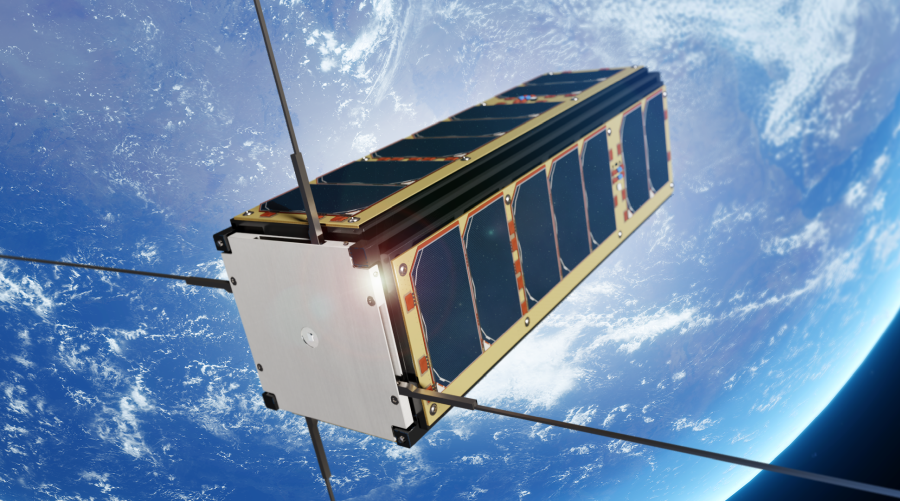
In the last six years, Slovenia has launched four satellites into orbit. In 2020, the first Slovenian satellites – NEMO-HD and Trisat – were launched into space. Trisat was the first satellite to be entirely designed, manufactured and assembled in Slovenia. It was developed by the University of Maribor and Skylabs, a Slovenian company. In 2022, it was joined by Trisat-R, and in September this year, TRISAT-S was also successfully launched.
-
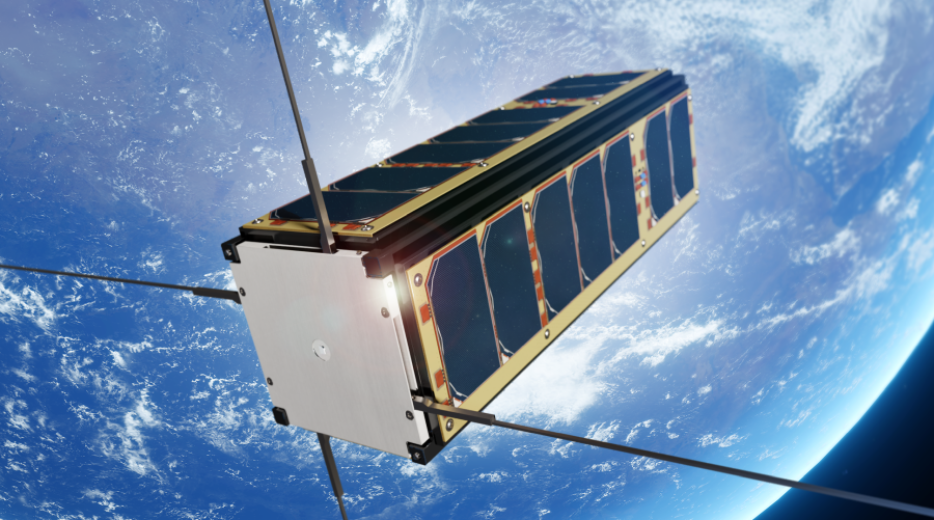 The TRISAT-R satellite is designed to measure ionising radiation in medium Earth orbit, enabling more accurate modelling of the magnetosphere and a better understanding of space weather. Photo: Skylabs archives
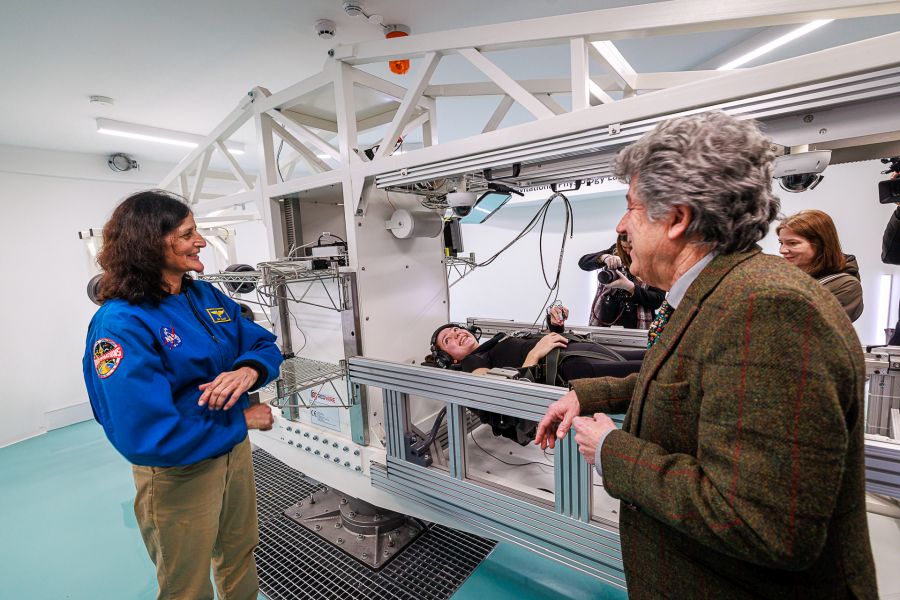
Space exploration also takes place here on Earth. At the Planica Nordic Centre, researchers from the Jožef Stefan Institute and the European Space Agency are studying how extreme conditions, such as living in a weightless environment, affect the human body.
The Jožef Stefan Institute is also Slovenia's leading research institution in the natural sciences, engineering and life sciences.
Its researchers contributed to confirming the existence of the Higgs boson and, together with researchers from the Faculty of Mathematics and Physics at the University of Ljubljana, became the first in the world to successfully incorporate liquid crystals into microscopic circuits powered entirely by light. Recently, they also succeeded in 3D-printing microscopic structures directly inside living human cells, opening up new possibilities for studying intracellular processes.
-
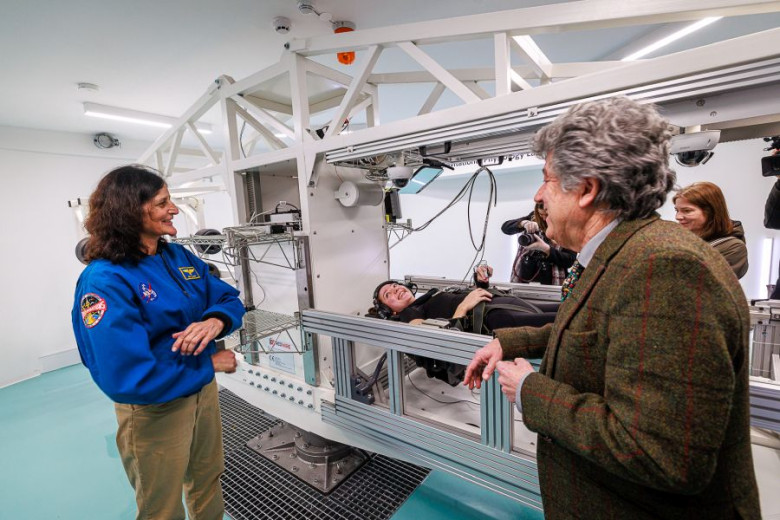 The Laboratory for Space Physiology at the Jožef Štefan Institute was also visited by Sunita Williams, an astronaut of Indian-Slovenian descent and one of the most prominent women in the field of space exploration. Photo: Marjan Verč
Slovenia among the pioneers of artificial intelligence
Few people realise that Slovenia has one of the longest traditions of research in artificial intelligence. Research in this field began as early as the 1970s, when Slovenian researchers were among its pioneers. Even then, they placed great emphasis on logic and the explainability of AI systems, believing that artificial intelligence should be understandable to humans. UNESCO has also recognised Slovenia's role in shaping the digital future by establishing the International Research Centre on Artificial Intelligence (IRCAI) in Ljubljana.
This year, the Slovenian AI Factory project was also launched. It is one of 19 such AI factories being established across EU Member States. At its heart will be a supercomputer designed to help researchers, businesses and public institutions develop advanced artificial intelligence solutions.
While Slovenia's first supercomputer, Vega, brought the country into the European high-performance computing network in 2021, this year's new addition, Frida, specialises in the computations essential for artificial intelligence. These include computations needed to further develop GaMS, an open-source large generative language model for Slovenian developed by experts at the Centre for Language Resources and Technologies of the University of Ljubljana.
-
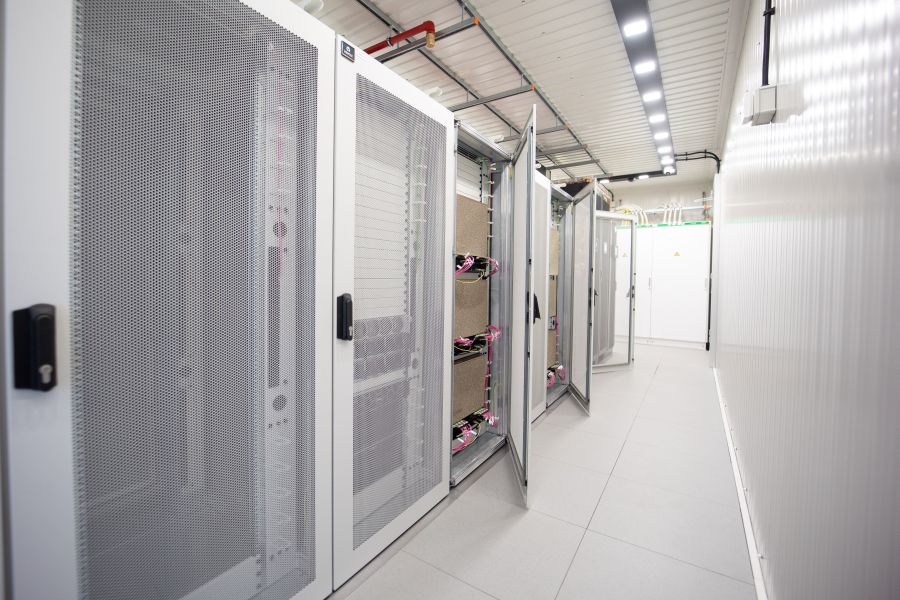
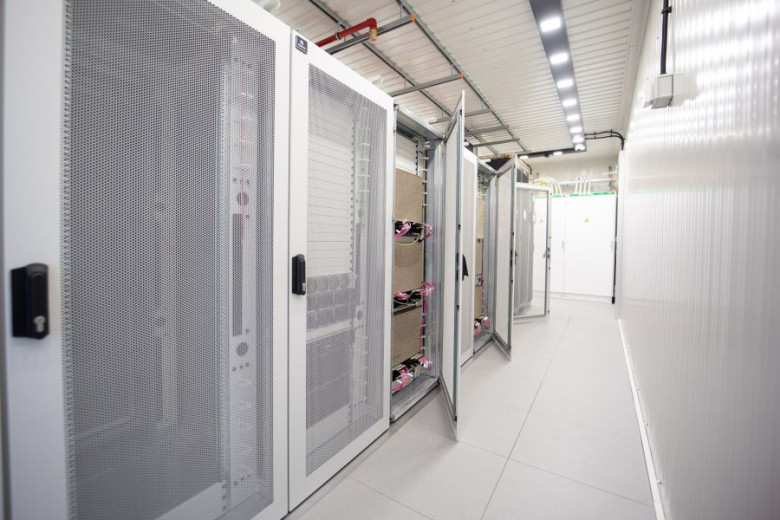 The Frida supercomputing data centre strengthens Slovenia’s role in the European Research Area, creating new opportunities for data-intensive research, scientific discovery, and innovation. Photo: Kaja Kodba/STA
Science as the foundation for societal development
Amid the multitude of AI tools available worldwide, a language model for a language spoken by only two million people may seem insignificant. Yet just as language has long embodied the idea of Slovenian sovereignty, the country is now building its technological sovereignty by developing its own technologies and investing in science.
For a language with so few speakers to have its own large language model is far from a given, let alone one developed entirely by Slovenian researchers. And therein perhaps lies the greatest symbolism: Slovenian researchers do not rely on solutions developed by others, but help shape the future themselves.
Cover photo: jittawit.21/Getty Images