Date: 24. July 2026
Time to read: 2 min
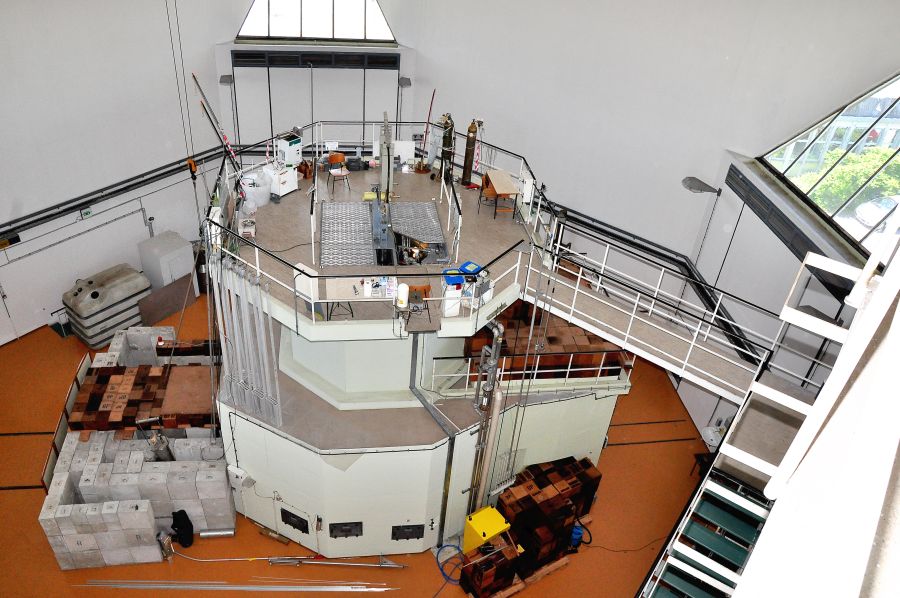
Situated amidst fields and meadows on the outskirts of the Slovenian capital, the TRIGA (Training, Research, Isotopes, General Atomics) research reactor is one of the country's most significant scientific facilities. It functions as one of the Jožef Stefan Institute's main research centres. The TRIGA reactor does not generate electricity. Instead, it harnesses neutrons - tiny particles that enable researchers to study materials, develop new technologies, and address challenges in energy, medicine, and environmental protection.
Since 1966, the reactor has provided training for generations of nuclear experts, supported cutting-edge research, and contributed to advances in medicine, environmental sciences, and some of the world's largest international scientific projects.
As one of the few remaining operational research reactors in Europe, TRIGA has become an important global hub. Researchers and students from some of the world's most prestigious universities travel to TRIGA, where interest from the scientific community far exceeds capacity, with research visit slots being booked out months in advance.
A training reactor for research
The TRIGA reactor falls under special classification as a research reactors developed in the United States in the 1950s as part of the Atoms for Peace initiative. These reactors were designed to be extremely safe for use in research and education, and for the peaceful use of nuclear technology.
"The requirement was that the reactor had to be so safe that even a secondary school pupil or university student could operate it without any risk of a major accident. That is how the TRIGA reactor was conceived," explains Prof. Dr Luka Snoj, Head of the Reactor Physics Division at the Jožef Stefan Institute.
By acquiring the TRIGA reactor in 1966, Slovenia established itself as a country with nuclear technology. The TRIGA reactor therefore marks the beginning of Slovenia's journey, during which it has developed its own nuclear expertise and educated generations of experts who now contribute to key national and international projects.
-
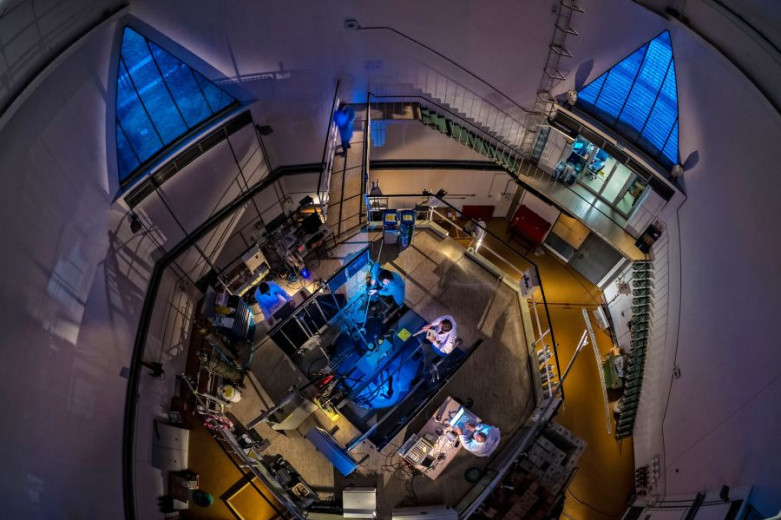 During its first decades of operation, the TRIGA reactor played a pivotal role in the development of nuclear science and technology in Slovenia. Photo: Jožef Stefan Institute Archive
-
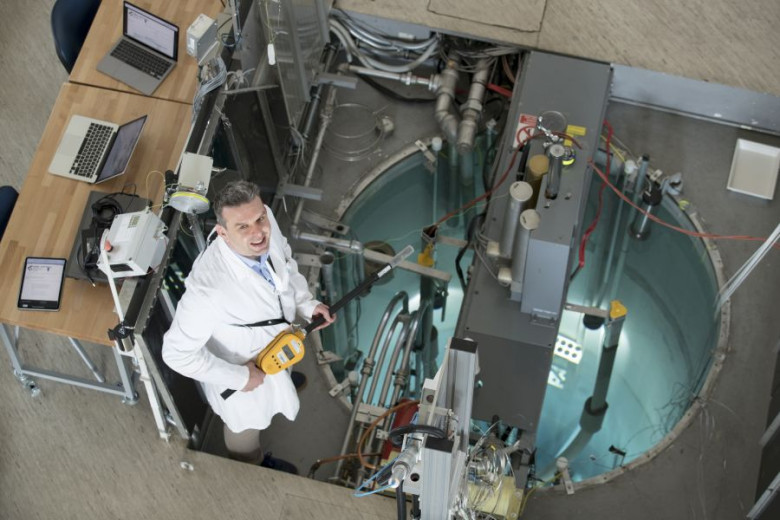 Prof. Dr Luka Snoj, Head of the Reactor Physics Division at the Jožef Stefan Institute. Photo: Jure Eržen
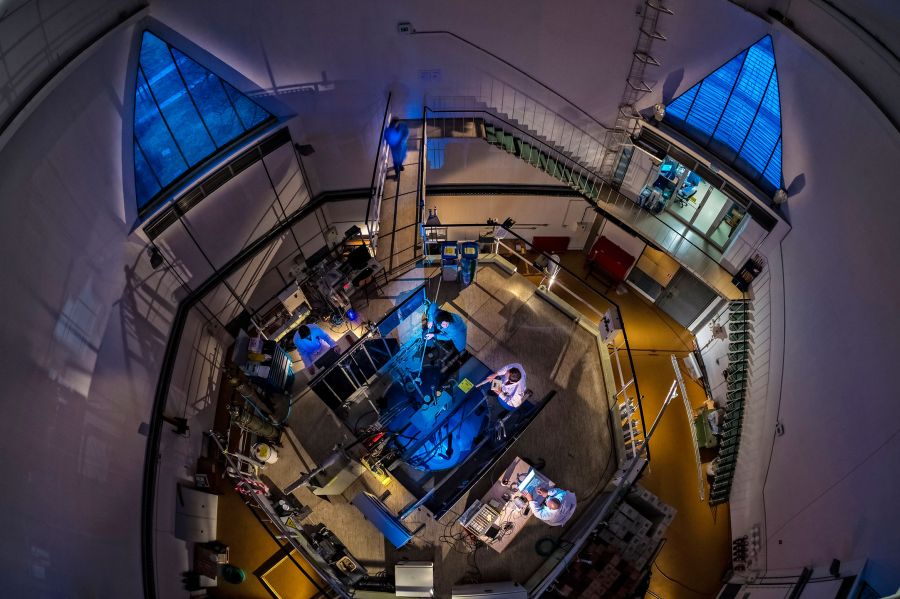
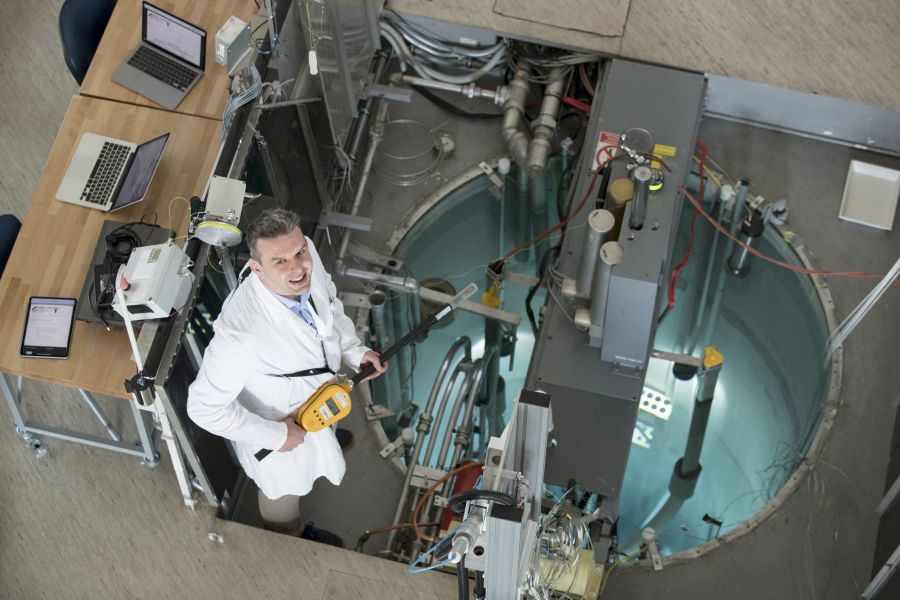
The experts who commissioned the TRIGA reactor later assisted in the construction of the Krško Nuclear Power Plant, which is Slovenia's only nuclear power station. The plant currently meets around a fifth of the country's electricity needs.
Some 300 research reactors once operated across Europe. Following the Chernobyl disaster, many older research reactors were decommissioned, and none has been built since, leaving only around 30 in operation today. Despite being in operation for 60 years, regular upgrades, meticulous maintenance and strict safety standards have ensured that the TRIGA reactor remains a cutting-edge research facility.
Materials research and the development of new technologies
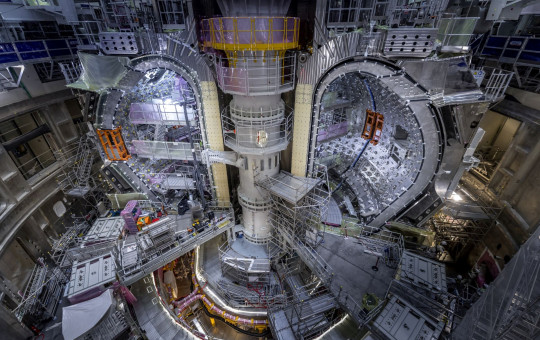
The components being tested by the reactor for CERN (the European Organization for Nuclear Research) are destined for installation in the world's largest particle accelerator. As Professor Luka Snoj explains, it is theoretically impossible to predict how long certain components will withstand intense radiation, so they must therefore be tested under real operating conditions. "Since these components can only be replaced every ten years, we need to verify how long various chips and electronics will withstand radiation. In just one hour of irradiation, we can simulate 10 years of operation at CERN." For this reason, accelerators from around the world send their components to TRIGA for testing. Components for ITER — the world's largest experimental fusion reactor, which is currently under construction in France — are likewise tested at the facility.
-
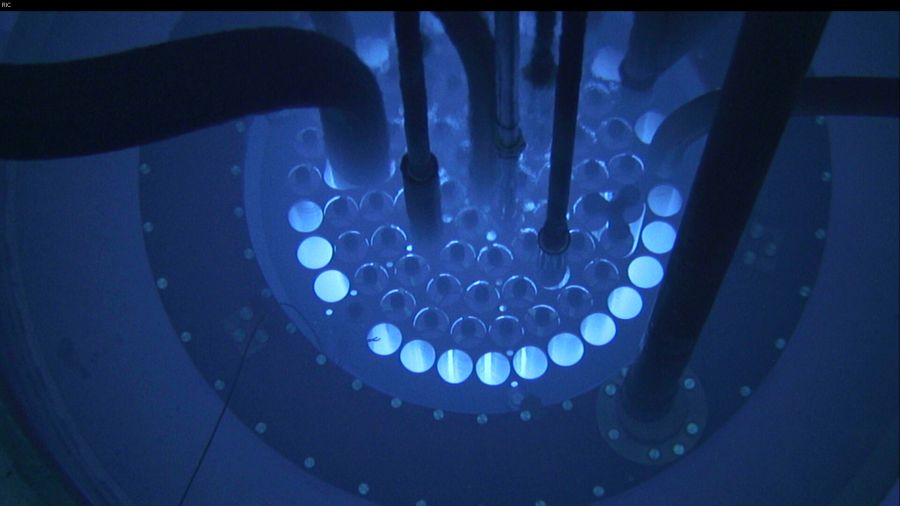
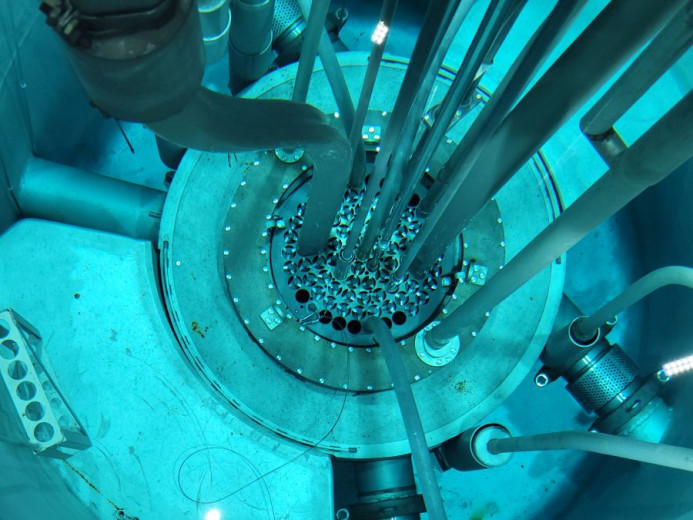
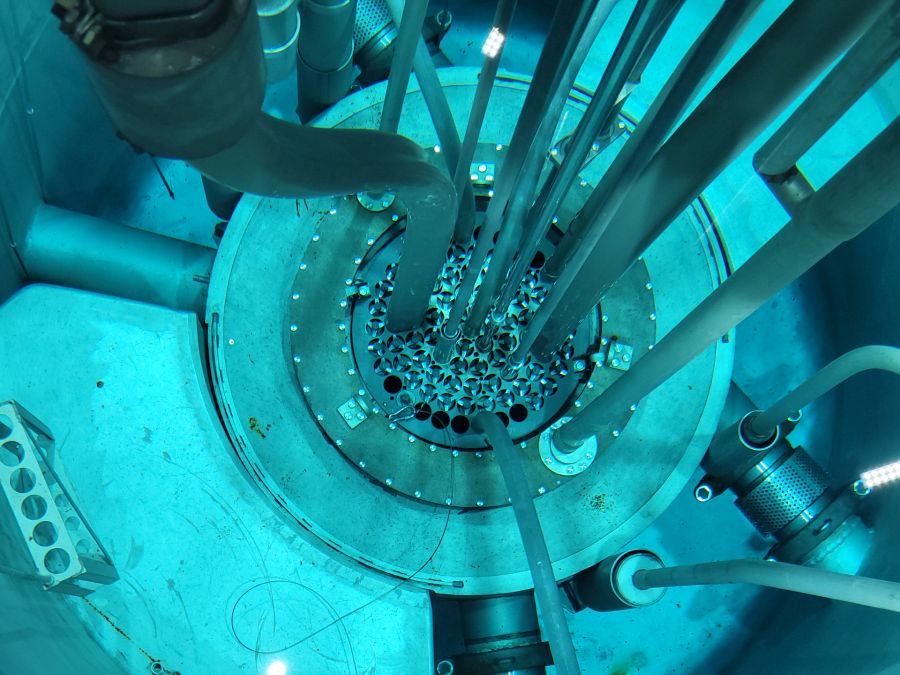
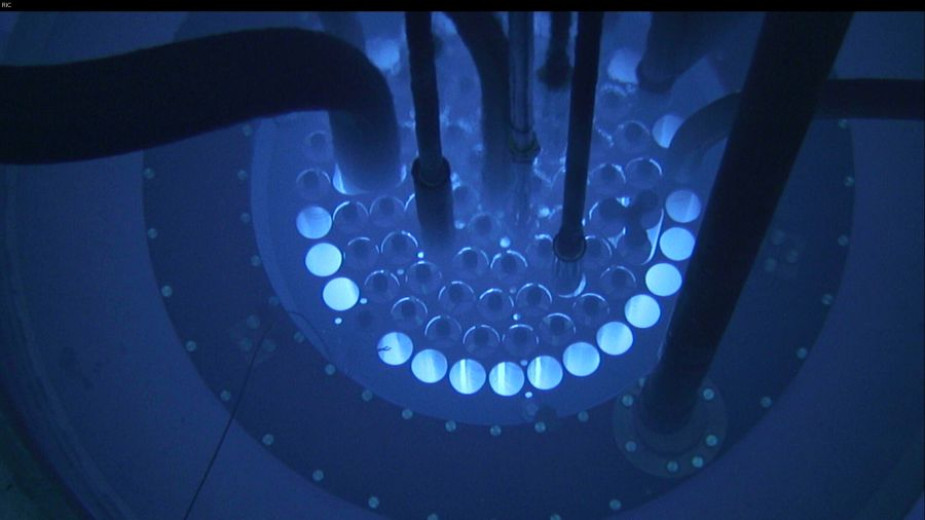 Cherenkov radiation in the reactor. The characteristic blue glow created when charged particles move through water faster than light can travel through that medium. Photo: Jožef Stefan Institute Archive
However, their expertise extends beyond large-scale scientific projects. In collaboration with the universities of Lancaster and Manchester, TRIGA tests and irradiates robots intended for use in managing and remediating the consequences of the Fukushima accident.
TRIGA's experts also provide specialised technical support to the Krško Nuclear Power Plant, assisting with complex calculations to determine how many fuel assemblies require replacement, for example.
From food safety to modern medicine
The research conducted at TRIGA extends well beyond nuclear facilities and power generation. The neutrons generated by the reactor enable researchers to examine the composition of various materials and substances with a level of precision that is often unattainable using other methods.
Using the neutron activation analysis method, researchers can check for the presence of harmful elements in food, water, soil, and even cosmetics. "For instance, by placing a fish sample in a reactor, we can precisely determine the mercury, cadmium, and other potentially harmful substance content that affects our health and the environment. In short, we can find out whether the food we consume is contaminated by particular pollutants," explains Prof. Dr Snoj.
Nuclear methods also play a significant role in developing radioactive tracers for cancer diagnosis and treatment — tools that are becoming increasingly important in modern medicine.
-
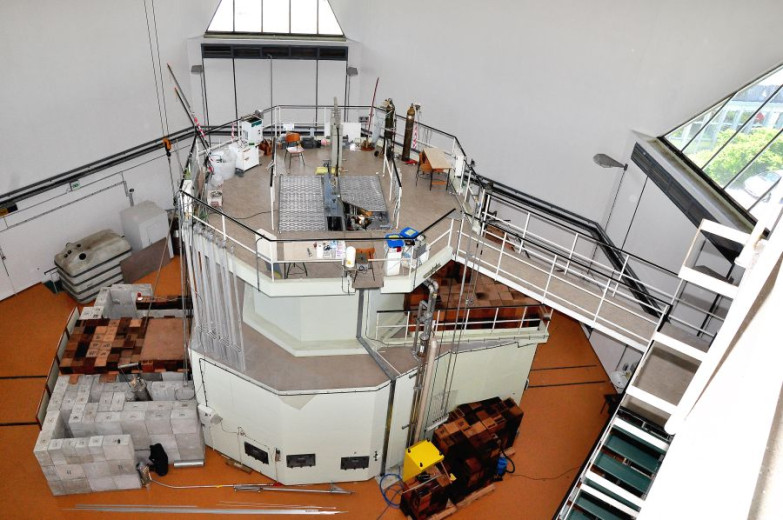 The TRIGA reactor core is located at the bottom of the reactor vessel, with 5 meters of demineralized water above it. Photo: Jožef Stefan Institute Archive
Slovenia's nuclear classroom
The TRIGA facility is the cradle of Slovenian nuclear science - virtually every nuclear expert in the country began their professional career or received their training there. It is also one of Europe's most leading centres for education in nuclear technology.
Every year, the facility welcomes students, researchers, and professors from renowned universities such as the Massachusetts Institute of Technology, the University of Cambridge, Virginia Tech, Politecnico di Milano, many other prestigious institutions from across Europe, America and Asia.
-
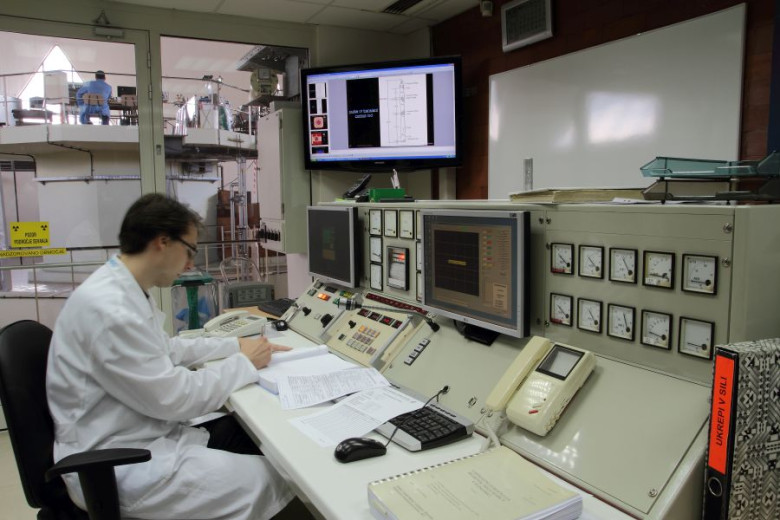 TRIGA serves as a renowned educational platform, enhancing the global visibility of Slovenian nuclear expertise. Photo: Jožef Stefan Institute Archive
-
 As the central research institution for nuclear technology, the TRIGA reactor is the foundation of Slovenia's nuclear sovereignty. Photo: Jožef Stefan Institute Archive
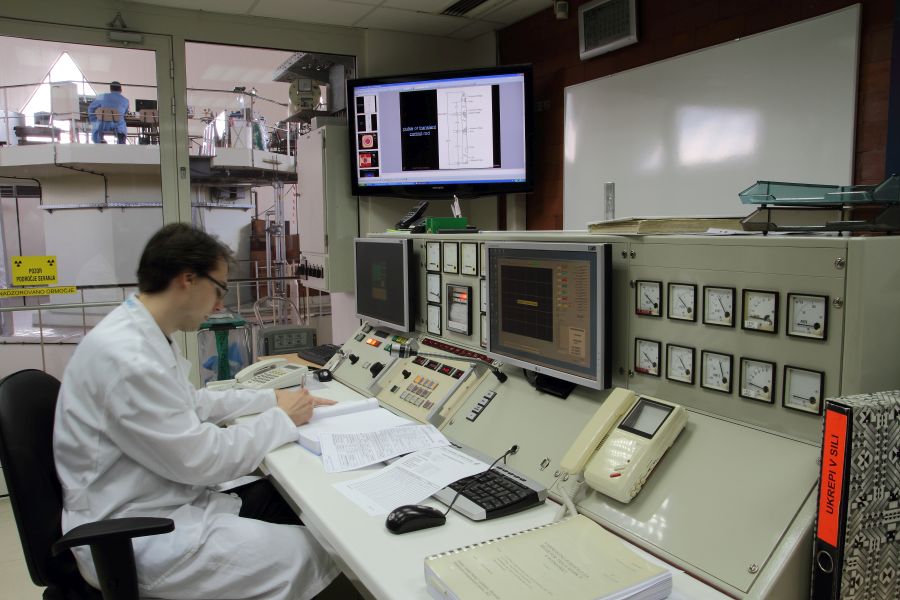
Interest is so high that research visit slots often need to be booked more than a year in advance. "Next week, for example, I have a meeting with representatives from the University of Cambridge to arrange a visit for next spring," says Prof. Dr Snoj. For this reason, TRIGA is not only a research reactor, but also a place of knowledge exchange, where experts from around the world come together to exchange knowledge.
For this reason, TRIGA is not only a research reactor, but also a place of knowledge exchange, where experts from around the world come together to exchange knowledge.
Knowledge for the future
As Europe strengthens its nuclear research and seeks new, low-carbon energy solutions, the importance of research reactors such as the TRIGA reactor is increasing.
Slovenia has not only preserved a research reactor for six decades, but has also nurtured the expertise, professional excellence and international networks that have grown around it. As Prof. Dr Luka Snoj proudly concludes:
"Nuclear powers such as the United States, the United Kingdom, and France send their students and experts to us for training. This is a unique form of international recognition, confirming that we are on the right track."
Slovenia is indeed one of the few countries that possesses both a research reactor and, even more importantly, a team with the expertise to operate it.