Date: 30. October 2026
Time to read: 2 min
How can large birds fly several hundred kilometres in a single day while using no more energy than they would at rest? An extensive international study involving Slovenian researchers provides the answer. It found that soaring on air currents is the most energy-efficient form of active movement on Earth. This discovery also highlights the exceptional importance of the migration corridor over Slovenia, which is one of the key routes for large birds of prey in Europe.
Masters of soaring
The project, which took place over seventeen years, revealed that large soaring birds, such as vultures and eagles, can fly using approximately the same amount of energy as they would at rest by skilfully exploiting air currents.
“The study showed that, under the right conditions, these birds can fly across Slovenia without flapping their wings even once,” explains Tomaž Mihelič, Expert Director of DOPPS – BirdLife Slovenia and co-author of the study.
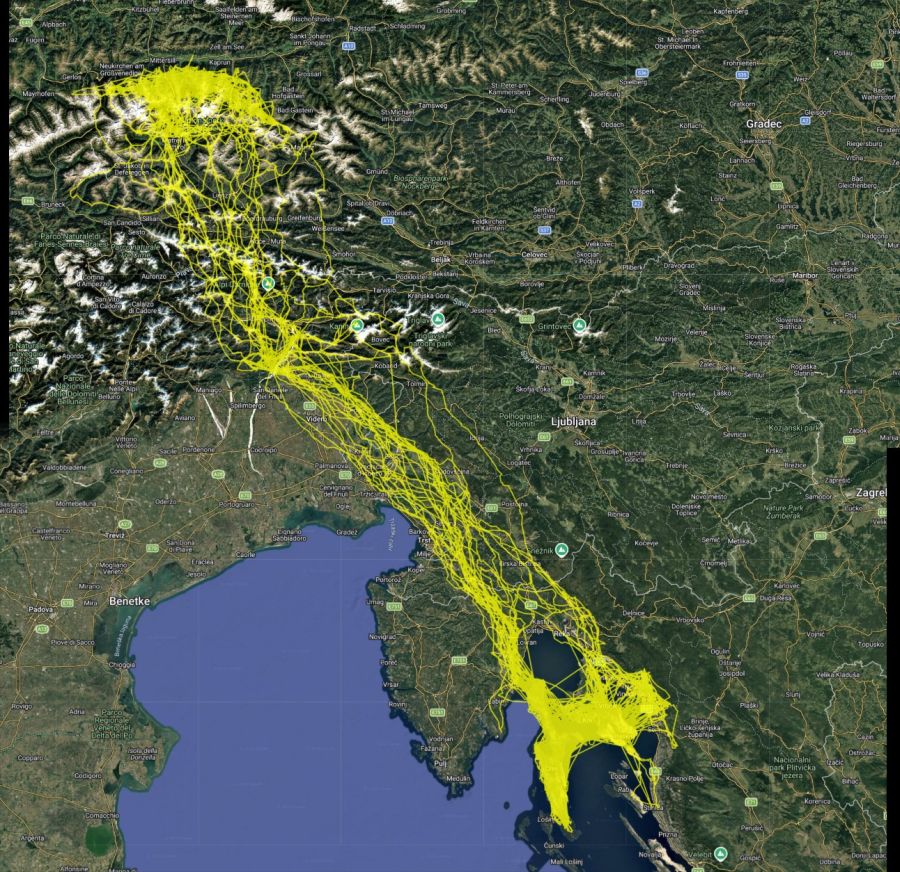
Large birds of prey are heavily dependent on areas where they can effectively make use of favourable air currents. One of the most important migration corridors for large birds of prey in this part of Europe passes directly over Slovenia. It is an aerial corridor that provides the only viable route from the Adriatic Sea to the Alps across the Dinaric ridges and hills stretching from Čičarija and Snežnik in southern Slovenia all the way to the Julian Alps.
-
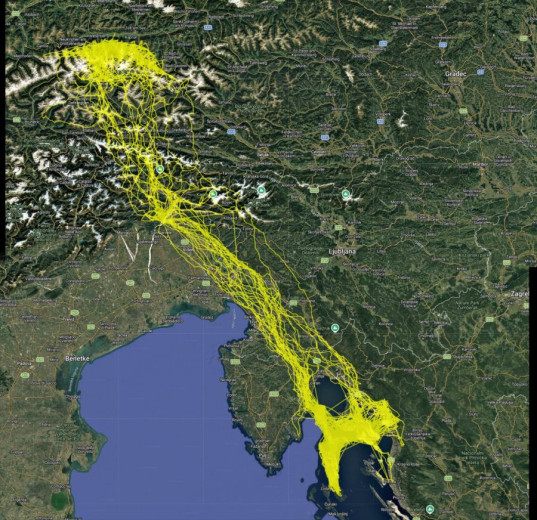 Migration corridor over Slovenia, mapped using telemetry data from the tracked movements of a griffon vulture. Screenshot: DOPPS – BirdLife Slovenia
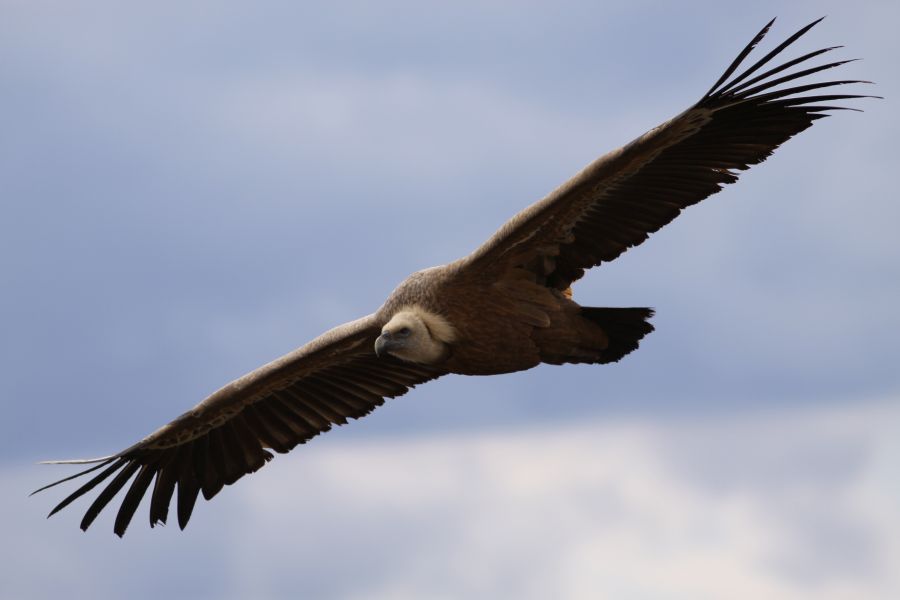
Mihelič explains the significance of such corridors using the example of the Eurasian griffon vulture. An adult griffon vulture can weigh up to around nine kilograms, making it impossible for it to fly long distances without favourable air currents.
“If it had to cross an area where it could not take advantage of rising air currents and had to keep flapping its wings, it would simply be unable to cross it.”
This is why connections between areas with suitable conditions for soaring are so vital. In this sense, Slovenia is one of the most important areas for nature conservation in Europe, as it provides a vital link between the Alps and the Balkans. “There is virtually no viable alternative route for vultures,” emphasises Mihelič.
-
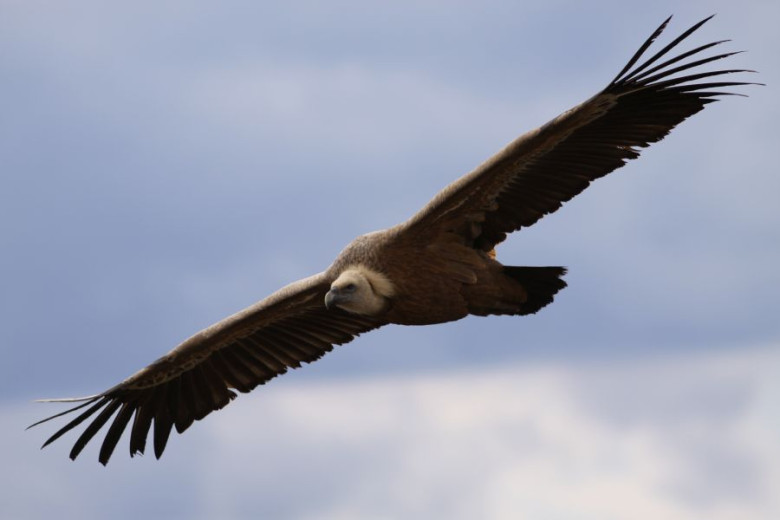 The study examined seven vulture species, among them the griffon vulture. Photo: Tomaž Mihelič, DOPPS – BirdLife Slovenia
Slovenian researchers on the international team
Slovenian researchers were invited to take part in the study, which brought together 68 researchers from around the world, primarily because of their extensive telemetry dataset and specialist expertise. “In addition to data, we contributed our experience in attaching transmitters, our understanding of how they affect birds' flight, and our expertise in interpreting the results. We were very pleased to be part of this research team,” says Mihelič.
Modern transmitters, which weigh less than one per cent of the body mass of a large bird, make it possible to track the animals' movements and behaviour with exceptional precision. Researchers can therefore determine not only where a bird is, but also the altitude at which it is flying and whether it is actively flapping its wings or simply soaring at any given moment.
-
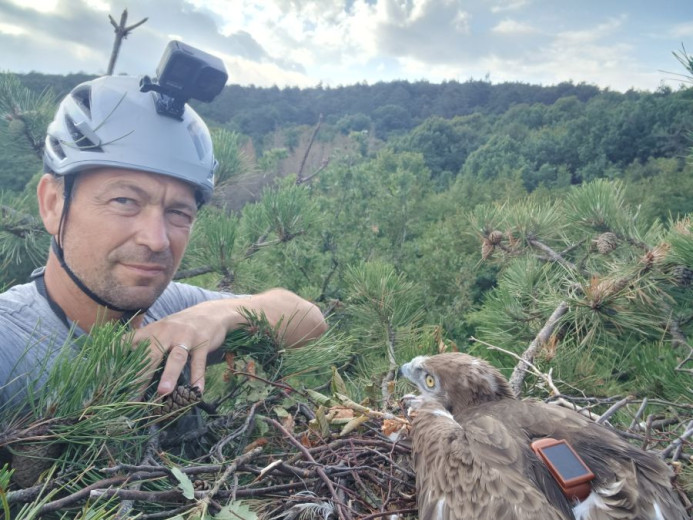 Tomaž Mihelič with a short-toed snake eagle equipped with a transmitter for telemetry tracking. Photo: Tomaž Mihelič, DOPPS – BirdLife Slovenia
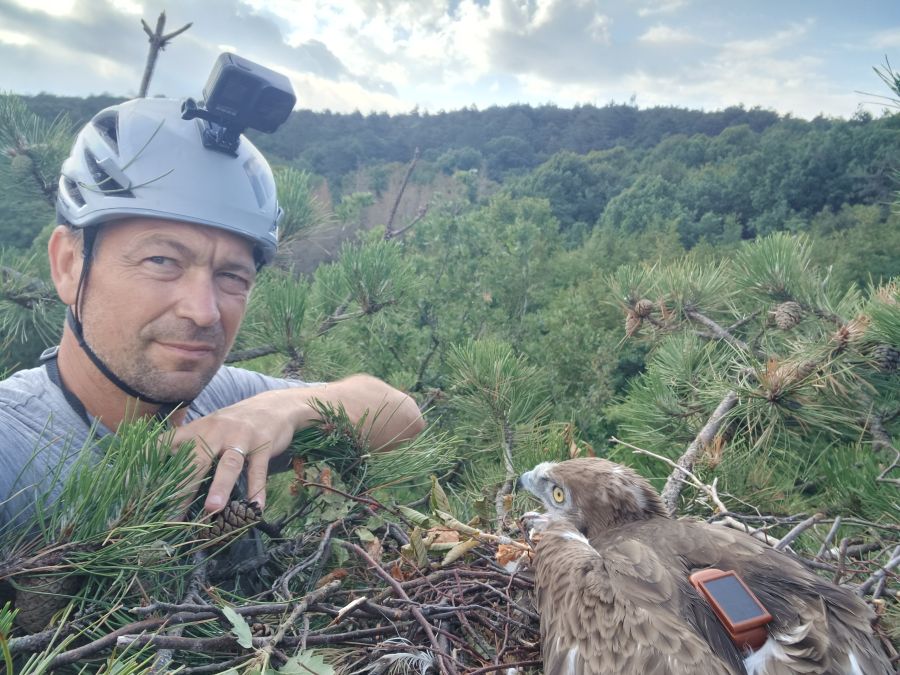
Although the telemetry data collected by DOPPS – BirdLife Slovenia were not originally intended to study energy consumption during flight, they have also proved valuable in this context. As Tomaž Mihelič explains, the main aim of telemetry is to identify areas that are crucial for birds and therefore require appropriate protection.
“With this study, we gained an understanding of why vultures depend so heavily on the ridges they usually fly over, while telemetry data had already shown us that they really do follow these routes and rarely venture elsewhere.” The data therefore not only contribute to a better understanding of bird behaviour but are also important for nature conservation planning.
“We analysed more than four million kilometres flown by vultures alone. In total, more than 1.5 million telemetry readings were collected during the study,” notes the Expert Director of DOPPS – BirdLife Slovenia.
-
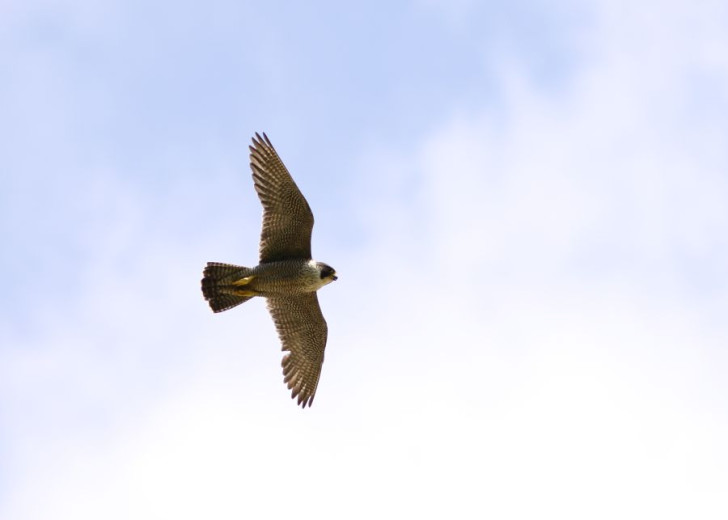 By contributing extensive telemetry data and specialist expertise, Slovenian researchers played an important role in one of the largest studies of energy use in flying birds. Photo: Tomaž Mihelič, DOPPS – BirdLife Slovenia
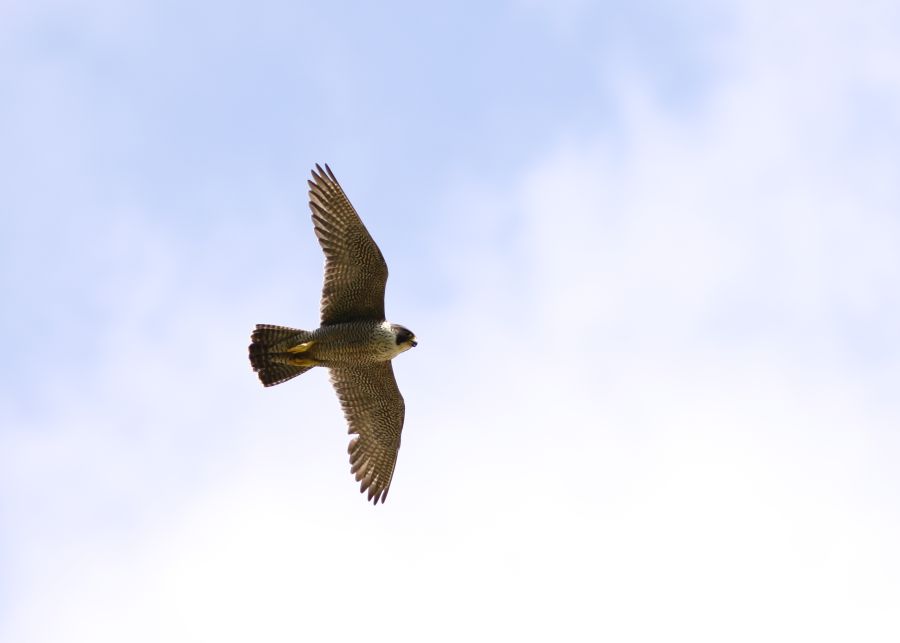
Protecting migration routes
The study confirms how closely animal movements are linked to the environment. “This incredible adaptation to their environment enables vultures to use very little energy when flying. Without it, they would most likely not even survive as a species, as they would be unable to find enough food in the wild to meet the energy demands associated with more active forms of flight. By taking advantage of air currents, they can cover enormous distances with minimal effort,” explains Tomaž Mihelič, adding that even flying 200 kilometres in a single day requires almost negligible amounts of energy.
Unlike rivers, mountain ridges or forests, these invisible aerial pathways are not immediately apparent. However, for large birds of prey, these connections are essential for covering long distances. Preserving this unique corridor is therefore imporant not only for Slovenia, but also for bird conservation on a European level.
-
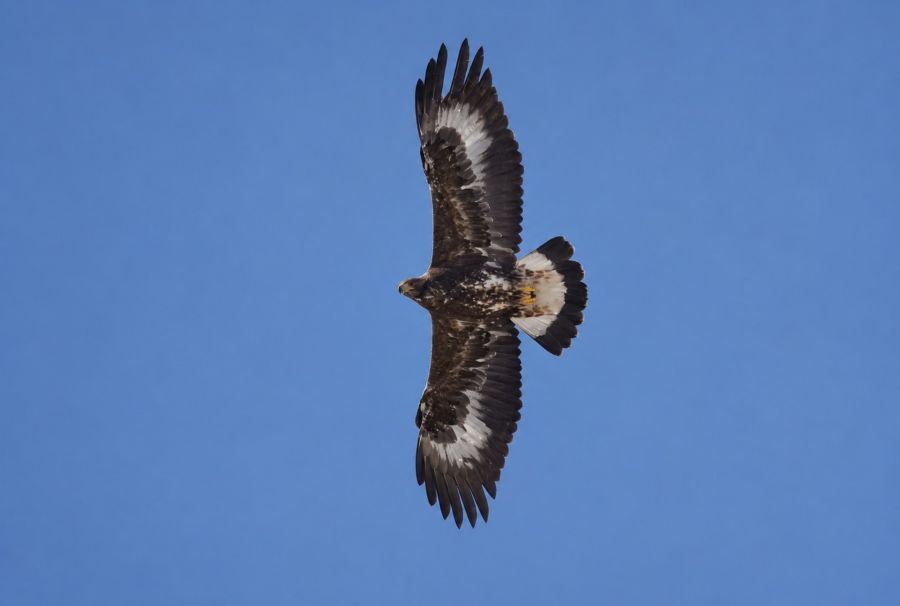
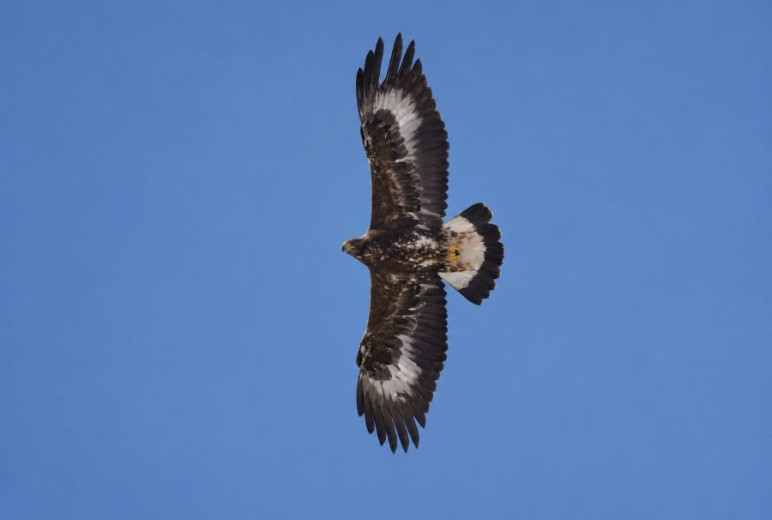 The golden eagle is the largest breeding bird of prey in Slovenia. Photo: Tomaž Mihelič, DOPPS – BirdLife Slovenia