Date: 15. September 2026
Time to read: 2 min
Although Slovenia has only a few dozen kilometres of coastline, its waters harbour a rich and diverse underwater world. This year, researchers and divers have been delighted by two significant sightings: the discovery of juvenile noble pen shells, the largest bivalve species in the Mediterranean, and more frequent sightings of the Mediterranean feather star, a mysterious and elegant inhabitant of the seabed.
Juvenile noble pen shells offer a glimmer of hope
The noble pen shell is a true giant among the bivalves found in Slovenian waters. The largest bivalve in the Adriatic and Mediterranean Seas can grow up to 150 centimetres long. Once relatively common in Slovenian waters, it is now a critically endangered species.
The species was already severely threatened by human activity decades ago, particularly by harvesting for food and recreational fishing. After it was protected, the population increased, in some places to such an extent that individual specimens had to be relocated from bathing areas to more remote locations. Then, a few years ago, the species was struck by a parasite that caused the mass die-off of noble pen shells throughout the Mediterranean.
-
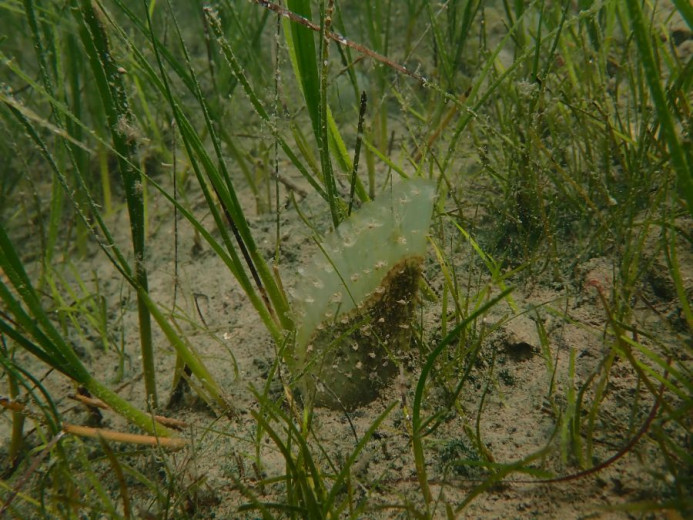 Young noble pen shells were found at several locations along the Slovenian coast. Photo: Valentina Pitacco, National Institute of Biology
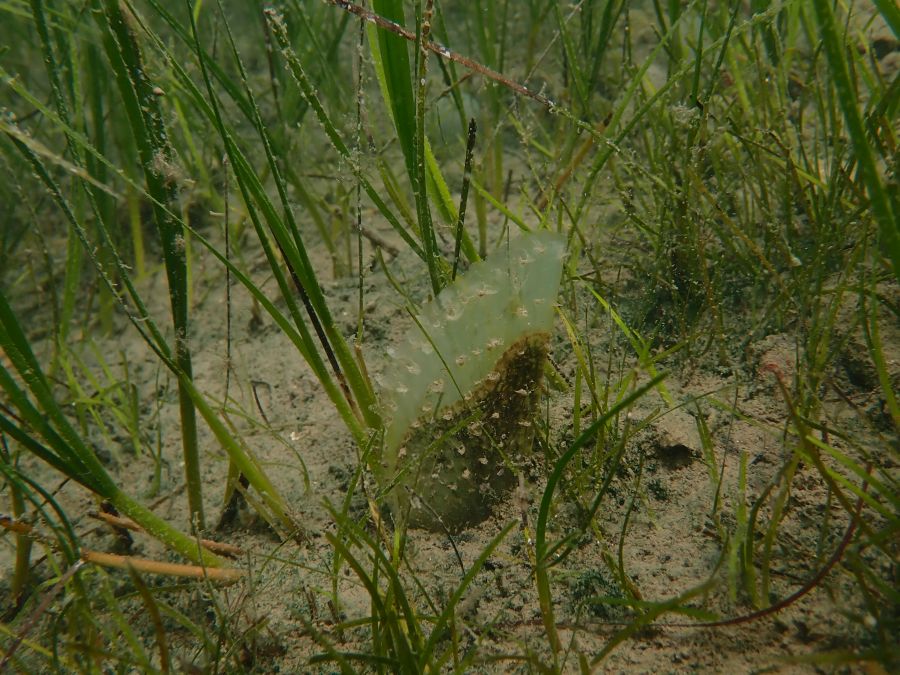
Nevertheless, the discovery of juvenile specimens offers some cause for optimism.
"This means that we still have a source population of adult individuals that are capable of reproducing and can thus recolonise our waters. However, we still don’t know how long these juveniles will survive or how many of them will actually reach adulthood," explains Dr Valentina Pitacco from the National Institute of Biology.
For noble pen shells, the journey to adulthood is long and uncertain. Juveniles are highly vulnerable, and their natural mortality rate is high. This is also confirmed by experience from 2022, when researchers likewise found juvenile specimens. Today, only two or three of those found at the time are still alive. This year's high temperatures are also a cause for concern, but researchers hope that as many juvenile noble pen shells as possible will survive and reach adulthood.
Seagrass meadows provide shelter for juvenile noble pen shells
Researchers are trying to protect juvenile noble pen shells. "If we find them among seagrass then we usually leave them there, as it provides them with sufficient protection from predators. In addition, seagrass meadows are their best habitat," notes Dr Pitacco.
If they are found in locations where their chances of survival would be low, such as on artificial structures like shellfish farms or in shallow water among rocks, they are relocated to areas where conditions are more favourable. Those found on bare sediment in areas that can be monitored regularly are protected with specially designed cages.
Slovenian researchers help save the endangered species
Slovenian researchers are also involved in efforts to conserve the noble pen shell. Researchers from the National Institute of Biology took part in the international Life Pinna project, which ended last year.
As part of the project, genetic research was carried out at the University of Sassari, while researchers at the University of Genoa attempted to breed noble pen shells under artificial conditions. Although they were unable to complete the entire life cycle, they succeeded in rearing noble pen shells to larval stages that had never before been reached in the laboratory. This represents an important step towards finding ways to restore the population.
-
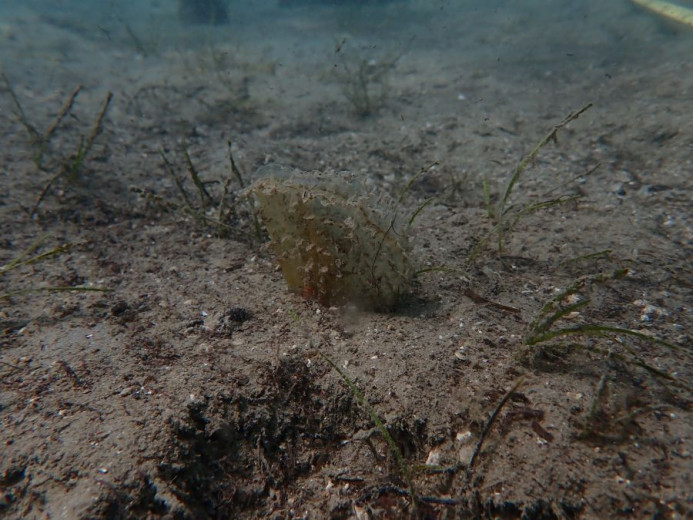 Anchoring in seagrass meadows is one of the threats to noble pen shells. As the species is protected, touching, moving or removing them from the sea is prohibited. Photo: Valentina Pitacco, National Institute of Biology
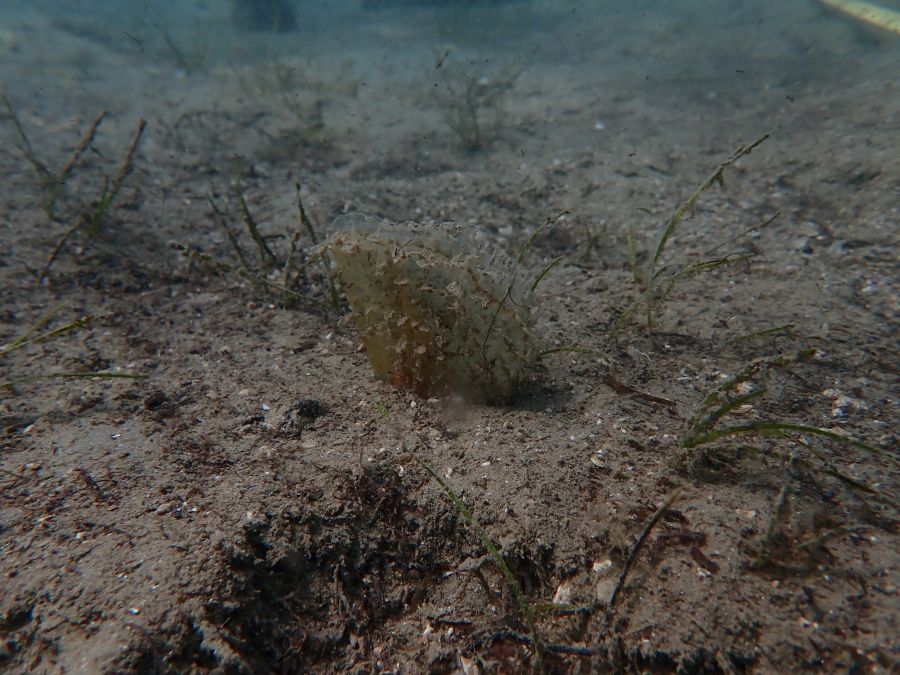
Among other things, the researchers also monitored the presence of the parasite that caused the mass die-off of noble pen shells.
"At the beginning of the project, the parasite was still relatively widespread in Slovenian waters, as we also detected it in other mollusc species. Its presence subsequently declined. This, however, doesn’t mean that the parasite has disappeared, as it’s still present, albeit to a much lesser extent than at the beginning of the project. This also gives us some optimism," explains Dr Pitacco.
They hope that, through broad international cooperation, they will be able to do even more to conserve this species and gain a better understanding of the factors affecting its survival.
The Mediterranean feather star returns after decades
The discovery of juvenile noble pen shells in Slovenian waters was not the only pleasant surprise. This year, divers have also spotted the Mediterranean feather star more frequently.
This unusual animal belongs to the echinoderms, a large group of marine invertebrates that also includes starfish, sea urchins, brittle stars and sea cucumbers. It can be recognised by its characteristic feathery arms and elegant movements, which often resemble a dance.
-
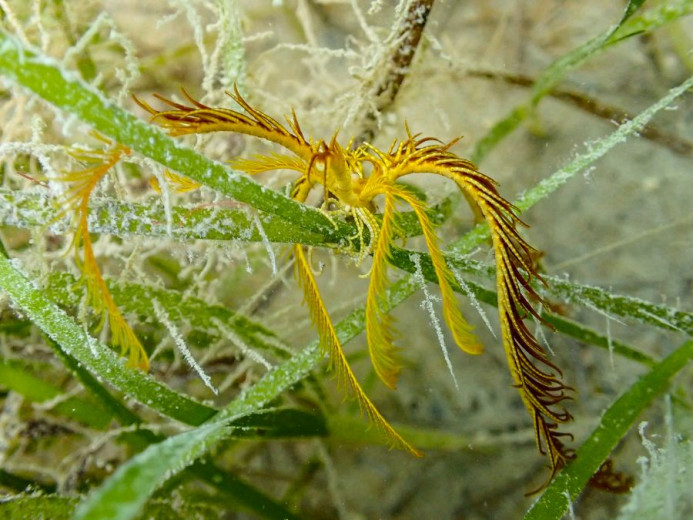 The Mediterranean feather star has ten long, branched arms that resemble feathers and can come in a variety of colours, from yellow and white to orange, red and brown. Photo: Manja Rogelja, Aquarium Piran
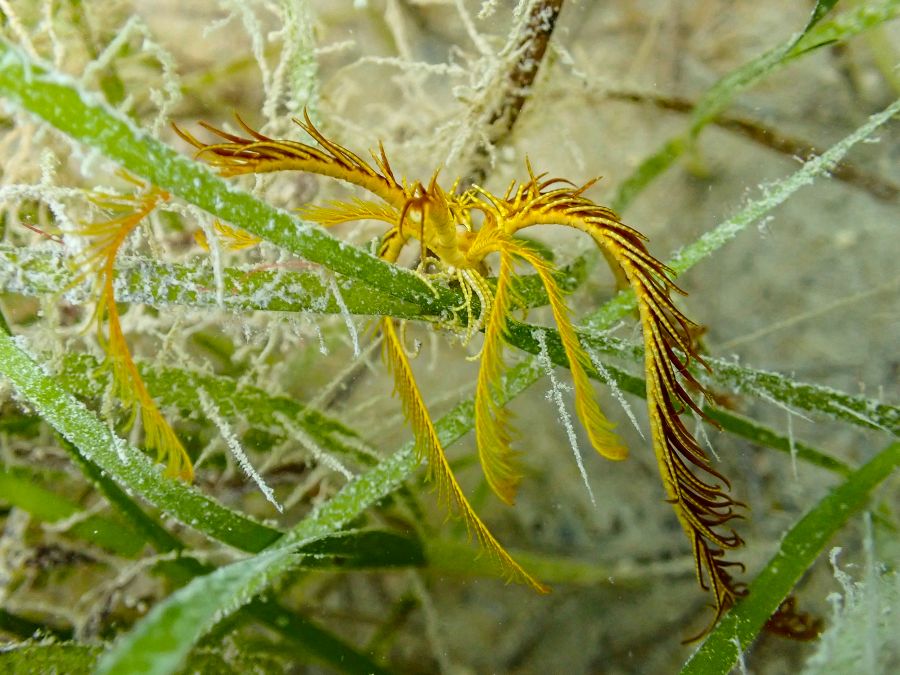
"Although it looks very delicate, it can also move actively. It can climb and crawl along the seabed, and it can even swim when it feels threatened. Its swimming is one of its most distinctive features. Its ten arms move synchronously and alternately, making its movement look like an elegant dance beneath the sea surface," says Dr Manja Rogelja, head of the Piran Aquarium.
The mysterious inhabitant of Slovenian waters
The Mediterranean feather star lives on various types of seabed, including among seagrasses and on rocky or sandy bottoms covered with algae. During the day, it often stays in more sheltered and shaded places, while at night it moves to more exposed areas with stronger currents, where the water brings it more food.
Researchers do not yet know why it has become more common in Slovenian waters in recent years. "The fact that the Mediterranean feather star has started appearing more frequently in Slovenian waters indicates that, in some areas, conditions have been established or maintained that allow it to settle and survive. It will be interesting to monitor whether it becomes more common in the coming years and how its distribution changes," says Dr Rogelja.
-
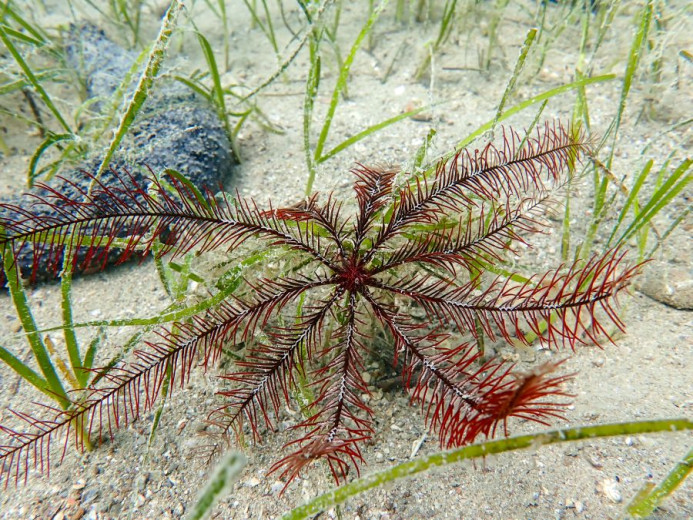 The size of the Mediterranean feather star population in Slovenian waters cannot yet be estimated, as sightings are based mainly on incidental observations. Photo: Manja Rogelja, Aquarium Piran
-
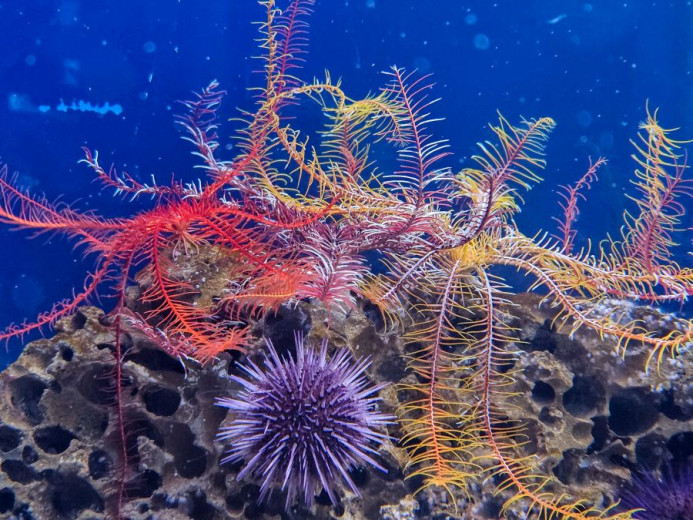 Feather stars can be threatened by various changes to their habitat, particularly human impacts on coastal and marine ecosystems. Photo: Manja Rogelja, Aquarium Piran
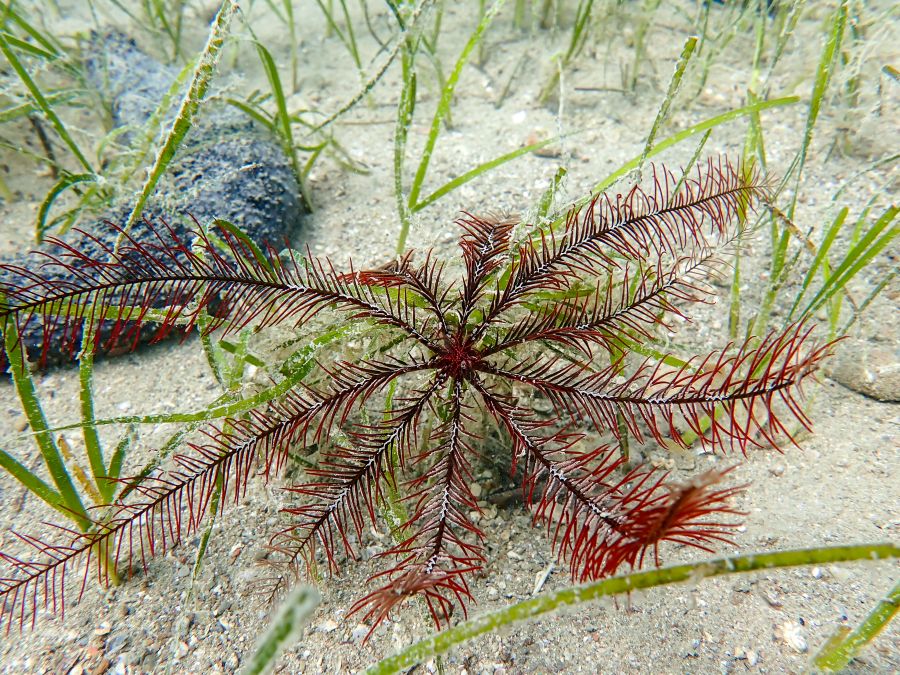
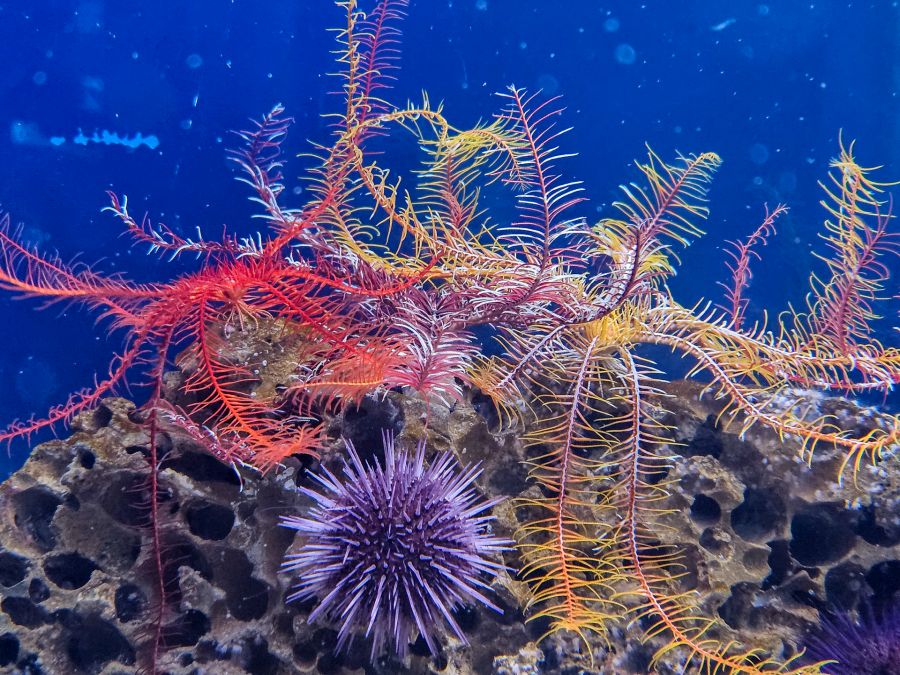
She explains that its presence is also important in terms of the functioning of the marine ecosystem and the preservation of its diversity. "As a benthic suspension feeder, it filters tiny plankton and particulate organic matter from the water column, and is thus involved in the flow of matter and energy between the water column and benthic communities."
Its presence can therefore also provide information about environmental conditions. As Dr Rogelja explains, the Mediterranean feather star depends on water currents to bring it food, while its distribution is also influenced by other factors, such as temperature, food availability and habitat characteristics. Monitoring its occurrence, abundance and distribution is therefore useful for gaining a better understanding of changes in our marine environment.
At the same time, she cautions that the mere presence of the Mediterranean feather star is not yet a reliable indicator of a well-preserved or pristine environment, as we do not yet have a sufficiently good understanding of the ecology of the species and the factors that influence its distribution.
A rich underwater world
Every new discovery helps researchers better understand the complex marine ecosystem and the changes taking place within it. The noble pen shell and the Mediterranean feather star are just two of the many species inhabiting Slovenian waters and contributing to their richness and diversity. They remind us of how important it is to explore, understand and preserve this world so that we can continue to admire it in the future.