Date: 2. November 2026
Time to read: 1 min
In south-eastern Slovenia, between the Krka and the Kolpa Rivers, lie Dolenjska and Bela krajina. These are regions of wine-growing hills, vast forests, medieval castles and thermal springs, where rich heritage goes hand-in-hand with technological development and economic success.
Dolenjska: the green Krka Valley and the land of Cviček
Among the most distinctive features of Dolenjska are its hilly landscape and the Krka River, the lifeblood of the region, which has been shaping its development for centuries. Novo mesto, the region’s economic, cultural and administrative centre, developed on the river’s banks. The Krka was once an important source of water and food. It was also a transport route and provided natural protection for the settlements and castles built along its banks.
-
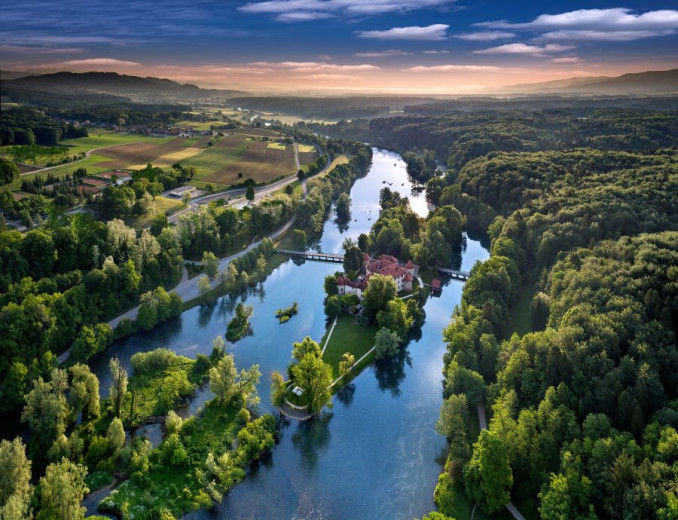 Situated on an island in the Krka River, Otočec Castle is one of the most recognizable tourist attractions and symbols of south-eastern Slovenia. Photo: Riccardo Lavezzo and Fiorenzo Calosso/slovenia.info
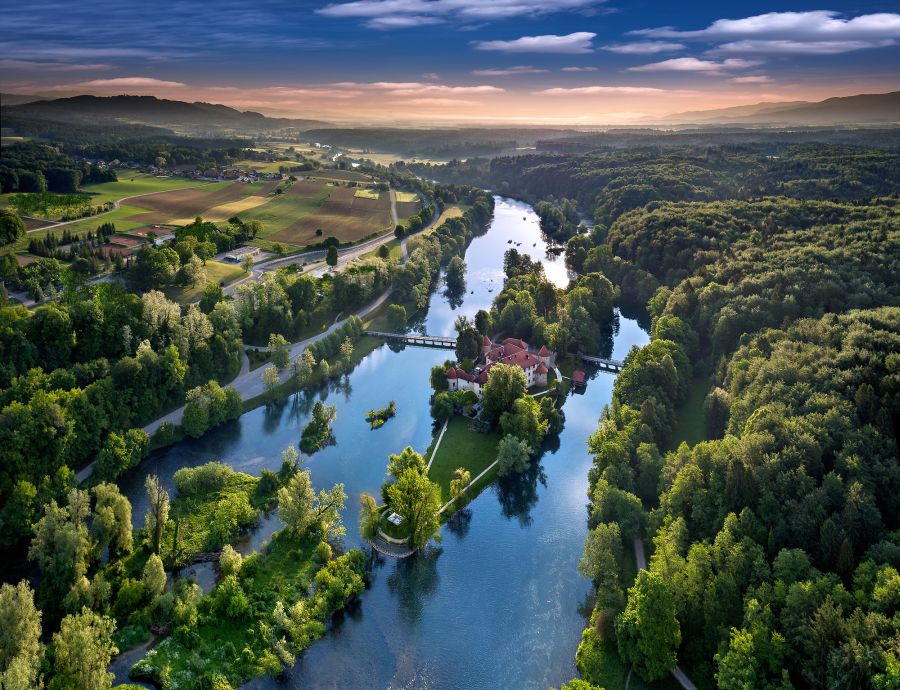
Today, the Krka is one of the most popular Slovenian rivers for relaxation and active leisure time. There are many hiking and cycling trails running along its banks.
Its calmer stretches are suitable for boating, canoeing and stand-up paddleboarding, while in summer it offers a pleasant refreshment to swimmers. Thermal springs hold a special place in Dolenjska’s tourism offering. Dolenjske Toplice and Šmarješke Toplice are among the oldest health resorts in Slovenia. For centuries, their natural thermal waters have been attracting visitors seeking relaxation and well-being.
-
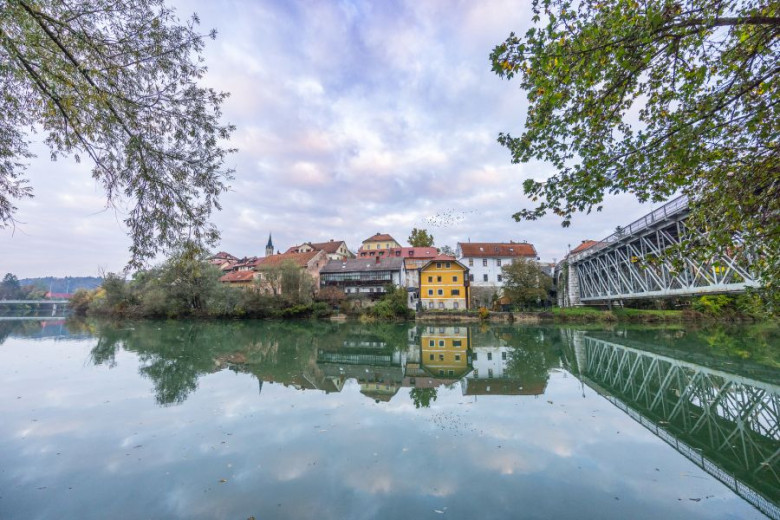 Surrounded by the Krka River, Novo mesto is internationally known as the “City of Situlae”, boasting the world’s largest collection of elaborately decorated Iron Age situlae. Photo: Jošt Gantar/slovenia.info
Dolenjska is also the land of Cviček, a wine with protected origin, which is inextricably linked to the region’s identity.
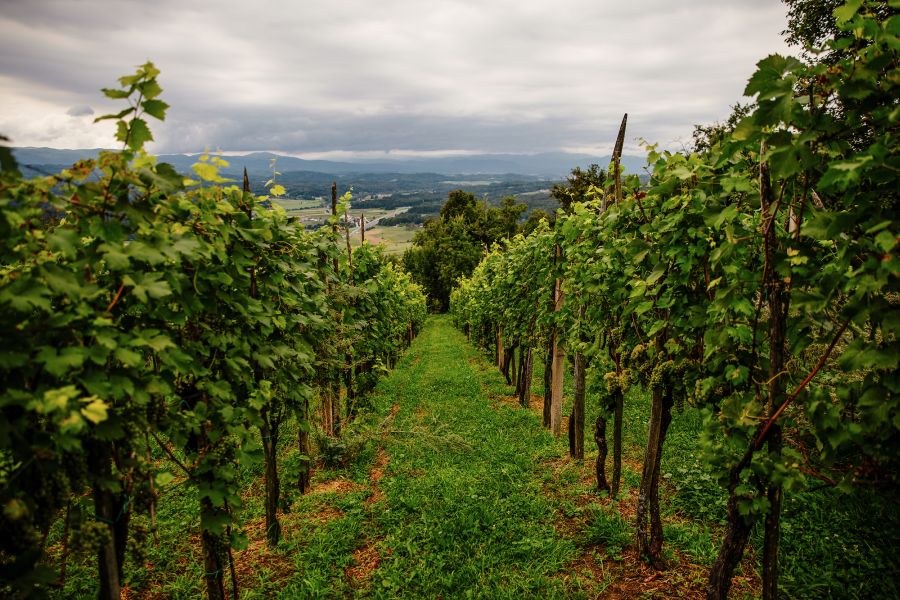
Vineyards scattered over sunny slopes and the characteristic vineyard cottages shape one of the most recognisable cultural landscapes in Slovenia.
In addition to winegrowing, Dolenjska is also characterised by rich cultural and historical heritage. The Krka Valley used to be dotted with castles. Monasteries, pilgrimage routes and traditional events also give this region a special character. One of the most recognisable cultural heritage monuments is the Pleterje Charterhouse.
-
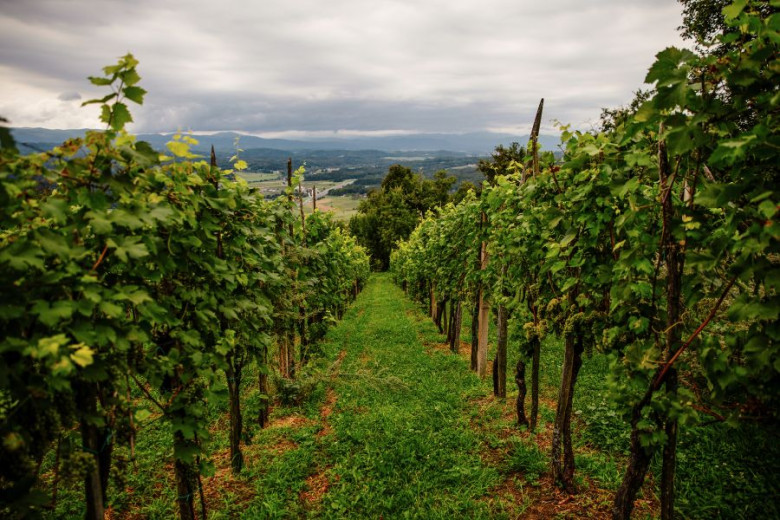 Winegrowing has shaped Dolenjska’s landscape and culture for centuries. Photo: Ernad Ihtijarević/slovenia.info
Bela krajina: the land of white birches, the Kolpa River and tradition
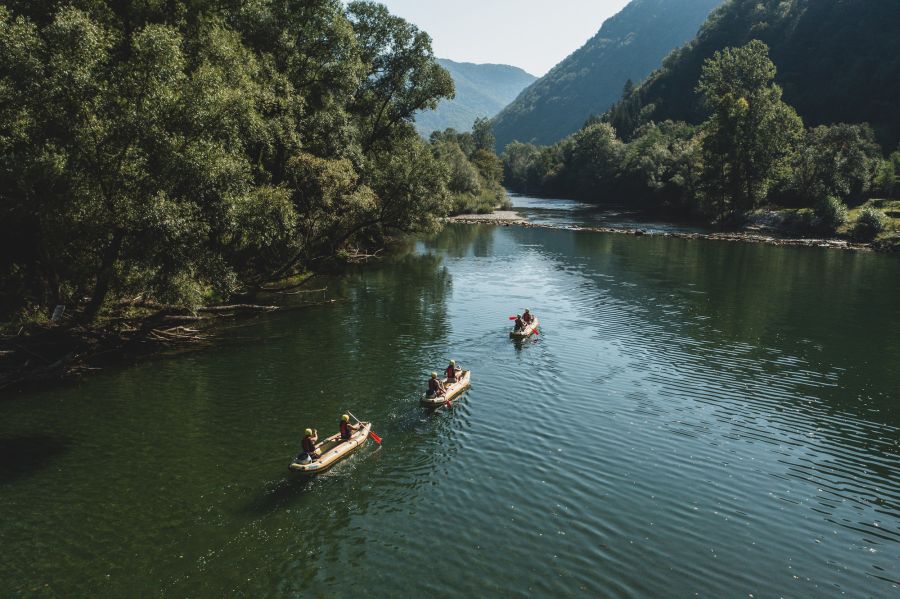
Bela krajina lies on the southern side of Gorjanci hills, which both connect it to and separate it from Dolenjska. Its appearance is marked by the Kolpa River, which meanders through the mostly karst landscape and forms the natural border with Croatia to the south and east. It is considered one of the cleanest and warmest Slovenian rivers, suitable for swimming, boating and paddleboarding.
The Kolpa Landscape Park stretches along the river, encompassing a mosaic of forests, meadows, litter meadows, dolines and traditional cultural landscapes.
The underground karst world of Bela krajina is home to the black olm, a very rare and endangered cave amphibian not found anywhere else in the world. This year marks the 40th anniversary of its discovery.
-
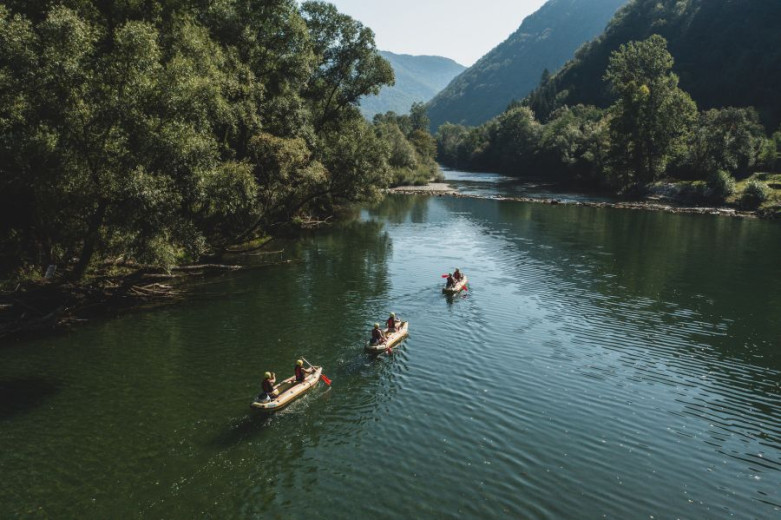 Meandering through the karst landscape of Bela krajina, the Kolpa River has shaped the region’s culture, traditions and way of life for generations. Photo: Ciril Jazbec/slovenia.info
Črnomelj is the main town of Bela krajina and its largest settlement. According to the most famous legend, Črnomelj was named after a miller who, disguised as an old woman, tried to cheat a good fairy by grinding brown flour instead of white. The fairy punished him for his dishonesty, and from then on, the town is called Črnomelj – the town that “mills black flour” (brown flour is called black flour in Slovenian).
Cultural heritage gives this region its distinctive character. Over the centuries, the influences of diverse peoples and cultures have intertwined here and left their mark on folklore, traditional dress, music, customs and cuisine.
The Jurjevanje festival in Bela krajina is the oldest folklore festival in Slovenia. It originates in ancient spring celebrations of St. George’s Day (jurjevo), associated with greenery, song and dance.
The region is also known for Bela Krajina pisanice, characteristically decorated Easter eggs, which were added to Slovenia’s List of Intangible Cultural Heritage in 2012.
-
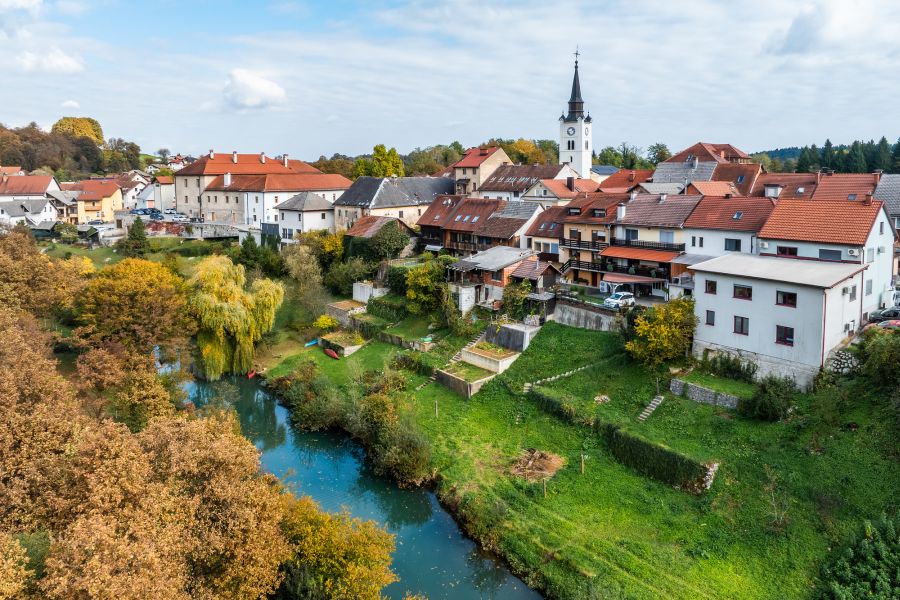
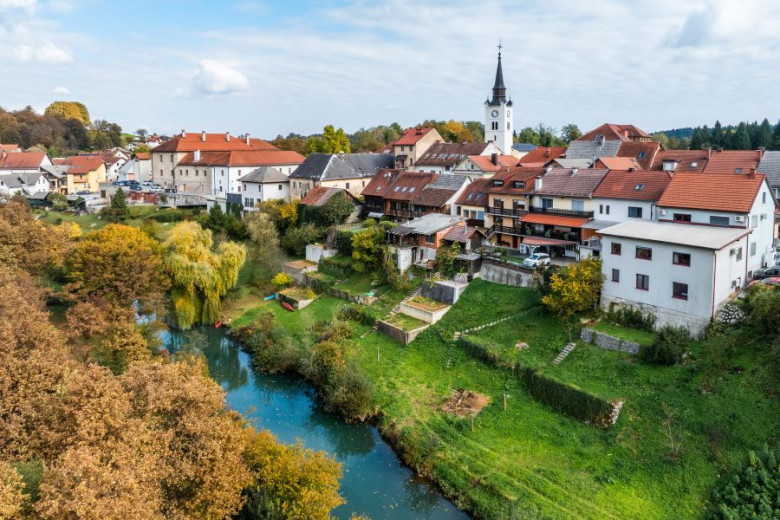 Črnomelj is the cultural heart of Bela krajina and one of the oldest towns in the region. Photo: Jošt Gantar/slovenia.info
-
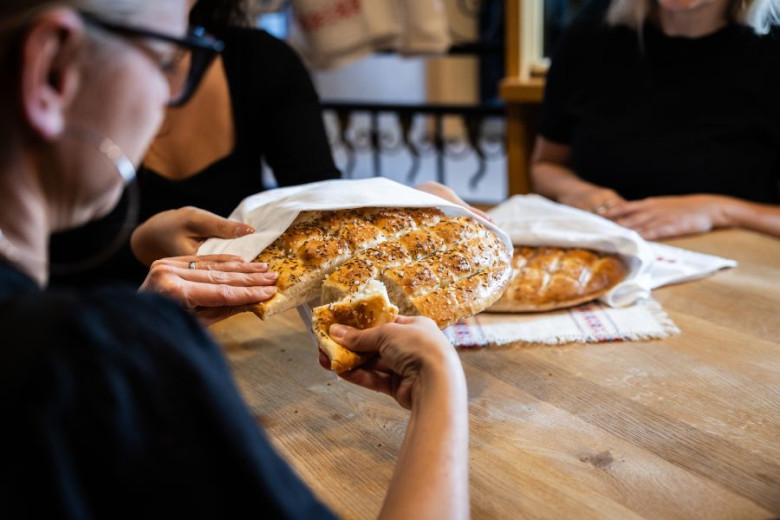 Belokranjska pogača is traditionally served warm and torn by hand, reflecting the hospitality and customs of Bela krajina. Photo: Jošt Gantar/slovenia.info
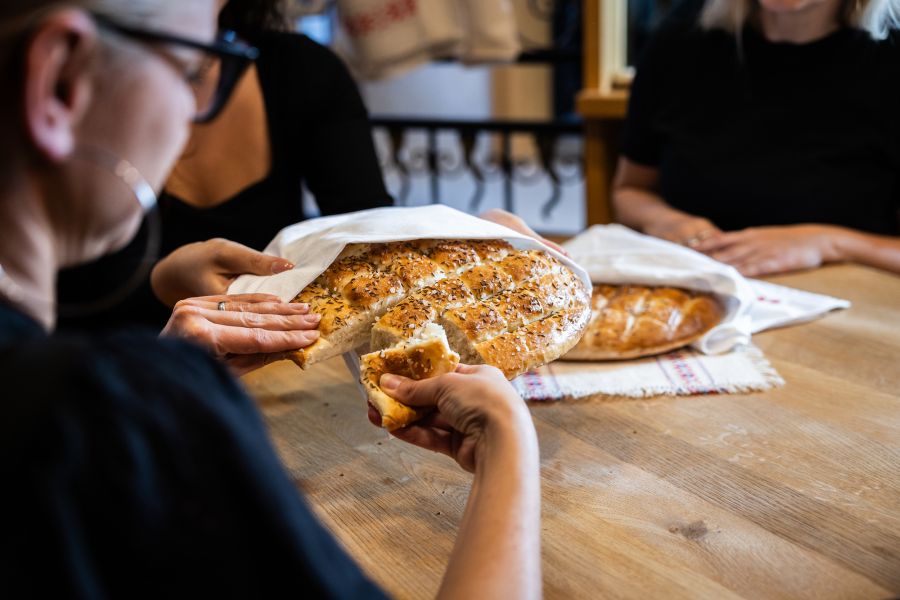
Bela krajina is also home to the famous Belokranjska pogača (a type of flatbread), a recognisable traditional Slovenian dish. In addition to its rich culinary heritage, the people of Bela krajina also carefully preserve their winegrowing tradition. Metliška Črnina, Belokranjec and Modra Frankinja wines are an important part of this tradition, which is passed down from generation to generation.
The region’s economic potential
Dolenjska and Bela krajina are important not only for their natural beauty and cultural heritage but also for their contribution to the Slovenian economy.
For years, south-eastern Slovenia has been among the more economically successful Slovenian regions, which is demonstrated by the high added value per employee, above-average salaries in the business sector and the marked export orientation of companies.
The region’s economic strength is built together by internationally established companies considered to be the drivers of Slovenian economy. The Revoz factory in Novo mesto has been producing Renault vehicles for more than five decades. The company, which is now focusing on the production of electric vehicles, is one of the Renault Group's key manufacturing sites in Europe. Krka, one of Europe's leading generic pharmaceutical companies, which sells its products in more than 70 markets worldwide, is also headquartered in Novo mesto. Adria Mobil is one of Europe's leading manufacturers of motorhomes and caravans. An important pillar of the region’s economy is also Trimo in Trebnje, renowned for its innovative and sustainable solutions for modern construction. Kolpa, one of the leading manufacturers of bathroom fittings and interior furnishing in Central and South-East Europe, is headquartered in Metlika.
-
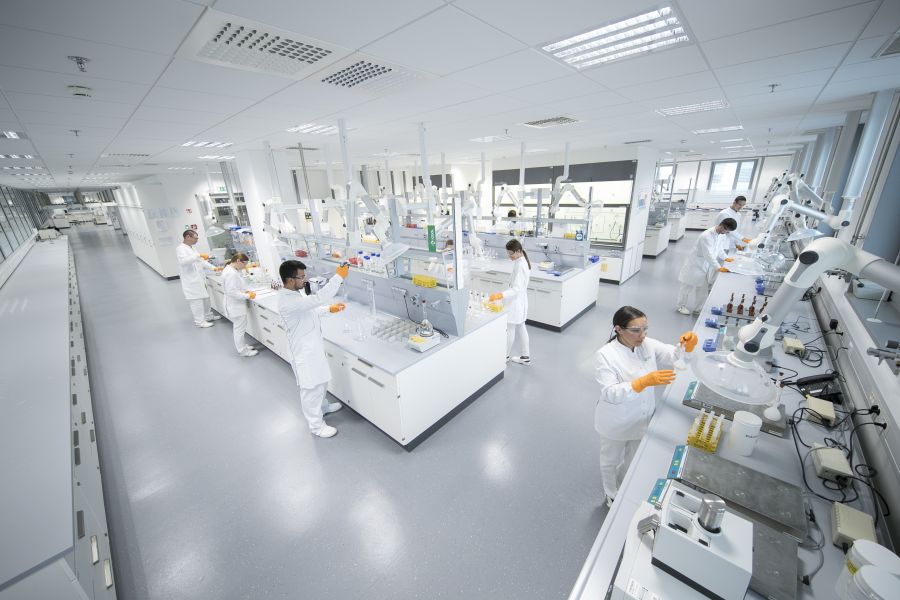
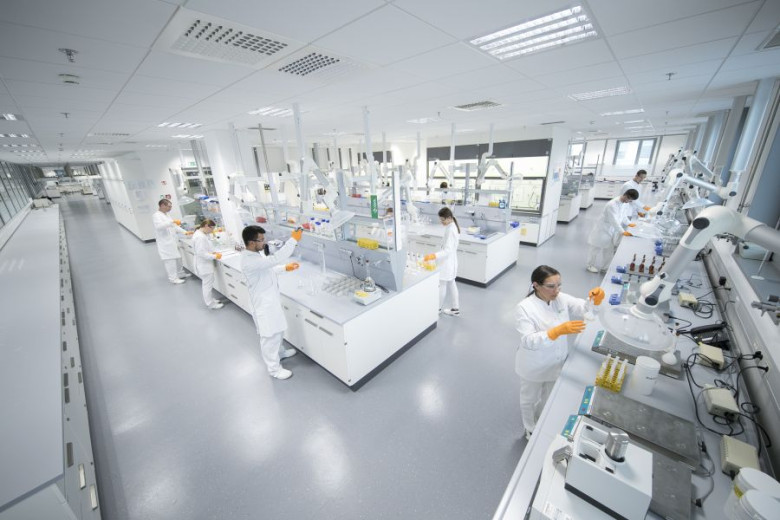 Krka is today one of Slovenia’s most successful international companies and a major driver of the country’s pharmaceutical industry. Photo: Krka, d. d., Novo mesto archive
-
 The Novo mesto plant is one of the Renault Group’s key manufacturing sites in Europe. Photo: Nebojša Tejić/STA

The region’s success is based on knowledge, innovation and the development of products with high added value. Companies from Dolenjska and Bela krajina are not only important exporters but also actively help shape global supply chains and development trends in pharmaceuticals, mobility, construction and specialised manufacturing. Their ability to combine tradition, technological development and international competitiveness makes this one of the most successful regions in Slovenia.
Cover photo: Jacob Riglin/slovenia.info