Date: 24. November 2026
Time to read: 3 min
Slovenia is already home to more than ten libraries of things, with the number of loans increasing each year. They operate much like conventional libraries, but on their shelves you’ll find a wide variety of items rather than books. They encourage sharing, reduce the need to buy things and offer an alternative to conventional consumer habits.
Have you ever walked around your home and counted the appliances and devices you haven’t used for quite some time? It's also worth considering how much they have cost you and how much space they take up.
According to some studies, the average household uses an electric drill for just 15 minutes a year. Producing an electric drill weighing around two kilograms generates approximately 50 kilograms of waste and 10 kilograms of carbon dioxide, taking into account everything from raw material extraction to transport. These figures raise an obvious question: do we really need to own all the items we rarely use?
Borrowing items
One such alternative is a library of things. Ljubljana's library of things now offers around 250 items, all listed in its online catalogue, where users can check their availability and make reservations. Users can borrow items by paying an annual membership fee, donating an item from the library's wish list or volunteering. Non-members can also borrow items on a one-off basis for a nominal fee.
Among the most popular items are a steam cleaner, a deep-cleaning vacuum cleaner, a projector, folding event tables and benches, power tools for the home and garden, a pressure washer and an overlock sewing machine. As library manager Jošt Derlink explains, these items have come in handy in all sorts of real-life situations.
"Our speakers saved the day at a wedding when a sound system was needed at the last minute; our metal detector has helped find several lost keys and wedding rings; two friends used our power tools to convert a van into a campervan; our folding event tables and benches have been used at countless neighbourhood picnics; and one of our backpacks has travelled through Oman, Bali and Uzbekistan."
-
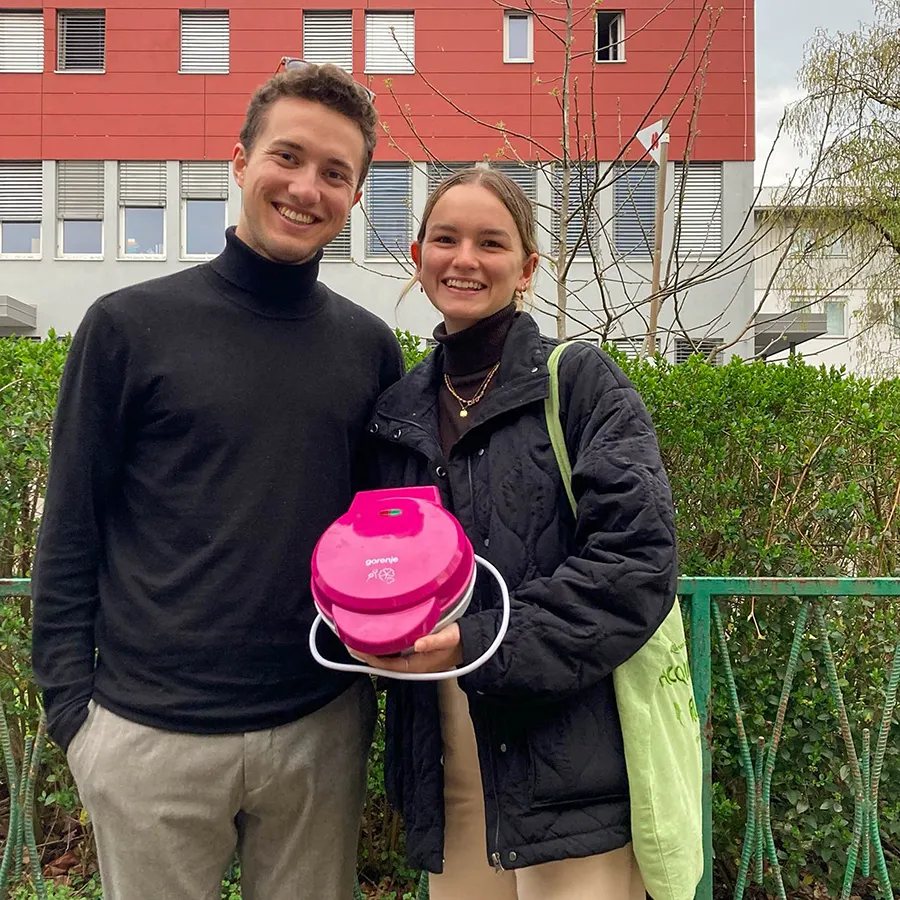
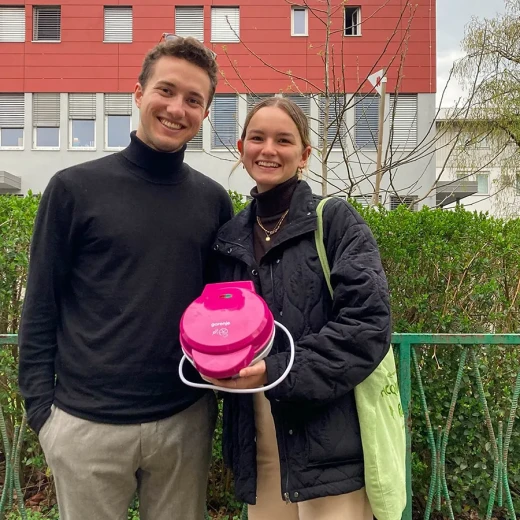 Two students from Belgium on an Erasmus exchange enjoyed a little taste of home thanks to a waffle maker. Photo: Knjižnica reči
-
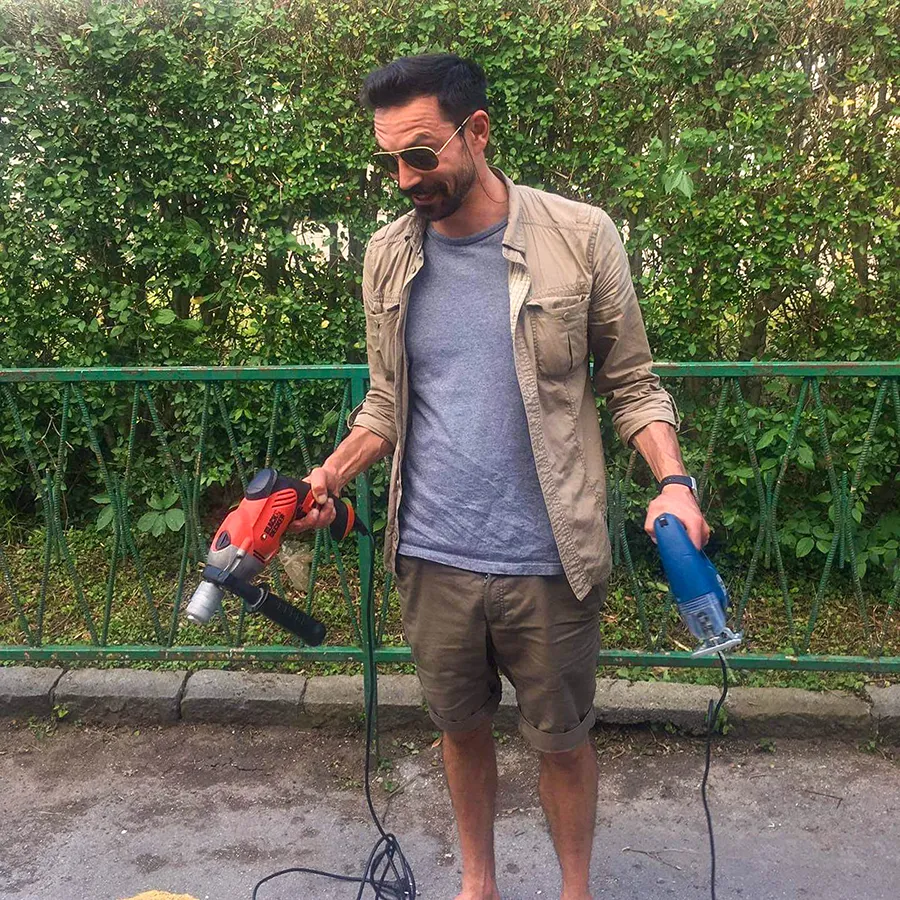
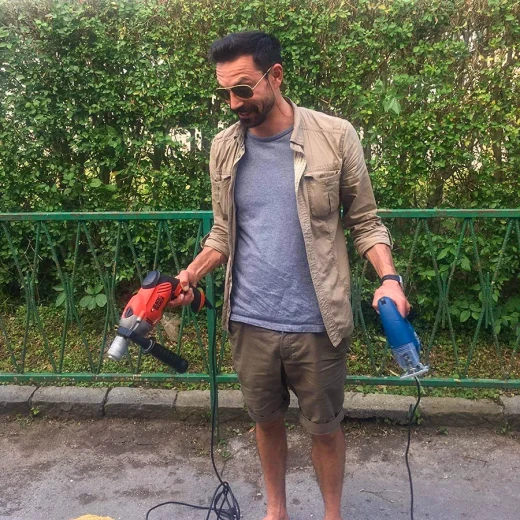 Power tools are among the most frequently borrowed items. Photo: Knjižnica reči
Repairing items
Many modern products are not designed to be easily repaired. Access to spare parts is often limited, and repair costs are high. As a result, when something breaks down, our first instinct is often to replace it rather than repair it.
As the library explains, "Consumers tend to opt for a new device if the cost of repairing the existing one exceeds 30% of its value. It is therefore very difficult for repair services to compete with the low prices of new devices."
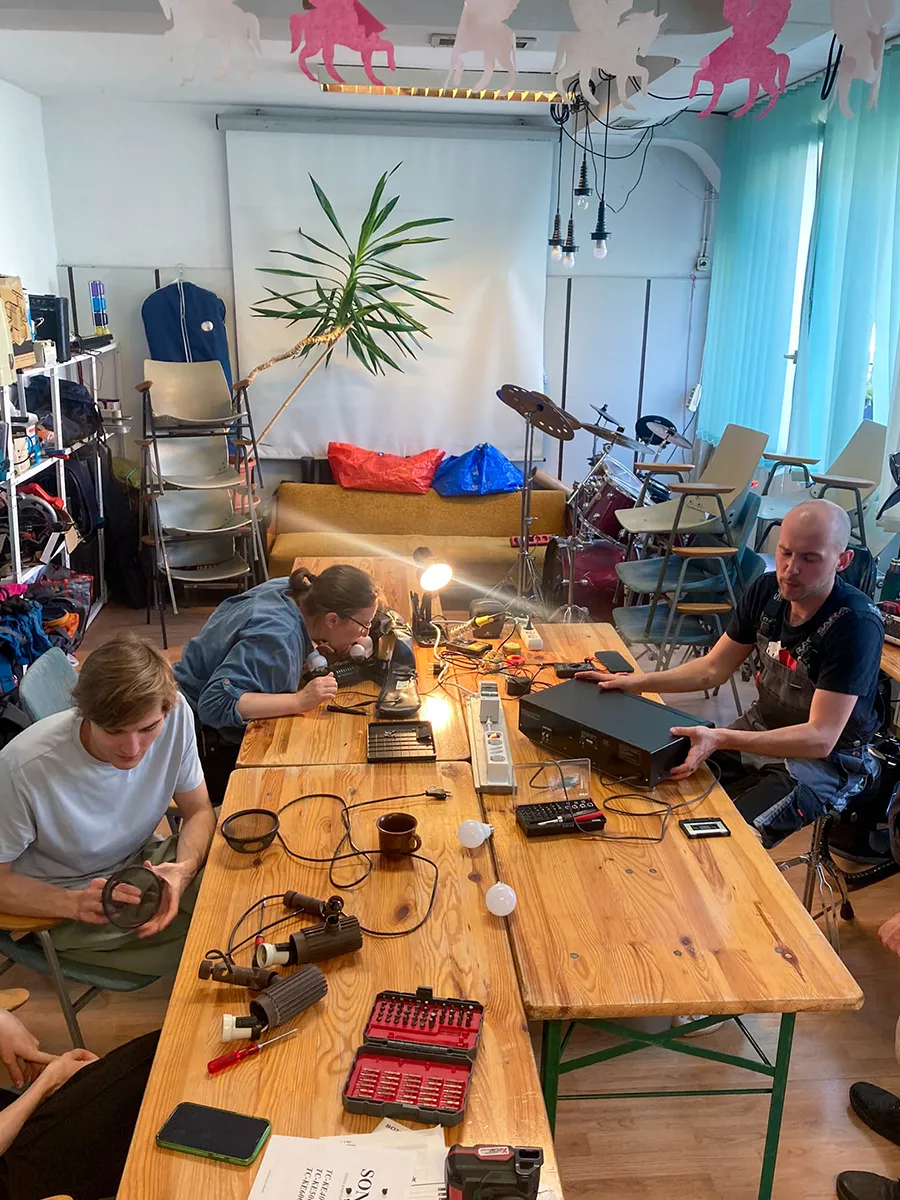
The library addresses this issue by running twice-monthly repair workshops called Poprav'c – a name that plays on the Slovenian words for repairing something and resitting an exam, capturing the idea of giving things a second chance.
At these community workshops, visitors can learn to repair their own electrical appliances free of charge, with guidance from a skilled team.
-
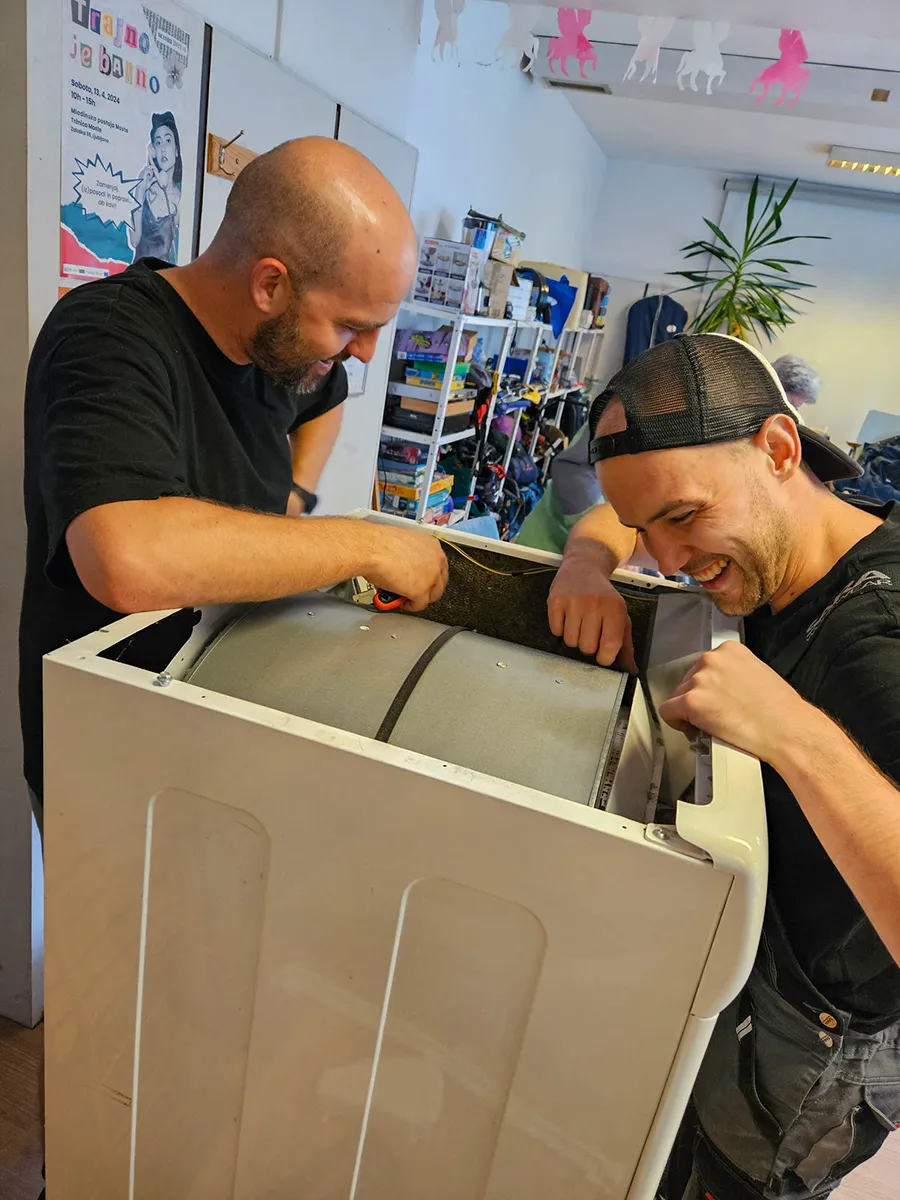
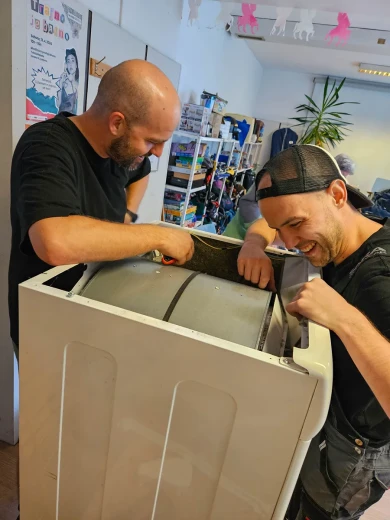 The library has even tackled the repair of a washing machine. Photo: Knjižnica reči
-
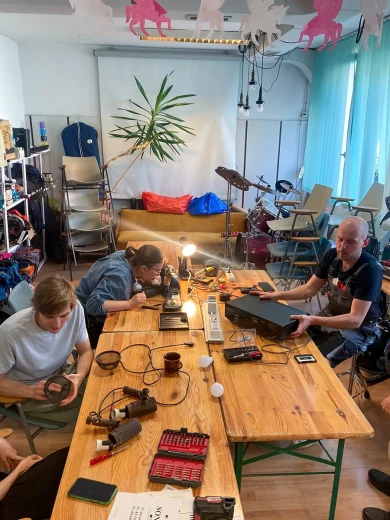 Most items pass their "resit" at Poprav'c and are given a new lease on life. Photo: Knjižnica reči
Benefits for people and the environment
Sharing and repairing items and keeping products in use for longer can help reduce raw material consumption and waste generation. In 2025, Slovenia generated almost 1.1 million tonnes of municipal waste, equivalent to 511 kilograms per capita. Almost three quarters of all municipal waste was collected separately.
Such initiatives can help people save money and reduce their storage needs, while also contributing to more efficient use of resources. Libraries of things show that many of the items we need only occasionally can be borrowed rather than owned.