Date: 9. March 2026
Time to read: 2 min
Every year, these delicate harbingers of spring are the first to remind us that winter is departing and that warmer, longer days are on the way. In Slovenia, snowdrops do not need to be sought deep in forests, on remote meadows or hillsides. The can be found in gardens, along paths, by the edges of roads; in fact, in spring, they can be found almost anywhere we look. Yet in the international collectors' world, Slovenian snowdrops are highly valued and can fetch several hundred euros for a single specimen.
The extraordinary abundance of snowdrops in Slovenia can also be supported by statistics: more than two million snowdrops can grow on a single hectare of land. Slovenia is also among the richest natural habitats in terms of the diversity of snowdrop forms, although only one species, the common snowdrop (Galanthus nivalis), grows here.
Natural wealth inspiring admiration
The common snowdrop naturally grows in the European part of Turkey in the south all the way to Paris and Kyiv in the north. As Jože Bavcon, PhD, one of the country's leading snowdrop experts and head of the University Botanic Gardens Ljubljana, explains, visitors from abroad are often surprised by the sheer abundance of snowdrops in Slovenia. "When colleagues from the Czech Republic visited a few days ago, they were astonished that, in Slovenia, snowdrops grow ‘like grass' because they are so widespread in nature. In the Czech Republic, they do not have such natural habitats everywhere; only in parts of the country (the Carpathians). Elsewhere, you find only specimens that have escaped from castle gardens and grow in clusters."
-
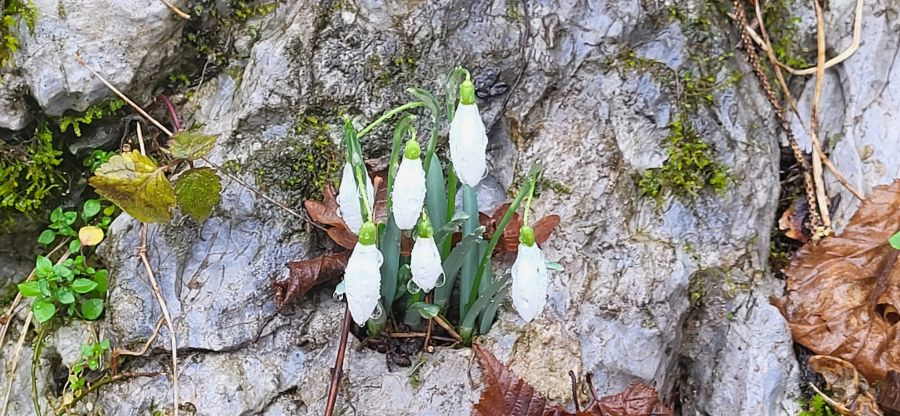
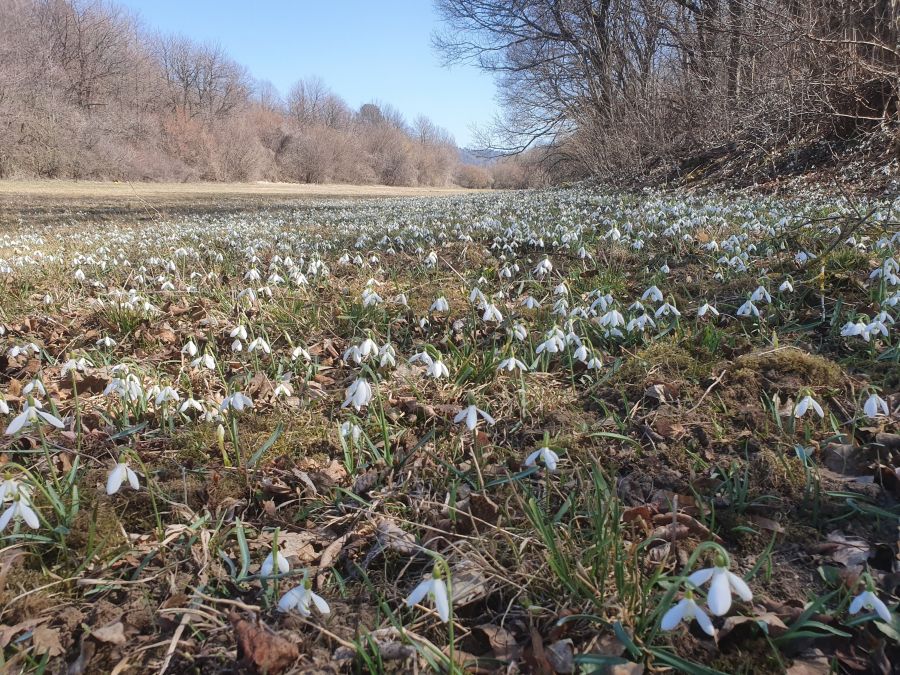
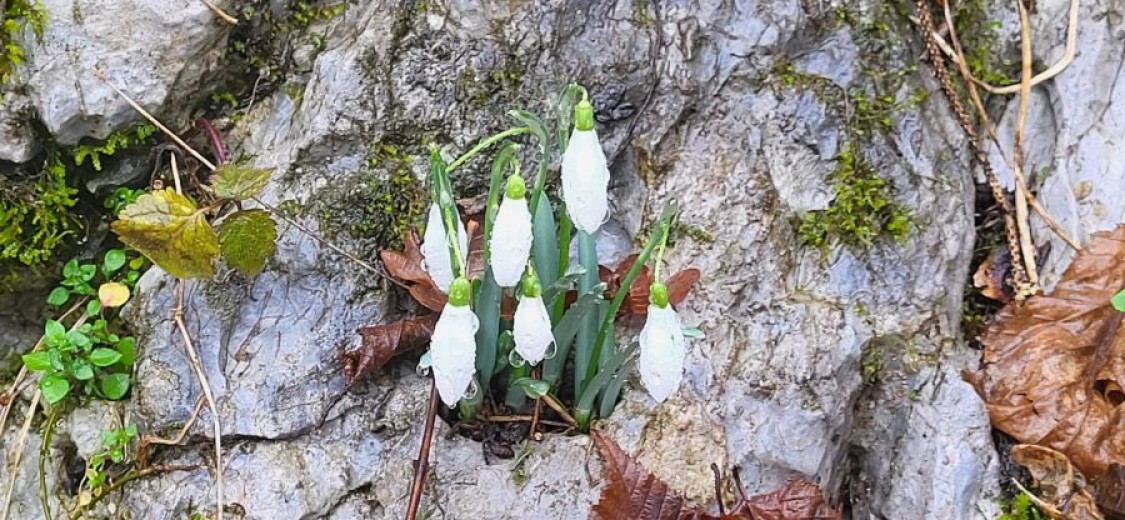 In Slovenian Istria, snowdrops bloom even in narrow rock crevices, where summers are very hot, yet the plants survive these conditions. Photo: Jože Bavcon
-
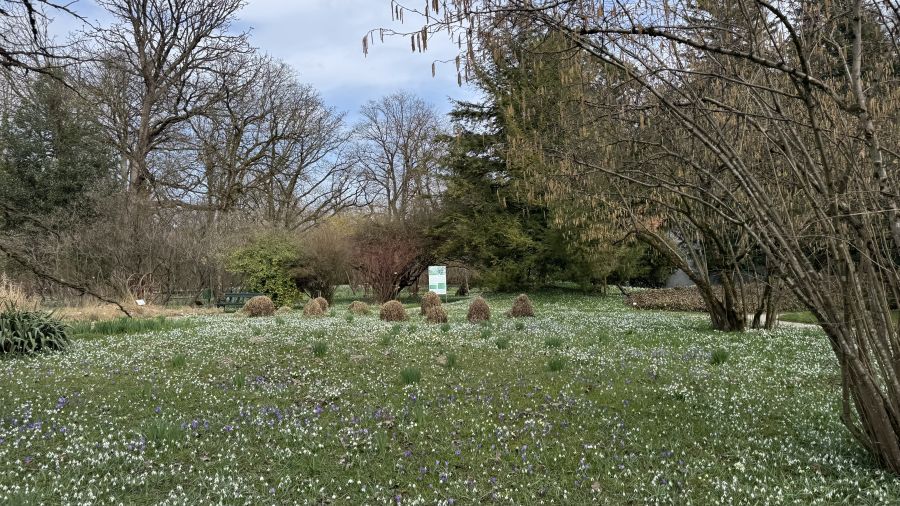
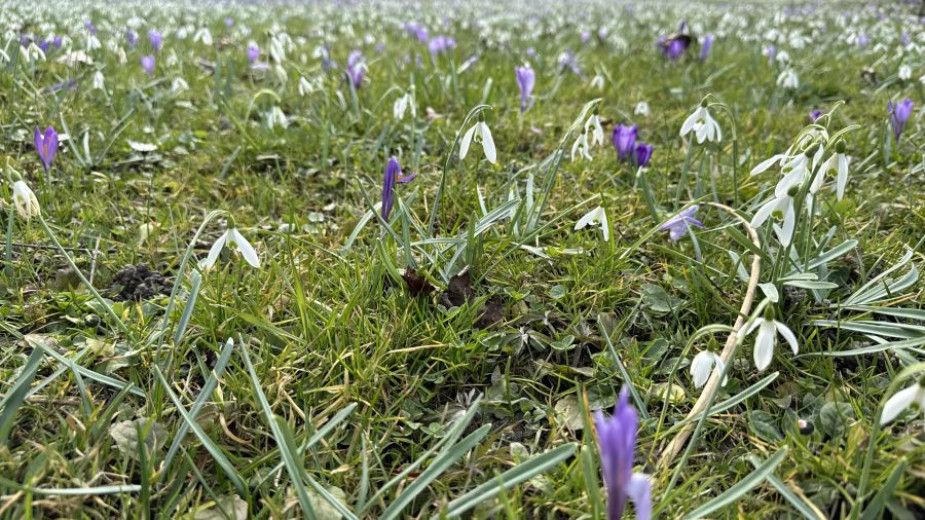 Snowdrops and crocuses herald the arrival of spring even in the Botanical Garden of the University of Ljubljana. Photo: UKOM
-
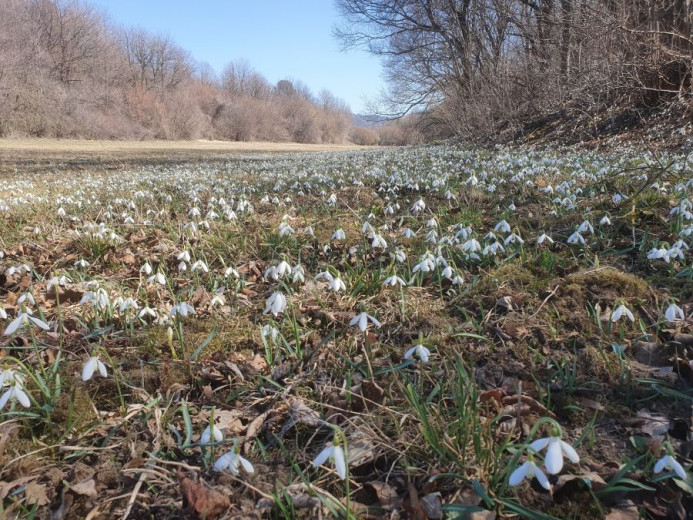 In spring, many Slovenian meadows are covered with white carpets of blooming snowdrops. Photo: Jože Bavcon
Blanka Ravnjak, PhD, a researcher at the Botanical Garden, adds that snowdrops are extremely popular in countries where they are not native, such as England and northern Europe.
"They are among the first flowering plants and symbolise birth and new beginnings. Their fragility is also deceptive, as they are capable of pushing through frozen ground and snow, which gives them a powerful symbolic message.”
Bavcon has been working with snowdrops professionally for 25 years, although they have been an important part of his life him since childhood. Even today, they explore habitats across the country for interesting specimens and include them in the Botanical Garden's collection, which now comprises around 9,500 units, namely, pots of common snowdrops. "Collecting snowdrops in the field can take an entire day and sometimes becomes so intense that after a full day, your back ends up quite sore," says Bavcon with a laugh. They look for snowdrop specimens that differ from the standard shape and colour. These are then transplanted to the Botanical Garden and observed for several years to determine whether the difference is a genetic mutation or the influence of the environment.
-
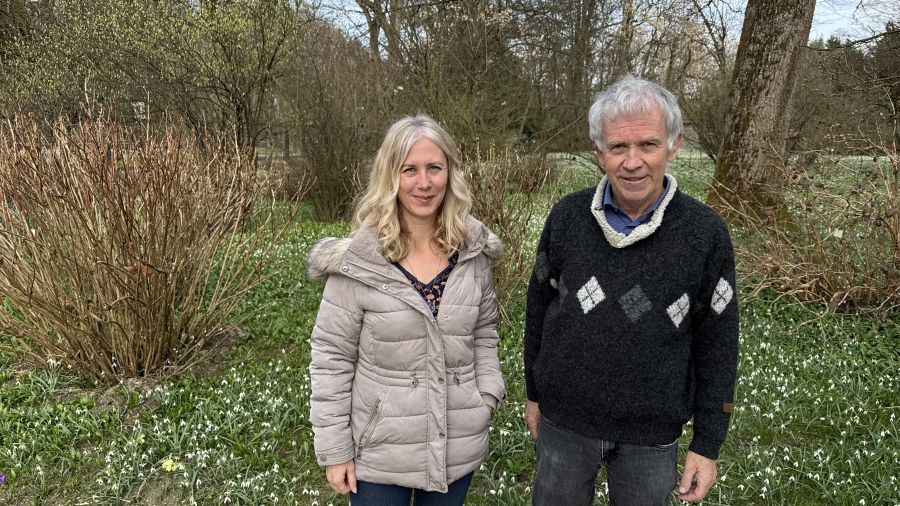
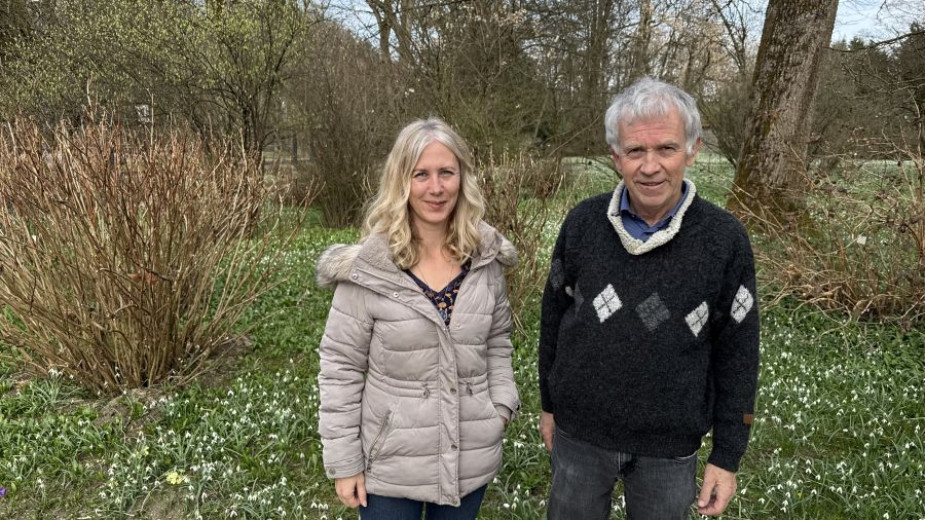 Dr Blanka Ravnjak and Dr Jože Bavcon among snowdrops in the Botanical Garden of the University of Ljubljana. Phto: UKOM
-
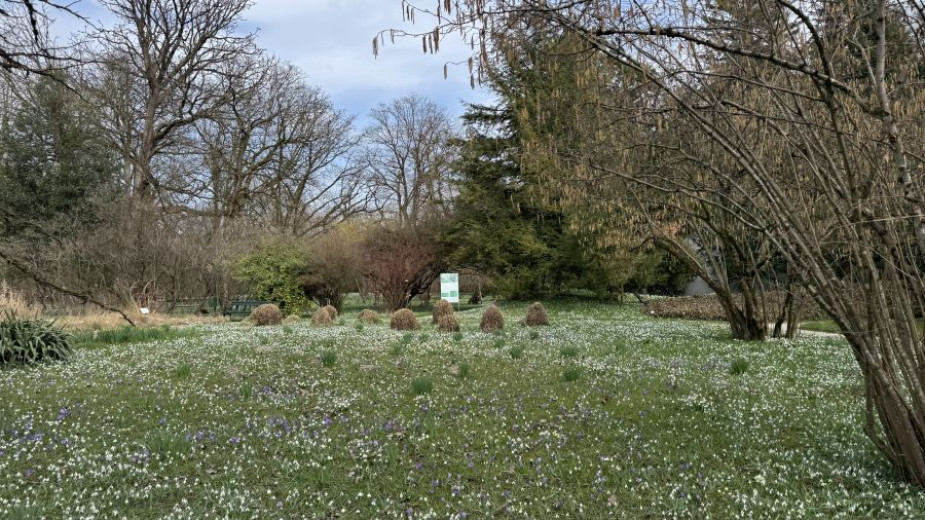 The 11th Snowdrop Festival was held this year at the Botanical Garden of the University of Ljubljana. Photo: UKOM
-
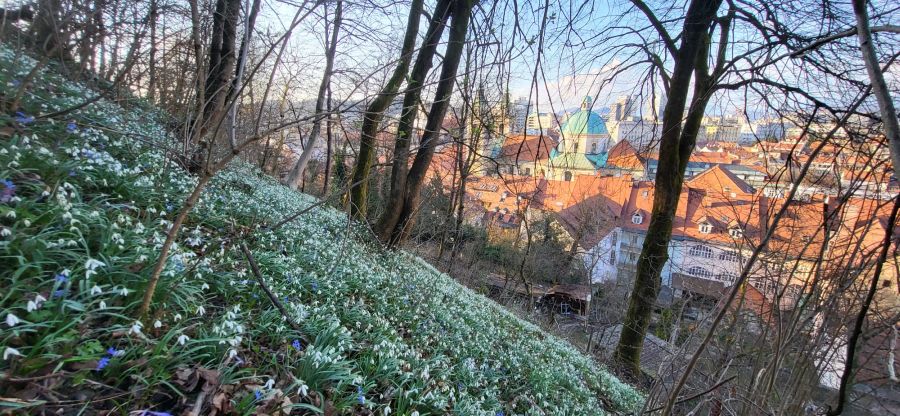
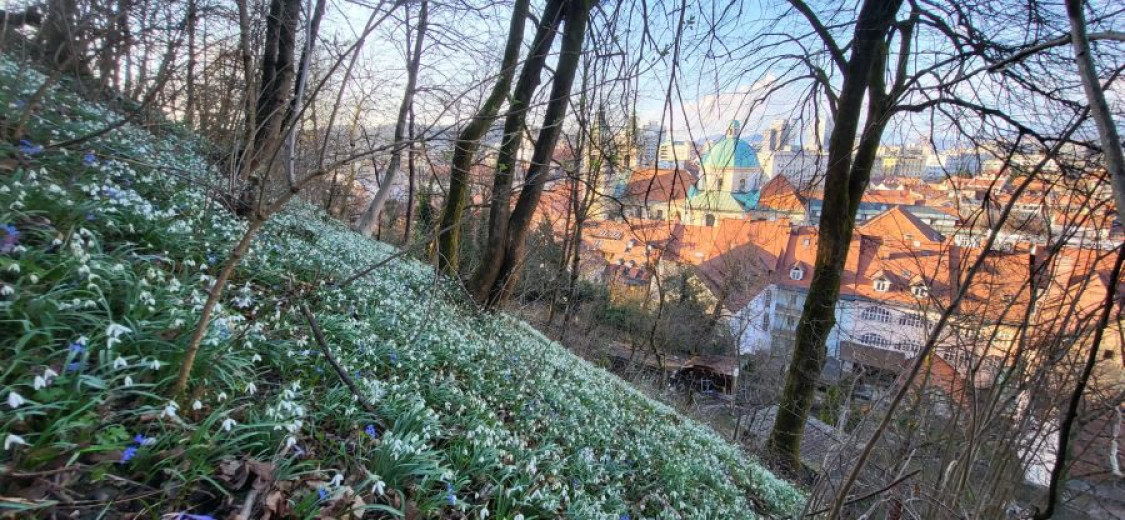 You don’t even have to leave the city to admire snowdrops, the delicate white flowers also adorn Castle Hill in Ljubljana. Photo: Blanka Ravnjak
Slovenia's collection and expertise both also enjoy considerable respect abroad. In England, where renowned snowdrop specialists such as John Grimshaw, PhD, and Matt Bishop are active, there is great interest in Slovenian professional work on snowdrops. Articles by Slovenian experts have also been published in the journal of the Royal Horticultural Society.
According to the interviewees, successful snowdrop collecting requires knowledge, intuition and a touch of luck. Bavcon recalls how, in 2003, at one of the habitats in the Primorska region, he searched for hours for the so-called "star", a form of snowdrop that has three additional white segments above the ovary, arranged symmetrically at equal angles. After five hours of persistent searching, he finally found one, and from then until 2010, they did not find another.
-
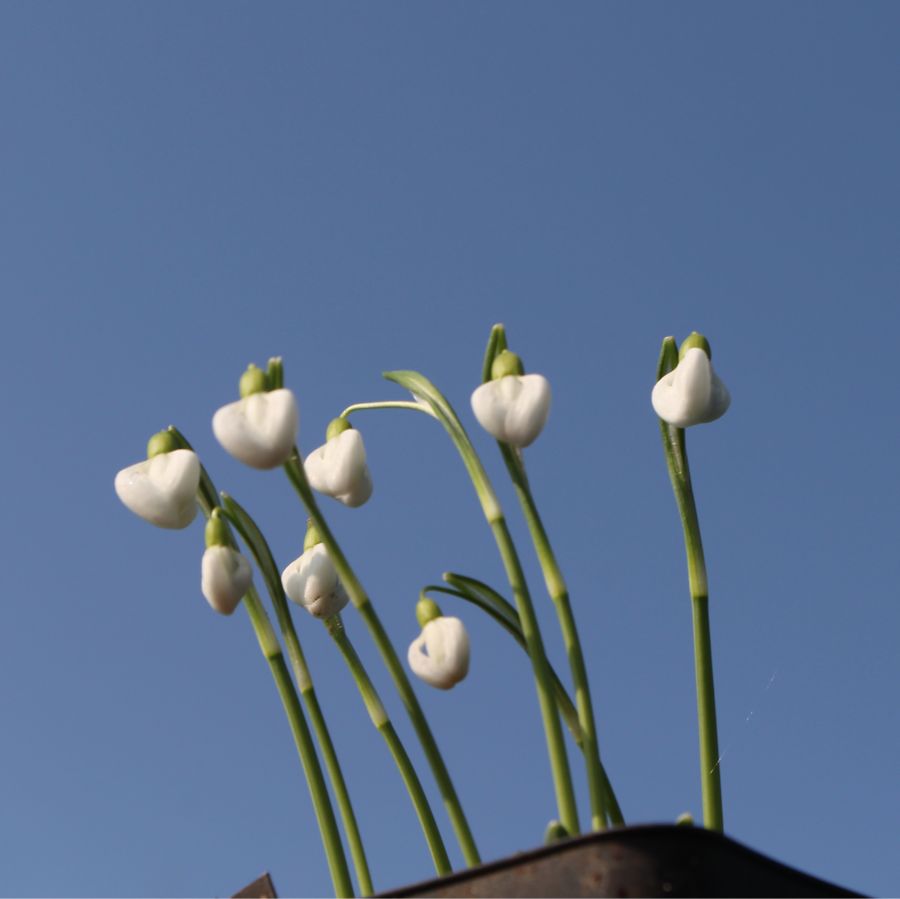
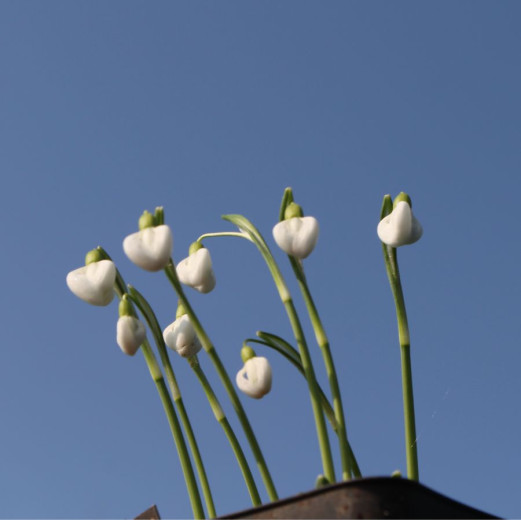 The Cardinal's Hat variety, with its flower shape, resembles a cardinal’s hat. Photo: Blanka Ravnjak
-
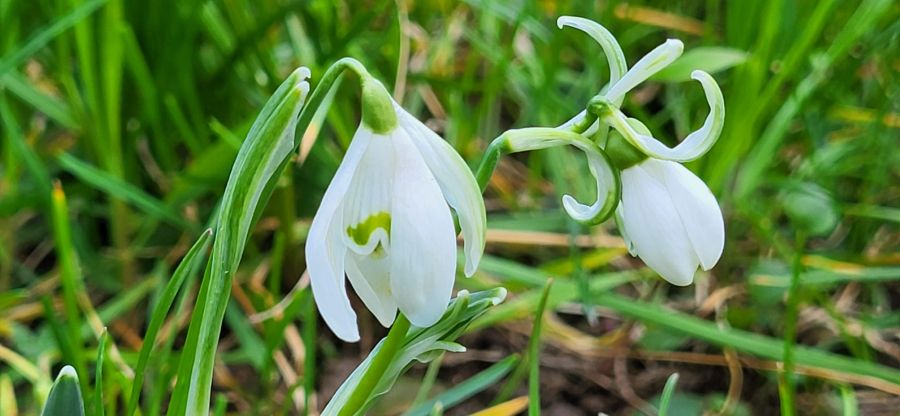
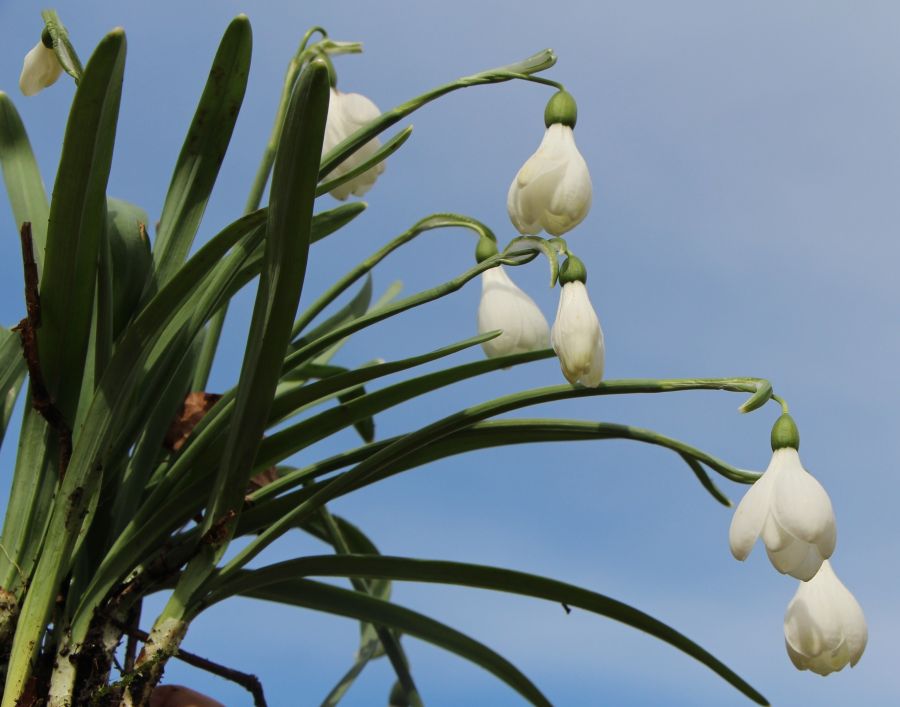
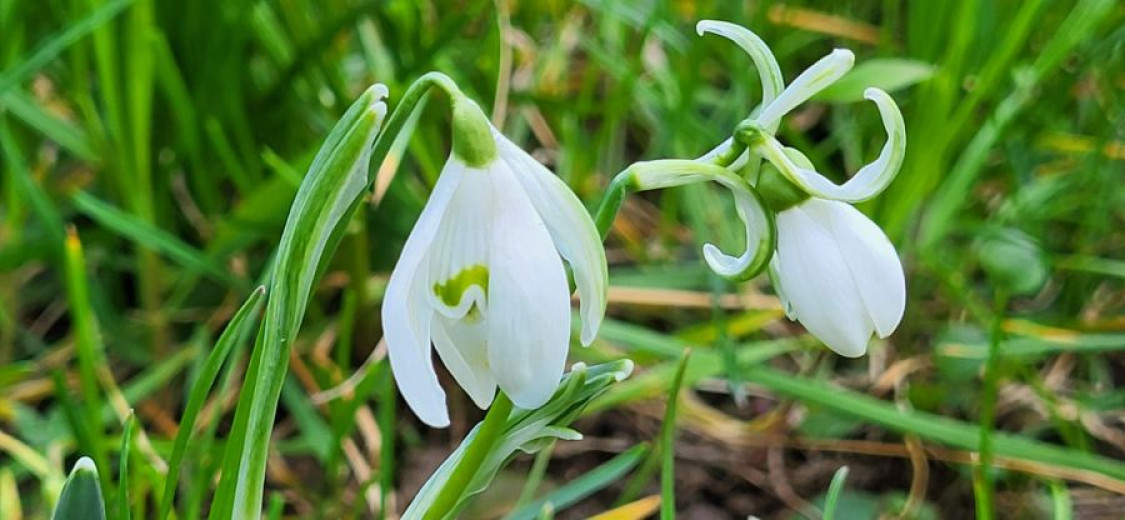 Among the thousands of snowdrops in nature, there are occasionally truly unique specimens. Photo: Jože Bavcon
-
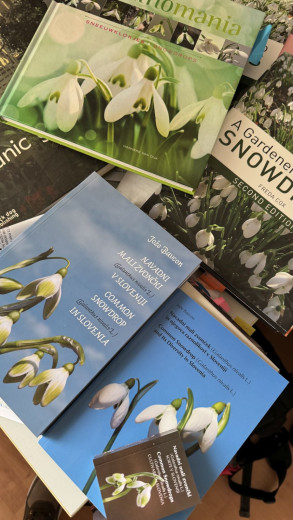 There is a rich body of domestic and international literature on the wealth of Slovenian snowdrops. Photo: UKOM
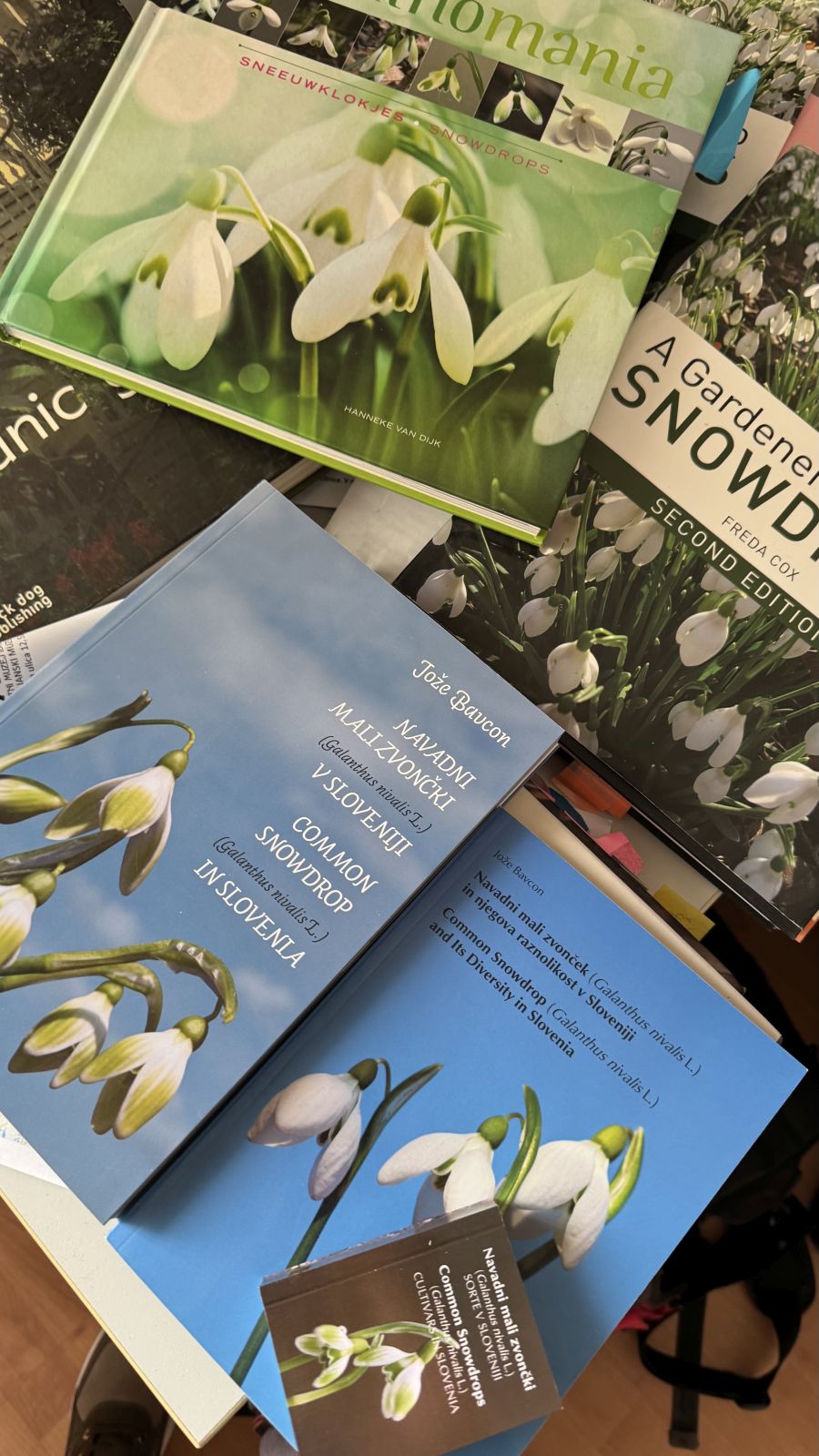
Snowdrops are not only special in terms of their shape and colour – they can also be wonderfully fragrant. Although their scents are usually only detected by pollinators, Ravnjak recalls that, on a cold winter day, they noticed a pleasant fragrance at a snowdrop site. "At the time, only snowdrops were in bloom, so it was clear to me that the scent could not be coming from another plant. The fragrance was very pleasant, similar to lilac. When I started to follow the scent, I discovered a unique specimen. We later named the variety Fragrant Elf."
Did you know?
Research shows that the abundance of snowdrops is also extremely important for pollinators. In her doctoral thesis, Katja Malovrh, PhD, from the Botanical Garden of the University of Ljubljana's Biotechnical Faculty, found that one hectare of snowdrops produces 2.5 decilitres of nectar. A foreign study found that a single flower produces 4 milligrams of pollen per day. With more than 2,340,000 snowdrops growing per hectare, this translates to roughly 9.36 kilograms of pollen. This represents a valuable food source for pollinators in the early days of spring when food is still scarce.
When snowdrops ignite a collector's passion
The fact that the Botanical Garden's collection is truly invaluable and appreciated abroad is also demonstrated by offers to purchase the entire collection. "This is our research treasure, the foundation of our work and knowledge, and that is not for sale," emphasises Ravnjak. They therefore only sell specimens that they themselves cultivate in sufficient numbers. "We sell the interest, not the principal," jokes Bavcon.
On the very day of our interview, they sold six snowdrops worth just over €600. They have many regular customers from abroad. Before Brexit, they had numerous customers from the United Kingdom, but things have become somewhat more complicated since. Years ago, a gentleman from the Netherlands even came to Slovenia for a single day to buy snowdrops. On one occasion, he paid about €8,000 for two ordinary crates.
How competitive the world of snowdrop collectors can be is illustrated by the following anecdote from Bavcon and Ravnjak. “Once, a collector from Germany came to us who, when making her purchase, also bought snowdrops for another collector – or so she claimed. It turned out that she kept all the snowdrops for herself. When the other collector was asked whether he had received the snowdrops, he replied: 'Oh, not at all! If she buys them, she always keeps everything for herself.'"
-
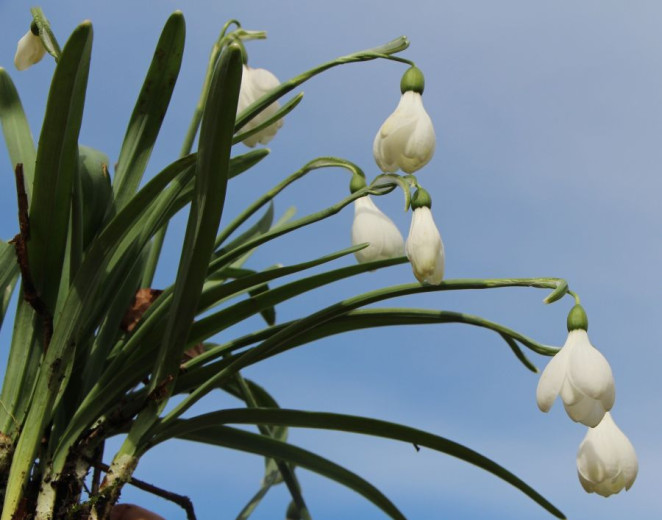 The Perlice variety has nine semicircular perianth segments shaped like rounded drops. Photo: Blanka Ravnjak
-
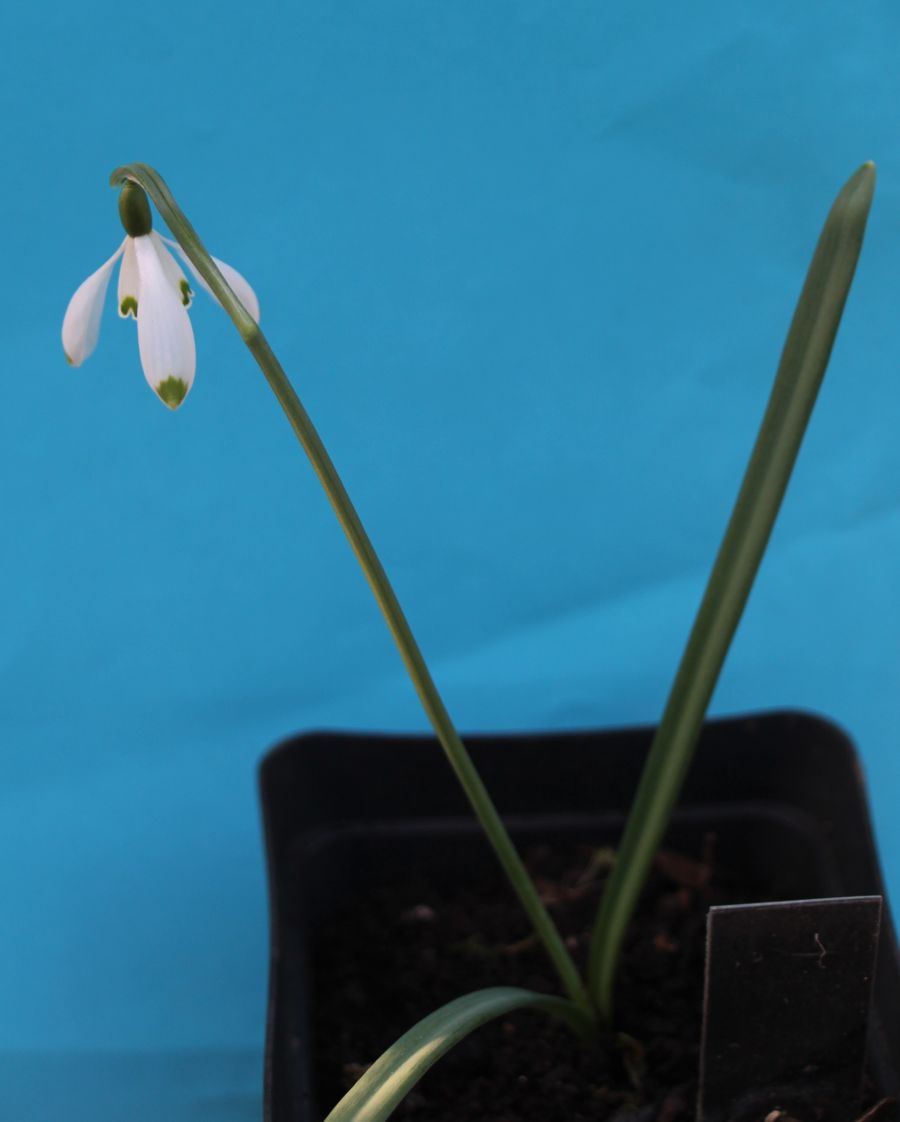
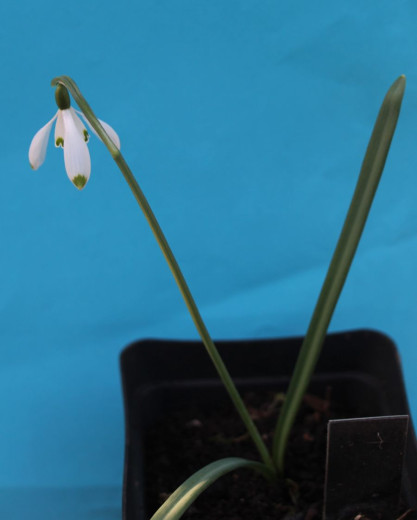 Jakob's Shell is a variety with a distinctive green spot at the tip of the outer perianth segments, shaped like Jacob’s shell. Photo: Blanka Ravnjak
-
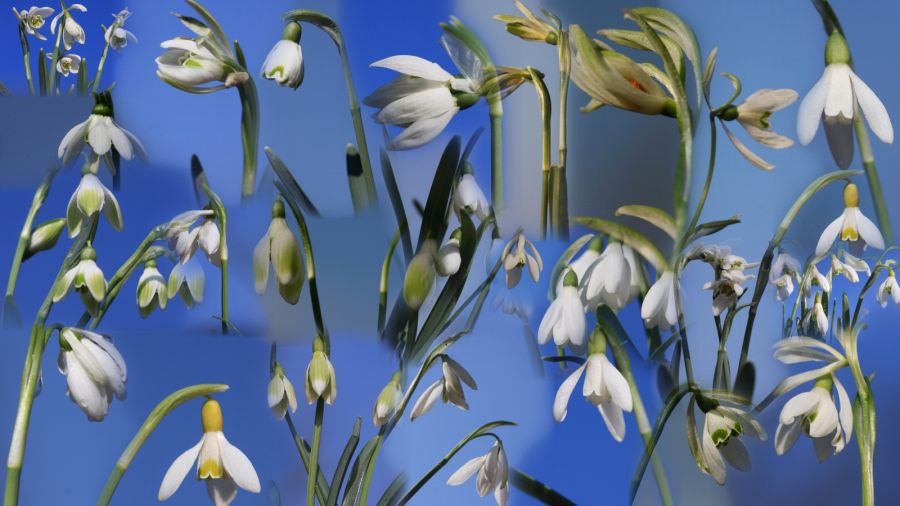
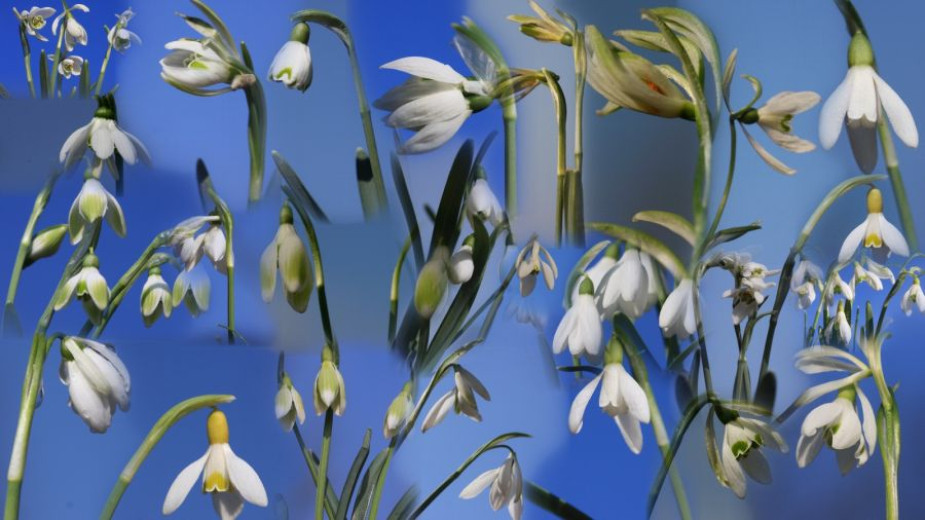 The diversity of snowdrops in Slovenia. Source: Jože Bavcon
English collectors have also warned about a black market where snowdrops from Slovenia are sold online. The Botanical Garden has a permit to collect plants in the wild, but the specimens they gather are first cultivated and propagated in their garden before being offered up for sale. The original plant always remains in the garden. In Slovenia, the snowdrop is a protected plant species.
In 2013, the Nova Gorica cultivar was offered at an auction in England with a starting price of 99 cents; after six days, it sold for €513. A snowdrop cultivar named Ljubljana was sold within two hours for €350.
-
 Thanks to foreign collectors, Slovenian snowdrops also grow outside Slovenia. Source: University Botanical Gardens Ljubljana

Snowdrops as a tourism opportunity
When Slovenian researchers take foreign snowdrop experts into the field in Slovenia, they are always impressed by the so-called carpets of white flowers. For this reason, Bavcon believes that snowdrops could also represent an excellent tourism opportunity for Slovenia. "Just as people travel to the Netherlands to admire tulips, they could come to Slovenia for snowdrops," emphasises Bavcon.