Date: 15. May 2026
Time to read: 3 min
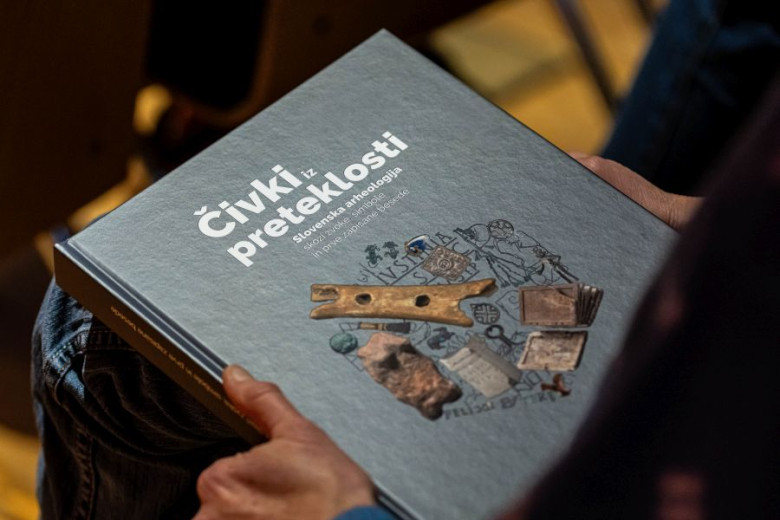
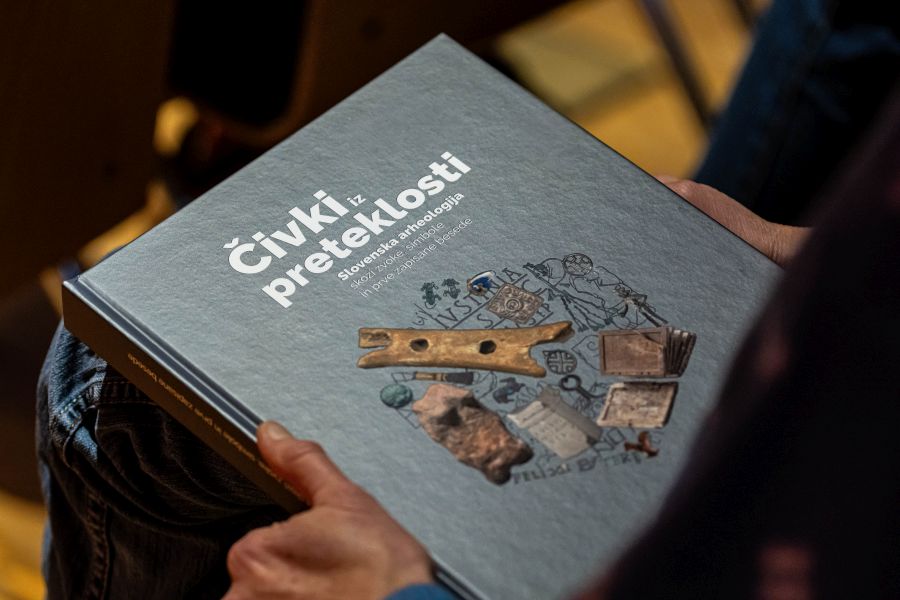
How did people once record their thoughts, express their beliefs, mark their belongings or tell stories? What can ancient artefacts tell us about this today? The exhibition Tweets from the Past (Čivki iz preteklosti), on display at Cankarjev dom in Ljubljana until 23 August 2026, reveals the earliesttraces of symbols, signs and written records in the territory of present-day Slovenia through remarkable archaeological finds. Some of the exhibited objects even hold the remarkable distinction of being the oldest of their kind in the world.
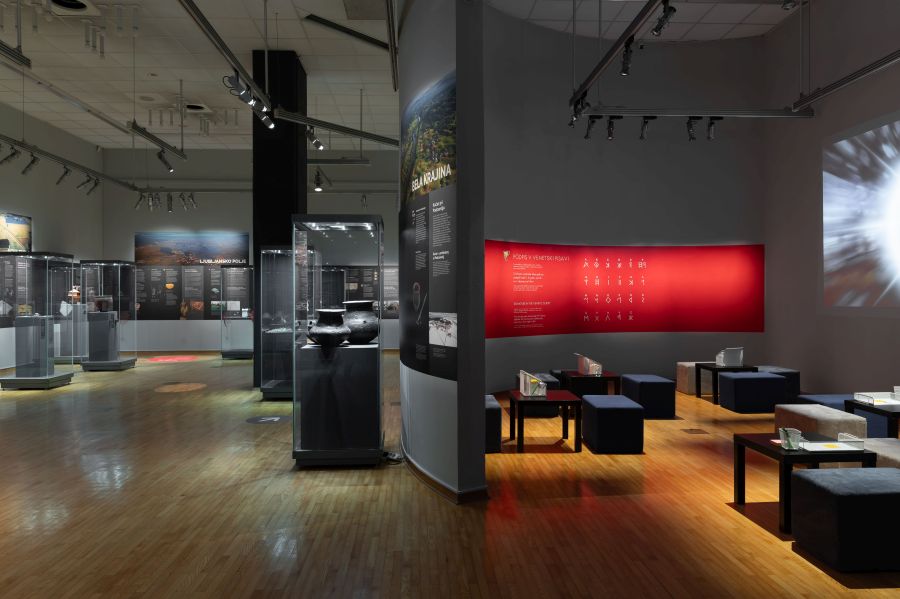
The exhibition gives visitors an insight into the world of ancient artefacts that “speak” through exceptionally evocative traces and inscriptions. Sometimes in the form of mysterious signs, other times as symbols of everyday life or the spiritual world. Tweets from the Past brings together outstanding archaeological finds from museums across Slovenia and uncovers stories about the earliest beginnings of creativity, communication and symbolic thought on the territory of present-day Slovenia.
In one place, visitors can trace the entire history of the territory of present-day Slovenia. Despite Slovenia’s relatively small geographical area, its territory was exceptionally rich and culturally diverse throughout different historical periods. The exhibition invites reflection on human cognitive development, imagination and creativity, as well as on the dimensions of time and space. The exhibition is also a nationwide project involving ten museums from across all Slovenian regions, which gives it additional significance.
These exceptional archaeological finds “echo” from the past, offering insight into the communities and peoples who lived in the territory of present-day Slovenia thousands of years ago. The exhibition presents Slovenian archaeology through three groups of objects: artefacts connected with music; symbolic objects such as prehistoric figurines, depictions of deities, animal motifs and objects with incised signs; and objects bearing the earliest written words.
Each exhibit tells its own story. A story of something once created, used, valued, worn, lost or discarded. Alongside the individual objects, visitors are introduced to important archaeological sites from across Slovenia and invited into a story of the past of the Slovenian lands as revealed through archaeology.
-
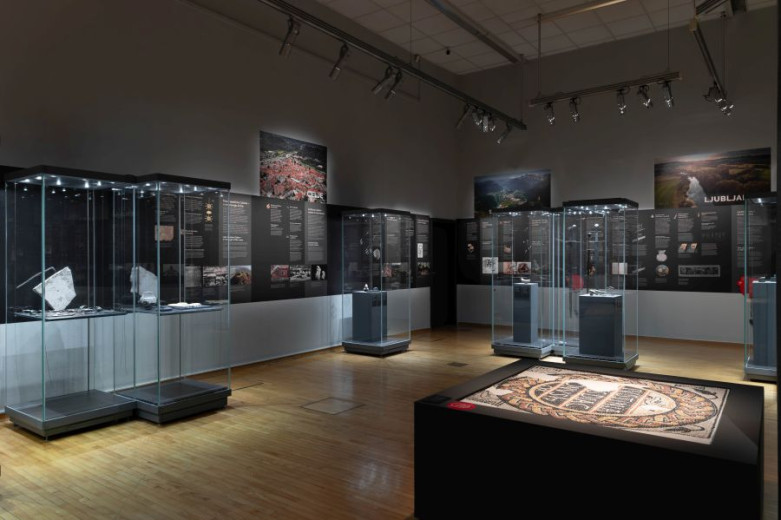 The exhibition gives visitors an insight into the world of ancient artefacts that “speak” through exceptionally evocative traces and inscriptions. Photo: Blaž Gutman/Cankarjev dom
Artefacts holding world records
Three artefacts of outstanding global significance are among the exhibition’s key highlights: the world’s oldest flute, the world’s oldest wheel with an axle, and the world’s oldest bone needle. All three are considered the oldest of their kind in the world.
The Neanderthal flute is held by the National Museum of Slovenia, the oldest wheel with an axle from the Ljubljana Marshes by the City Museum of Ljubljana, and the bone needle from Potočka zijalka Cave by the Celje Regional Museum.
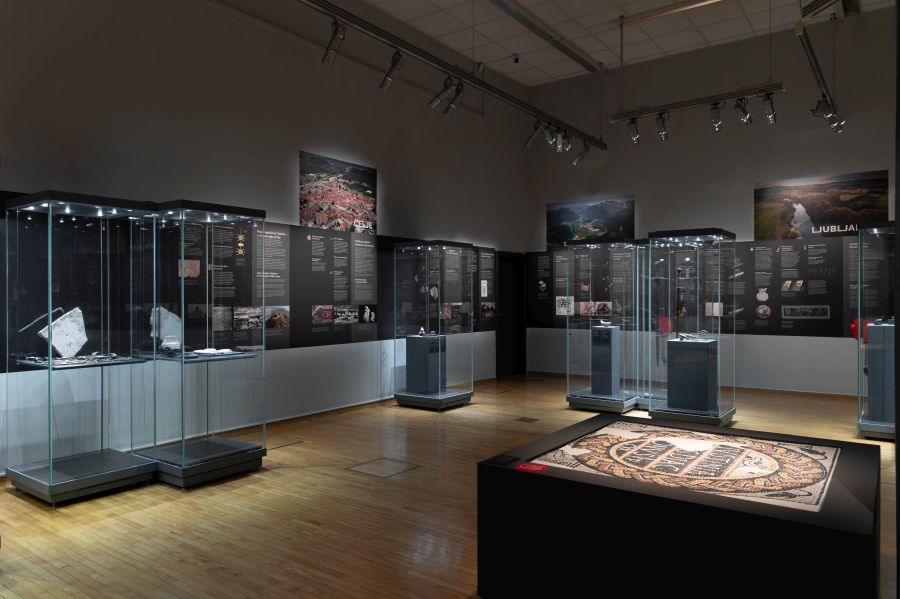
Almost all of the items on display are originals, with the exception of the three oldest artefacts. Because of their exceptional value and the fragility of the materials – particularly bone and wood – the original artefacts never leave their home institutions. The exhibition therefore presents precise replicas instead.
-
 Almost all of the items on display are originals, with the exception of the three oldest artefacts. Photo: Kristina Bursać
The “first lady” of the Slovenian lands
Among the original artefacts, another remarkable find stands out – the “first lady”, a female ceramic figurine from the Copper Age discovered at the Nova Tabla archaeological site near Murska Sobota. Dating from the first half of the 4th millennium BC, it is considered the oldest female figurine discovered in the territory of present-day Slovenia.
Figurines with female features have been known since the Paleolithic period, among the most famous being the Venus of Willendorf; however, they were not equally widespread across different periods and environments. This discovery from the territory of present-day Slovenia represents an important contribution to understanding the symbolism of femininity, fertility, and the spiritual world of prehistoric communities.
Traces of early writing and symbols
The exhibition also explores the origins of writing. The oldest inscriptions from the territory of present-day Slovenia are written in the Venetic script, which visitors can admire on several artefacts, including a silver votive plaque dating from the 2nd or 1st century BC, held by the Tolmin Museum.
A particularly intriguing question is whether the early Slavs already had a writing system. The exhibited pottery from the 6th or 7th centruy AD, discovered at the Nova tabla archeological site, bears a carved saltire, also called Saint Andrew's Cross. Its meaning remains unclear: it may have been a decorative motif, an owner’s mark or even an early form of a written symbol.
As Dr Darja Pavlovič from the National Museum of Slovenia explains, very few sources on early Slavic writing have survived. However, there are indications that the early Slavs used not only symbols, but also simple forms of recording information, such as lines and incisions. They are believed to have recorded them on wooden tablets, which have not survived. The X-shaped symbol on the pottery may therefore have had a meaning beyond mere decoration – perhaps indicating ownership or the significance of the object.
-
The exhibition also explores the origins of writing. Photo: Blaž Gutman/Cankarjev dom
Ancient graffiti
The exhibition also reveals that graffiti are not a modern phenomenon. Fragments of painted plaster bearing ancient graffiti, held by the Gorenjska Museum, testify to the spontaneous expression of people in Roman times. The inscriptions and drawings were created without fixed rules, often using a pointed metal object that the individual happened to have at hand. In contrast to how graffiti are perceived today, they did not carry a negative connotation at the time.
Symbols of the sun, life and the afterlife
Another fascinating artefact is the bronze figurine of a dog from Slovenian Istria, held by the Koper Regional Museum. In the Bronze Age, the dog symbolised loyalty, protection and guidance between the worlds of living and the dead.
Sun-wheel pendants from the Late Bronze Age, held by the Goriška Museum, also tell a remarkable story. For prehistoric communities, the sun was a symbol of life and divine power. Archaeologists speculate that some objects may even have been buried during a solar eclipse as a symbolic way of helping the Sun “not disappear”.
Valuables from daily life
The exhibition also contains artefacts connected with writing and prestige. Among them is a miniature book from Roman times from the Ptuj–Ormož Regional Museum. It consists of small bone tablets bearing traces of wax and writing lines, and testifies to the importance of literacy and the value of books in the ancient world.
A glass necklace from the 5th or 4th century BC, held by the Dolenjska Museum in Novo mesto, features colourful beads in the shape of ram heads, revealing the symbolism of fertility, fire and prestige in Iron Age society.
-
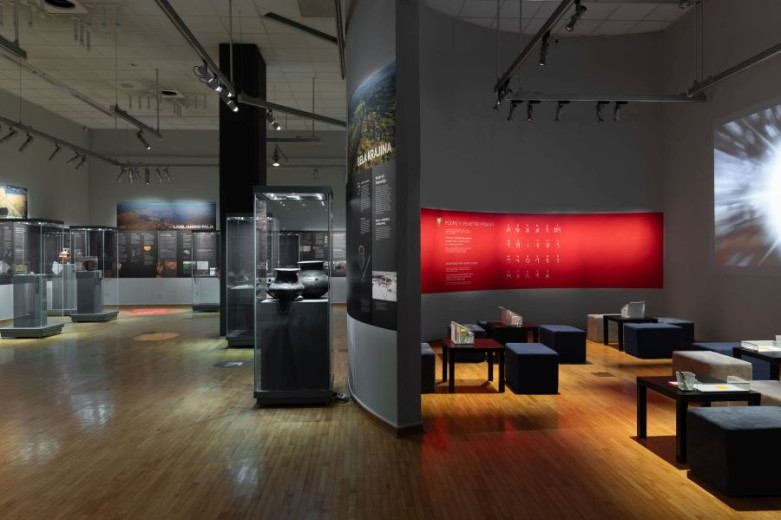 The exhibition offers visitors an insight into a time when people were only beginning to inscribe their thoughts, beliefs and identities into the material world. Photo: Blaž Gutman/Cankarjev dom
A dialogue with the past
Tweets from the Past are not merely an exhibition of items, but tell the tale of the first signs of human communication, symbols and stories that have survived for millenia. The exhibition offers visitors an insight into a time when people were only beginning to inscribe their thoughts, beliefs and identities into the material world.
Each artefact carries its own story, from daily tasks to spiritual beliefs. Together, they create a remarkable mosaic of human history. They also invite visitors to reflect on how they themselves might leave behind their own “tweet” for future generations.
The artefacts were lent by ten Slovenian museums: Celje Regional Museum, Murska Sobota Regional Museum, Ptuj–Ormož Regional Museum, Museums and Galleries of Ljubljana, Dolenjska Museum in Novo mesto, Koper Regional Museum, Gorenjska Museum, Goriška Museum in Nova Gorica, Tolmin Museum.