Date: 7. May 2026
Time to read: 1 min
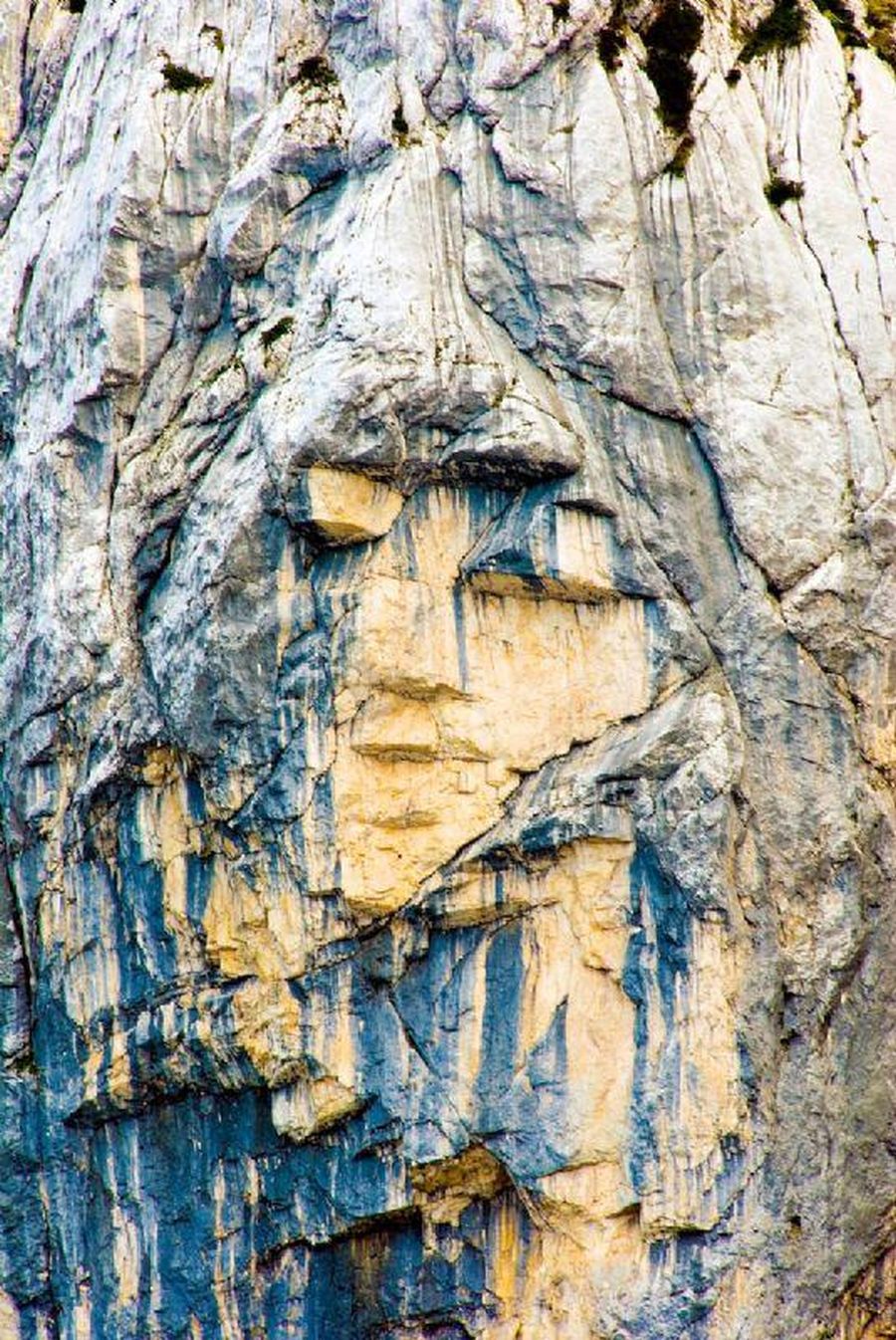
The Heathen Maiden (Ajdovska deklica) is one of the most beautiful natural landmarks in the Slovenian Alps. It is a strikingly clear image of a woman’s face, carved by nature into the northern wall of Mount Prisojnik. Best seen from the Vršič Pass, this stone figure is not only a geological curiosity but also the central character of one of Slovenia’s most recognisable folk tales.
In these tales, she appears as a giantess (ajd), a being from ancient times when giants are said to have roamed the Slovenian landscape, shaping the world around them with their immense strength. Unlike many legends in which giants are portrayed as wild or dangerous, she is described as not only strong but also kind and compassionate. Her image is tied to two landscapes: the forests beneath Crngrob and the high-mountain world of Prisojnik above the Vršič Pass. These ties give the legend a special depth. The Maiden is both an earthly and a mountain being, a helper of people and a guardian of secrets.
Her story explains unusual natural phenomena, such as the stone face in the rock, while also carrying messages about life, responsibility and the consequences of one's actions.
Today, when we gaze upon her face in the rock or listen to old tales, we are not merely looking at a legend, but at a part of cultural heritage that shaped people’s relationship with the world around them for centuries.
-
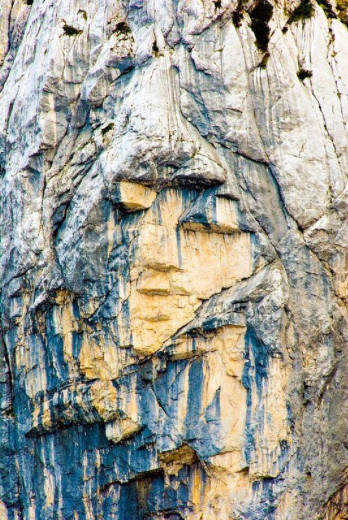 The image itself was formed through the freezing of water in rock crevices, erosion caused by rain and wind, and the crumbling of limestone, which erodes at different rates and shapes the relief. Recently, part of the nose has broken off due to frost. The appearance therefore continues to change slightly over time because of natural processes. Photo: wikipedia
The Church in Crngrob
A very long time ago, a heathen maiden lived in the forests of Crngrob, a giantess wandering the land with her flock of sheep. Her life was deeply connected to nature. Whenever she was hungry, food was always plentiful, and when she was thirsty, she would place one foot on Mount Šmarna gora and the other on Mount Šmarjetna gora, bend down to the Sava River, and drink directly from it.
One day, under the orders of a haughty chieftain, serfs had to build a church in Crngrob. The labour was extremely arduous, as they had to carry enormous stones on their backs that wounded their bodies and drained their strength. When the heathen maiden passed by, she took pity on their suffering.
She offered to help and soon became indispensable to the construction. She carried huge stones in her apron and scooped water for the mortar in a giant bucket.
Her help was invaluable, yet it also became her downfall. Exhausted by the effort and weakened by the cold, she fell ill and died. Deeply grateful to her, the serfs buried her in the forest and hung one of her ribs inside the church as a memorial. According to folk tradition, a drop of blood falls from this rib once every year. This was believed to be a mysterious omen: when the last drop of blood falls, the world will come to an end.
-
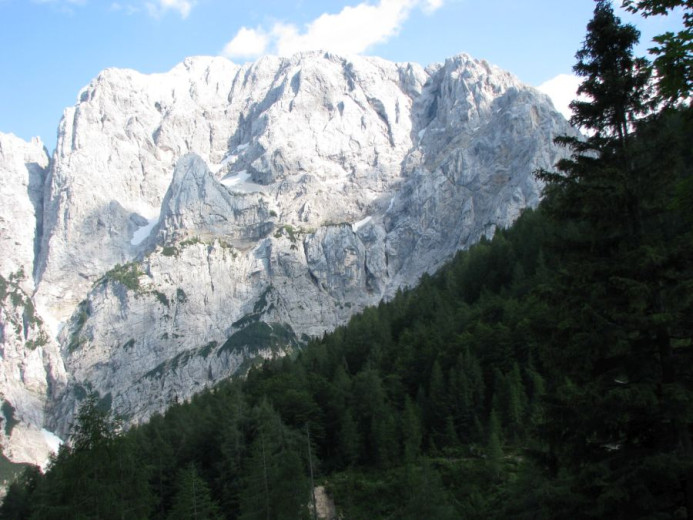 The stone face of the Heathen Maiden in the northern wall of Prisank is best viewed from the scenic hill near the Poštarska Hut at Vršič, though it can also be seen from the Erjavčeva Hut. Photo: wikipedia
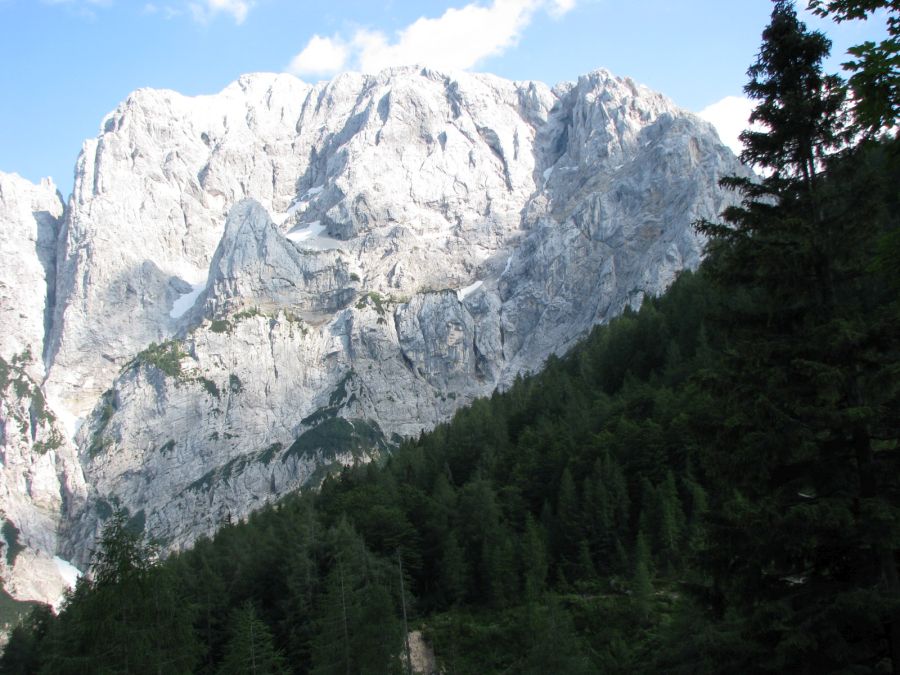
Another legend places the heathen maiden high in the mountains, in the rocky face of Prisojnik above the Vršič Pass. There she still watches over the Trenta Valley today as a petrified face with large eyes.
While she was alive, she protected mountaineers and pack traders travelling along dangerous routes between the valleys.
During winter storms, when snow, fog and wind obscured the paths, she would step out of her hiding place and guide people to safety. She also possessed the gift of prophecy.
Her fate, however, was sealed by a prophecy in which she foretold that a certain boy would one day kill Zlatorog, the white chamois with golden horns. Her sisters believed she had revealed too much, so they punished her by turning her into stone. Thus she remained forever fixed in the mountain wall.
For a long time afterward, people continued to honour her. Pack traders crossing the Vršič Pass would leave bread, cheese and wine upon the rocks as offerings of gratitude. These gifts symbolised the bond between humans and nature, as well as respect for powers beyond human understanding.
-
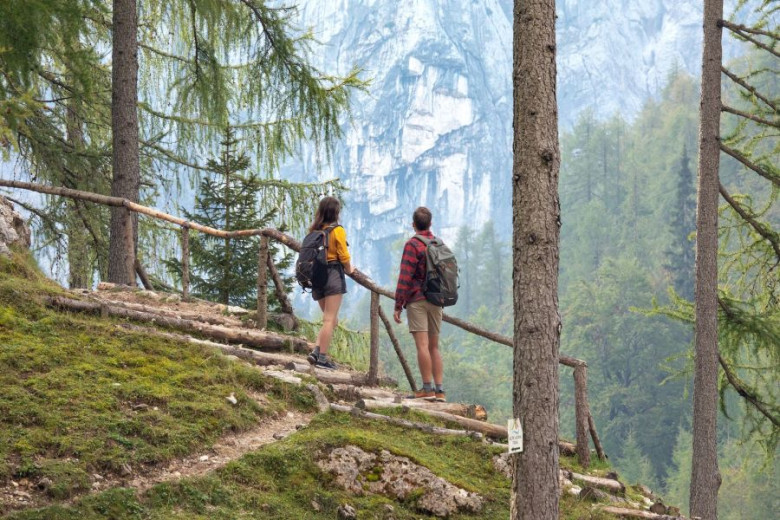 In written sources, however, the legend only began to appear in the 19th century, when Slovenian collectors of folk traditions - such as ethnographers and writers - started recording tales from the Alpine world. Photo: Jošt Gantar/ slovenia.info
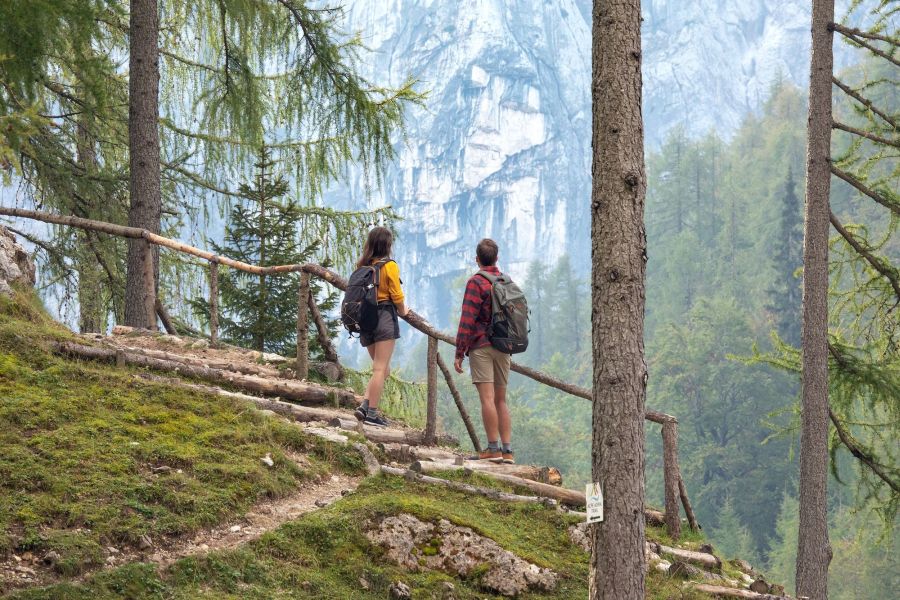
More Than just a Legend
Today, the Heathen Maiden remains a symbol of kindness, sacrifice and responsibility. Her stone face is not merely a natural curiosity, but a reminder of a time when people believed in close connection with nature and respected its mysteries. Anyone who pauses beneath the walls of Prisojnik and looks upward may still feel that the legend lives on — in the wind, the silence and the mysterious gaze of the stone guardian.