Date: 19. May 2026
Time to read: 1 min
The Bohinj Railway is celebrating its 120th anniversary this year, having been opened in 1906 during the Austro-Hungarian era. It ranks among the most technically challenging and, at the same time, most picturesque railway lines in this part of Europe. Still in operation today, it connects the Gorenjska and Primorska regions and is recognised as an important technical and cultural monument. It is also one of the most beautiful railway lines in the world.
The idea for the Bohinj Railway developed as part of a broader plan to improve railway connections between the interior of the Austro-Hungarian Empire and the Adriatic Sea. The main objective was to establish a reliable link between the Koroška and Gorenjska regions and the port of Trieste, which held great economic and strategic importance. In addition to commercial interests, the railway line was also important from a military perspective, as it facilitated the faster movement of troops and supplies towards the western part of the empire.
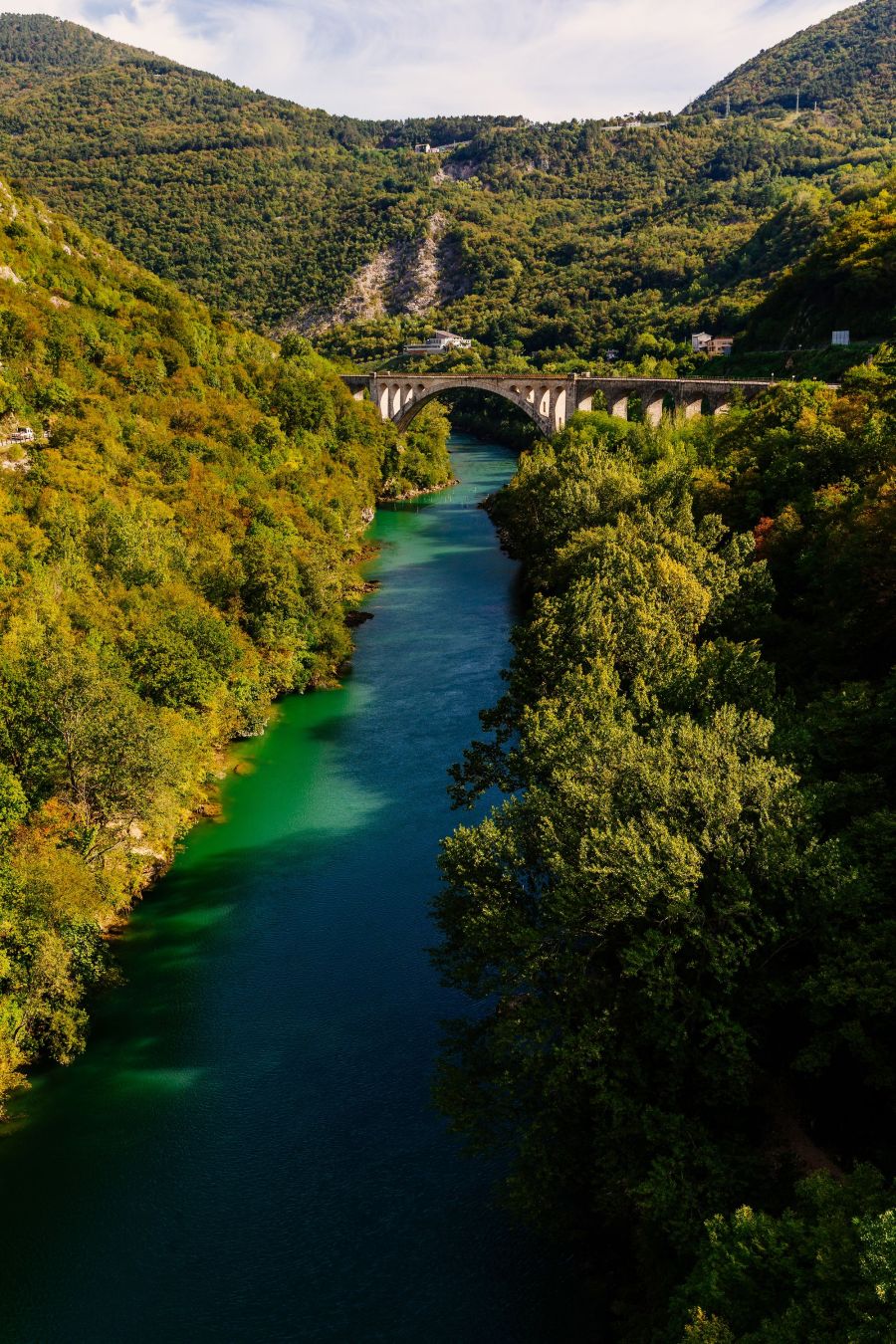
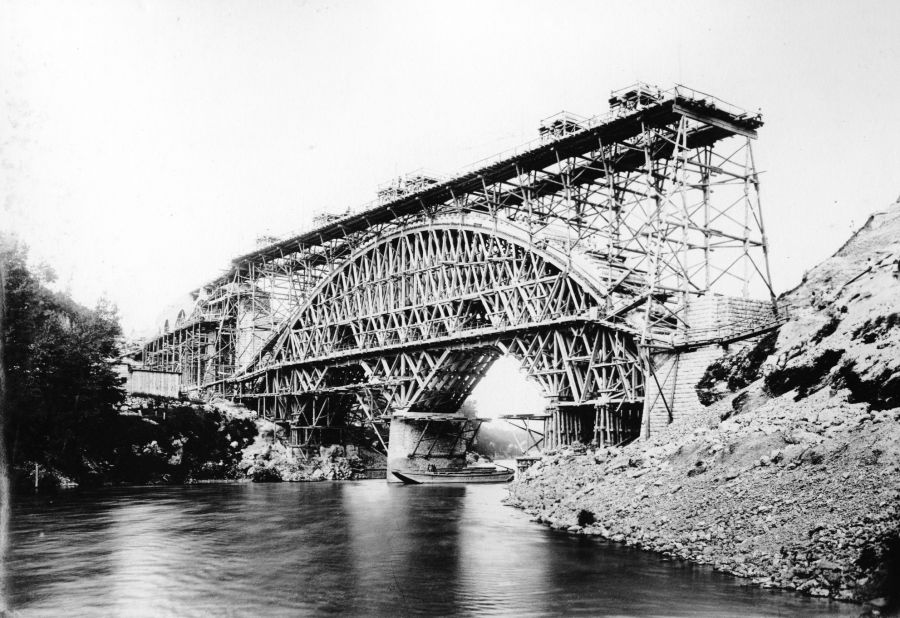
The construction of the railway line was extremely demanding as it had to cross the Julian Alps, a major natural barrier. One of the greatest engineering feats is the Bohinj Tunnel, over six kilometres long, which was among the longest railway tunnels in Europe at the time of its opening. This tunnel enabled passage between the Bohinj and Soča valleys and became a key element of the entire line. In addition, engineers built numerous bridges and viaducts, among which the Solkan Bridge stands out for featuring the largest stone arch in the world.
-
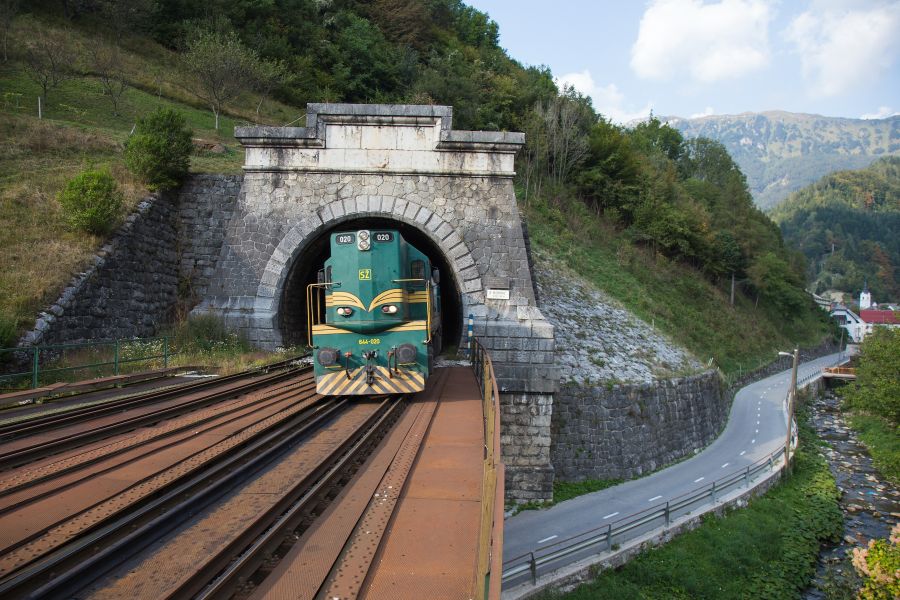
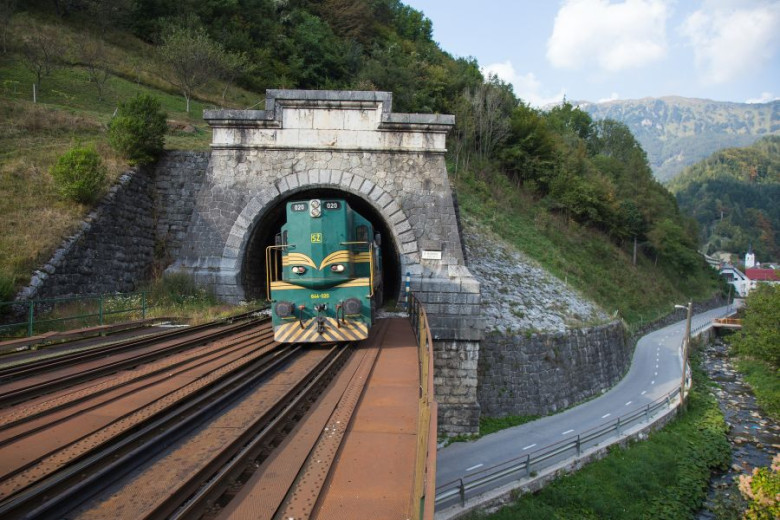 This year, additional trips will be organised to mark the 120th anniversary of the line. Photo: Tanja Gorjan
-
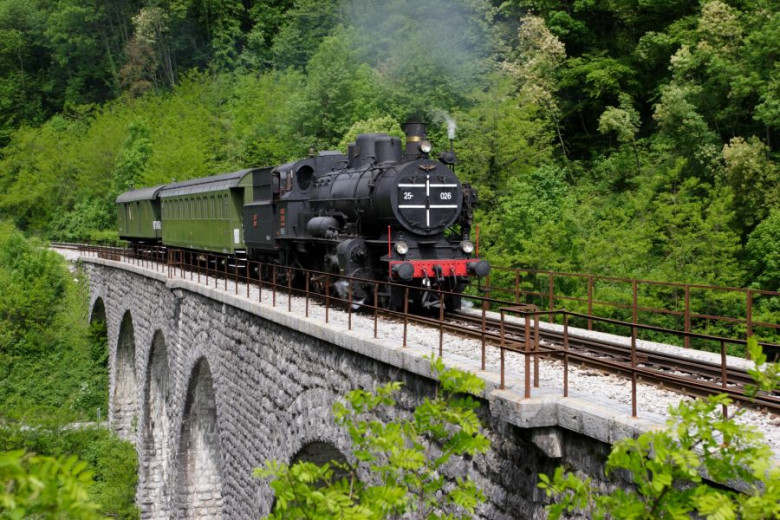 Visitors can travel along the Bohinj Railway on a museum train, which normally operates from May to November. Photo: Slovenske železnice Railway Museum archive
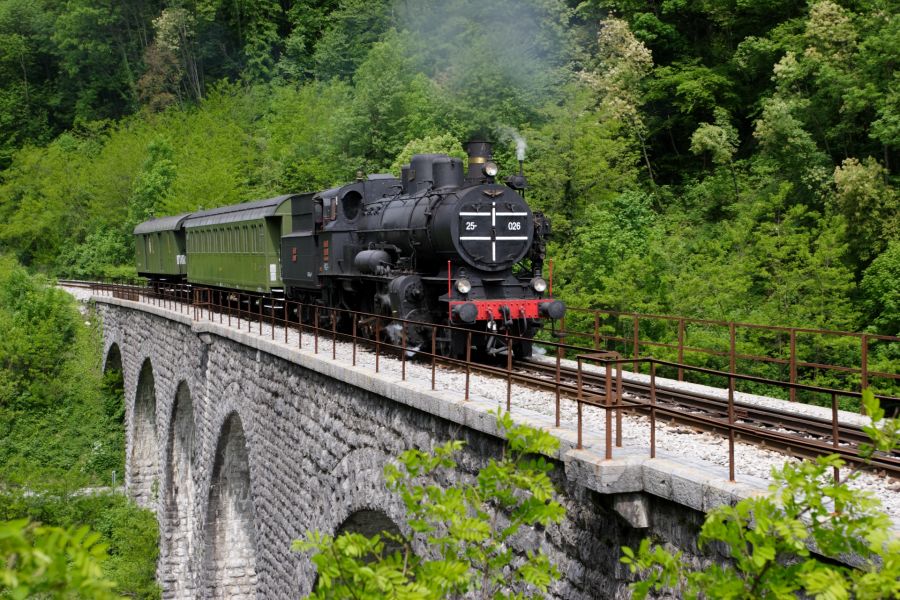
Lonely Planet ranks it among the most scenic train trips
This year, the Bohinj Railway also received significant international recognition, as Lonely Planet ranked the journey along this route among the 10 most scenic train trips in Europe. .
It undoubtedly deserves this recognition, as it is not only one of the most picturesque railway routes in the world but also technically diverse. The line includes a total of 28 tunnels – the longest being the Bohinj Tunnel beneath Mount Kobla (6,327 m) – five galleries and as many as 65 bridges.
It takes passengers from the Alpine valleys of the Gorenjska region through Bled and Bohinj, beneath the Julian Alps, and onward into the valley of the Soča River, considered one of Europe’s most beautiful rivers, all the way to Nova Gorica.
It is the transition from the Alpine landscape to one with a Mediterranean feel that gives the railway its distinctive character, making it especially popular today among tourists and railway enthusiasts alike.
Every passage through the Bohinj Tunnel, every journey across the Solkan Bridge or along the Soča River is simultaneously a journey through space and time. Although trains run more slowly than on modern main lines, this gentler pace allows passengers not simply to pass through the landscape but to truly experience it.
-
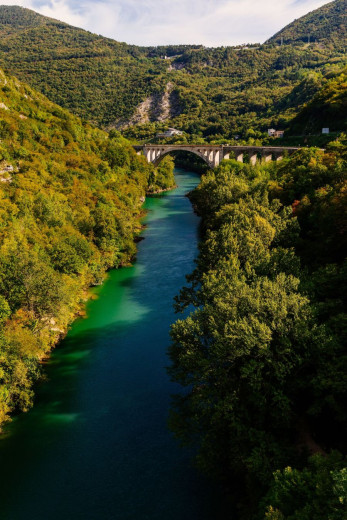 The Solkan Bridge is the largest stone-arch railway bridge in the world. Photo: Ernad Ihtijarević/ slovenia.info
Stories about the railway
Through various stories, anecdotes and historical records, the Bohinj Railway has evoked a wide range of emotions in people: sadness, joy, admiration, respect and astonishment. Its construction was considered an extraordinary technical feat, which is why some believed the tunnel was even “cursed”; in reality, it was one of the most challenging railway construction projects of its time.
The Solkan Bridge became a symbol of technical expertise and engineering ambition.
The railway line, meanwhile, played an important role during the First World War, when it served as a crucial supply route for the Isonzo Front. At night, trains ran almost continuously and often without lights, so as not to be detected by enemy artillery. Locomotive drivers had to rely primarily on experience, intuition and knowledge of the distances between tunnels, which made their work extremely dangerous. After the Second World War, old Austrian locomotives continued to operate on the line for many years, earning the nickname “old ladies” among railway workers because of their reliability. Among the locals, a humorous saying has endured that the slow speed and numerous bends give passengers plenty of time to reflect. It is precisely this unhurried pace that is today considered one of the greatest charms of the Bohinj Railway.
-
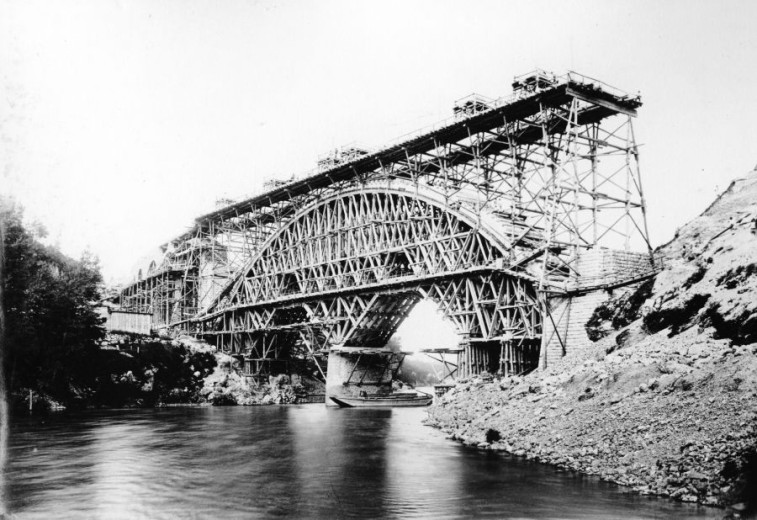 The bridge was designed by the architect Rudolf Jaussner and engineer Leopold Oerley, initially with an 80-meter (260 ft) stone arch, and built in 1904 and 1905. Its central span was built by the Viennese construction company Brüder Redlich und Berger and the end viaducts were built by the Italian construction company Sard, Lenassi & Co, incorporated in Gorizia for this project by the Italian engineer Giovanni Battista Sard of Turin. Photo: Tolmin museum archive
-
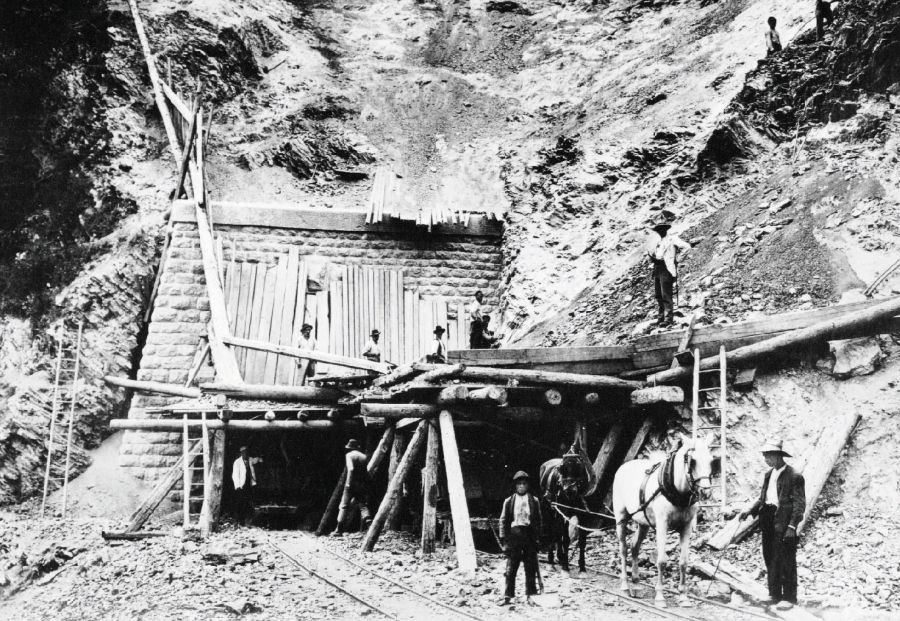
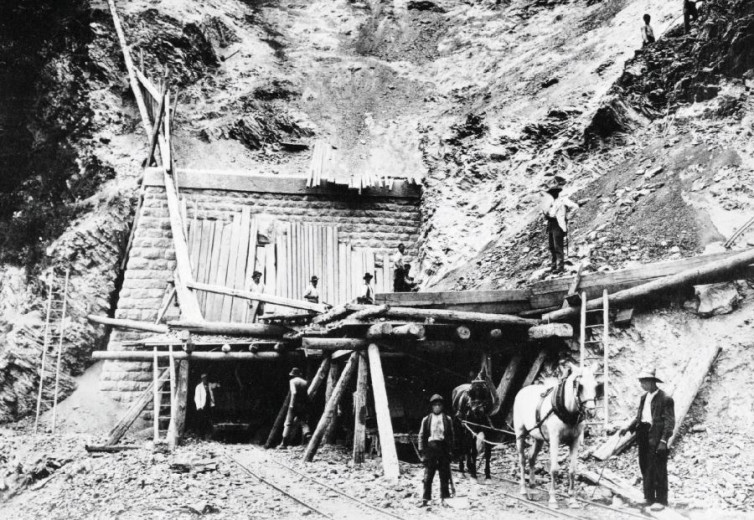 The Bohinj Tunnel, over six kilometres long, which was among the longest railway tunnels in Europe at the time of its opening. Photo: Tolmin museum archive
Special programme marking the 120th anniversary of the Bohinj Railway
As part of a special operating schedule, train services will run on 23 May 2026 on the routes Ljubljana–Bled Jezero and Bled Jezero–Bohinjska Bistrica, including several return journeys between Bohinjska Bistrica and Bled Jezero. The schedule will continue on 24 May 2026 with a service operating from Bohinjska Bistrica via Bled Jezero to Ljubljana.
Additional special round-trip services will take place on 31 May and 6 June 2026, when multiple train services will be organised throughout the day on the Bohinjska Bistrica–Bled Jezero–Bohinjska Bistrica route. Special services will also be organised on 13, 14, 20 and 21 June 2026 on the route between Bohinjska Bistrica–Most na Soči–Nova Gorica and back. This exceptional route winds through picturesque valleys, across majestic bridges and through numerous tunnels, creating a unique and unforgettable railway experience.
Experience Slovenia by train
The Bohinj Railway is a reminder of a time when engineering boldness, political needs and natural constraints together shaped one of the most demanding railway routes in this part of Europe. In its tunnels, across the bridges and along its bends, the story of the builders’ perseverance, the strategic interests of the former empire and the lives of people who lived, worked and travelled along the railway line can still be read today.
It is a journey through the landscape of diverse colours, scenes and cultural features.
Would you like to truly experience Slovenia and its diversity? Buy a ticket for a journey along this unique railway line.