Date: 24. April 2026
Time to read: 1 min
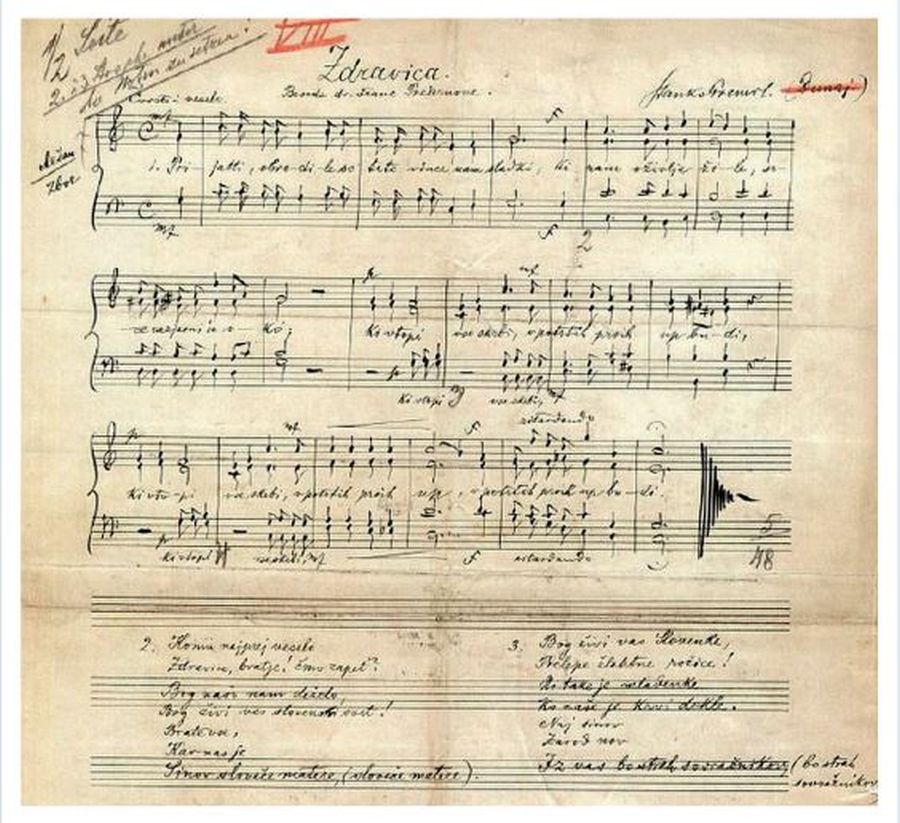
The seventh stanza of the poem Zdravljica (A Toast), written by France Prešeren, is used as Slovenia’s national anthem, while the melody was adapted from the choral composition of the same name by Stanko Premrl. In commemoration of all those connected to its creation, the House of Zdravljica was opened in the birthplace of Stanko Premrl in Podnanos near Vipava. There, visitors can learn about the history behind Slovenia’s national anthem and the people who contributed to its creation.
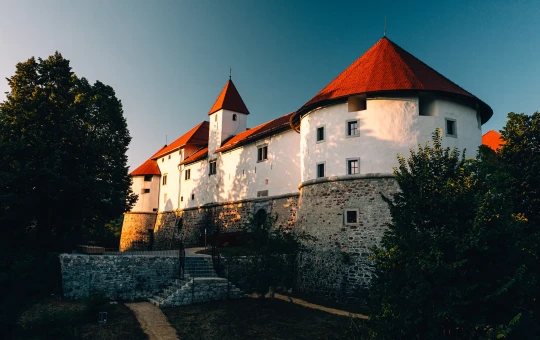
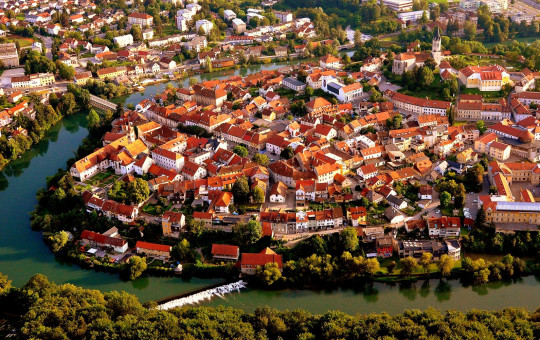
The dilapidated building in the centre of the village was renovated by the Municipality of Vipava, with support from the Interreg BEroots project, and transformed into a modern interpretive centre. Although the initiative to present Stanko Premrl’s legacy to the public dates back several decades, the decisive step towards its realisation came with a civil society initiative in 2010, when the project was brought to life as part of cross-border cooperation.
-
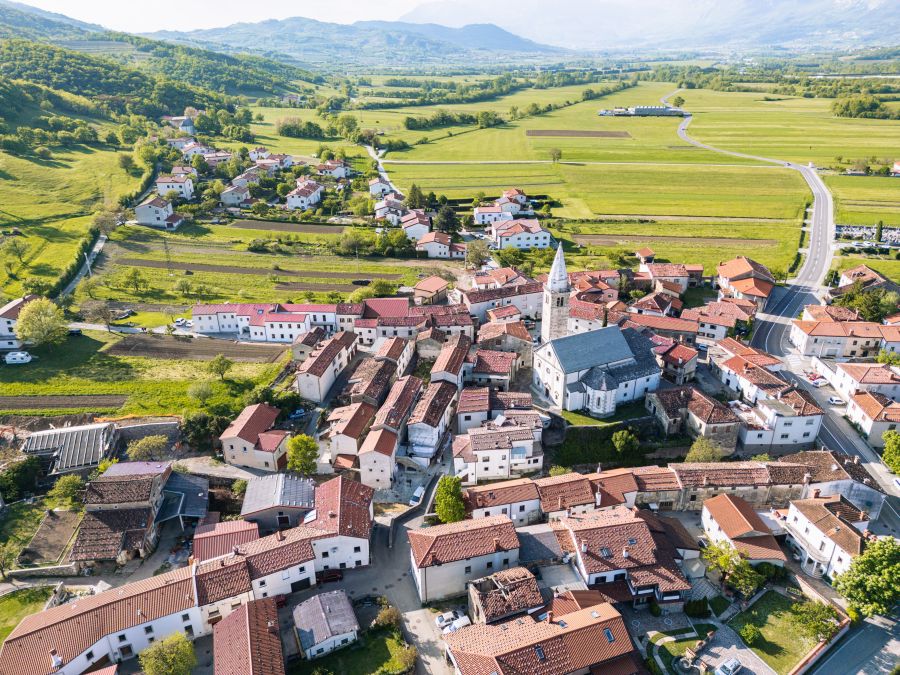
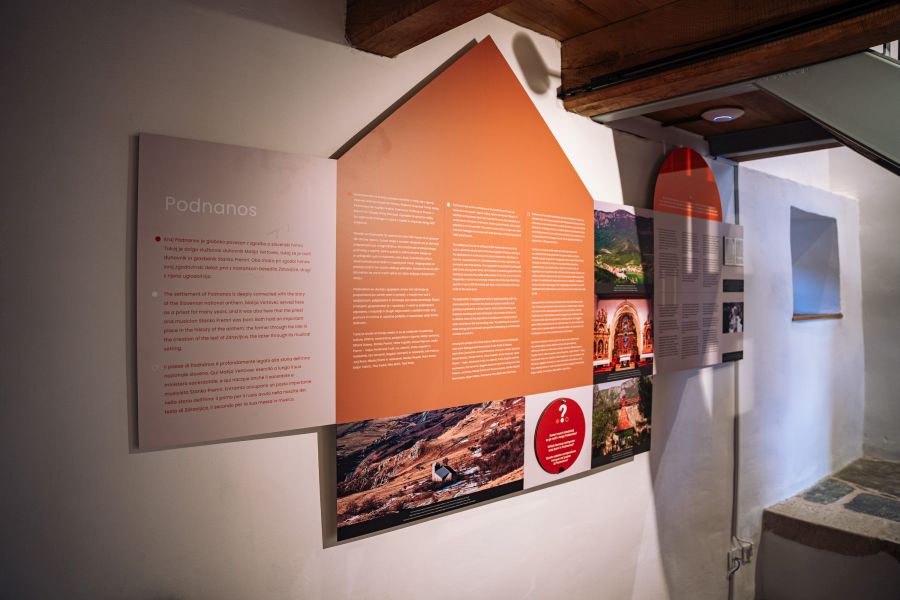
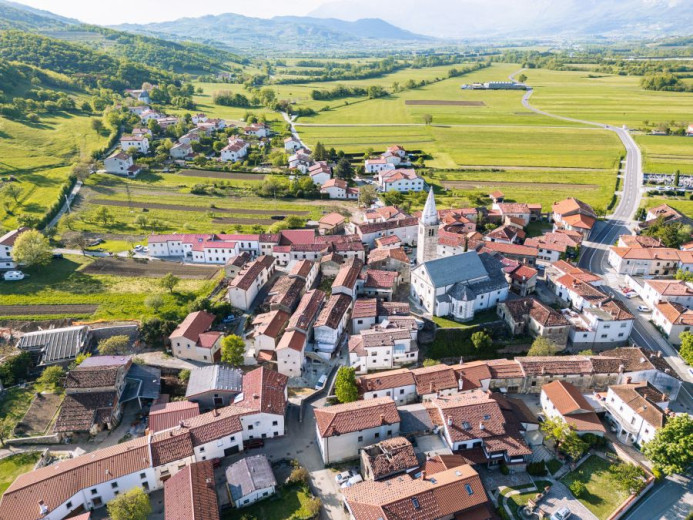 It is no coincidence that the house is located in Podnanos. In the centre of the village, right beside the stone bridge over the Pasji rep stream, Stanko Premrl was born in 1880. Photo: Luka Fabčič
-
 The House of Zdravljica is not only a museum space, but tells the story of the poem that became a symbol of national identity. Photo: Luka Fabčič
The exhibition on the origins of the national anthem
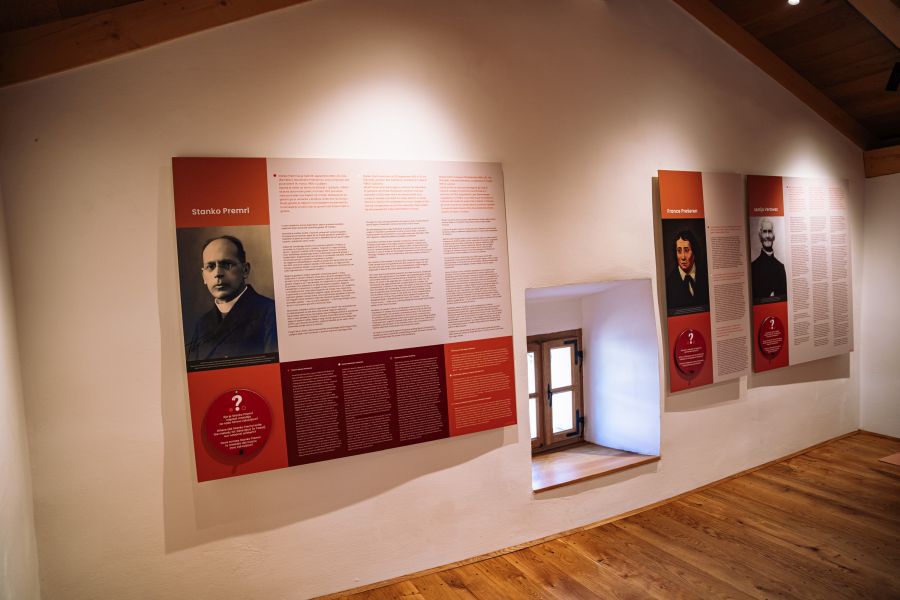
The exhibition uses modern approaches and interactive elements, placing key figures of Slovenian cultural history at the forefront. Particular focus is given to Matija Vertovec, who encouraged the poem’s creation, and France Prešeren, its author.
Although Stanko Premrl is less widely known than France Prešeren, he is nonetheless considered one of Slovenia’s most important composers.
He composed more than 2,000 works and left a significant mark on both sacred and secular music. His connection with Prešeren is not only artistic but also symbolic, as both the place and the idea of national identity are intertwined.
-
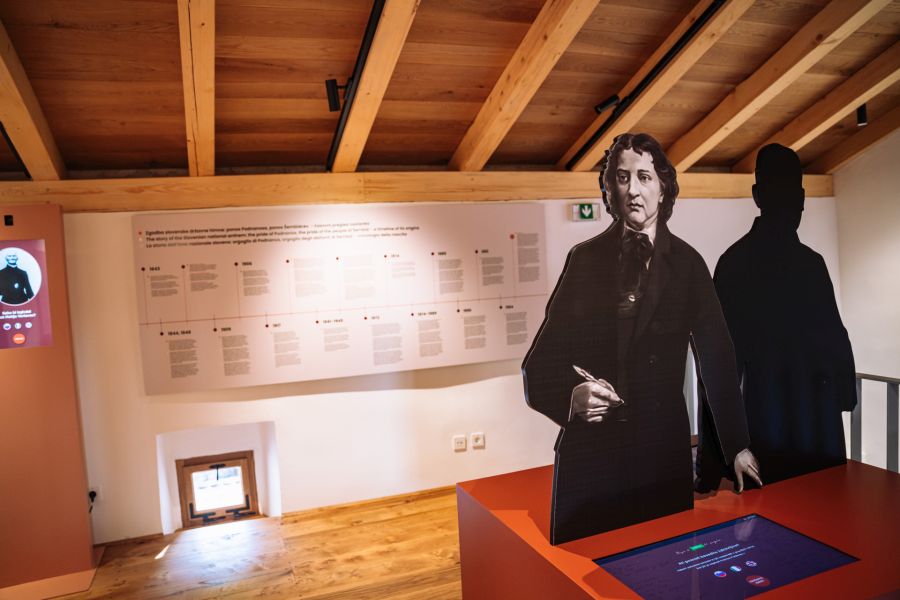
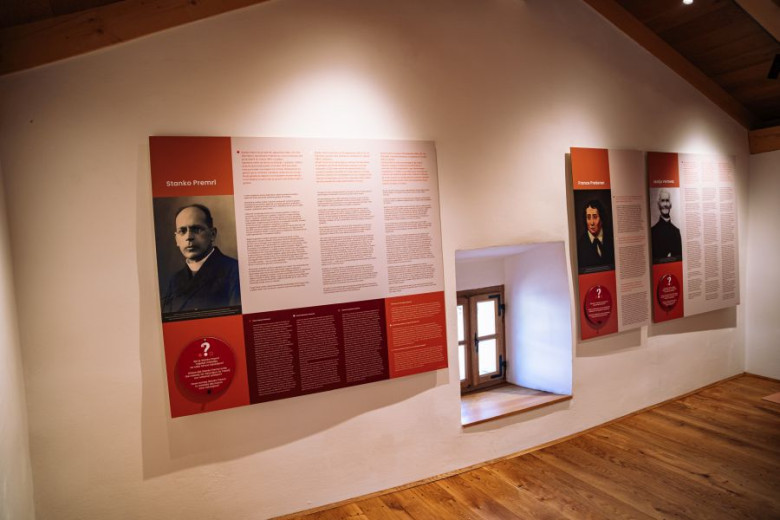 At the House of Zdravljica, visitors can learn about the period in which the national anthem was created, its various musical settings, the people who played a key role its creation, and the rich heritage of the Vipava area. Photo: Luka Fabčič
-
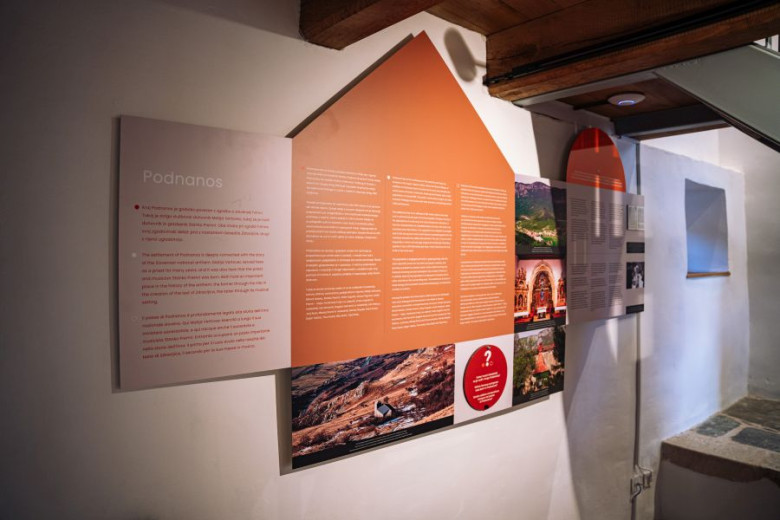 The exhibition engagingly presents the origin of Zdravljica and its wider historical and cultural context to the public. Photo: Luka Fabčič
An unusual initiative
In 1843, over six decades before the unveiling of Prešeren’s monument, when Kmetijske in rokodelske Novice (Farming and Handicrafts News) began to be published, Matija Vertovec, a 59-year-old vicar from Št. Vid near Vipava, quickly became one of its correspondents. He was a keen advocate of viticulture and therefore urged France Prešeren to write an ode to the vine.
Prešeren did not respond immediately; however, in 1844 he composed a poem that surpassed its original purpose.
Its message extended beyond viticulture and became an expression of freedom, unity and friendship between nations.
The path to its publication, however, was not straightforward. The poem was subject to censorship and circulated only in manuscript form for a long time, until it was finally published in 1848.
Over the decades, it was set to music several times, but the decisive contribution was Premrl’s composition from 1905, written during his studies in Vienna.
It was this melody that later bacame the basis of the Slovenian anthem.
-
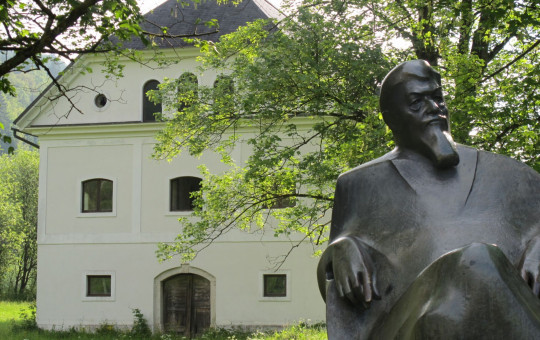
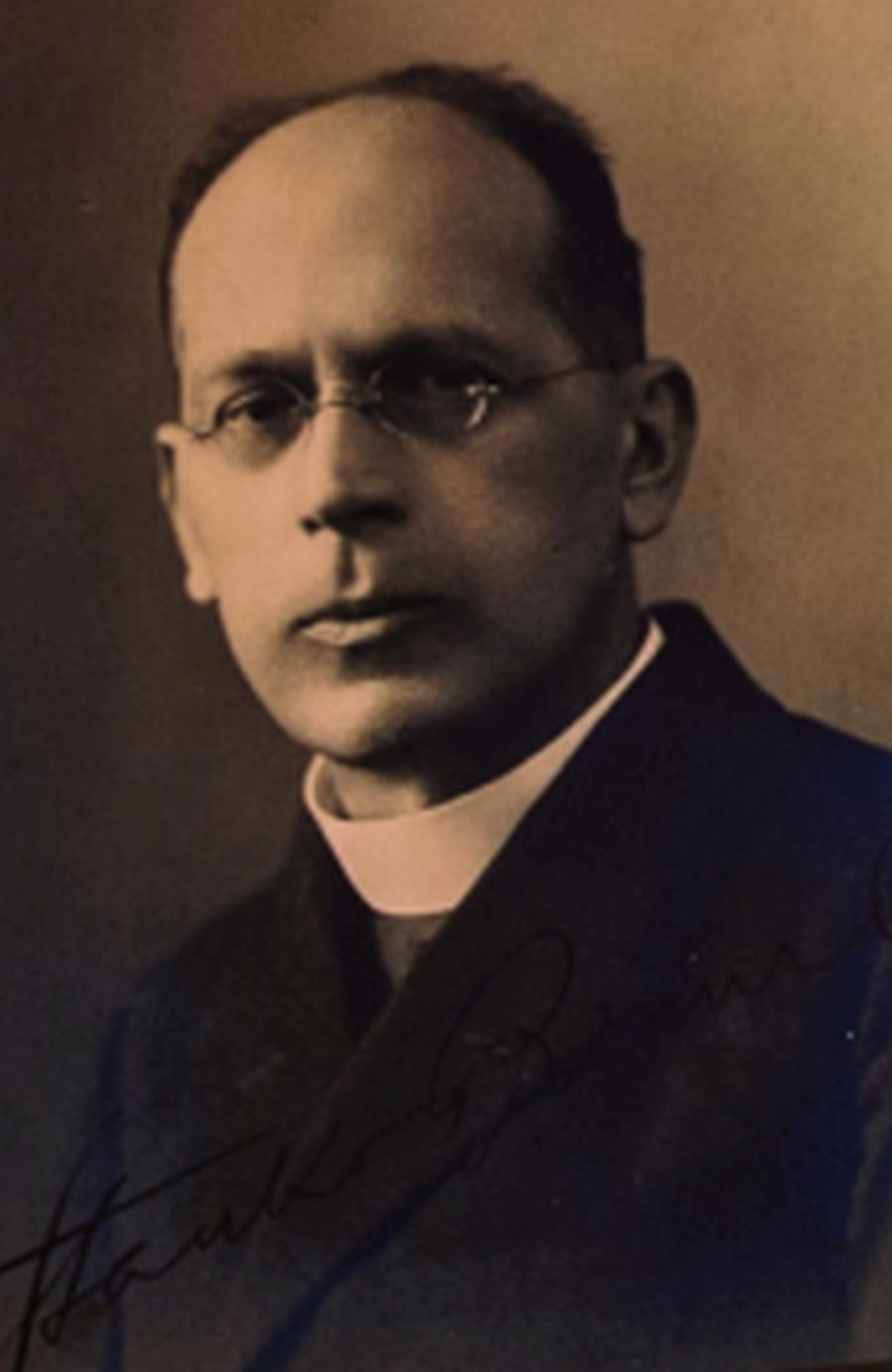
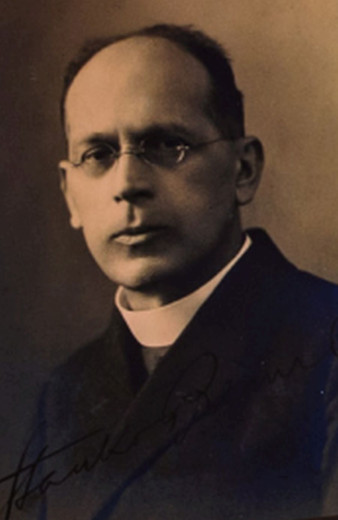 Stanko Premrl (1880–1965) was a Slovenian priest, composer and musical educator. On 24 September 1905, he composed a choral work to Prešern’s Zdravljica, which is now the Slovenian national anthem. Photo: Luka Fabčič
-
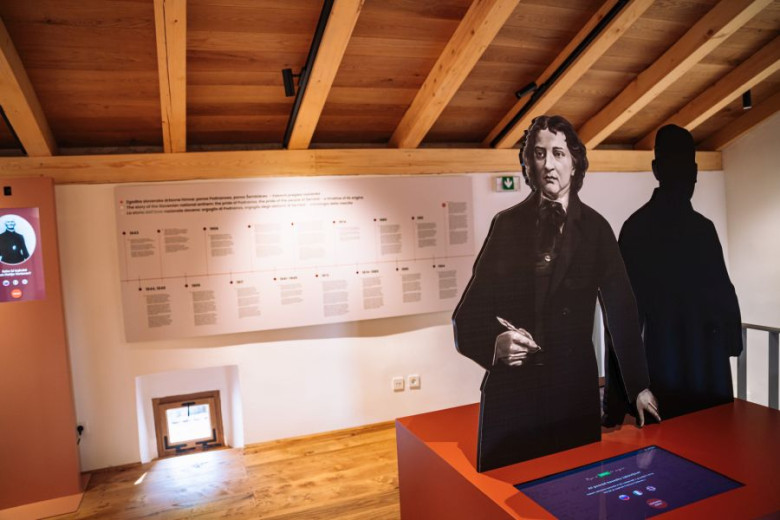 With engaging content and immersive experiences, the museum appeals to a wide range of visitors while connecting heritage, art, and the message of community, peace, and cooperation.Foto: Luka Fabčič
-
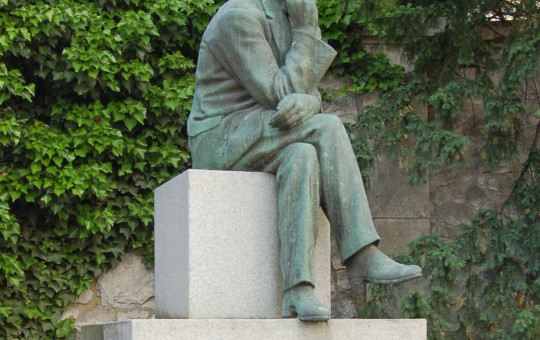
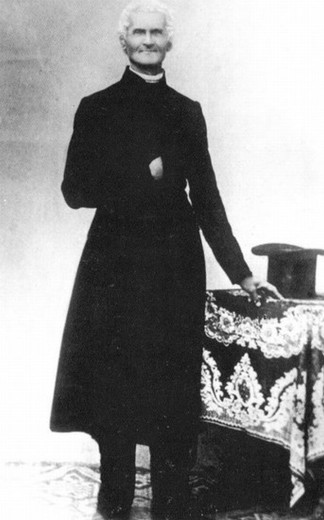 Matija Vertovec ( 1784 -1851) not only influenced the creation of Zdravljica, but through his view of wine as a symbol of community and national identity also shaped its spirit. His call for a poem about the vine was understood by France Prešeren in a broader sense - as a celebration of unity. When Stanko Premrl set the poem to music, Vertovec’s idea gained a lasting cultural resonance. Photo: wikipedia
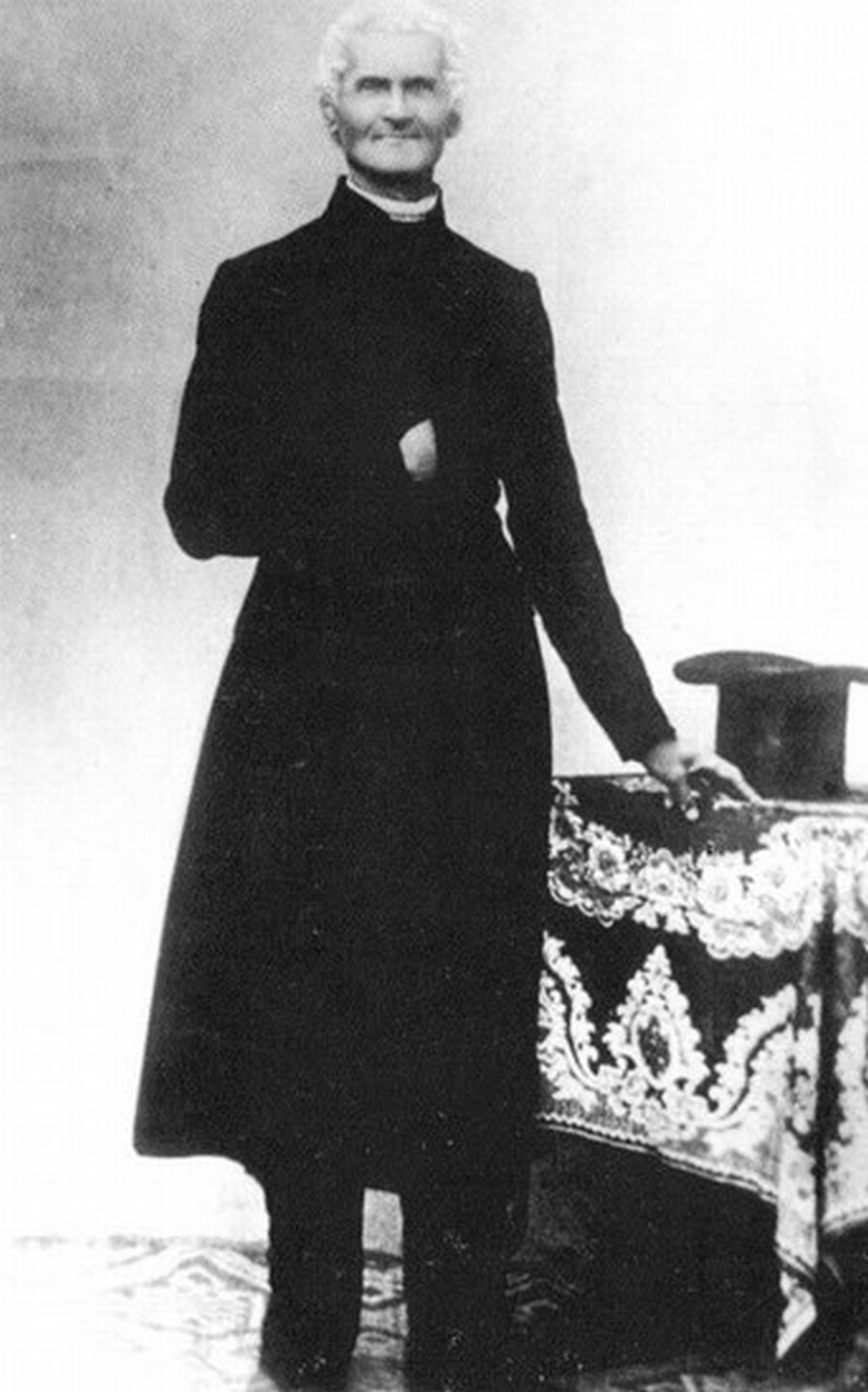
It remains a symbol of unity
In 1989, Premrl’s melody – together with the seventh stanza of Prešeren’s poem – was officially adopted as the Slovenian national anthem. Later, the poem gained even wider recognition, as the European Union recognised it as an important element of cultural heritage. Today, Zdravljica remains a symbol of unity, as reflected in its message of peace and coexistence among nations.
-
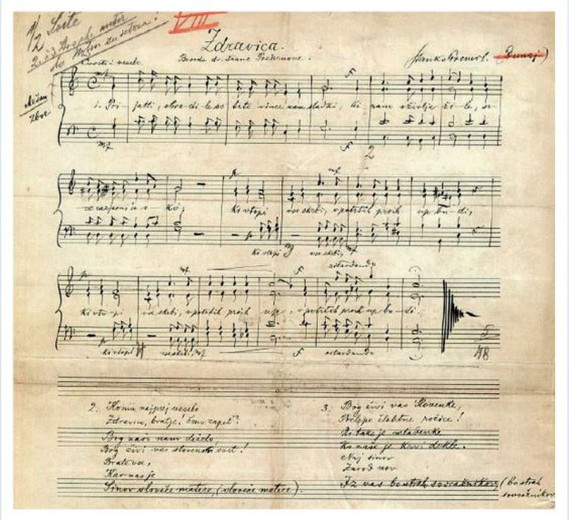 Stanko Premrl’s setting of Zdravljica is simple and melodic, usually in G major with mostly diatonic notes. It features smooth, stepwise motion, clear phrasing, and a solemn yet uplifting tone. Inspired by Romantic choral style, it reflects unity, dignity, and national identity. Photo: wikipedia