Date: 6. February 2026
Time to read: 2 min
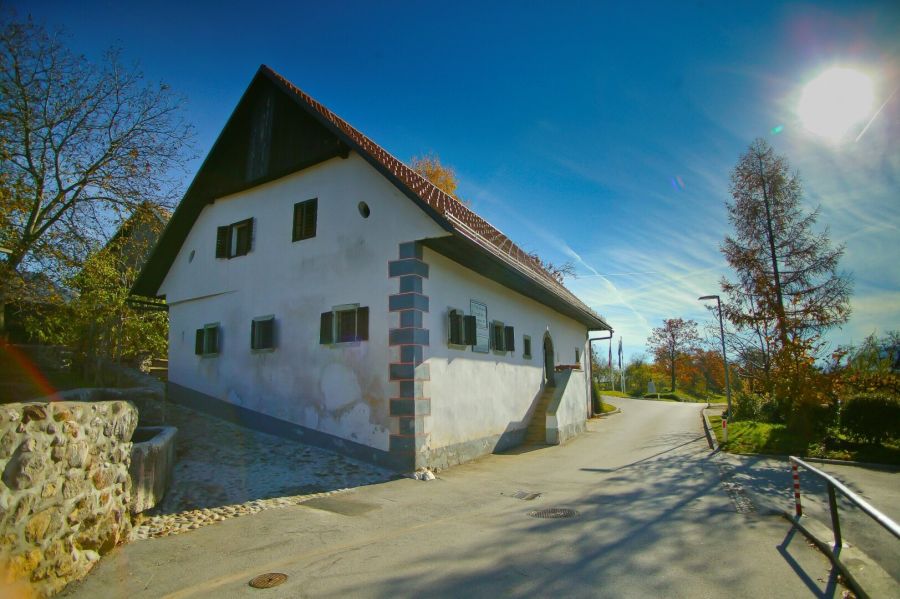
Prešeren's house in Vrba in the Gorenjska region is the birthplace of Slovenia's greatest poet, France Prešeren, and one of the country's most important cultural monuments. It is also the most visited museum in Slovenia.
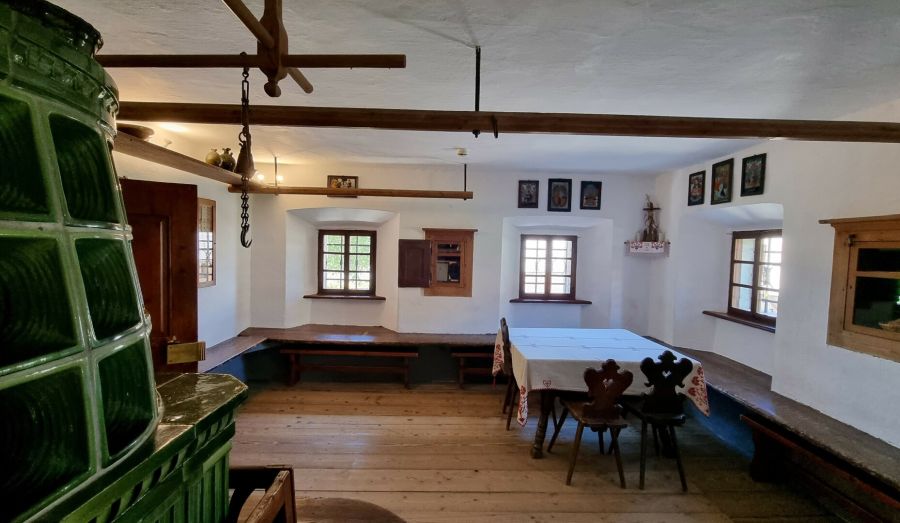
The house is a typical 18th-century farmhouse, built in the Gorenjska style, with a wooden façade, small windows and a simple interior. Upon entering, visitors can immediately sense the homely atmosphere of the space, which preserves an authentic snapshot of life in a rural farming family at the time. Today, the house functions as a museum and memorial site, where visitors can learn about the poet's life, work and the cultural environment of the 19th century.
Francelj
France Prešeren was born in 1800 as the third child in a family that was rural by origin but unusually educated for that time. He spent his childhood at home, where he had to help with household chores and care for livestock, yet he was intensely drawn to learning, reading and to listening to the stories of his elders.
Even as a boy, he was a curious observer of the world around him. He enjoyed watching passing merchants, listening to folk songs and fairy tales, and secretly learning various skills from his mother and neighbours.
At home, he was affectionately known as "Francelj". As an adult returning to his birthplace, he, however, remained somewhat withdrawn, quietly observing village life and enjoying the tranquillity of the local countryside. This close connection with nature, folk tradition and simple rural life would later profoundly shape his poetry.
-
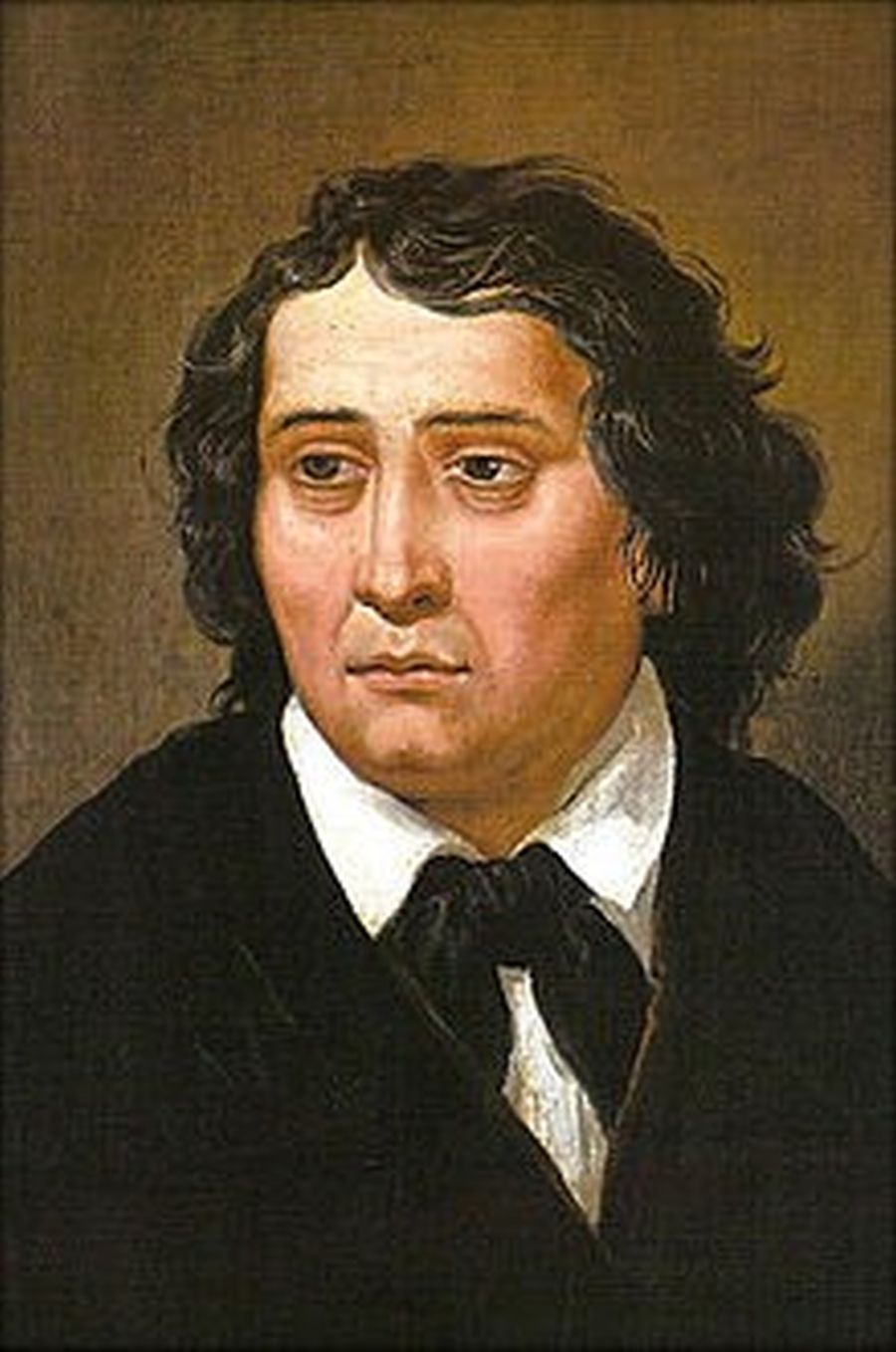
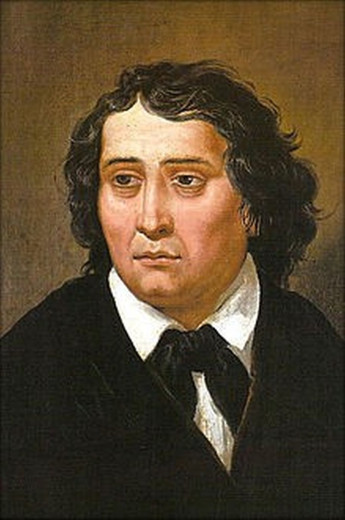 A poet France Prešeren. Photo: TIC Žirovnica
The story of the Prešeren family
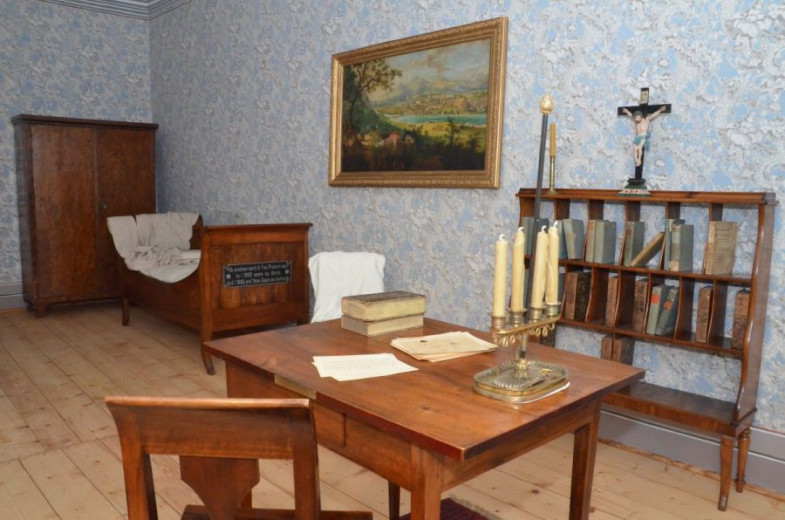
Today, the house offers visitors insight into the everyday life of the Prešeren family and the poet's youth. Among the most important exhibits is Prešeren's cradle, in which he lay as an infant, as well as old furnishings such as wooden benches, stools, chests and a table that were used in everyday life. In the black kitchen, with its preserved stove and kitchen utensils, visitors can see how households were once run.
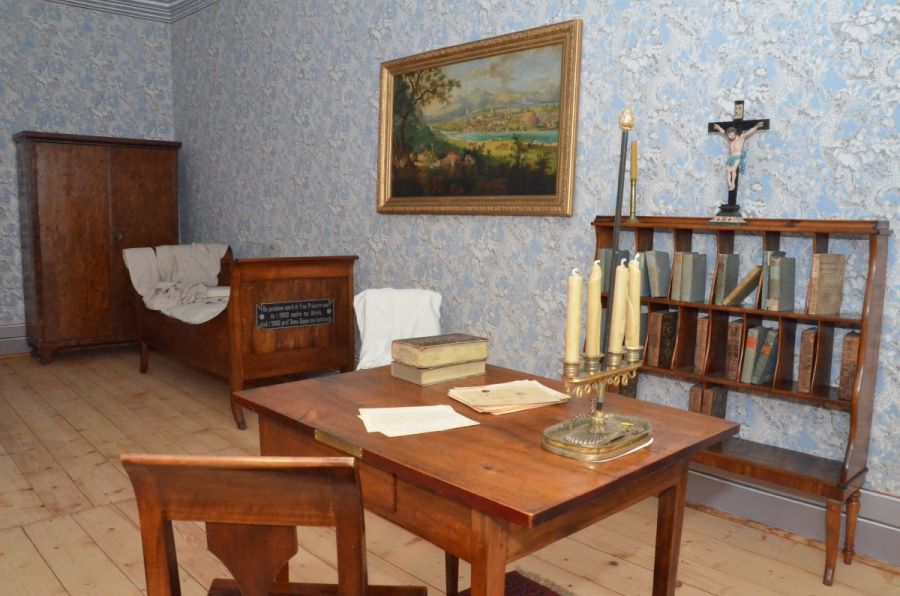
A special spot has been reserved for the memorial room, which displays manuscripts, documents and books, including volumes of Prešeren's poetry collection Poezije (1847), the poem The Baptism on the Savica, newspapers in which he was published, and translations of his works into foreign languages.
Literary evenings, cultural events and exhibitions are also frequently held in the vicinity of the house, transforming it into a vibrant cultural venue.
-
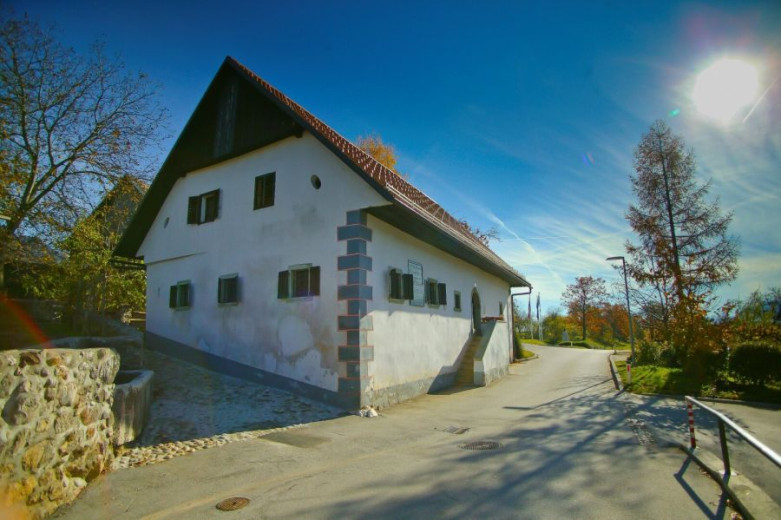 In 2011, this museum house was declared a monument of national importance, highlighting its invaluable contribution to Slovenian history. Photo: Klemen Čepič/TIC Žirovnica
The family home as a source of inspiration
In his poems, Prešeren often drew inspiration from his native Vrba and the Gorenjska landscape. His poem O Vrba directly describes the tranquillity of the village, family home and its gardens, while simultaneously expressing his longing and sense of belonging to his birthplace. In the lesser-known poem Povod, scenes of simple rural life, village paths and natural waterways reflect the joy of childhood and a close connection with nature. Descriptions of the Gorenjska landscape - hills, rivers and forests - also appear in the epic poem The Baptism on the Savica. Individual poems in the collection Poezije feature motifs of children's games, domestic life and household chores, reflecting the warmth of childhood, the security of home and the simplicity of village life. Parts of Zdravljica (A Toast) likewise contain natural imagery that emphasises the bond with his surroundings and love for the Slovenian nation.
-
 Prešeren’s House is one of the oldest houses in Vrba. Photo: TIC Žirovnica
-
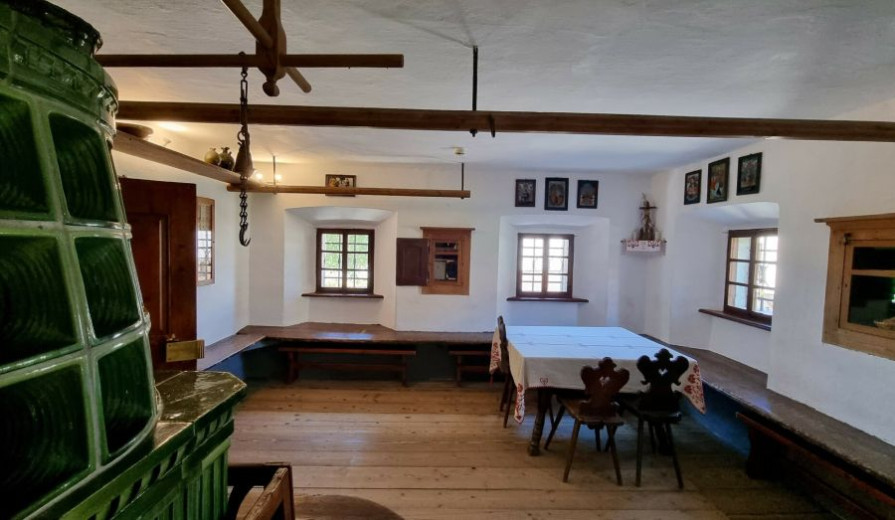 The house acquired its present appearance after the fire of 1856, while the older architectural elements date back to the 16th century. Photo: Klemen Čepič/TIC Žirovnica.
The renovated birth house
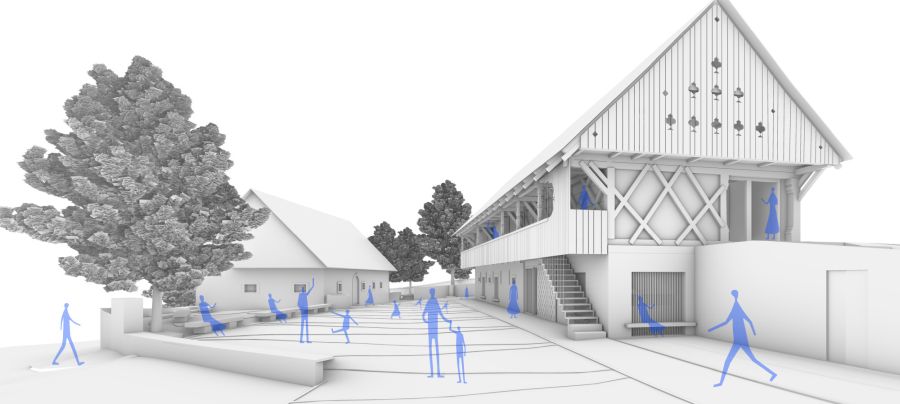
On Culture Day, 8 February, Prešeren's birth house in Vrba will be reopening its doors – as a renovated, content-rich contemporary museum experience. The new permanent exhibition is set across two buildings, the birth house itself and the former outbuilding, offering visitors an in-depth yet experiential encounter with the poet, his life and his time.
In the house, the original museum layout has been preserved, respecting the historical authenticity of the space.
Its renovation has been restrained and thoughtful: preserved objects, new ambient lighting and subtle thematic accents better connect the rooms with the life and work of France Prešeren, strengthening the symbolic power of the house as a place of remembrance. Visitors can also enjoy a 3D virtual tour, allowing them to either explore the house remotely or delve deeper into its details.
A whole new dimension is brought to the experience by the exhibition and interpretation area in the former outbuilding.
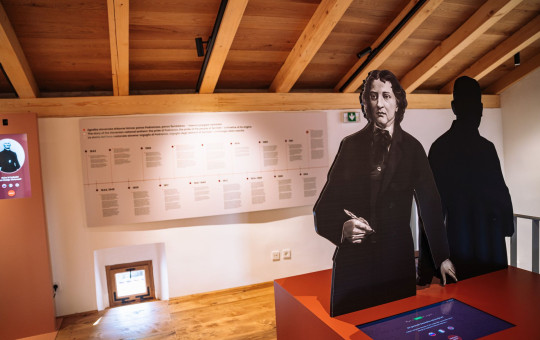
Designed as a modern interpretation centre, it interweaves Prešeren's life with his poetry and the broader cultural and historical context. Through the use of multimedia, sound, images and artistically designed elements, the exhibition creates a multi-sensory experience in which the poet's journey, from that of a village boy to a central figure in Slovenian culture, is revealed in a personal and inspiring way.
Prešeren's renovated house is therefore not just a museum, but a holistic experience that connects heritage with contemporary interpretation and preserves a strong emotional bond with the birthplace of Slovenia's greatest poet.
-
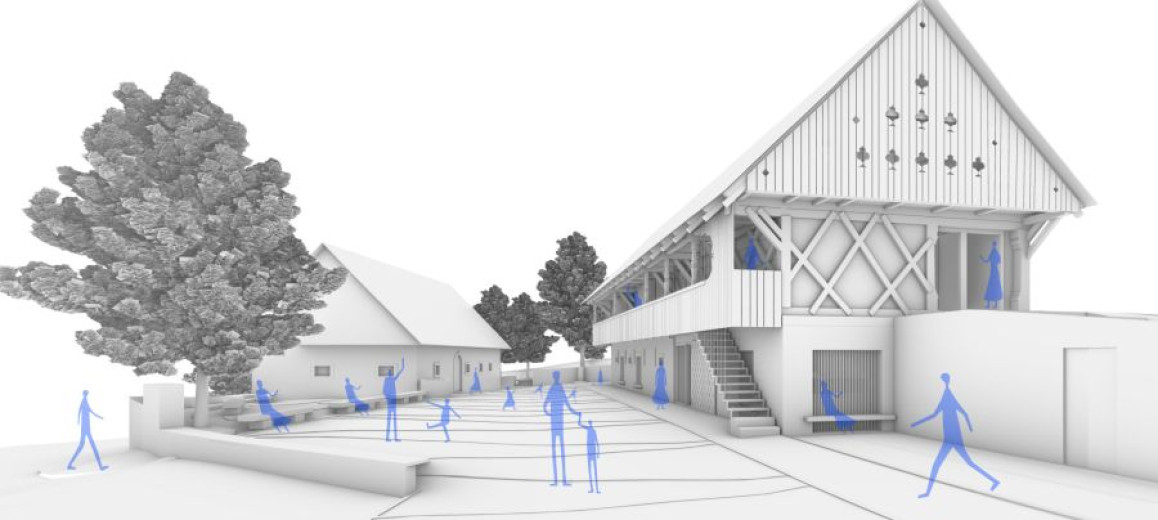 The renovated homestead will open its doors on 8 February 2026. Photo: Ministry of Culture