Date: 22. February 2026
Time to read: 2 min
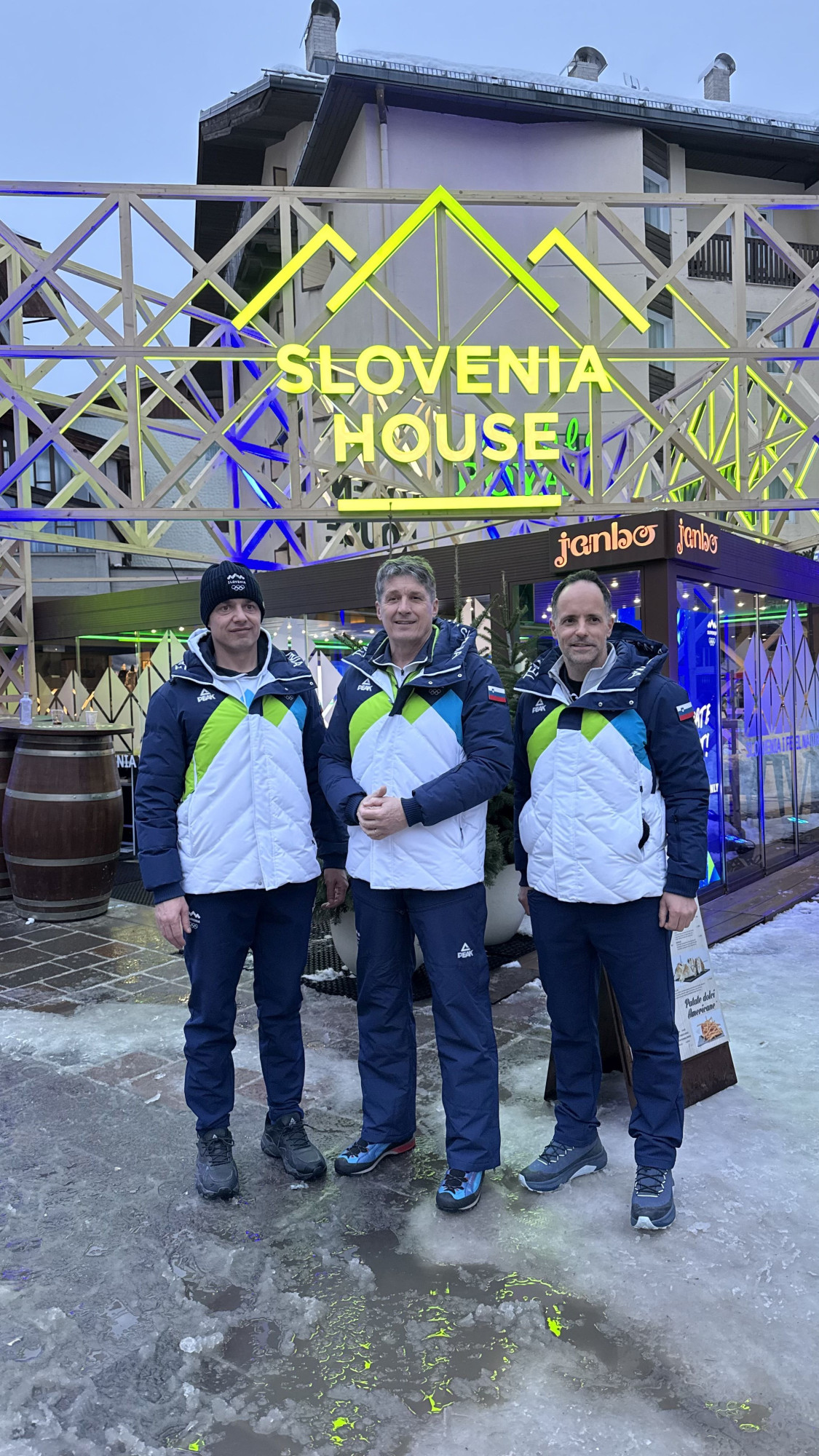
The Slovenia House in the center of Cortina d'Ampezzo became more than just a fan hub during the Milano Cortina 2026 Winter Olympic Games. Amid the Olympic buzz, under the national brand I Feel Slovenia, it evolved into a space where sports, business, culture, diplomacy, tourism and gastronomy intertwined.
-
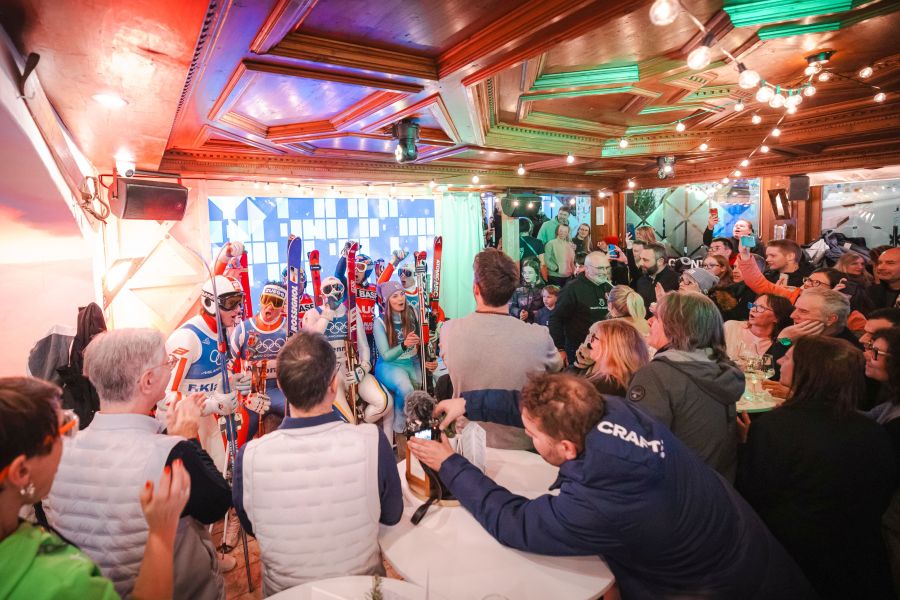
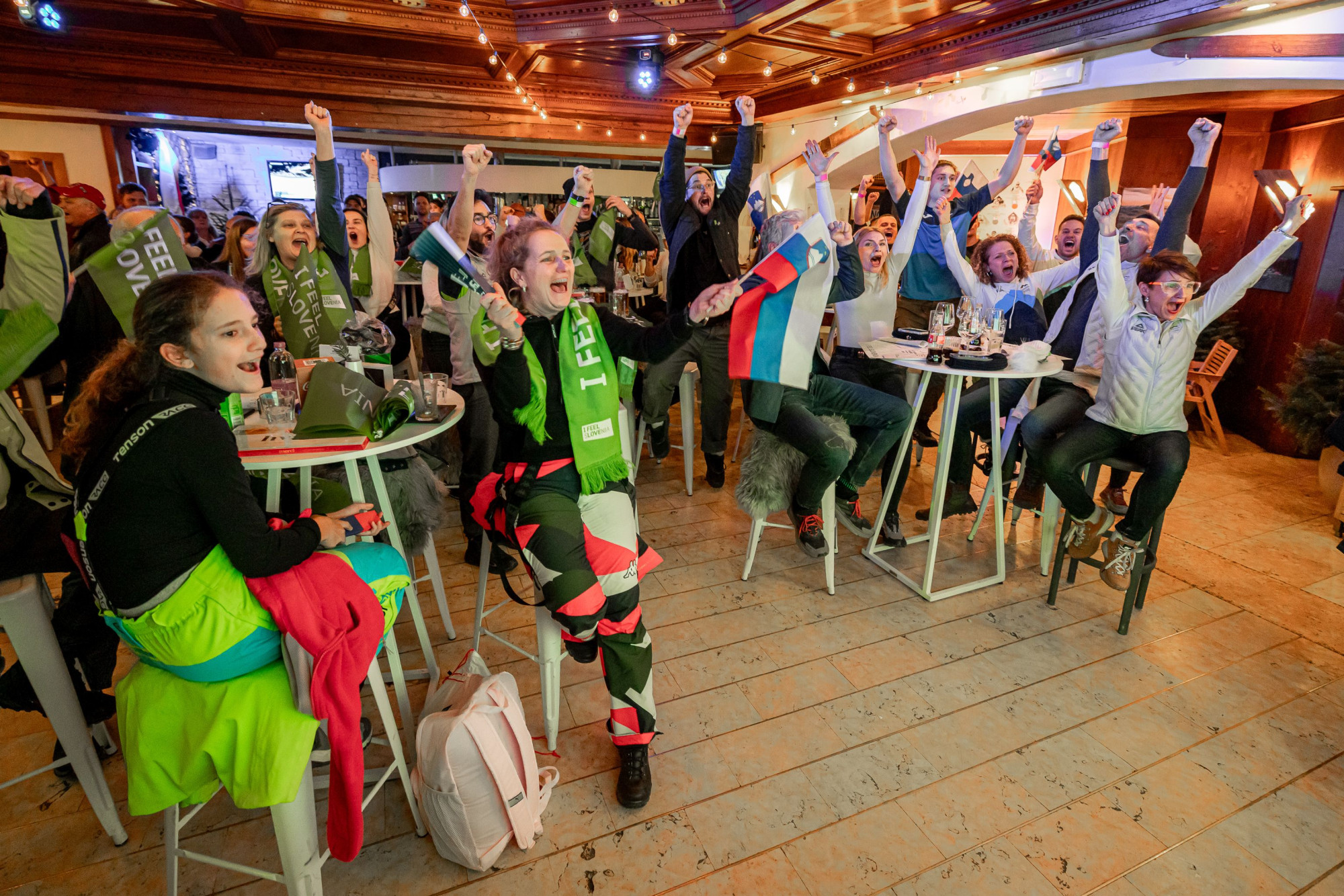
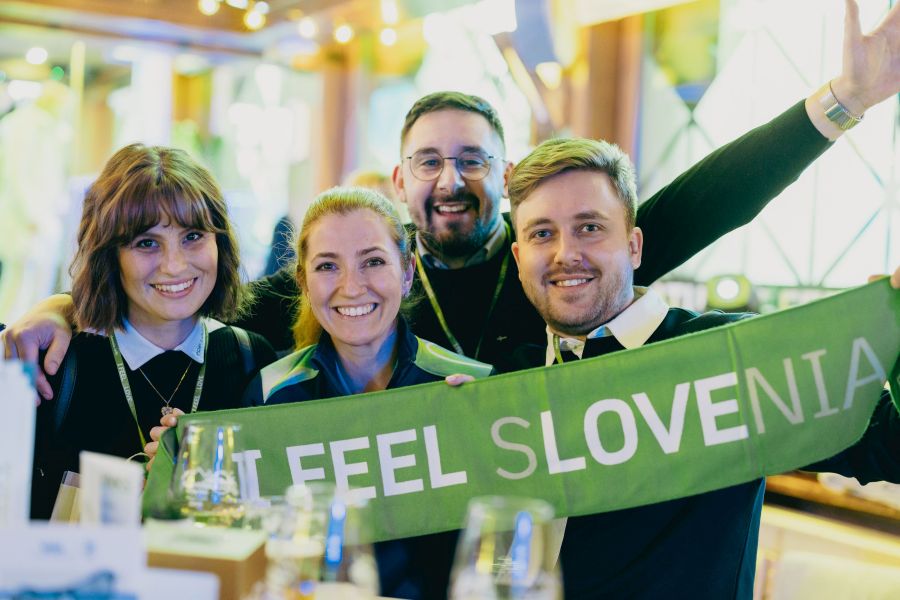
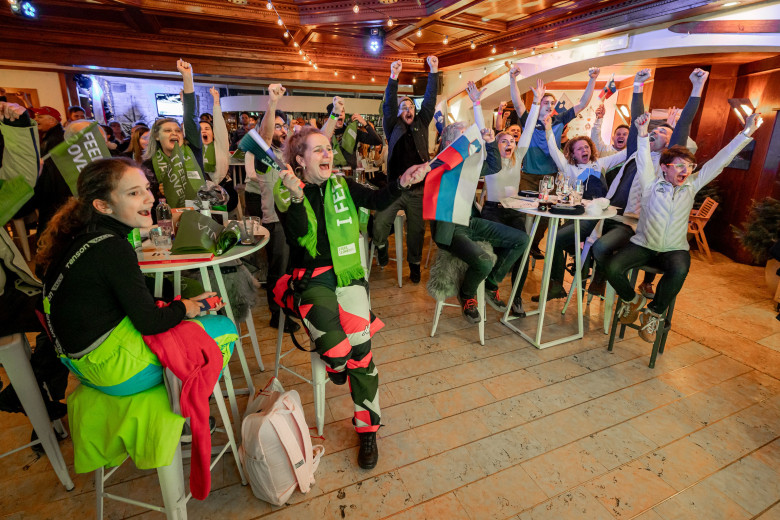 Slovenes cheer enthusiastically for Slovenia’s sporting heroes in Slovenia house. Photo: Anže Furlan
-
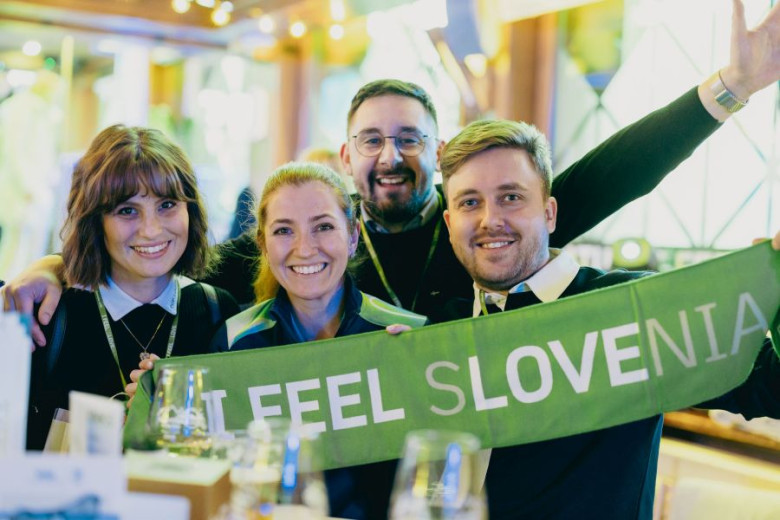 Slovenes passionately cheered for their athletes, especially loudly when competing for top medals. Photo: Anže Furlan
-
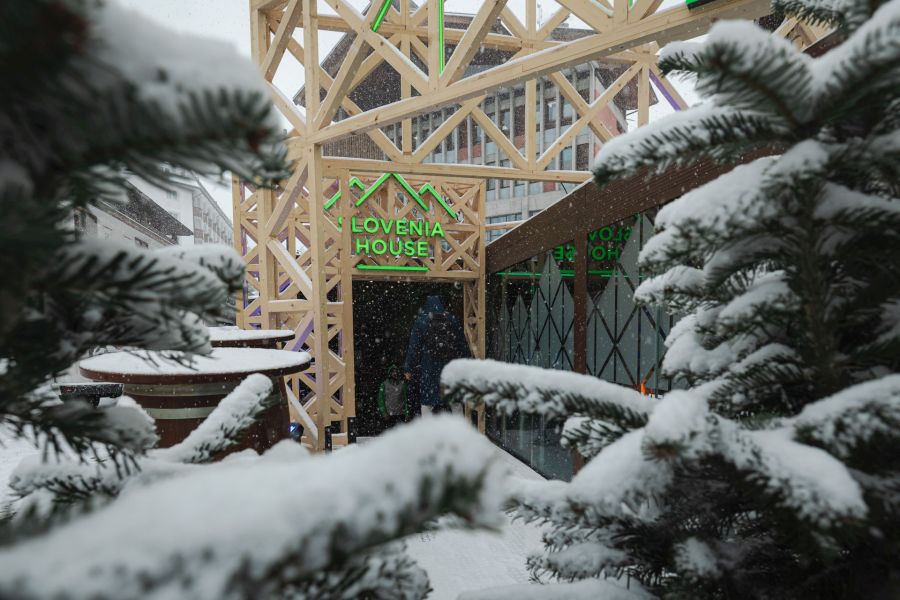
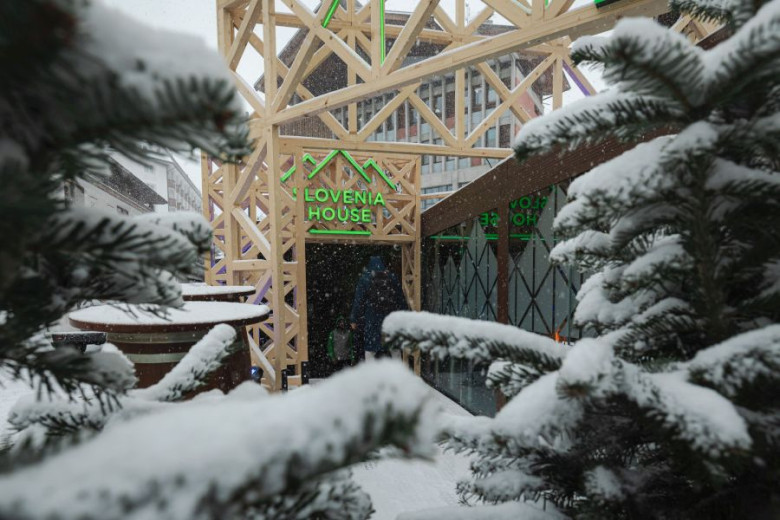 The Slovenian House was also a space for cultural expression. Its wooden design, inspired by the traditional Slovenian toplar, symbolically represented Slovenian heritage. Photo: Anže Furlan
The Slovenia House served as a meeting point for current and former Olympians, fans, and representatives of international sports organizations. Among the visitors were the house’s ambassador Tina Maze, Olympic cycling champion Primož Roglič, former alpine skier Jure Košir, ski jumpers from the Prevc family, and many other Slovenian Olympians.
-
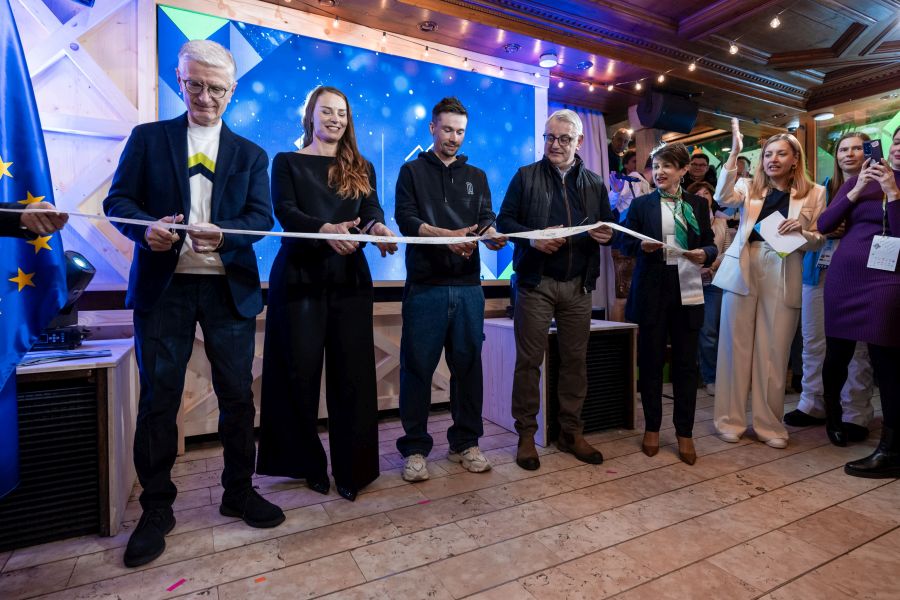
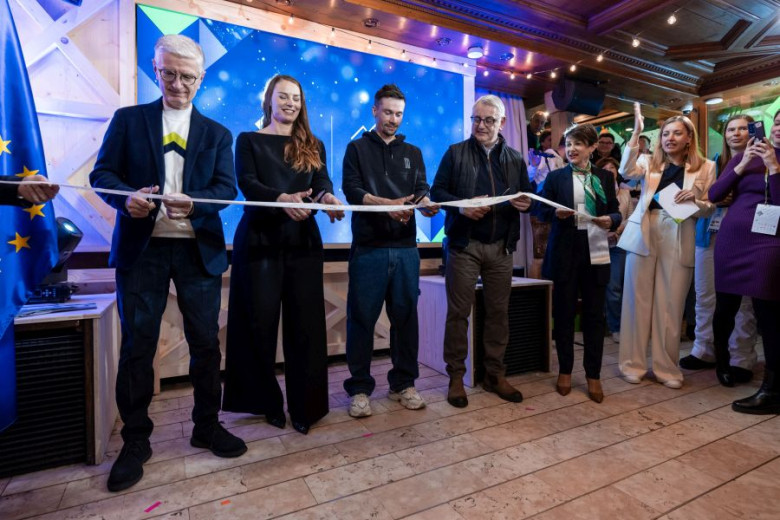 President of the Olympic Comittee Franjo Bobinac, ambasador Tina Maze, cyclist Primož Roglič and Minister of the Economy, Tourism and Sport at the opening event Matjaž Han. Photo: Anže Furlan
-
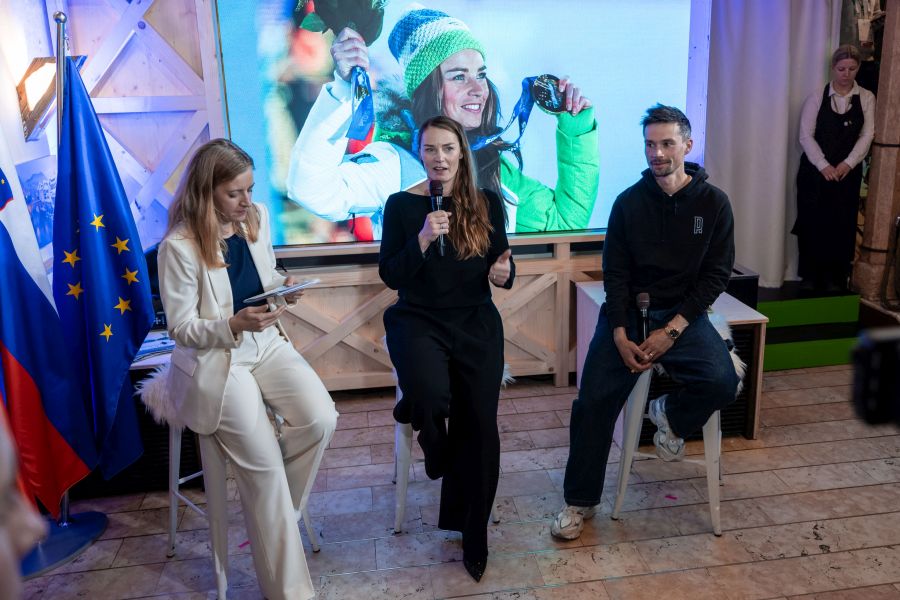
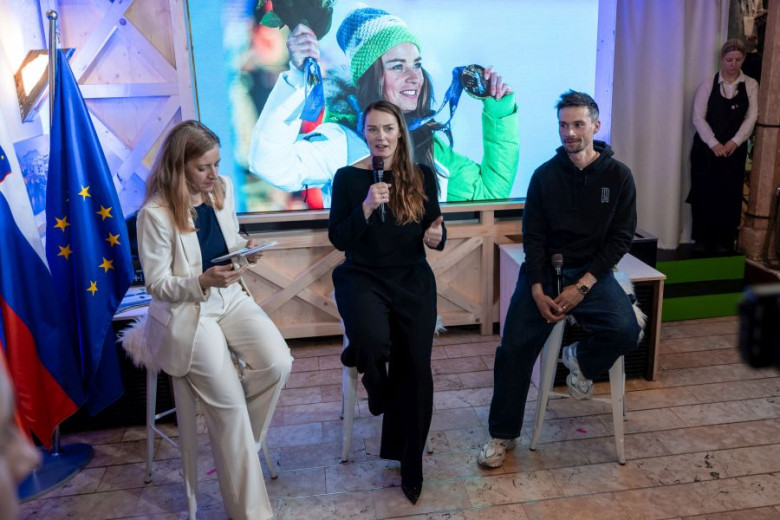 The Slovenian House ambassador is Tina Maze, Slovenia’s most successful Winter Olympian, best alpine skier, and greatest female athlete in the country’s history. Her career includes four Olympic medals (two gold, two silver), nine World Championship medals (four gold, five silver), and 26 World Cup victories. Photo: Anže Furlan
-
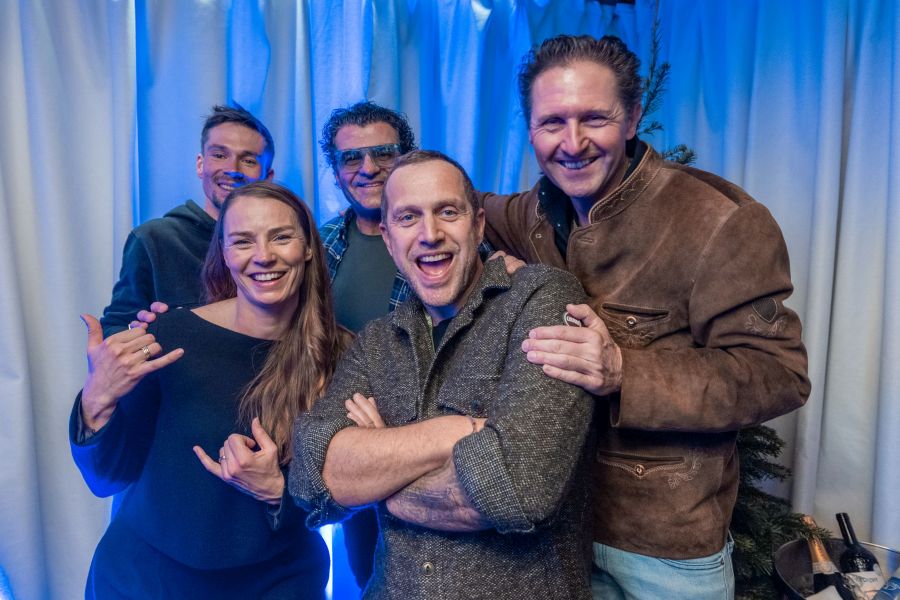
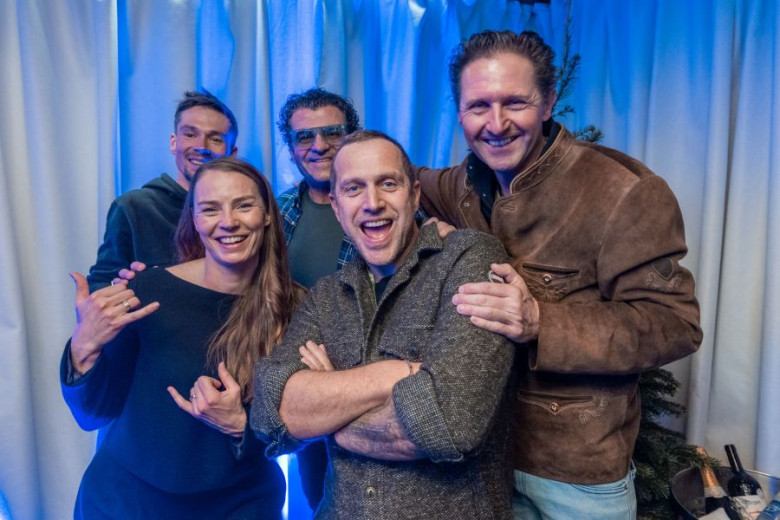 Alberto Tomba, Tina Maze, Jure Košir and Andrea Massi. Photo: Anže Furlan
High-Profile Visits and Diplomacy
The Slovenia House was visited by the President of the Republic of Slovenia, Nataša Pirc Musar, who highlighted the importance of systemic support for elite sports and the connection between sports and business.
Guests also included representatives of the International Ski Federation, the International Olympic Committee, foreign national committees, as well as numerous business leaders and diplomats.
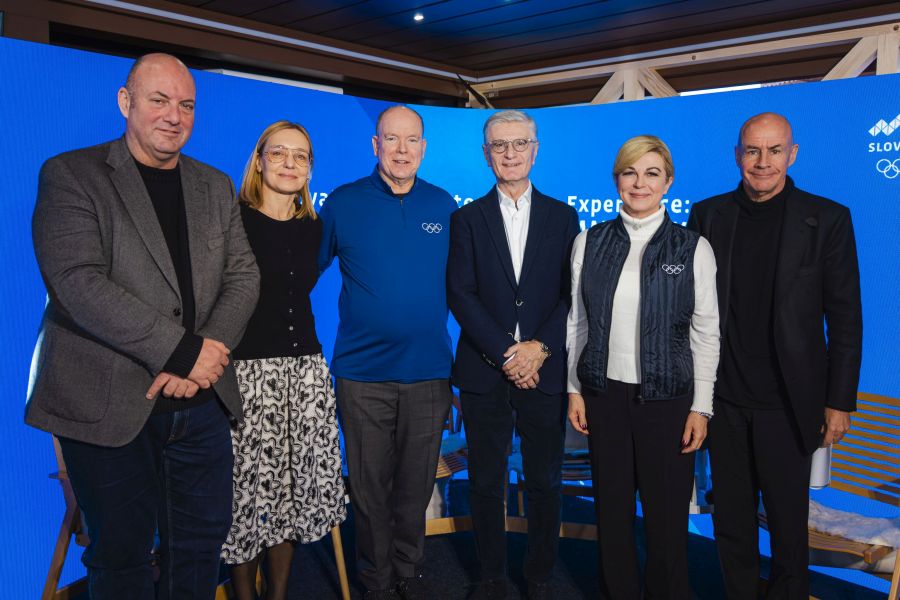
Prince Albert II of Monaco, also a member of the International Olympic Committee, visited the Slovenian House twice. The first visit included participation in a roundtable on sustainability in sports with the President of the International Ski Federation Johan Eliasch, IOC member and Chair of the Future Host Commission Kolinda Grabar Kitarović, and the President of the Slovenian Olympic Committee Franjo Bobinac. Participants agreed on the need to find permanent venues, change travel and waste management practices, optimize energy use, and ensure that the Olympics adapt to hosts, not vice versa. They emphasized that athletes themselves can be ambassadors of sustainability.
On the second visit, Prince Albert attended a meeting of the World Olympians Association led by former Slovenian rower Iztok Čop, with Olympians addressed by the association’s president Pernilla Wiberg. The discussion highlighted the importance of unity within the Olympic family, intergenerational knowledge transfer, and athletes’ roles as ambassadors of values and sustainability.
A unique aspect of these Olympic Games was that the Executive Board of the Slovenian Olympic Committee, led by Franjo Bobinac, convened on Olympic grounds for the first time in history. They emphasized that no medal is guaranteed and announced continued support for sports disciplines and federations.
-
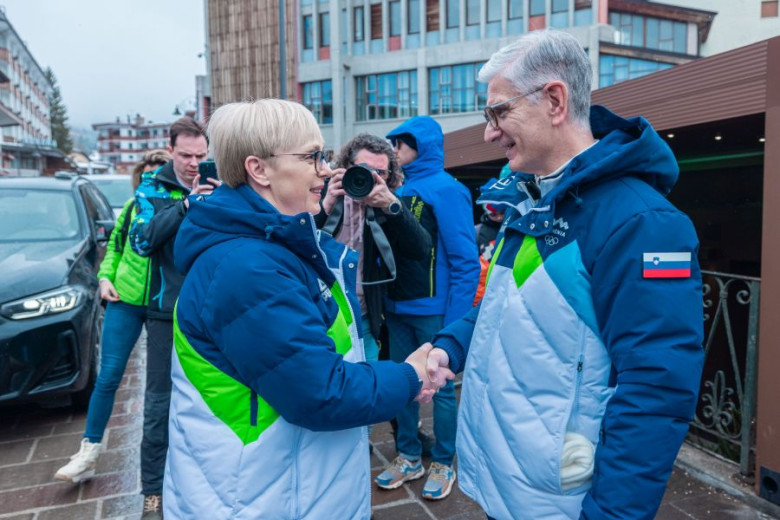 Slovenian President Nataša Pirc Musar personally came to support Olympic ski jumping champion Domen Prevc, watching the competition with Franjo Bobinac and IOC President Kirsty Coventry. Photo: Anže Furlan
-
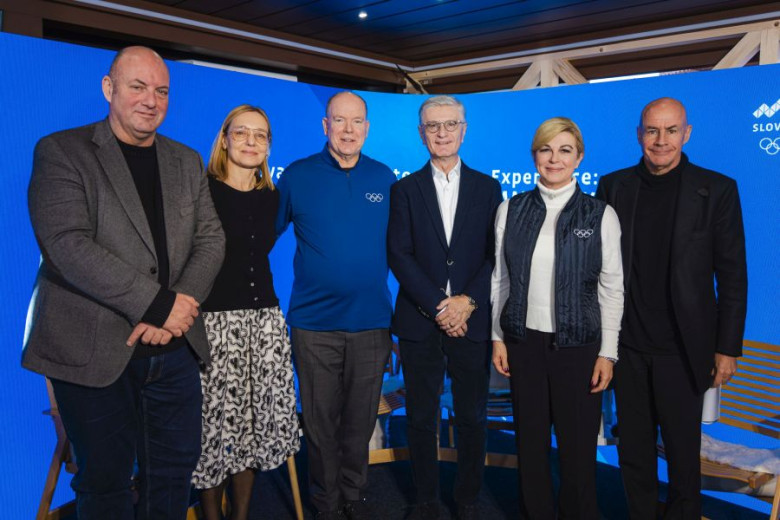 Among the participants in the round table on sustainability in sport, led by the President of the Commission for Sustainability in Sport at the OKS, Alja Brglez were also: the President of the International Ski and Snowboard Federation and IOC member Johan Eliasch; H.S.H. Prince Albert II of Monaco, IOC member and Chair of the IOC Commission for Sustainability and Legacy; and IOC member Kolinda Grabar - Kitarović. Photo: Anže Furlan.
-
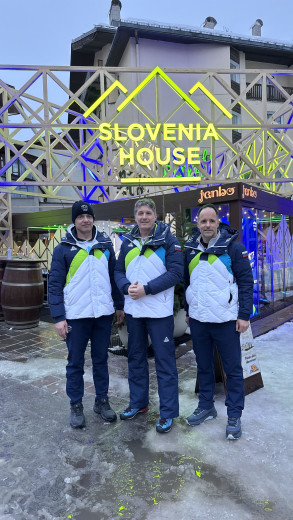 General Secretary at OC dr. Uroš Mohorič, Minister of Defence mag. Borut Sajovic and Business Director at OC Matic Švab. Photo: UKOM
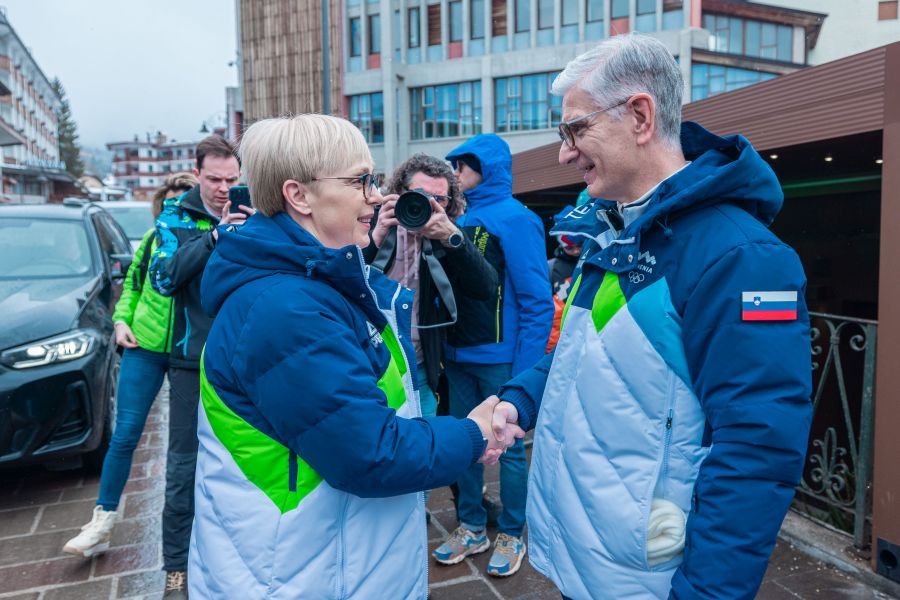
Olympic Values Through the Lens of Business
In the economic sphere, the Slovenia House functioned as a platform for international cooperation. The public agency SPIRIT Slovenia organized a delegation of more than 45 Slovenian companies that visited the technology park in Pordenone, attended the Lean Experience Factory, and participated in business meetings in Cortina. The focus was on sharing best practices, digital transformation, and long-term collaboration between Slovenia and Italy.
A particularly notable event was the Triglav Investments conference titled “Values in the World 2.0 – Excellence, Respect, and Friendship as a Compass for the Future.”
The roundtable included ski jumping Olympic champion Domen Prevc, Olympic judo champion Andreja Leški, Board Member of Zavarovalnica Triglav Marica Makoter, and BTC CEO Damjan Kralj. They highlighted integrity, trust, and responsible leadership as key elements of long-term success.
Events also linked sports and business in a broader context. Alongside the Olympics, a forum brought together representatives of Slovenian minority communities’ business and sports sectors from neighboring countries.
The focus was on connecting sports and business and promoting local communities. Programs supporting minority communities, improving sports infrastructure, and fostering strategic ties with the home country were presented. Panels emphasized athletes’ roles as brand ambassadors and the importance of collaboration for strengthening identity.
Representatives from ministries, business associations, and minority organizations discussed sports’ role in enhancing economic diplomacy and developing minority communities in Italy, Austria, Croatia, and Hungary. The Olympic Bridges conference, organized by the Coordination of Slovenian Minority Business and Sports, united representatives from Slovenia’s minority communities across these countries. Emphasis was placed on connecting sports and business and promoting local companies and sports clubs. A program to support the economic development of indigenous Slovenian communities in neighboring countries (2026–2029) was also presented. Panels highlighted the role of successful minority athletes and the importance of cross-border coordination.
-
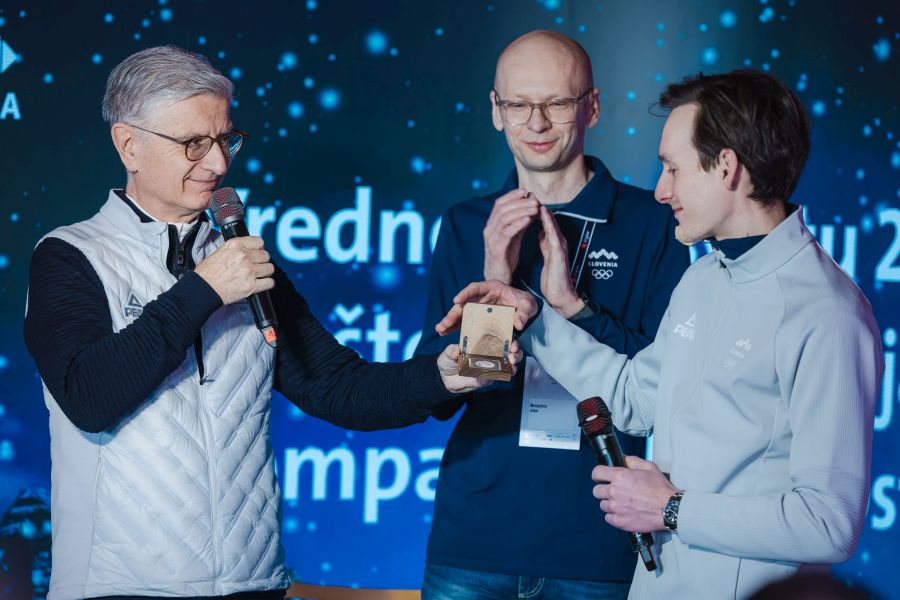
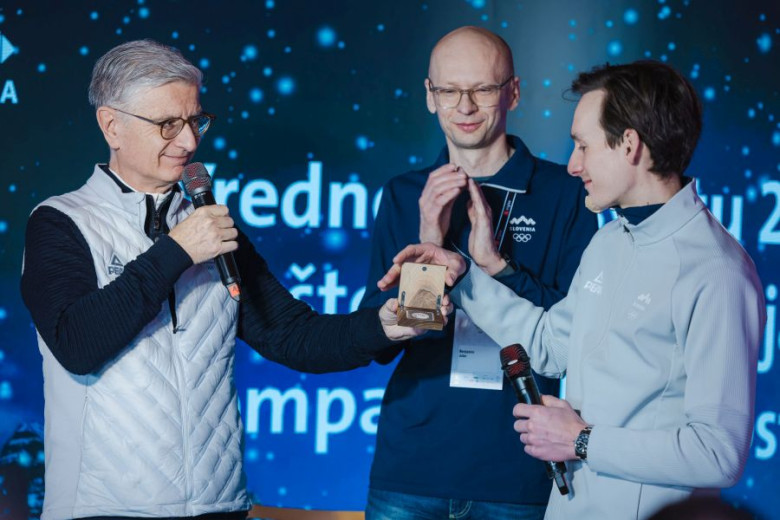 Domen Prevc received a Silver coin Tina Maze from the President of the Olympic Comittee Franjo Bobinac. Photo: Anže Furlan
-
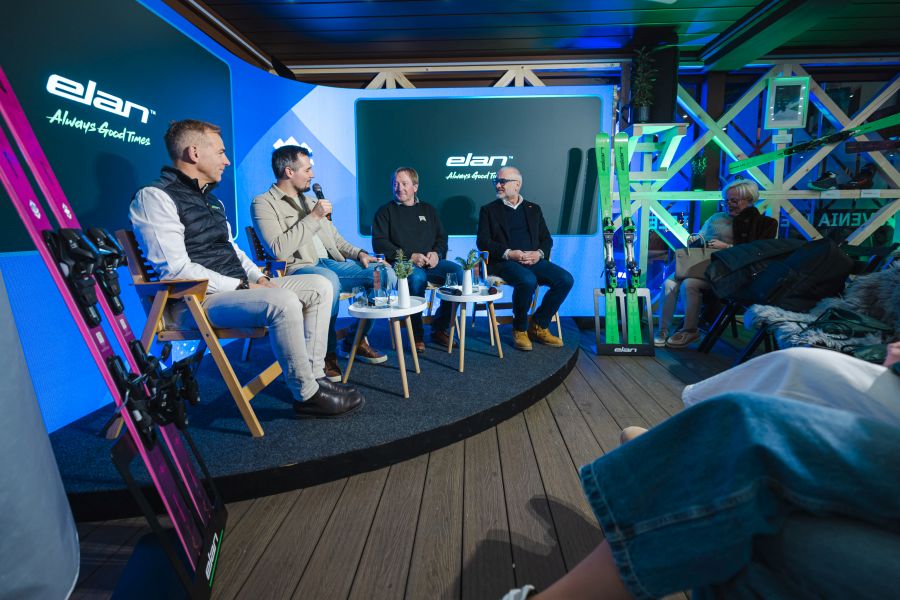
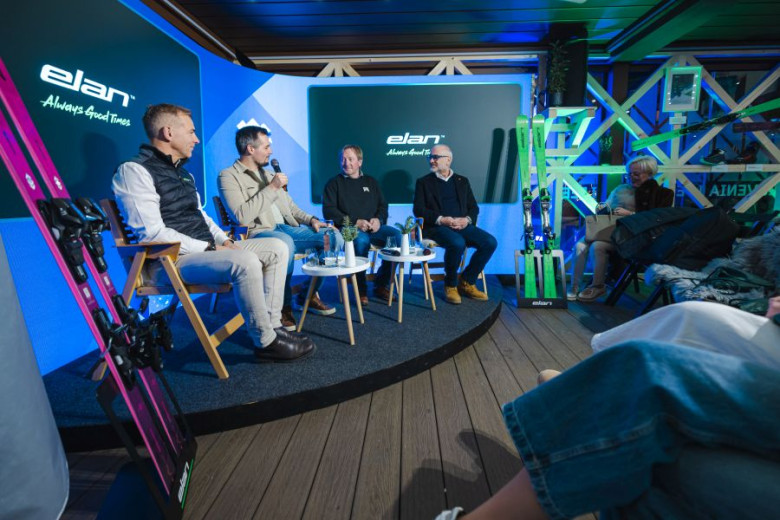 Former Alpine skier Bojan Križaj was penalist at the Elan round table in Slovenia House. Photo: Anže Furlan
-
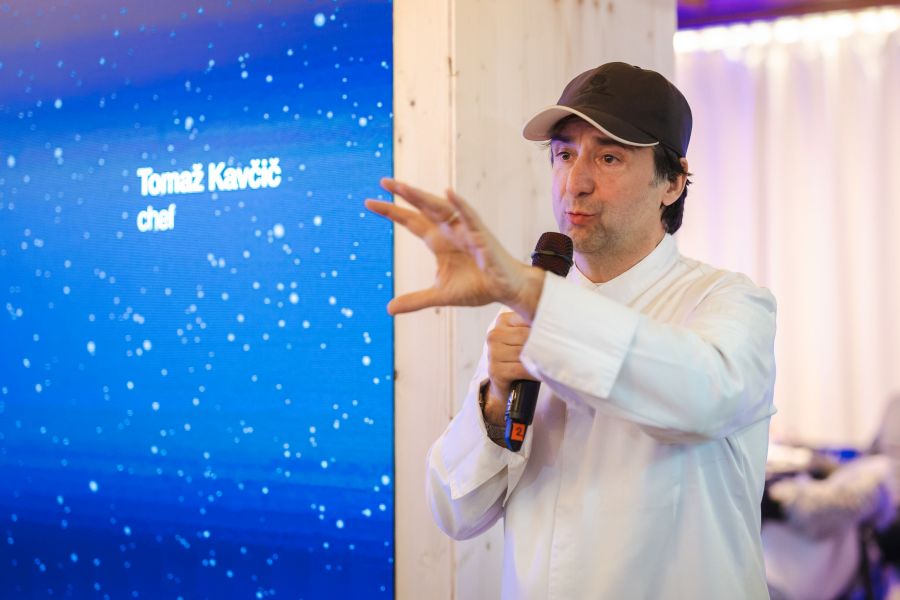
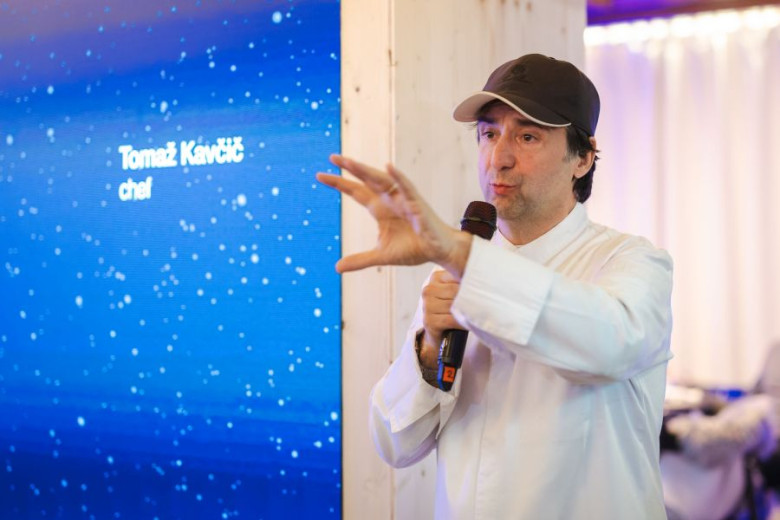 The Slovenian Tourist Board organized a special culinary event during the Games. Photo: Anže Furlan
-
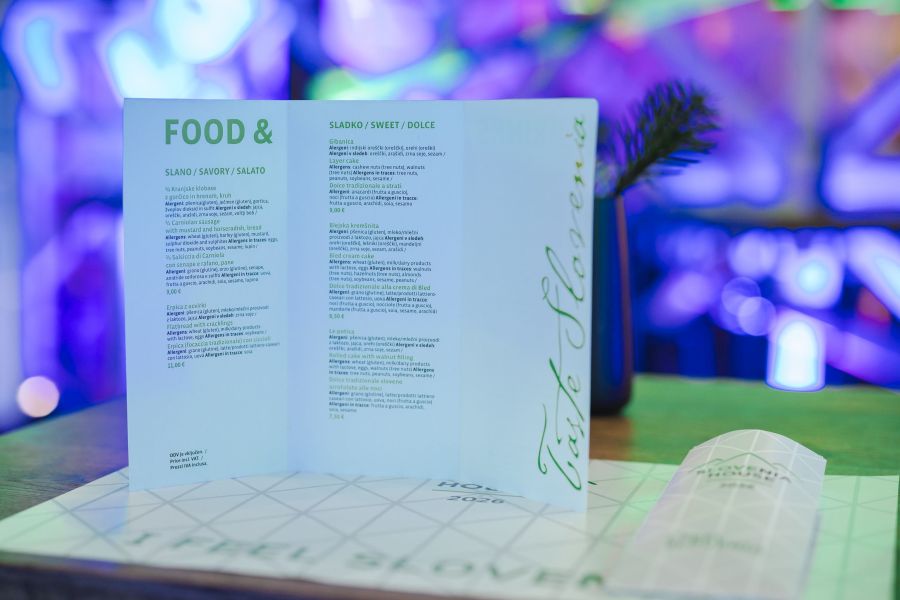
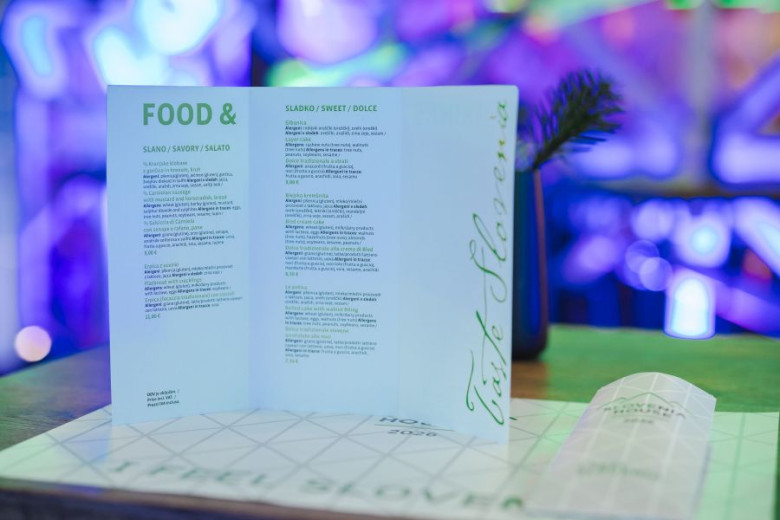 Slovenan cusine was very popular among visitors. Photo: Anže Furlan
-
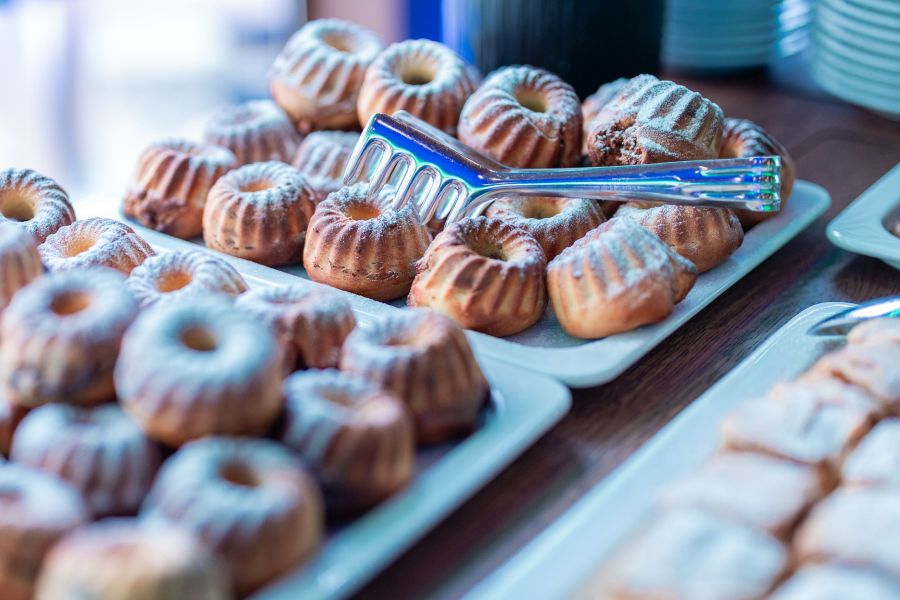
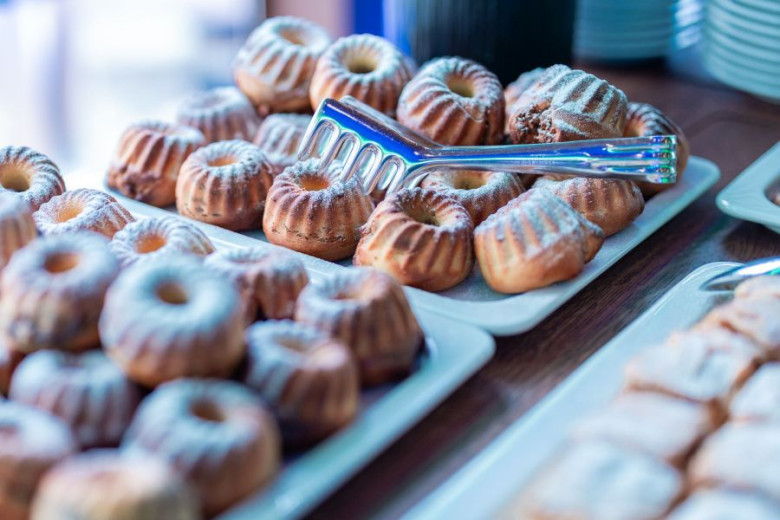 Potica cake. Photo: Anže Furlan
Identity and the Slovenian Experience
Visitors could sample Slovenian food and beverages, significantly promoting tourism and gastronomy. Catering at the Slovenian House was provided by the company Jezeršek.
The Slovenian Tourist Board organized a special culinary event during the Games. The Slovenia House showcased top Slovenian cuisine with more than 15 traditional dishes prepared for lunch and dinner, including a signature beef soup in a bottle. Special emphasis was given to five tourist regions, including the Julian Alps, Ljubljana, and Slovenian Istria.
The Ministry of Agriculture, Forestry and Food also hosted a culinary event highlighting Slovenian wines and dishes titled “Fall in Love with Slovenian Tastes.”
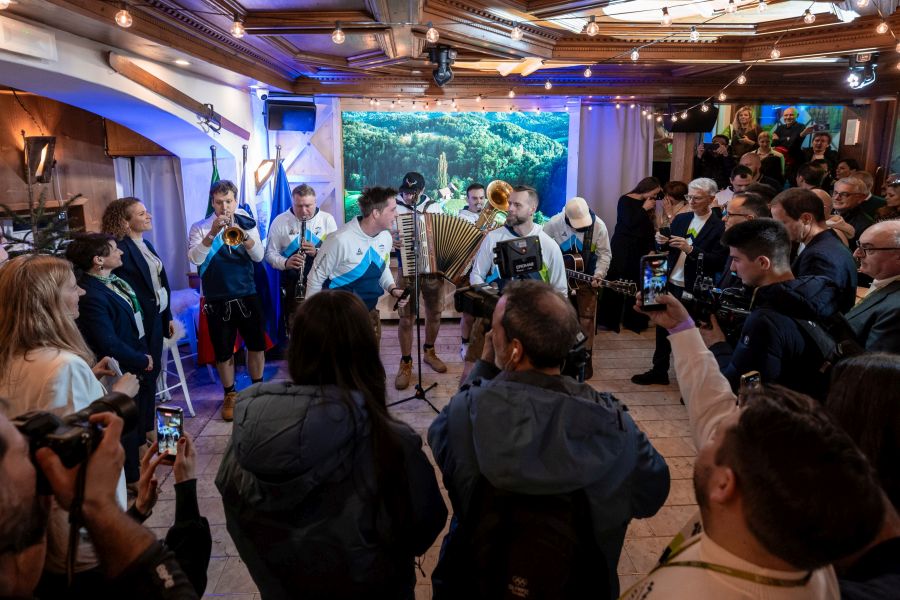
For musical entertainment, the band Fehtarji energized the Cortina square at the start of the Games with their song “Moja Slovenija.” Another highlight was Tina Maze’s visit, where she performed “Cik Cak” with Retro Band.
The Slovenian Ski Association presented its vision for Slovenian skiing development at the SLOSKI evening, including plans for the 2028 Ski Flying World Championships in Planica and the 2031 Nordic Championship bid. This showcased Slovenia’s role as a host of elite sports events, a key aspect of sports tourism.
-
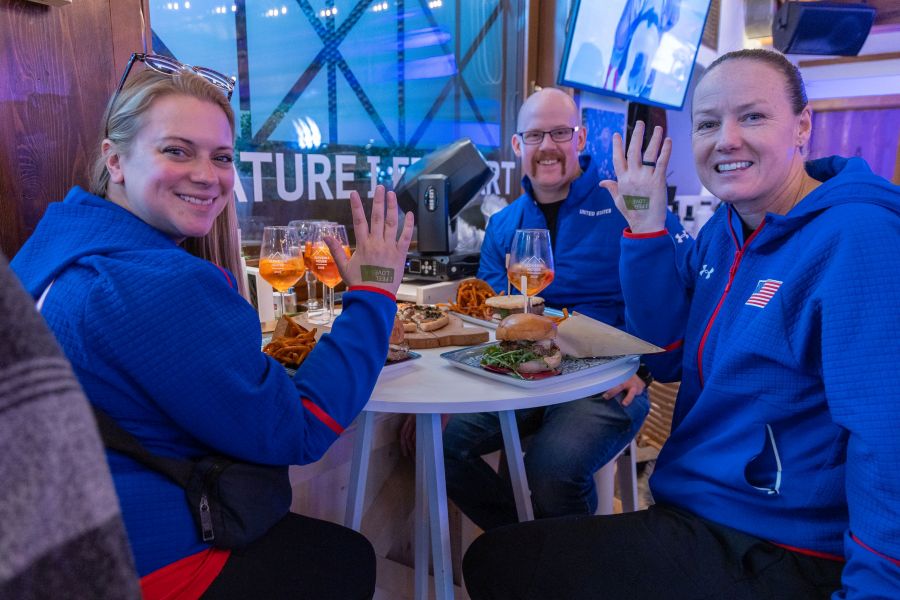
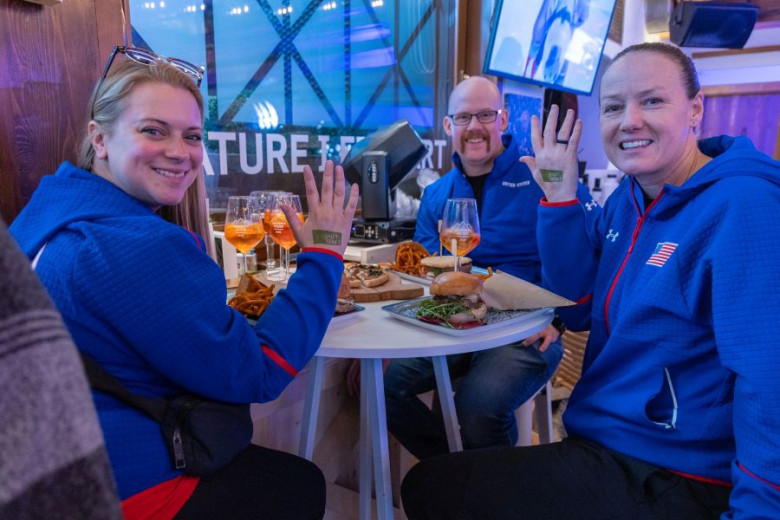 The Slovenian House’s popularity among national houses was evidenced by the constant crowds of visitors of different nationalities and generations. Photo: Anže Furlan
A Comprehensive Presentation of Slovenia
The Slovenia House in Cortina united three key dimensions. In sports, it reinforced pride in medals and highlighted Olympic values. In business, it opened doors to international cooperation, innovation, and discussions on future leadership. In culture and tourism, it presented the nation’s identity through architecture, gastronomy, and music.
All of this created a holistic story of Slovenia as a modern, sustainability-focused, and connected country.
The Slovenia House was not just an auxiliary Olympic venue but a space where achievements, ideas, tradition, and the future met in the heart of the Dolomites, yet with a clear view home.
-
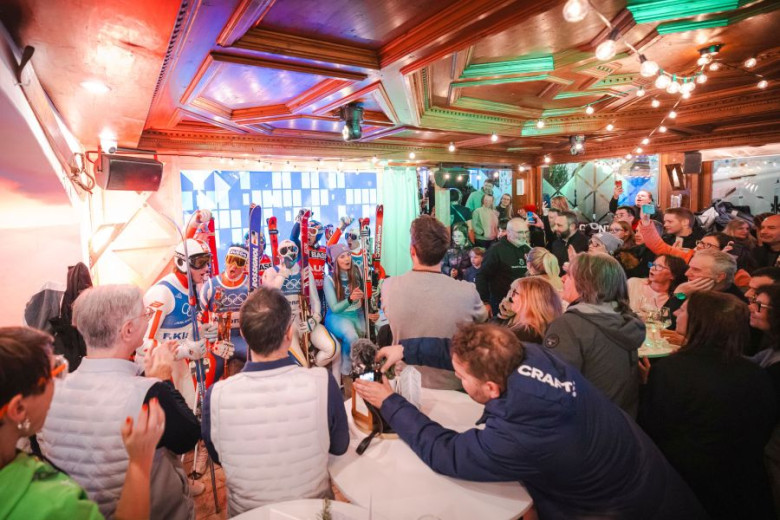 Tina Maze devoted precious time to entertaining visitors, performing “Cik Cak” with Retro Band. Photo: Anže Furlan
-
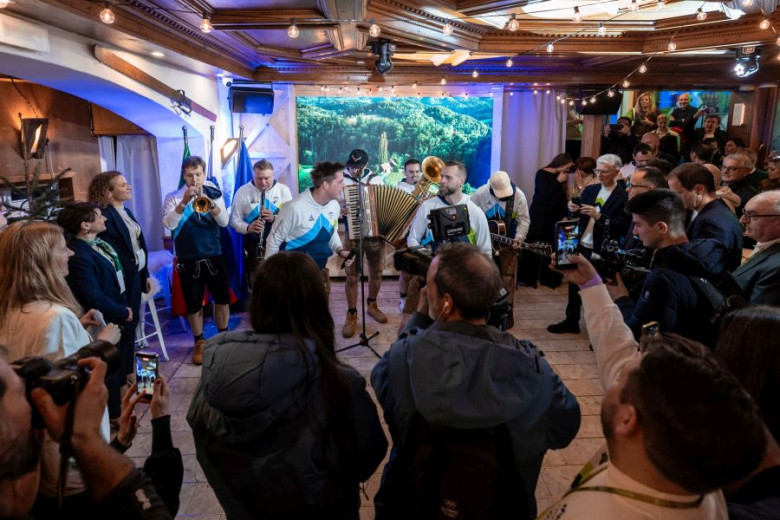 For musical entertainment, the band Fehtarji energized the Cortina square at the start of the Games with their song “Moja Slovenija.” Photo: Anže Furlan