Date: 1. October 2026
Time to read: 2 min
This year marks the Year of Cankar. Exactly 150 years have passed since the birth of Ivan Cankar, one of Slovenia's greatest writers and playwrights. This anniversary year will feature numerous performances, exhibitions, film events, walks, literary evenings and other events, but above all it offers a new opportunity to discover Cankar.
The Municipality of Vrhnika, his birthplace, together with Ilirska Bistrica, has declared this the Year of Cankar and Kette, as this year also marks the 150th anniversary of the birth of Dragotin Kette.
Yet Cankar is not interesting merely because this year marks the 150th anniversary of his birth.
He remains compelling because, more than a century ago, he was already able to pose important national questions.
What turns a person into a lackey? Why do people renounce their own convictions? Where does patriotism end and nationalism begin? Is the law always just? How much are we prepared to sacrifice for our own freedom?
Cankar was not a writer who flattered the Slovenians. He was a writer who held up a mirror to them.
From Vrhnika to Vienna
Ivan Cankar was born on 10 May 1876 in Vrhnika into a large and impoverished family. His father was a tailor, and the family lived in constant hardship. The experience of poverty remained with Cankar throughout his life and later became one of the most important themes in his literature. He did not write about poverty as someone observing it from afar. He knew it first-hand.
That is why, for Cankar, a social question is always also a moral one. He was interested not only in how much money a person had, but in how much dignity society allowed them.
What happens to someone born at the wrong end of the social ladder? Do they really have the same opportunities as someone born into wealth?
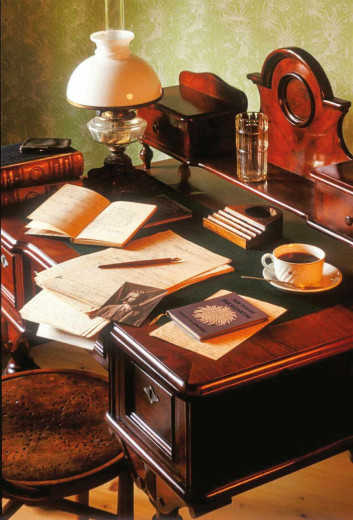
His mother held a special place in his world. The image of the suffering and self-sacrificing mother runs through his work and finds its most recognisable expression in the novel On the Slope (Na klancu). Cankar's mother is not merely a literary character, but almost a symbol of everything the writer understood as the sacrifice of ordinary people.
-
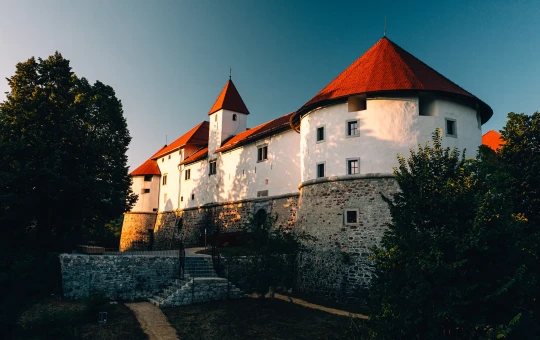
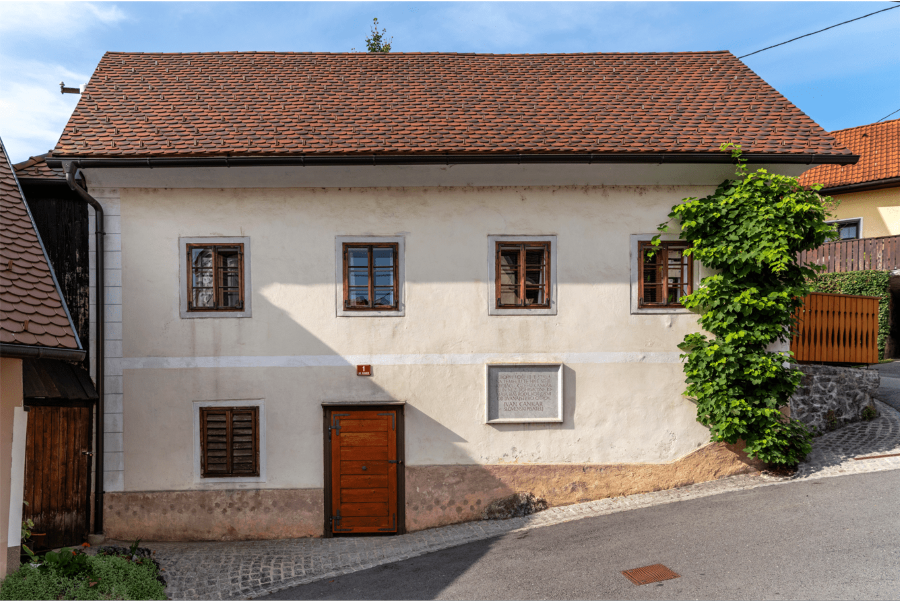
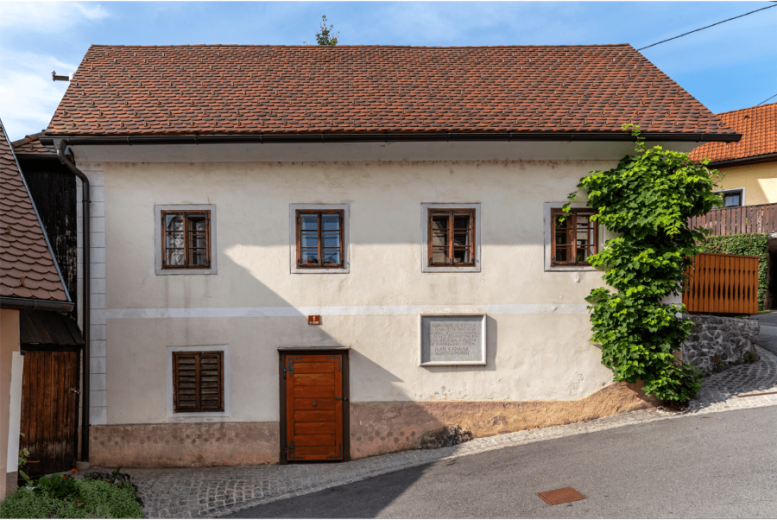 City of Vrhnika remembers its native son with the Cankar Memorial House, a monument and a literary trail - Along the Path of Cankar's Youth. Photo: Wikipedia
-
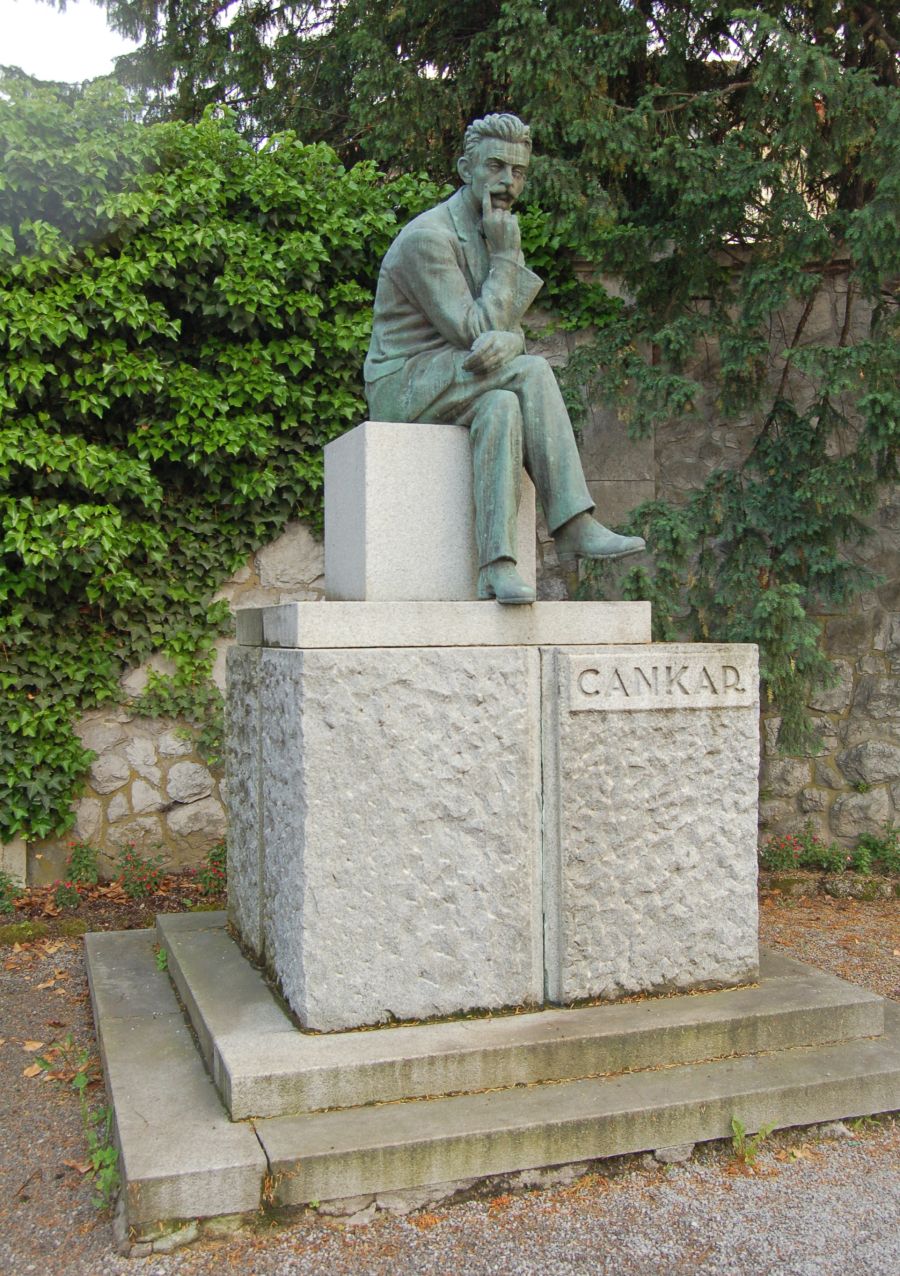
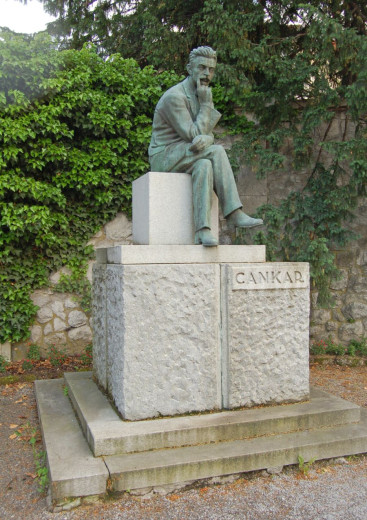 In 1919, Vrhnika began plans for a monument to Cankar. Slovenian emigrants in America helped raise funds, and the monument was unveiled in summer 1930. Photo: Wikipedia
In Ljubljana, while attending secondary school, Cankar came into contact with the generation that would later become the heart of Slovenian modernism. At the Zadruga society, he mixed with Dragotin Kette, Josip Murn and Oton Župančič. They were young, daring and convinced that Slovenian literature had to take a step forward. Cankar took that step with particular determination.
In 1896, he left for Vienna. He did not complete his studies, but the city became his true university. There he became acquainted with European literature, theatre, philosophy and political ideas. He read Nietzsche, Ibsen, Maeterlinck, Verlaine, Dostoevsky, Gorky and other European authors. Their influence were considerable, but Cankar never became an imitator of any of them. Drawing on European modernism, he fashioned something distinctly his own.
His Erotica (Erotika) caused a scandal in 1899. Yet youthful decadence was not where Cankar ultimately found his voice.
Cankar increasingly turned his attention to questions concerning humanity and society.
He wrote On the Slope (Na klancu), The Ward of Our Lady of Mercy (Hiša Marije Pomočnice), Martin Kačur: The Biography of an Idealist (Martin Kačur: Življenjepis idealista), The Bailiff Yerney and His Rights (Hlapec Jernej in njegova pravica), King of Betajnova (Kralj na Betajnovi), Scandal in St Florian Valley (Pohujšanje v dolini šentflorjanski), The Serfs (Hlapci), Images from Dreams (Podobe iz sanj) and numerous other works.
He became the first Slovenian writer to earn his living from writing for a significant part of his life. But life as a professional writer was far from comfortable. Cankar often lived in poverty, moved frequently, owed money and supported himself by writing incessantly.
He was an artist who wanted to make a living from his writing at a time when the Slovenian literary world had not yet made room for such a life.
-
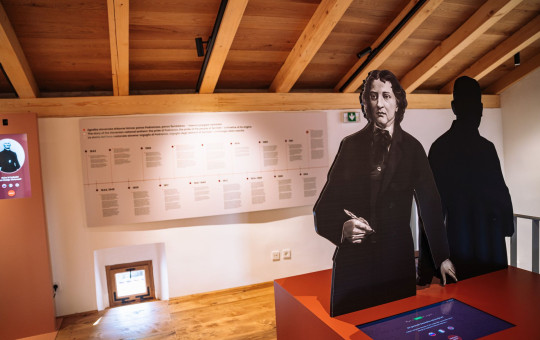
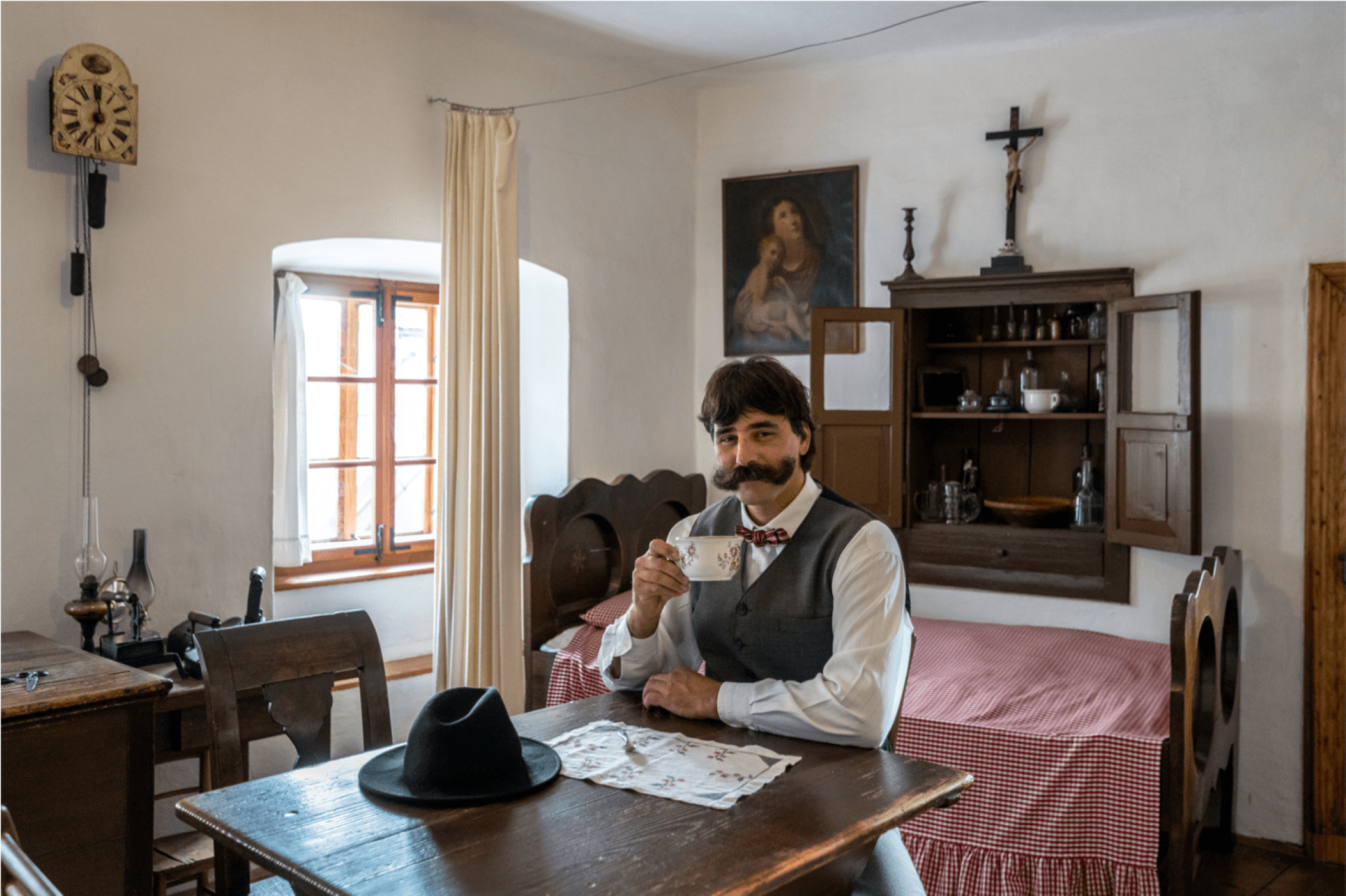
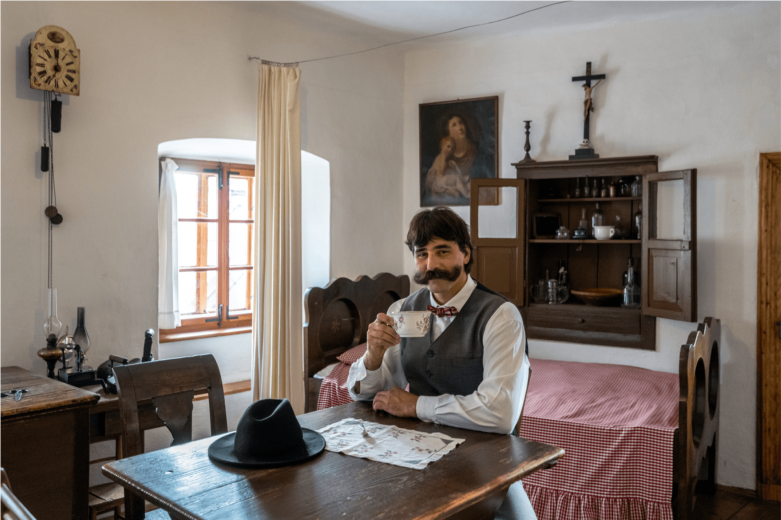 A scene from memorial house: Cankar’s loving mother prepared him a cup of coffee, but he rejects it. Later, he recalls her pain in his book "Na klancu". Photo: Wikipedia.
Rožnik and rebellion
If there is a place in Cankar's biography almost as important as Vrhnika and Vienna, it is Rožnik Hill in Ljubljana.
In 1910, he moved to Rožnik and remained there until 1917. There he wrote, reflected, and received friends and visitors.
A veritable literary circle formed around him. Cankar was no longer merely a writer. He had become a public figure.
On Rožnik, he lived somewhat removed from the world, yet at the same time remaining in constant conflict with it. His life was marked by alcohol, health problems, romantic relationships, friendships and numerous controversies. Yet he cannot be understood solely through his weaknesses. He was a man of extraordinary creative energy and knew how to transform his personal anguish into literature.
Today, his former living quarters on Rožnik have been turned into a memorial room, while the summit of the hill is named Cankarjev vrh.
But Cankar's rebellion was not only literary; it also reflected his worldview. He believed that society was responsible for those who are weaker, poorer or deprived of opportunity. This is the essence of The Bailiff Yerney and His Rights. Yerney is a man who has worked all his life, only to realise that society does not even recognise his right to the fruits of his labour.
Cankar thus raises a question that reaches far beyond the story of a single farmhand: is everything lawful necessarily just?
The play The Serfs is similarly unsparing. In it, Cankar portrays people who quickly adapt their convictions to a new balance of power. A lackey, therefore, is not merely someone who serves a master.
A lackey is someone who renounces their own conscience because it is easier that way. This is one of Cankar's most powerful ideas.
A person can be enslaved by power, money or ideology – or even by their own fear.
Cankar was equally unsparing in his view of the Slovenian nation. He loved the Slovenians, but could not abide hollow nationalism. He believed that true love of one's nation also means being able to tell it an uncomfortable truth.
In 1913, in his lecture Slovenians and Yugoslavs (Slovenci in Jugoslovani), he advocated the political unification of the South Slavs. Yet he did not advocate the disappearance of the Slovenian nation. The Slovenian language and culture formed the foundation of his identity. Cankar sought unity, not erasure.
-
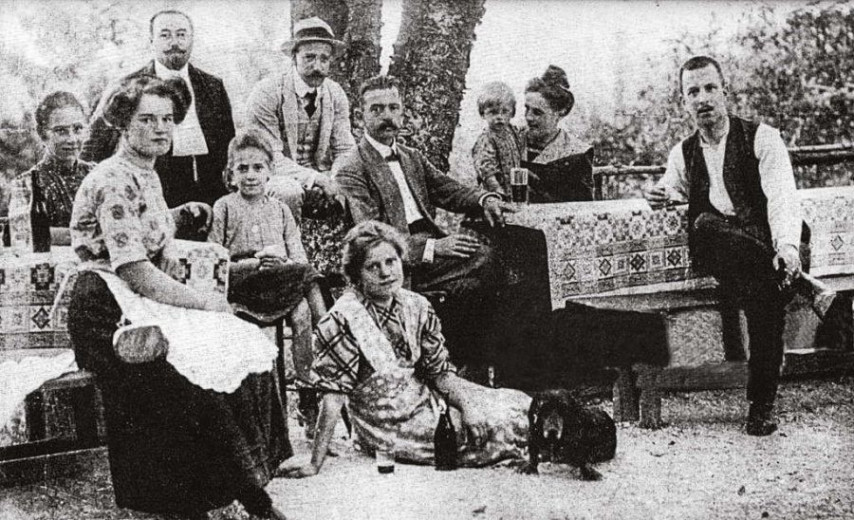 Ivan Cankar with friends, Rožnik. Photo: Wikipedia
From man to symbol
Cankar died on 11 December 1918, aged just 42. He died at a time when the entire political map of Europe was changing around him. Austria-Hungary had collapsed, a new Yugoslav state had emerged, and the Slovenian lands were entering an entirely new era.Cankar did not live to see this new world. Yet after his death, his life took on symbolic significance.
Numerous streets, roads, squares and other public spaces throughout Slovenia are named after Cankar, while schools and cultural institutions bear his name.
The house where he was born has been preserved in Vrhnika, a memorial room on Rožnik is dedicated to him, and a monument to him stands in front of Cankarjev dom in Ljubljana.
The most imposing tribute to his legacy is Cankarjev dom itself, one of Slovenia's foremost cultural institutions. The Cankar Award, presented for the best original literary work in Slovenian, and the Cankar Distinction, awarded to young people for achievement in Slovenian language and literature, are also named after him.
Cankar has also become part of Slovenia's everyday landscape.
We encounter his name on maps and road signs, in school corridors and theatre programmes. Yet no street or monument can tell us as much about him as his works can.
-
 Cankar lives in Slovenia’s landscape, but his symbolic writing and thoughts reveal him more deeply than any street or monument. Photo: Wikipedia
Remembering Cankar's values
The Year of Cankar commemorates not only the writer himself, but also the values he stood for.
Cankar's characters must choose between conscience and self-interest, freedom and comfort, and truth and conformity. For him, a nation is not something merely to be praised, but something that must constantly be built.
For him, the homeland is not a flag or a slogan, but language, culture, memory and, above all, responsibility.
If The Serfs still unsettles us, if On the Slope still moves us, if the fate of Bailiff Yerney still angers us, and if we still recognise ourselves in Cankar's satirical portrayals of Slovenian society, then Cankar is more than a monument. He is still among us.