Date: 1. December 2025
Time to read: 1 min
The childhood of past generations was inseparably linked to free play in courtyards, meadows, or in front of the family home. The world children created was built on imagination, resourcefulness, and community. Their main “tools” were pebbles, elastic bands, chalk, or simply their own bodies, while the rules emerged spontaneously. Today, children grow up surrounded by an abundance of activities and organized programmes, yet toy - free play, once taken for granted, is becoming increasingly rare.
Especially in cities, children living in apartment buildings often do not even know one another. In rural areas, contact among children remains somewhat more genuine and frequent, but the digital world is slowly replacing the natural playground there as well.
The differences between urban and rural childhoods are thus fading, except perhaps for the possibility of running freely in front of the house or exploring a nearby forest.
Children today are also less excited by toys or quickly grow tired of them. In the past, the attitude toward toys was noticeably more respectful.
-
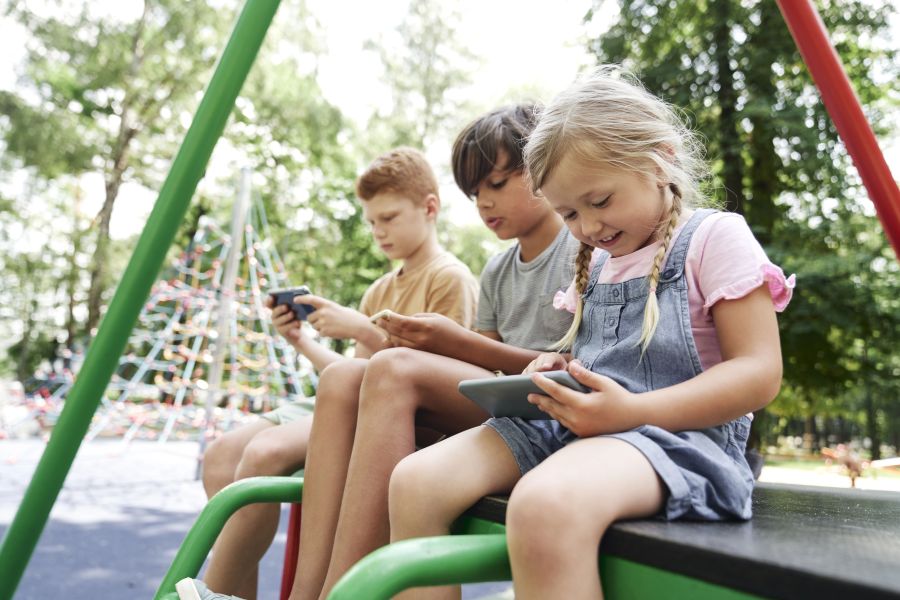
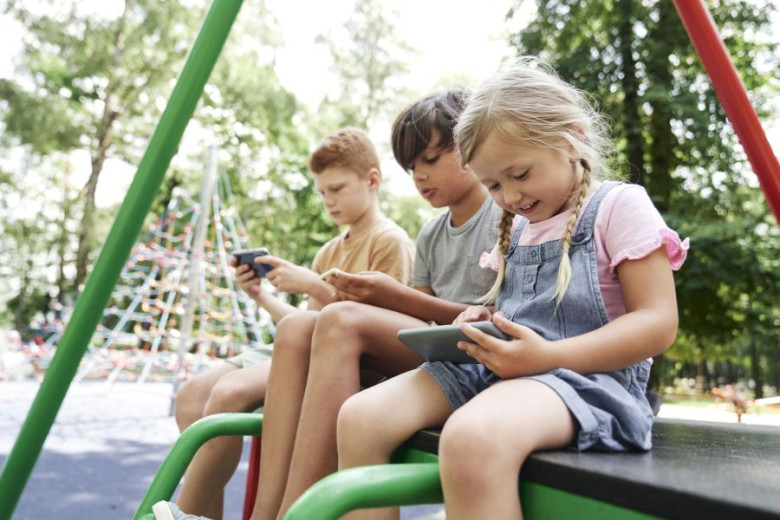 Excessive use of mobile phones, including social media and gaming apps, can lead to screen addiction, which can negatively impact mental health by causing anxiety, depression, and sleep disturbances. Photo: gpointstudio /Depositphotos.com
Popular Games in Slovenia Long Ago
Play has always played an important developmental role: it encouraged cooperation, imagination, motor skills, social interaction, and feelings of achievement.
Playing with pebbles taught precision and rhythm; the “rooster fight” developed competitiveness, balance, and quick judgment.
“Blind horse” strengthened orientation and sound perception, while hopscotch improved balance and spatial awareness. Games like fuclanje allowed constant adaptation of rules, as children continuously invented new challenges.
-
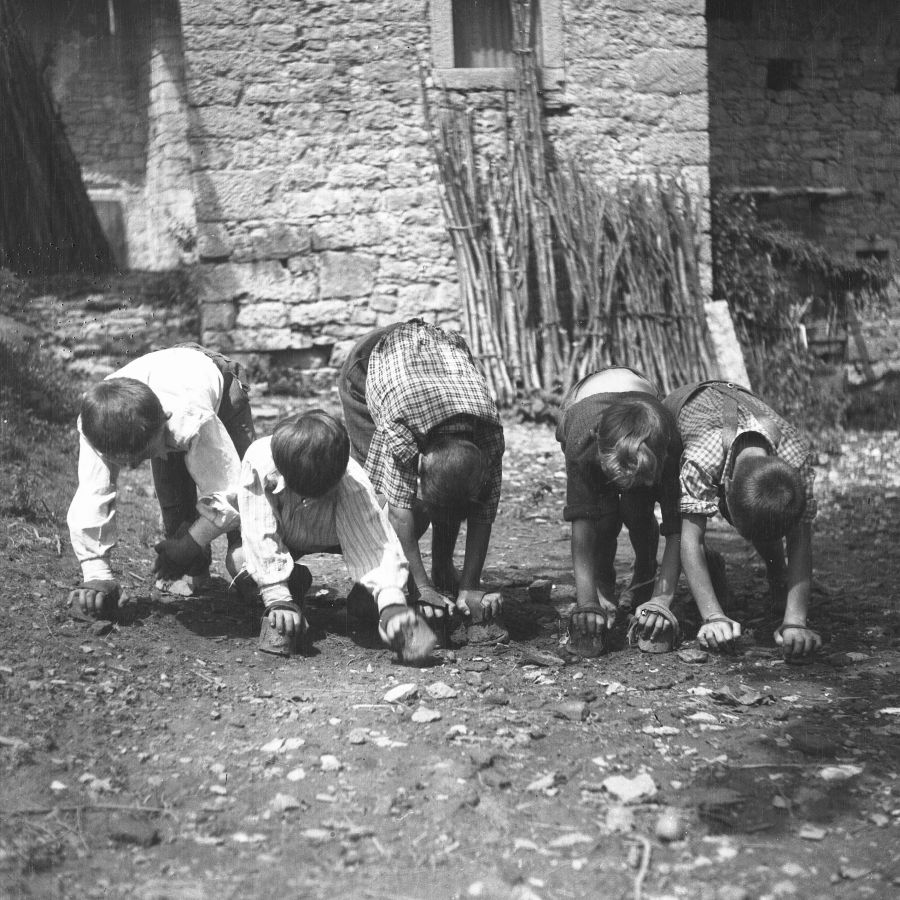
 Children playing “horses” with horseshoes on their hands, Robedišče, 1951. Photo: Jernej Šušteršič
-
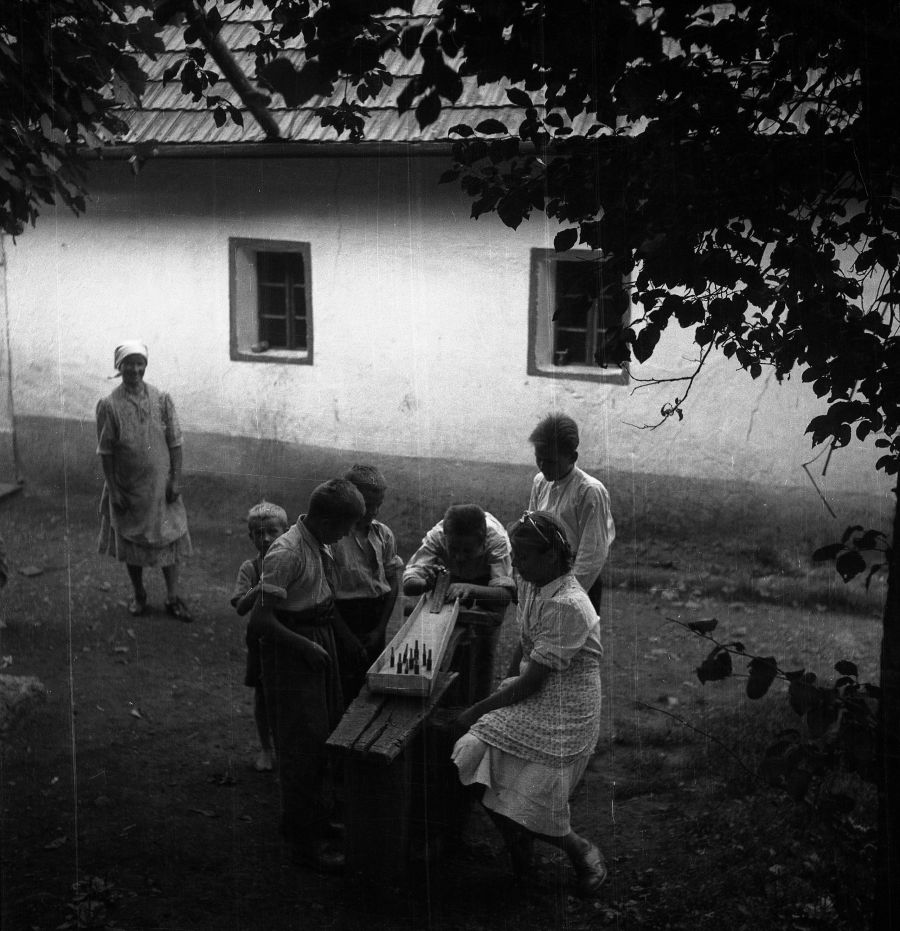
 Children playing “kjagəlplac”, Mali Kal, 1950. Photo: Jernej Šušteršič
-
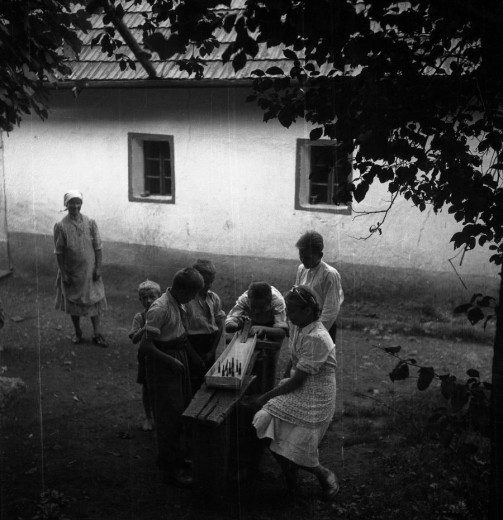
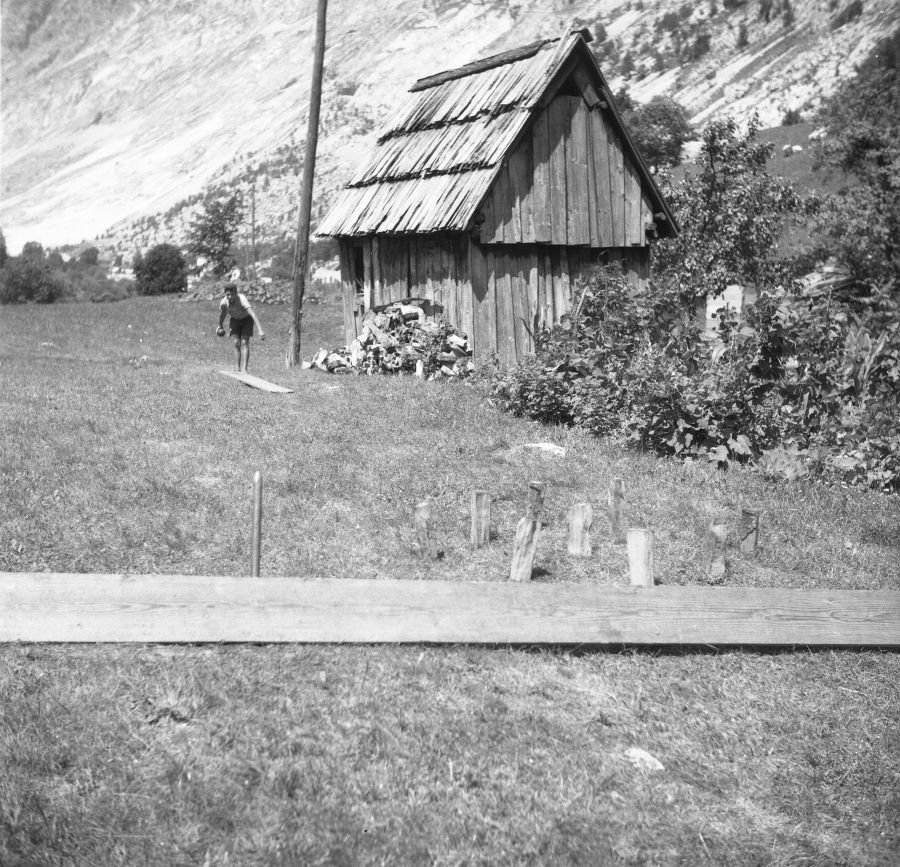
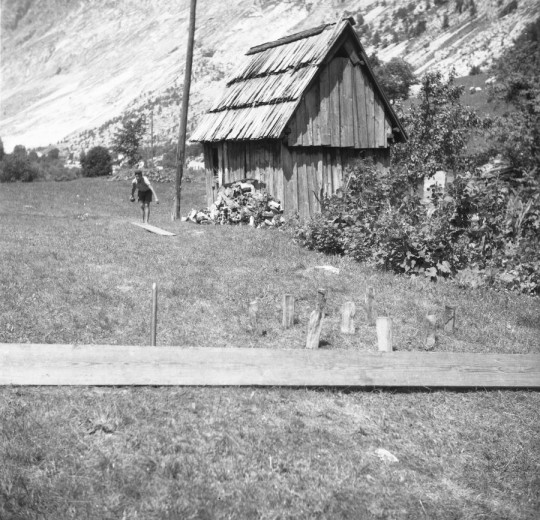 Children in Soča bowling (using firewood as pins), Soča, 1952. Photo: Boris Orel
The Lasting Value of Simple Games
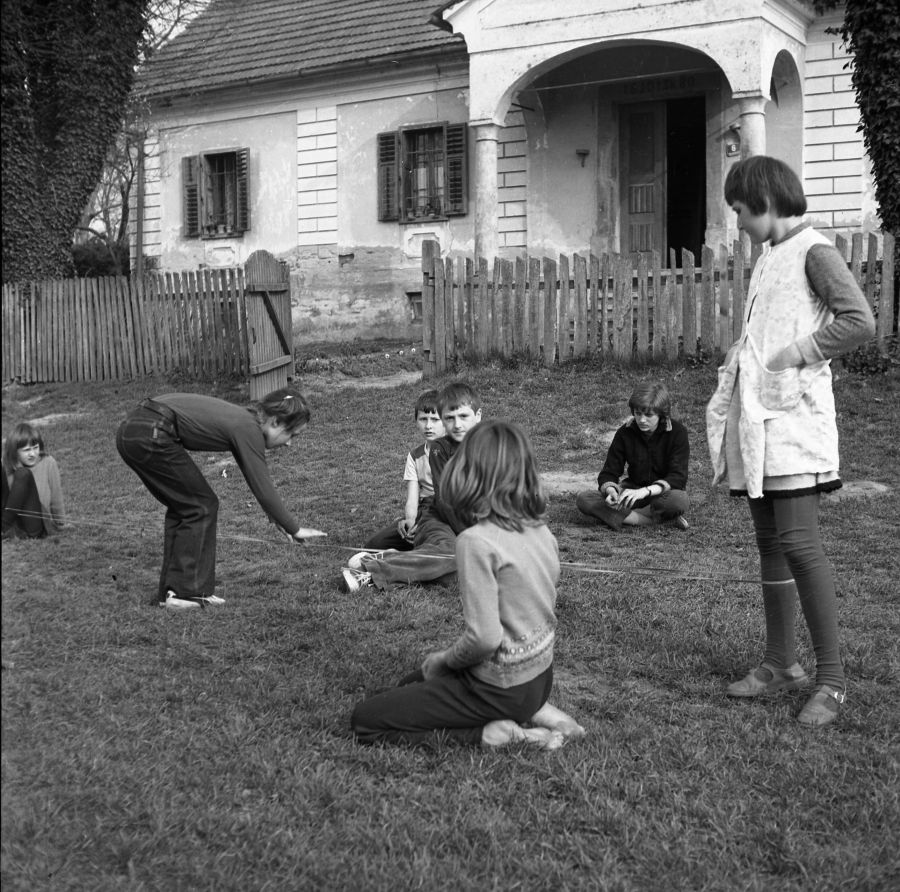
In somewhat later periods, the elastic jumping game gumitvist became one of the most popular children’s activities. It required rhythm, coordination, and precise jumps, similar to the hula - hoop, which quickly became a modern play accessory. Children often gathered for games such as “rotten egg,” where the key to winning was noticing the exact moment when the handkerchief dropped. Zemljo krasti (“steal the land”) demanded tactics, courage, and speed, as players defended their territory while trying to conquer others’. Tension peaked in the game Kdo se boji črnega moža (“Who’s Afraid of the Black Man”), which combined chasing, strategy, and team competitiveness. Classic games also included blindfold tag, skipping rope, “Is the Bridge Strong?”, and “Little Joe”.
All these activities gave children opportunities for movement, anticipation, and cooperation.
Some games survived with more precise rules, having been passed down almost unchanged. In “rotten egg,” the child who noticed the handkerchief had to chase the “rotten egg”; in zemljo krasti, the aim was to gradually take over territory until one player controlled the whole circle.
The common thread among all these games was simplicity, which allowed for the greatest creativity.
All that was needed was imagination, movement, and companionship without technology, equipment, or predetermined instructions. Rules were passed down orally, and the playground shifted with the seasons, available space, and the group of children.
-
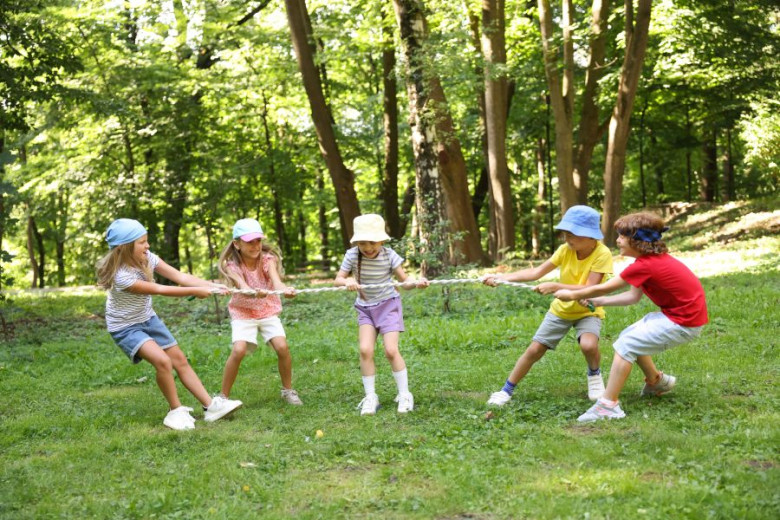 Tug of war is a sport in which two teams compete by pulling on opposite ends of a rope, with the goal of bringing the rope a certain distance in one direction against the force of the opposing team's pull. Photo: NewAfrica/Depositphotos.com
-
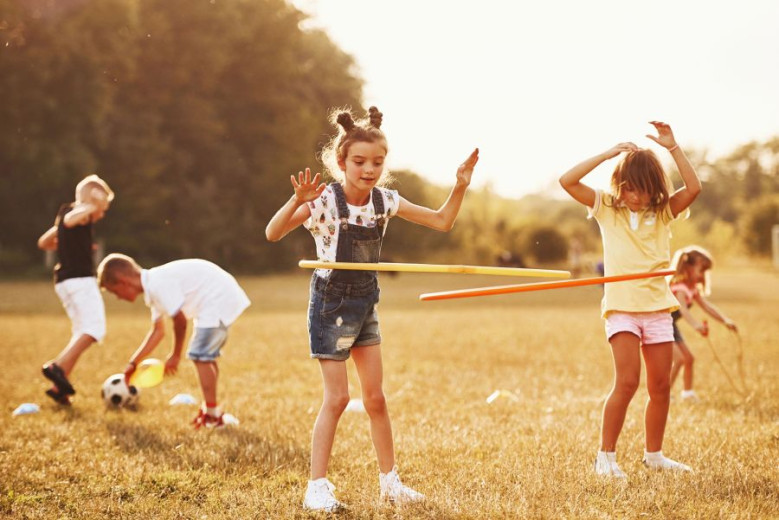 Hula hooping requires rhythmic movement and coordination, which helps children develop their gross motor skills. It also aids in refining their fine motor skills as they learn to control the hoop's movement. Photo: myronstandret/ Depositphotos.com
The Valuable Qualities of Play
Play remains fundamental to a child's development. It has been shown to reduce stress, strengthen self-regulation, enhance socio-emotional and language skills, and stimulate cognitive growth. During play, neurochemical processes are activated that make learning easier and build neural connections. Research on the absence of play further confirms its importance: by enabling children to process conflicts, regulate emotions, and acquire new skills, play is essential for healthy development.
More than purchased toys, it is creative and open-ended play that truly matters - the kind that once filled courtyards and meadows and still retains its timeless charm today.
-
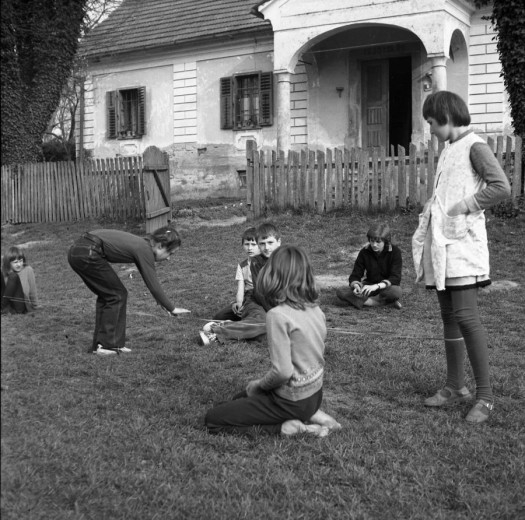 Elastic-band game “gumi-twist”, Banovci, 1977. Photo: Marija Makarovič
-
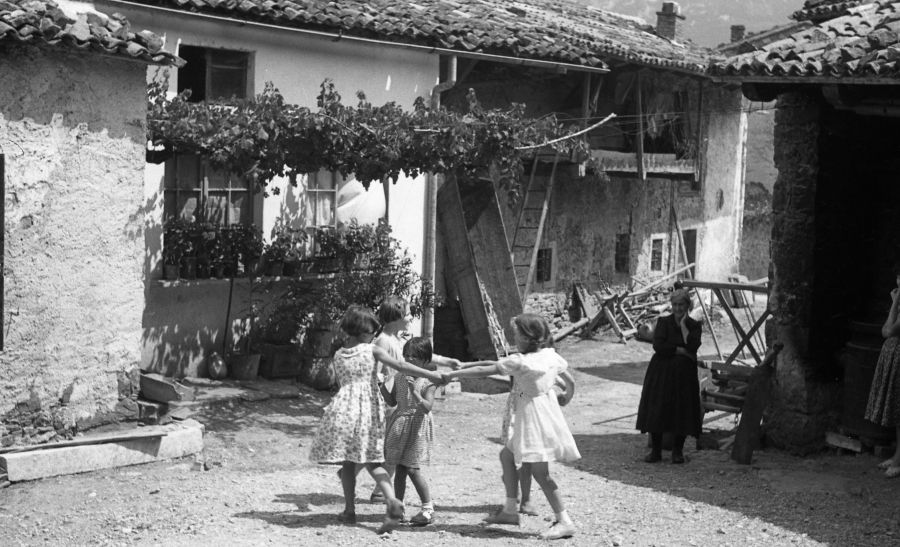
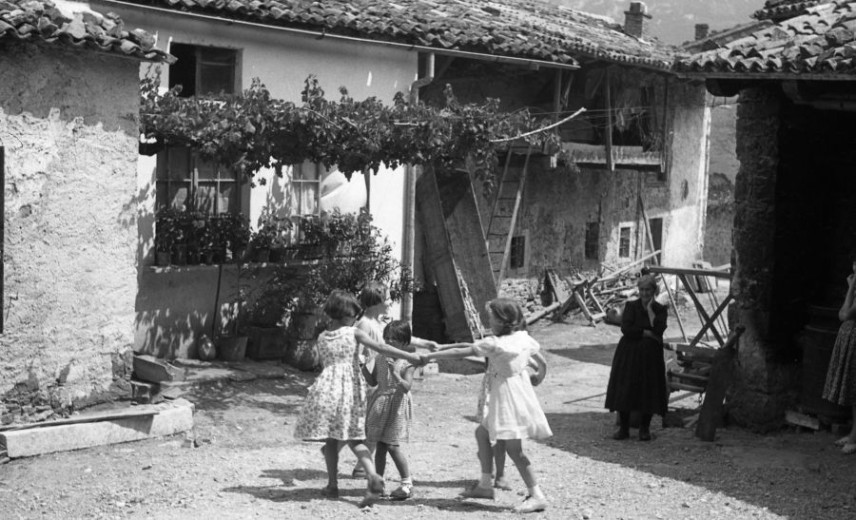 Children dancing in a circle (“Ringa raja” dance). Photo: Franci Šarf