Date: 16. July 2026
Time to read: 2 min
We usually experience plants through sight, smell, or touch. But can we also hear them? At the Arboretum Volčji Potok, this intriguing question is at the heart of an innovative project that invites visitors to experience the plant world through sound.
The answer comes in the form of the Floral Orchestra (Cvetlični orkester), a project that uses modern technology to reveal the hidden processes of plants. By transforming their bioelectrical signals into sound, it offers an entirely new perspective on plant life.
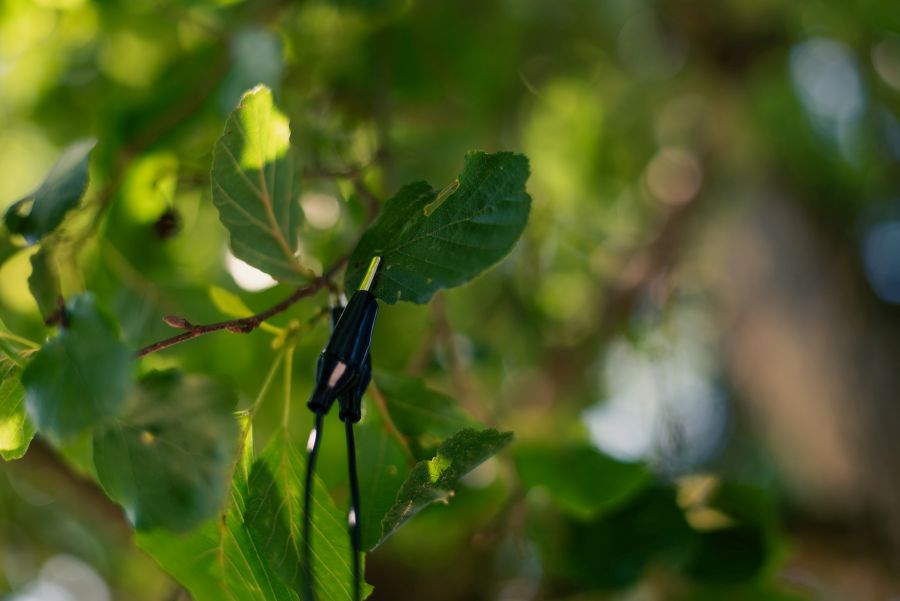
All plants generate bioelectrical signals as part of their life processes and in response to their environment. Although these signals cannot be perceived directly by humans, they can be measured using electrodes and sensors and translated into sound. The result is a unique interpretation of the plant world, allowing us to perceive processes that would otherwise remain invisible and inaudible.
"Plants are constantly communicating through bioelectrical signals. We don't listen to these signals directly; instead, technology translates them into sound. This allows visitors to experience nature in a completely new way – through hearing," explains multimedia artist Miha Godec, one of the creators of the Floral Orchestra.
-
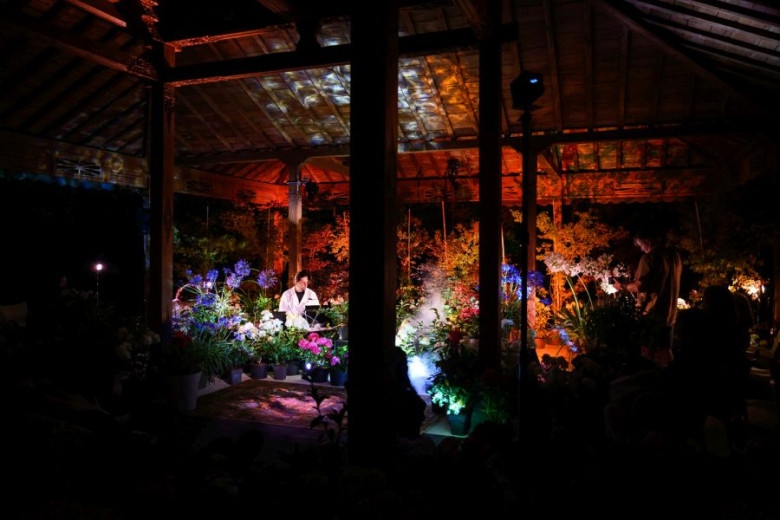 “Plants are constantly communicating through bioelectrical signals," explains multimedia artist Miha Godec. Photo: Katja Goljat
-
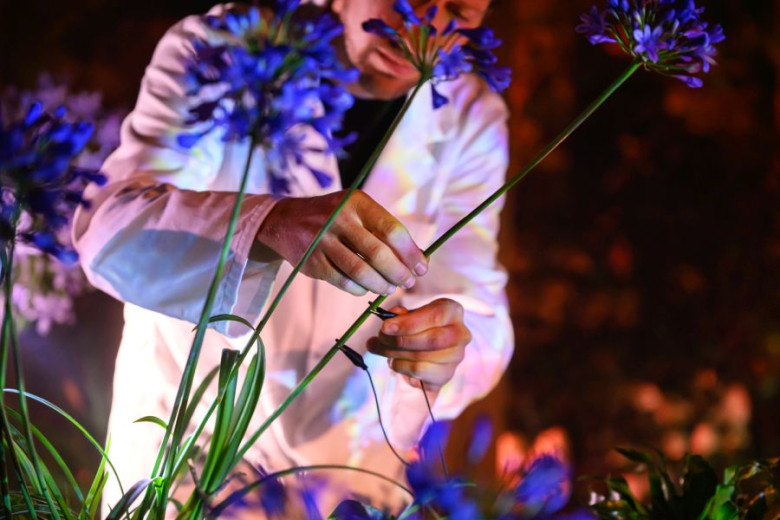 All plants generate bioelectrical signals that cannot be perceived directly by humans. Photo: Katja Goljat

Bioelectrical signals as music
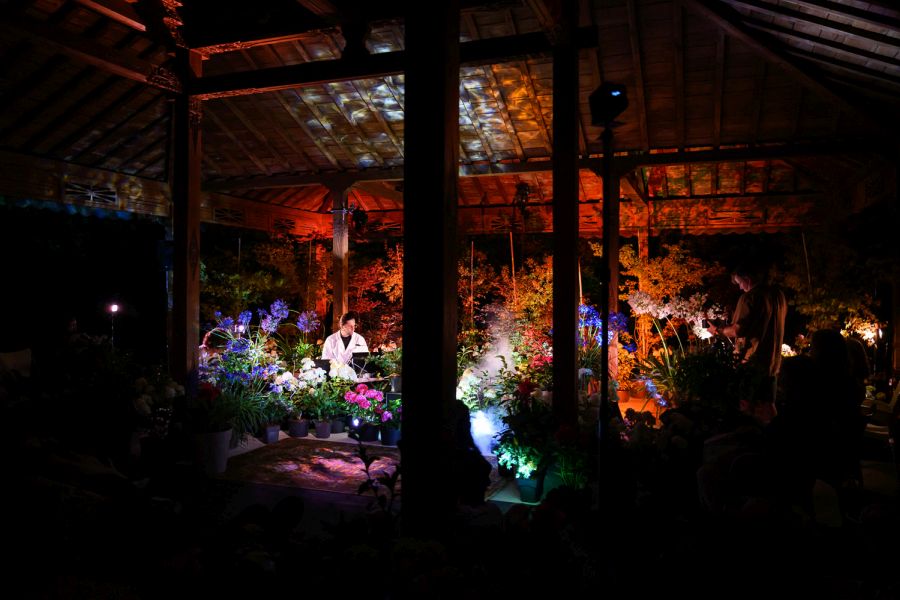
How does the Floral Orchestra work? The bioelectrical signals produced by plants are processed through sensors, electronics, modular synthesizers, and sound systems, creating subtle and ever-changing soundscapes. What visitors hear is not the actual "voice" of a plant, but an artistic interpretation of the data generated by a living organism. Since each plant's biological processes unfold at their own pace, every soundscape is unique and constantly evolving.
This process of converting biological data into sound is known as biosonification. It transforms information from living systems - most commonly plants - into an audible form, allowing us to perceive natural processes that are usually represented only through scientific measurements and numerical data.
"The Floral Orchestra is intended as the beginning of exploring new ways of connecting people with nature. We're especially pleased that part of the project will remain in the arboretum, allowing visitors to continue experiencing it long after the project itself has ended," says Miha Kačič, the project's creative director. Kačič is also working on an encyclopaedia of Slovenian trees, focusing on the unique sounds associated with different species, including the black alder.
A permanent sound installation has therefore been placed beside a black alder tree in the Arboretum Volčji Potok, enabling visitors to listen to the tree's bioelectrical signals even after the project concludes. It offers a slower, more immersive way of experiencing nature, drawing attention to the continuous processes taking place within plants, processes that remain beyond the reach of our eyes and ears.
The Floral Orchestra brings together science, technology, and botany, encouraging visitors to think of plants as living organisms in constant dialogue with their environment. At the Arboretum Volčji Potok, visitors are invited not only to observe plants, but to listen to them as well.
-
 Each plant's biological processes unfold at their own pace, every soundscape is unique and constantly evolving. Photo: Kaja Brezočnik
-
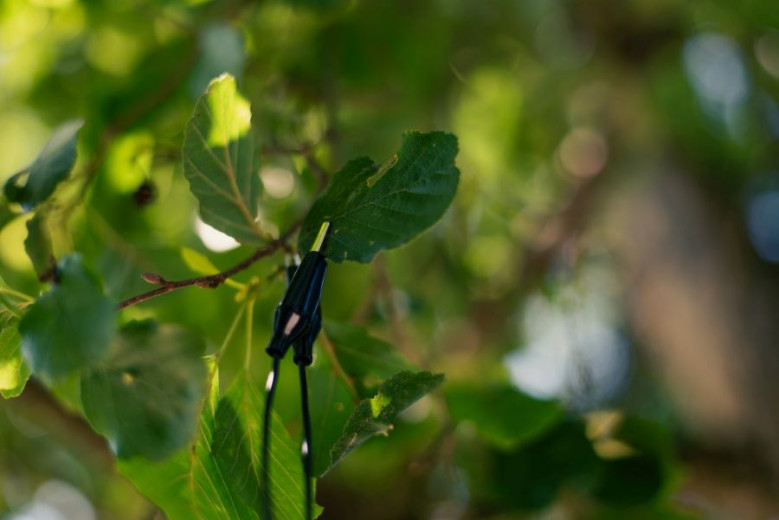 The bioelectrical signals can be measured using electrodes and sensors and translated into sound. Photo: Kaja Brezočnik