Date: 15. July 2026
Time to read: 5 min
Hidden in a forest not far from Ljubljana, the cave of Županova jama (Mayor's Cave) is the largest show cave in central Slovenia. Shaped by the waters of the Dolenjska karst over millions of years, this natural wonder can now be admired up close by visitors. This year marks the one hundredth anniversary of the discovery of this underground gem, and many fascinating stories are tied to it.
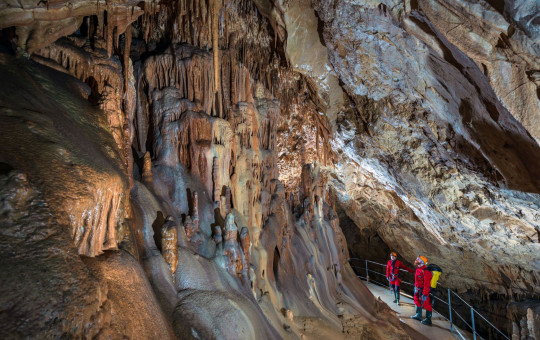
Inside, visitors are greeted by an astonishing subterranean world carved by a river that dissolved the limestone. The cave system extends for over 700 metres and is highly varied. Although the path through the cave includes a number of stairways, your effort will be rewarded with views of diverse chambers and impressive dripstone formations. The cave is open all year round and most parts have a constant temperature of around 10°C. A guided tour lasts just over an hour.
An adventurous journey into the cave
As early as the 17th century, Janez Vajkard Valvasor, a nobleman who explored the Slovenian lands, described a section of the cave known as Ledenica (Ice Cave) in his famous work Slava Vojvodine Kranjske (The Glory of the Duchy of Carniola). Several centuries later, Josip Perme, mayor of the former municipality of Št. Jurij pri Grosupljem, began to wonder whether the numerous karst chasms in the surrounding area might lead to a rich underground world. On 26 May 1926, he and his two companions descended into a chasm using a ladder. After hours of exploring, just as their candles and torches were beginning to fade, they came upon a magnificent chamber adorned with stunning stalactites and stalagmites.
"It's more beautiful here than in heaven," they marvelled.
-
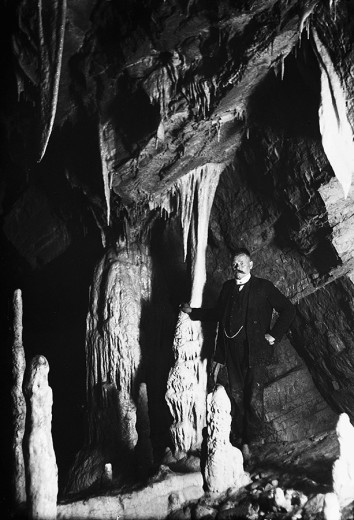 Josip Perme, after whom the cave is named, had wondered since his childhood whether there might be something more hidden beneath the ground. Photo: Albin Seliškar
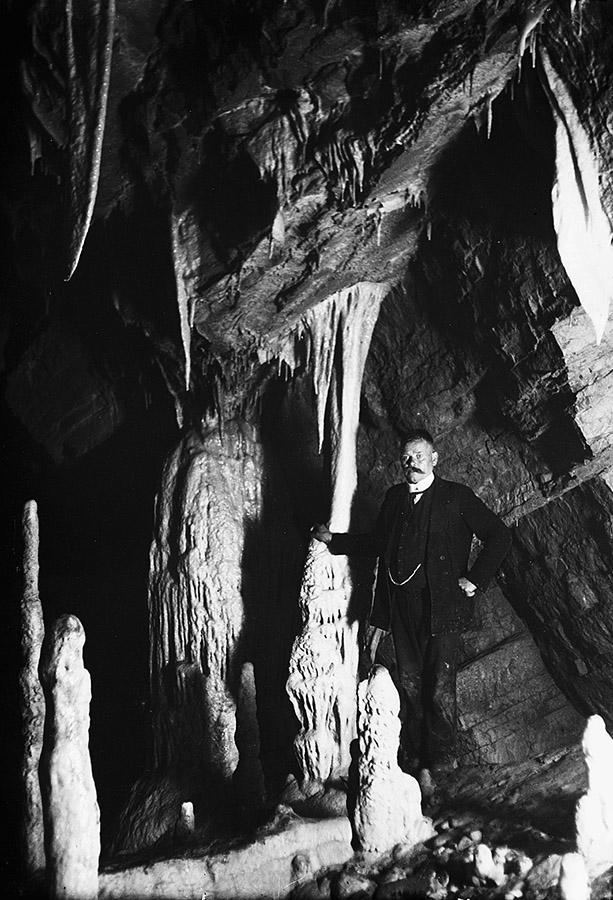
A few weeks later, members of the Cave Exploration Society conducted a formal scientific survey of the cave. Županova jama was the first cave in Slovenia in which a standardised protocol for cave exploration was applied and the resulting report, published in Geografski vestnik (Geographical Bulletin), is considered the first scientific speleological publication in the Slovenian language. The discovery and exploration of Županova jama therefore mark an important milestone in the development of Slovenian speleology, the study of underground caves, particularly karst caves.
In 1996, an eighth chamber – Igor's Hall – was discovered, though it remains accessible only to experienced cavers. Scientists do not rule out the possibility of further discoveries.
Visitors welcome!
Just one year after its discovery in 1927, the cave welcomed its first visitors. Initially, entry was only possible via a wooden ladder through the ceiling of Perme's Hall. In 1935, a tunnel was excavated to connect two sections of the cave, making it more accessible to visitors. Among those who helped to excavate the 34-metre tunnel was a local resident from a neighbouring village who had gained experience working in American mines. To determine the correct direction, the workers tapped the rocks on both sides with hammers and followed the sound.
A visit to the cave offers a fascinating and educational experience, explains Damjan Viršek, President of the Županova jama Society.
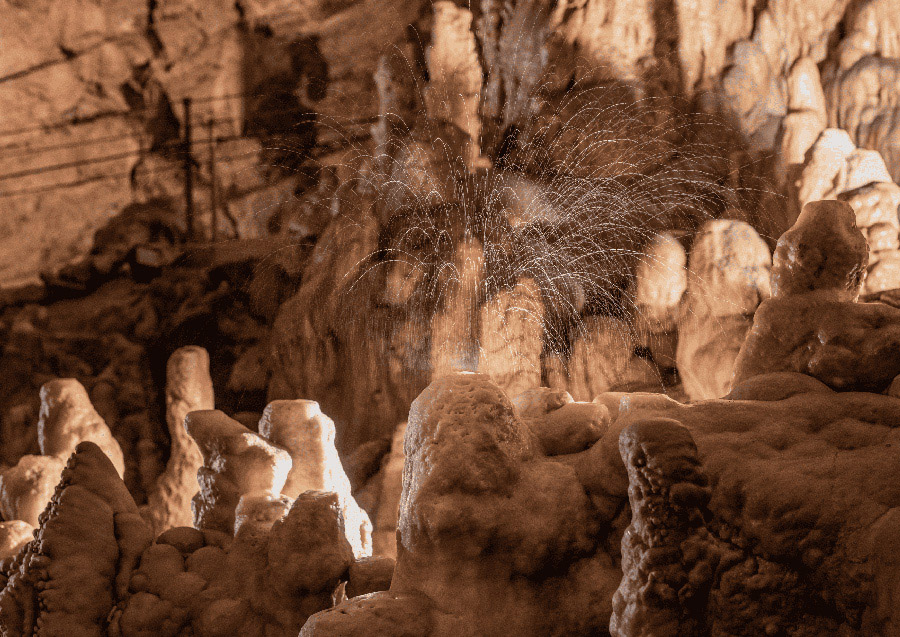
"Visitors are surprised to find that almost all of the speleothems glisten. This is because light reflects off the surfaces of calcite crystals, some of which are as large as a coin. Many are also amazed by the sheer size of the cave, likely because the chambers are so varied and there is a great deal to see."
The cave has also caught the eye of filmmakers. Its picturesque subterranean setting has served as the backdrop for a German film featuring the Apache chief Winnetou, one of the most beloved fictional heroes of the last century, as well as the classic Slovenian children's film Kekčeve ukane (Kekec's Tricks).
-
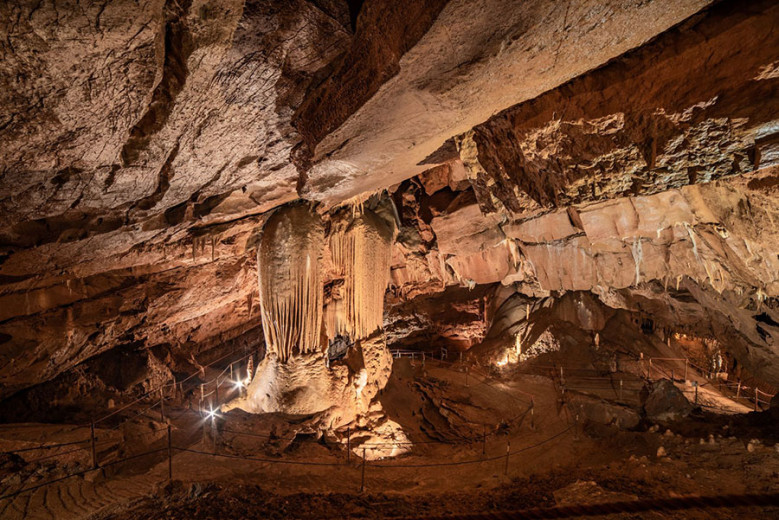 Matjaž’s Hall is home to the famous dripstone formation known as the Throne of King Matjaž. This formation is named after the legendary King Matjaž from Slovenian folk tales. This part of the cave also served as a filming location. Photo: Marjan Trobec
Wildlife
During your visit, you may see bats taking shelter in the cave. They rest there during the day and hibernate in the cave during the colder months.
Other typical cave-dwellers include beetles, woodlice, spiders and crickets, as well as other species that have adapted to life underground.
However, the olm – the most iconic resident of the Slovenian underground – is not found in Županova jama. This delicate amphibian requires permanently flowing water to survive, and the cave is located far above the permanent water table of the karst aquifer. Nevertheless, the olm has been observed in the wider Županova jama area, confirming that it lives within the surrounding underground water system.
Since cave-dwelling animals cannot rely on sight in the darkness, their other senses – particularly touch and smell – are more highly developed. Having adapted to a life completely devoid of light, they are typically also pigment-free.
A fragile cave ecosystem
Karst rock is highly permeable, meaning that contaminated water can quickly reach underground areas. As water purifies much more slowly in karst aquifers than elsewhere, contamination can have long-lasting consequences for both cave-dwelling animals and the quality of drinking water.
-
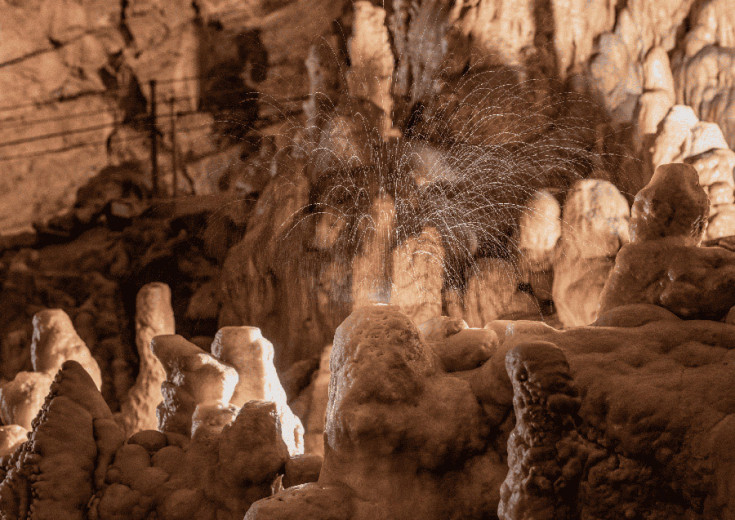 Stalactites and stalagmites form extremely slowly. Rainwater percolates through limestone, dissolving the rock and carrying it into karst caves. As the water evaporates, tiny calcite crystals are deposited. Photo: Peter Zakrajšek
As Damjan Viršek explains:
"By visiting the cave, we immerse ourselves in a natural wonder that has taken millions of years to form. Long after we are gone, the cave – with its wonderful speleothems and fascinating wildlife – will still be here, changing only imperceptibly beyond the tourist path, provided we visit it responsibly and respectfully. It is important that we interact with nature responsibly and respect every day, not just when we are in the cave."
Featured image: Damjan Viršek