Date: 14. August 2026
Time to read: 4 min
Slovenia has been committed to advancing the field of deafblindness for two decades. In 2021, it became the first country in the world to enshrine the tactile sign language in its Constitution, and in 2025 it adopted the Tactile Sign Language Act. The Ljubljana Memorandum 2026 has now attracted global attention, marking a new era in the understanding of deafblindness. The message is clear: every human being has the right to be heard, seen, understood and accepted.
Deafblindness is a distinct disability in which hearing and vision are so impaired that they cannot compensate for each other. It is therefore not merely the combined effect of blindness and deafness, but a distinct disability in its own right.
As emphasised by Dr Simona Gerenčer, co-founder of the Deafblind Association of Slovenia DLAN, people with deafblindness form an exceptionally diverse group. They differ in terms of the age at which the impairment occurred, the extent to which each sense is impaired, how the two impairments interact, and whether they have any associated disabilities. They also differ in terms of their life experiences, the way they perceive their environment and communicate, their level of language development and the support they receive from the community.
In everyday life, limited access to information and communication difficulties can make it harder for them to connect with others and express their needs, thoughts, and feelings. Loneliness, a lack of understanding, and an inability to communicate equally can lead to severe personal distress.
Tactile sign language is more than just a means of communication
People who are both deaf and blind perceive information from their surroundings in various ways, with touch playing a particularly important role. They also rely on any residual vision or hearing, as well as on their sense of smell and taste.
Tactile sign language has evolved in response to their diverse needs and modes of perception. Rather than being a single, uniform method of communication, it comprises different approaches adapted to each individual. For communication to be effective, the environment must adapt to the individual, not the other way around.
Deafblind people use a variety of methods to facilitate communication. These include the tactile alphabet on the palm, tactile sign language, and the Lorm alphabet, where specific points on the palm correspond to letters. They also use Braille and various electronic assistive devices. Interpreters play an important role in helping deafblind people to communicate and in explaining what is happening around them.
-
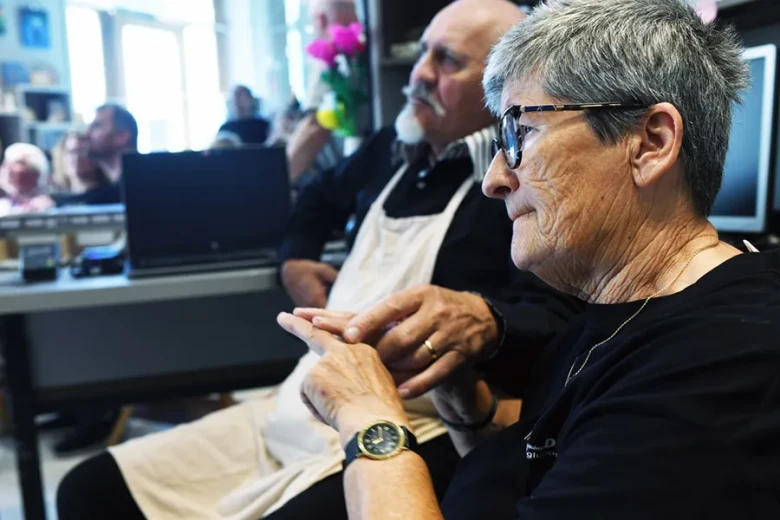 Deafblind people often receive information directly from their immediate environment. They can only perceive fragments of information at a time, which they then piece together into a coherent whole. Photo: Deafblind Association of Slovenia DLAN
-
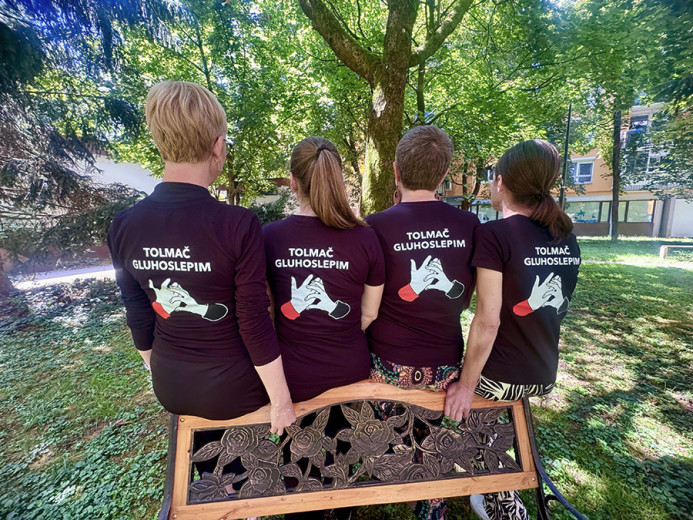 Interpreters for deafblind people must undergo professional training in various communication methods and the specific needs of deafblind individuals. Photo: Deafblind Association of Slovenia DLAN
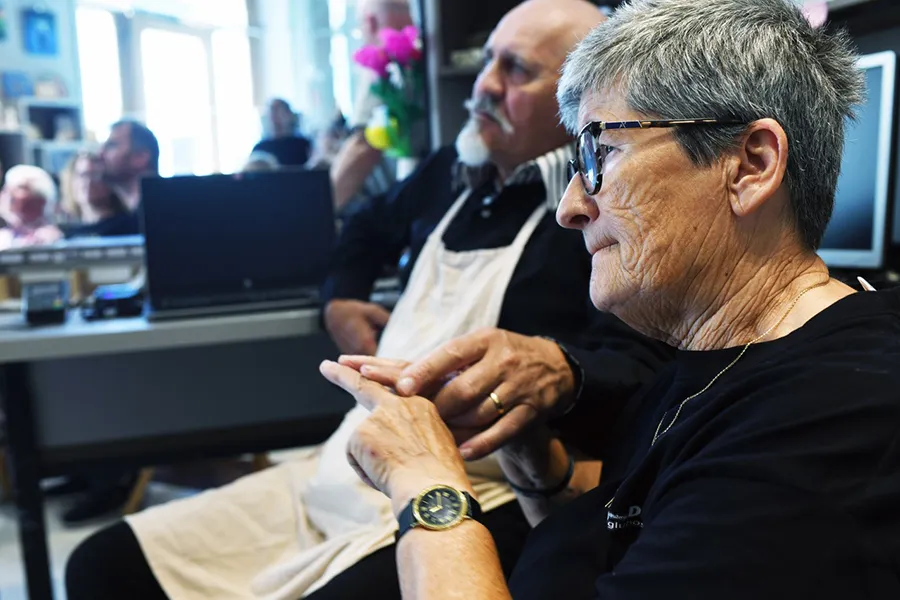
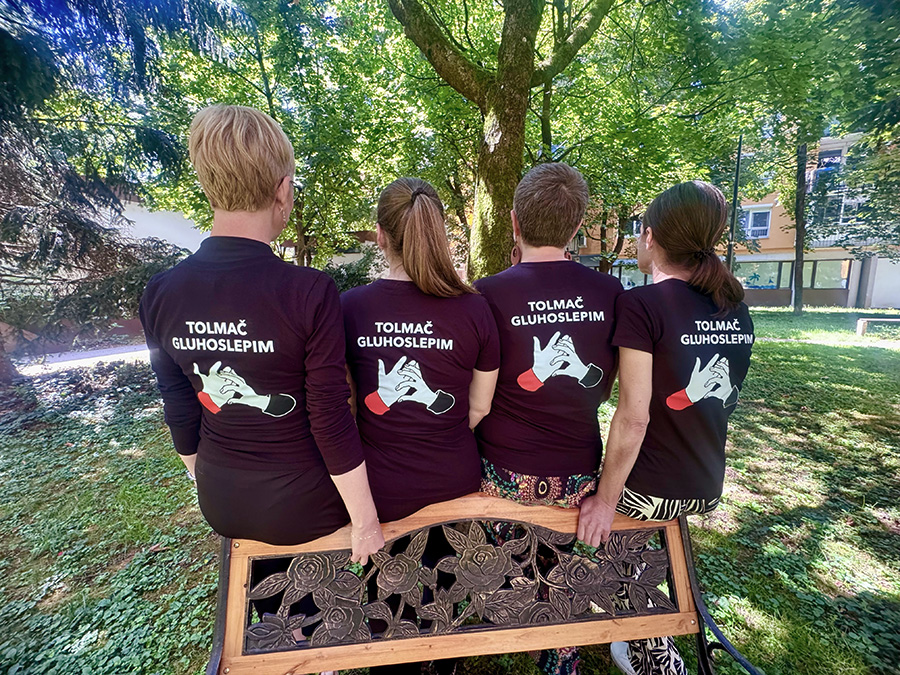
The language of a deafblind person not only enables expression, but also participation in society and the development of a sense of self-worth. It is an important part of their identity and their sense of belonging to a community.
Slovenia's long-standing efforts to advance the field
Most countries still primarily view deafblindness through the medical model of simultaneous hearing and vision impairment. However, as our interviewee explains, the Slovenian professional community has a much broader understanding of the condition.
"By constitutionally recognising the tactile sign language and adopting a dedicated Tactile Sign Language Act, Slovenia has made an important conceptual shift. It has placed the individual, their language, culture, and right to communication at the forefront, rather than focusing solely on the disability."
By enshrining this recognition in the Constitution and adopting a dedicated Act, Slovenia has recognised deafblindness as an independent disability, and the tactile sign language as an independent language. This places Slovenia among the leading countries in terms of recognising the rights of deafblind people.
Furthermore, over the past two decades, Slovenian experts have published over 90 professional publications on deafblindness and developed the first Slovenian e-dictionary of haptic signs. It is one of only a few such dictionaries in Europe. The dictionary is a valuable resource for developing, documenting and preserving tactile sign language.
A historical milestone: The Ljubljana Memorandum 2026
Slovenia is also striving for the international recognition of tactile sign language as an independent language. On 30 June 2026, experts, deafblind individuals, researchers, interpreters, and representatives of organisations from twelve countries gathered in Ljubljana for the first International Professional Conference titled "Interpreting for Persons with Deafblindness".
Together, they formulated key principles for the future development of the field, which are set out in the Ljubljana Memorandum 2026. This document is a significant step towards the international recognition of the tactile sign language as an independent language, the development of appropriate professional interpreting practices, and the inclusion of deafblind people in decision-making processes that affect their lives.
The Memorandum signifies a "shared commitment to ensuring that deafblind people everywhere in the world are recognised as equal bearers of human rights, their own language and culture, and the future development of society."
The Memorandum addresses the issue of the tactile sign language holistically, placing the individual at the centre. It will contribute to greater communicative accessibility and to the assertion of rights for those living with this form of disability. Endorsed by the World Federation of the Deafblind (WFDB), the Memorandum has been sent to organisations for deafblind people worldwide.
-
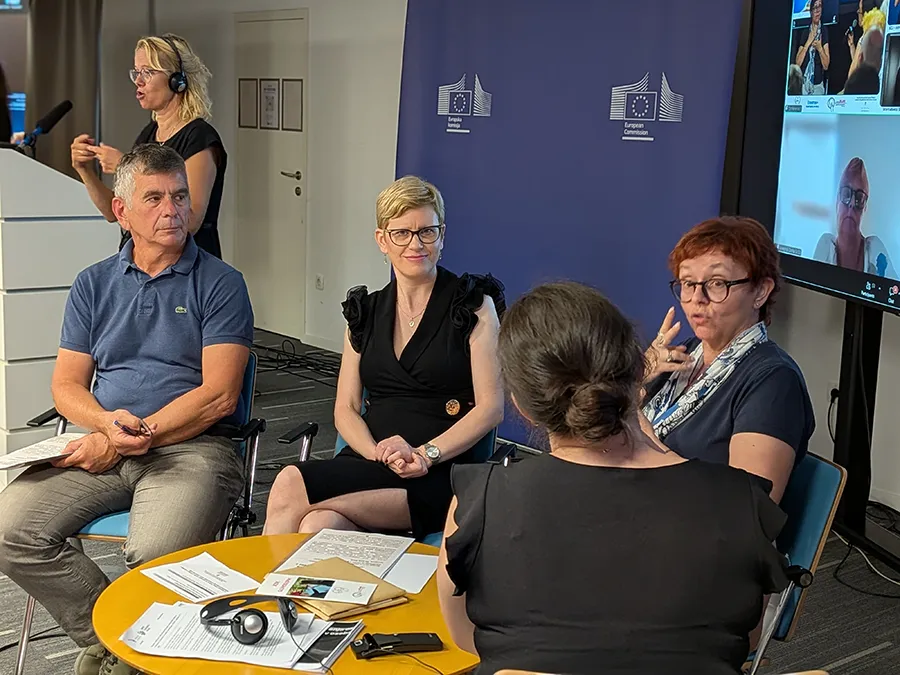
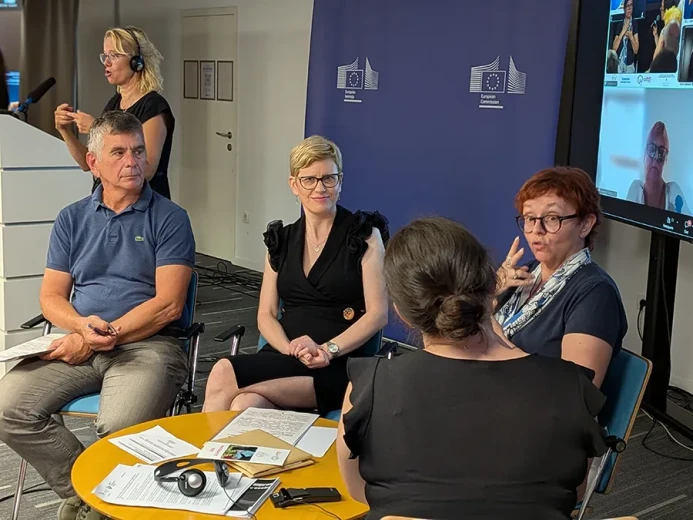 The Ljubljana Memorandum 2026 is the result of collaborative thinking from individuals with diverse professional backgrounds and areas of expertise. Photo: Deafblind Association of Slovenia DLAN
-
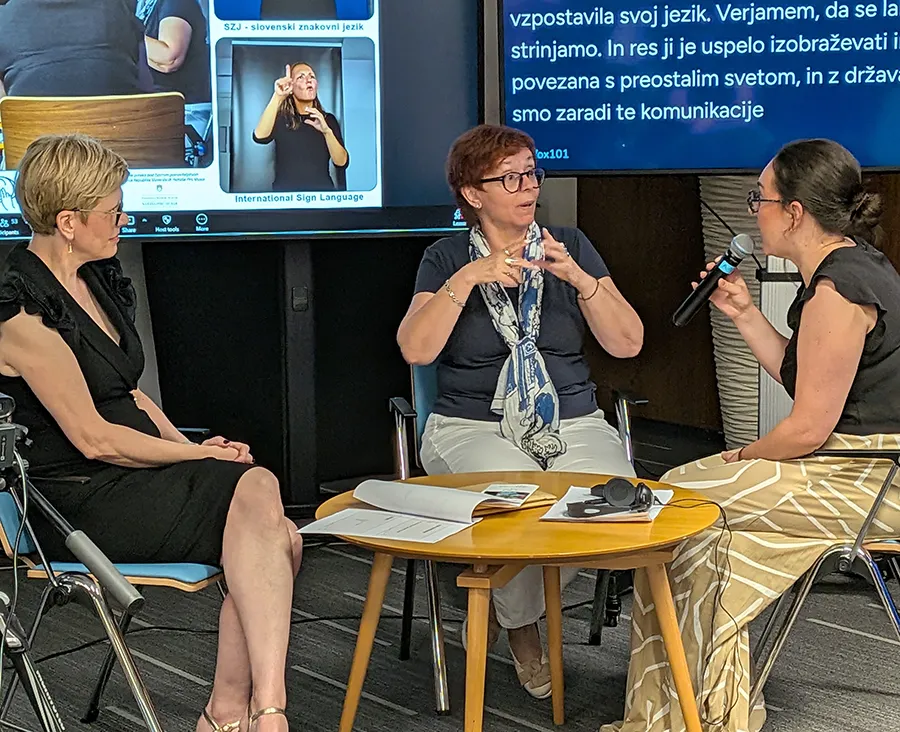
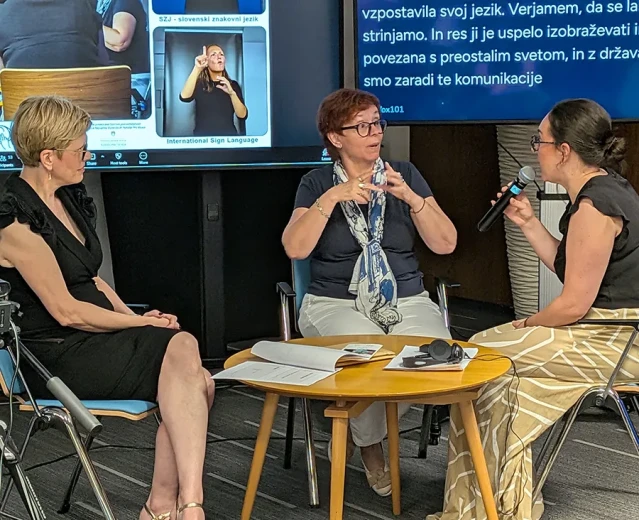 Experts emphasise the importance of research, development, language learning, and international cooperation. Photo: Deafblind Association of Slovenia DLAN
-
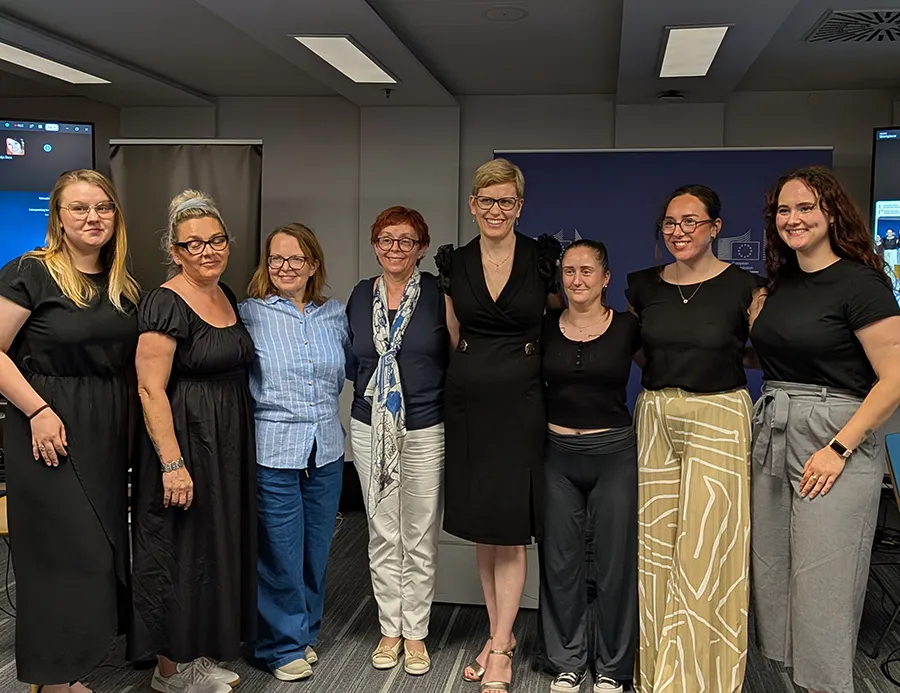
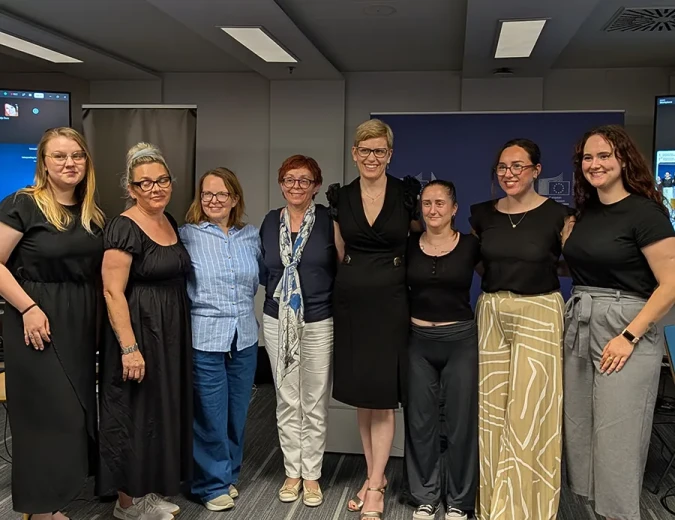 Conference participants and the authors of the document hope that the guidelines will be put into practice as soon as possible. Copilot said: In the center, fourth from the left, Dr Simona Gerenčer, secretary-general of the association. Photo: Deafblind Association of Slovenia DLAN.
The ability to communicate is of paramount importance to every human being. However, for communication to be effective, we must first understand the person with whom we are communicating.
" Tactile sign language is not only the language of the deafblind community, but also a reminder that human dignity begins when we dedicate our time, show respect, and demonstrate a willingness to communicate with one another," concludes Dr Simona Gerenčer.