Date: 11. December 2025
Time to read: 1 min
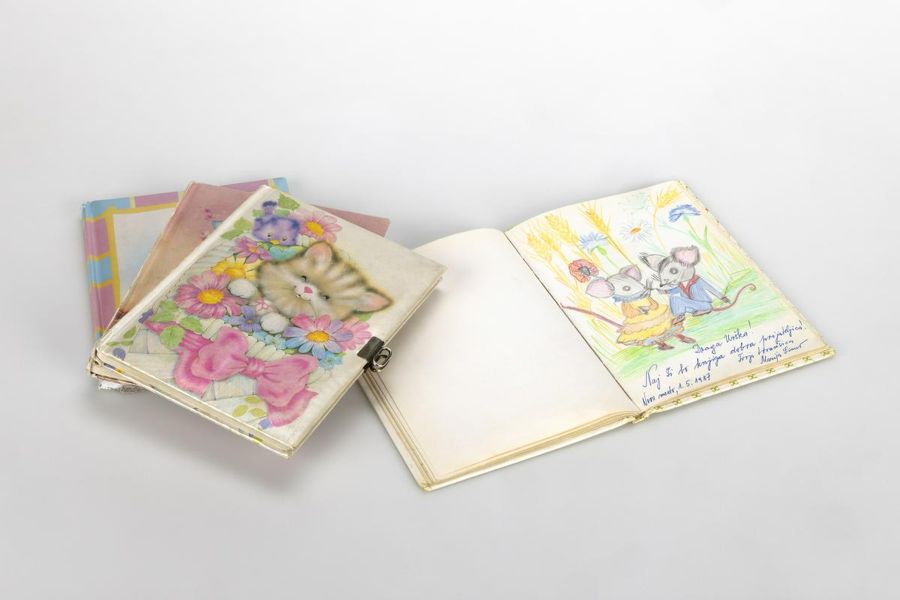
In the past, memory books were often given as gifts for Christmas, birthdays or name days. We would look with delight at the written words, drawings, and simple or more elaborate verses that reflected our relationships with friends, classmates and relatives, especially expressions of affection and support. The exhibition at the Slovene Ethnographic Museum offers a glimpse into this practice of expressing relationships, emotions and personal ties.
-
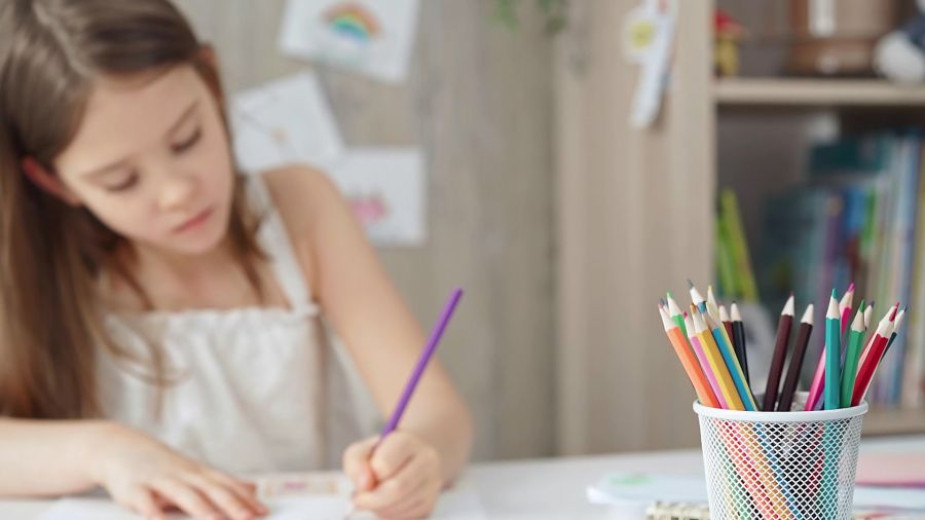 After 1918, memory books became democratized: they moved from the bourgeois milieu to primary school children, among whom they have been best preserved to this day. Photo: volhar/Depositphotos.com
Memory books have been known in Slovenia for nearly four hundred years. The oldest surviving examples come from Styria and Carinthia, where students at universities in Graz, Linz and Leipzig collected signatures from classmates and professors. In the 19th century, they spread to nearly half of all bourgeois households, linked to rising literacy rates. These albums often featured characteristic lithographed pages, floral borders and quotations.
Between 1880 and 1914, memory books increasingly featured national symbolism: a quarter of all entries contained patriotic motifs or quotations, reflecting the rise of the Slovenian national movement. Albums thus became an intimate yet important medium for expressing identity.
The earliest memory books did not even contain drawings, though some included photographs. When illustrations did begin to appear, the most common motifs were flowers and scenes from nature.
After 1918, memory books became popular among primary school children, particularly after 1950, when mass-produced illustrated editions began to appear. In the 1970s and 1980s, almost every girl and about half of all boys owned an album.
Interest in written memories, however, declined sharply with the arrival of mobile phones and computers.
-
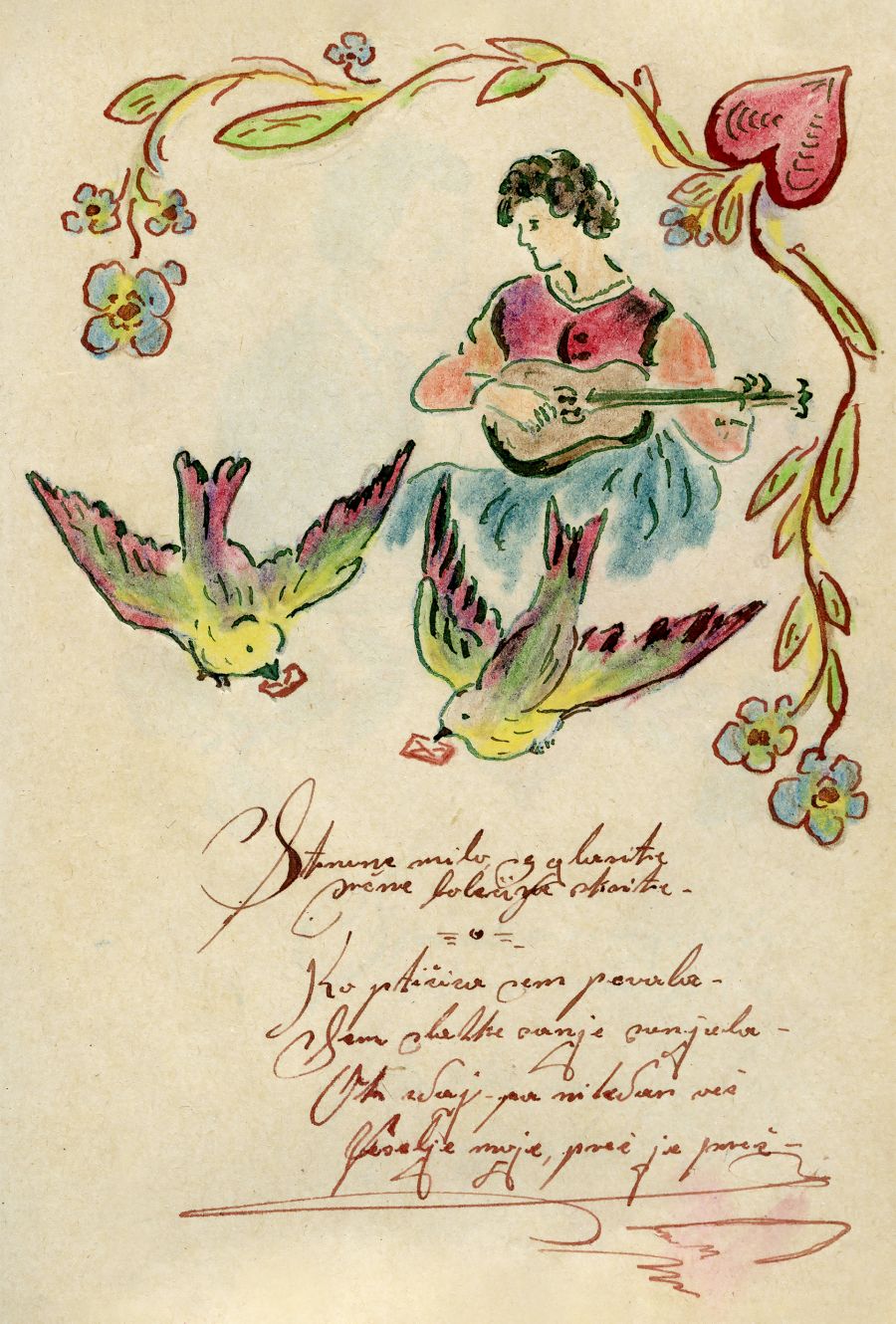
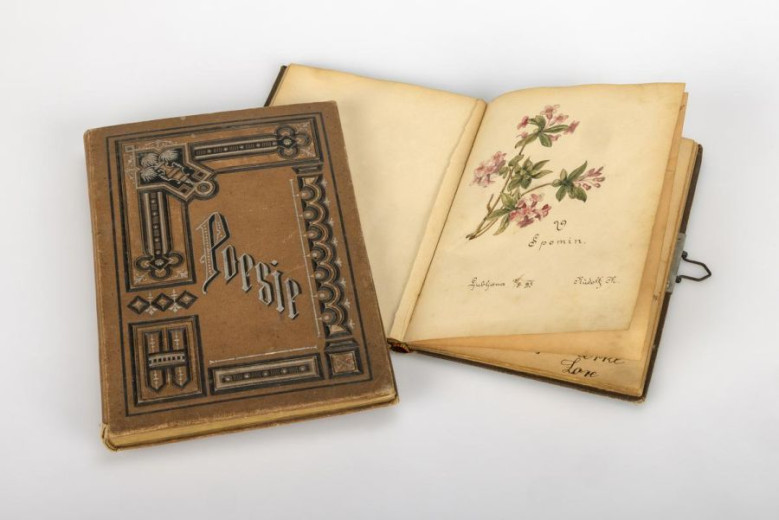 In the 19th century, memory albums titled Poesie or Poesie-Album, part of the German sentimental tradition, spread widely across the Habsburg lands. Due to the German-speaking school system, they were common in Slovenia as well. Poesie is not a famous book’s title but a generic label for such albums. Photo: Jan Simončič
-
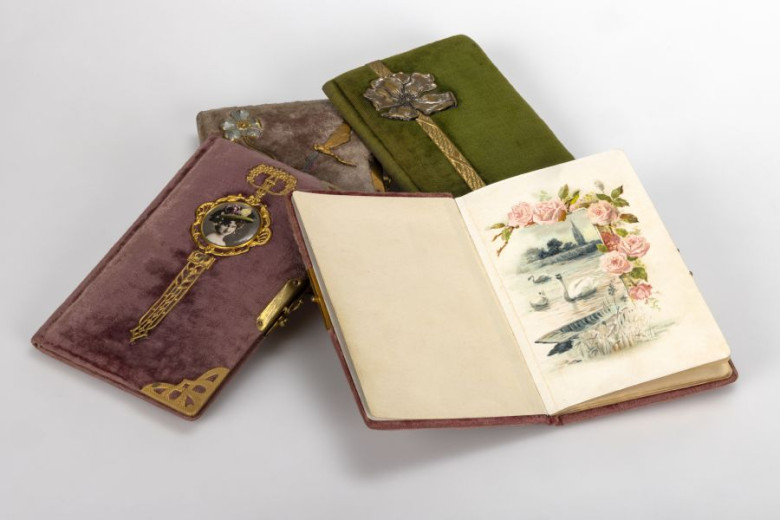 In the 19th century, memory books in the Habsburg Monarchy saw remarkable expansion. Between 1850 and 1914, according to estimates by museum and library experts, they appeared in approximately 30 to 40% of middle-class households in the Slovene lands. Photo: Jan Simončič
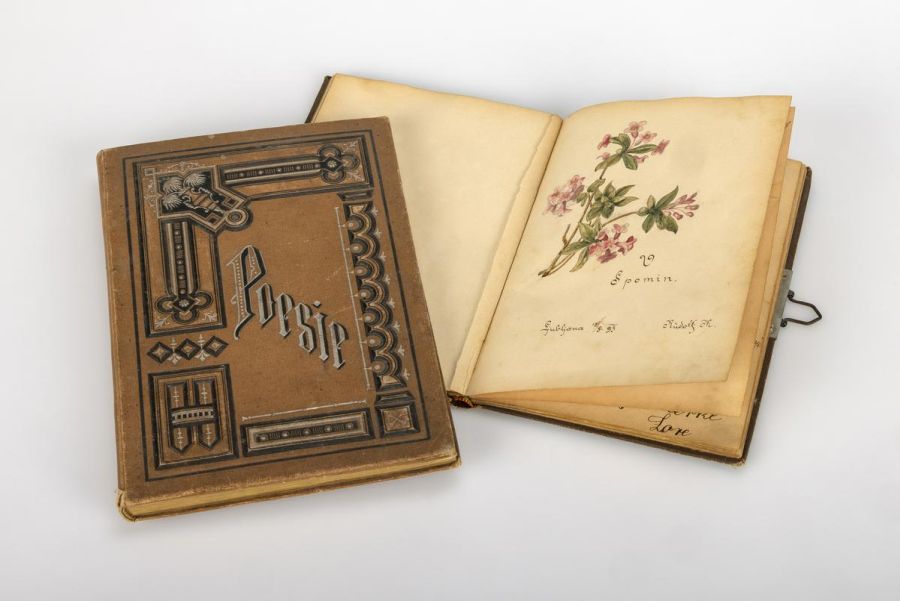
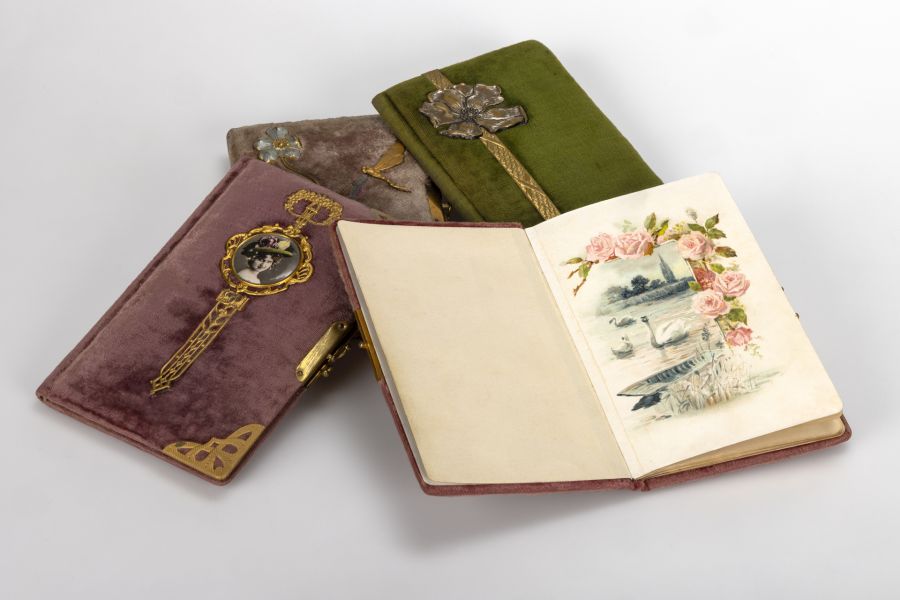
Precious records
Naturally, a memory book holds, above all, emotional value. Yet some also offer a unique artistic reflection of a particular era.
On the first page, usually on the right side, you would often find the inscription: "My book politely asks to be handled with clean hands." Typical memory-book verses included:
"Beautiful are the youthful years you are living now. But when those years have passed, you will long for them again." or "Do not show your happiness to the world, for the world is envious. Do not show not your pain, for the world is without sympathy."
Perhaps the most precious memory book in Slovenia is that of Travica Maleš Geršak, daughter of the painter and graphic artist Miha Maleš (1903–1987). It is so valuable because Maleš's friends – poets, writers, Slavicists, actors and other artists of that time – drew and wrote in it.
Among them were painter Maksim Gaspari, poet Oton Župančič, poet Tone Pavček, poet Tomaž Šalamun, painter Božidar Jakac and others.
We also know that writter Ivan Cankar liked to write and draw in memory books. His entries in memory books were published for the first time in the book Cankar's Letters, published in 1943.
-
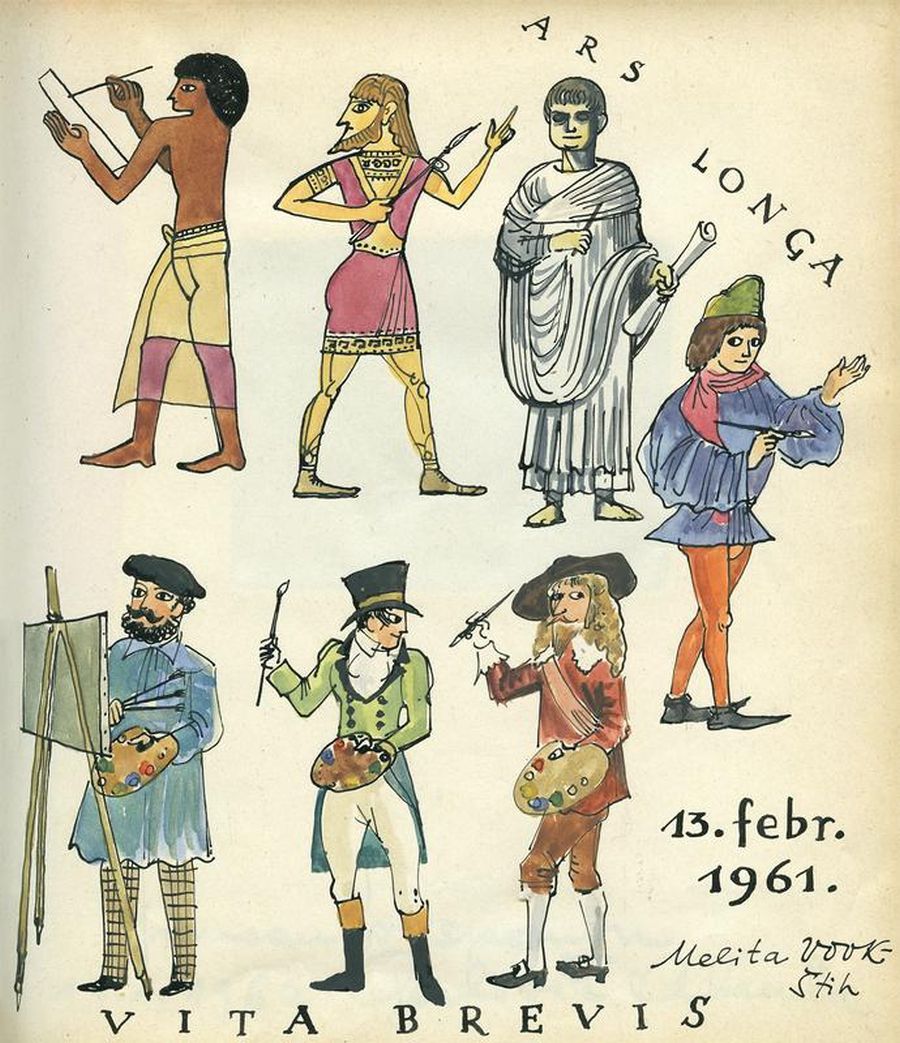
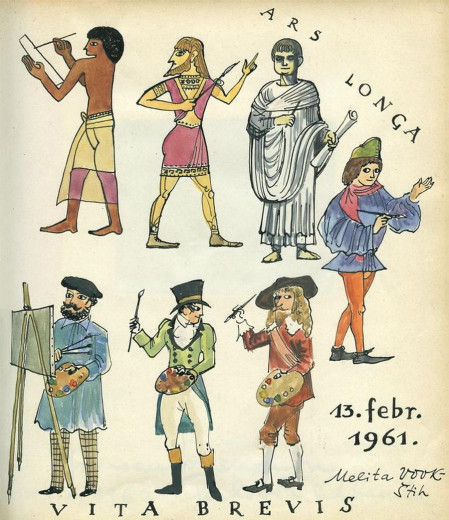 The 1961 memory book of ethnologist Janez Bogataj features a drawing and dedication created by the painter and illustrator Melita Vovk Štih. Photo: Jan Simončič
-
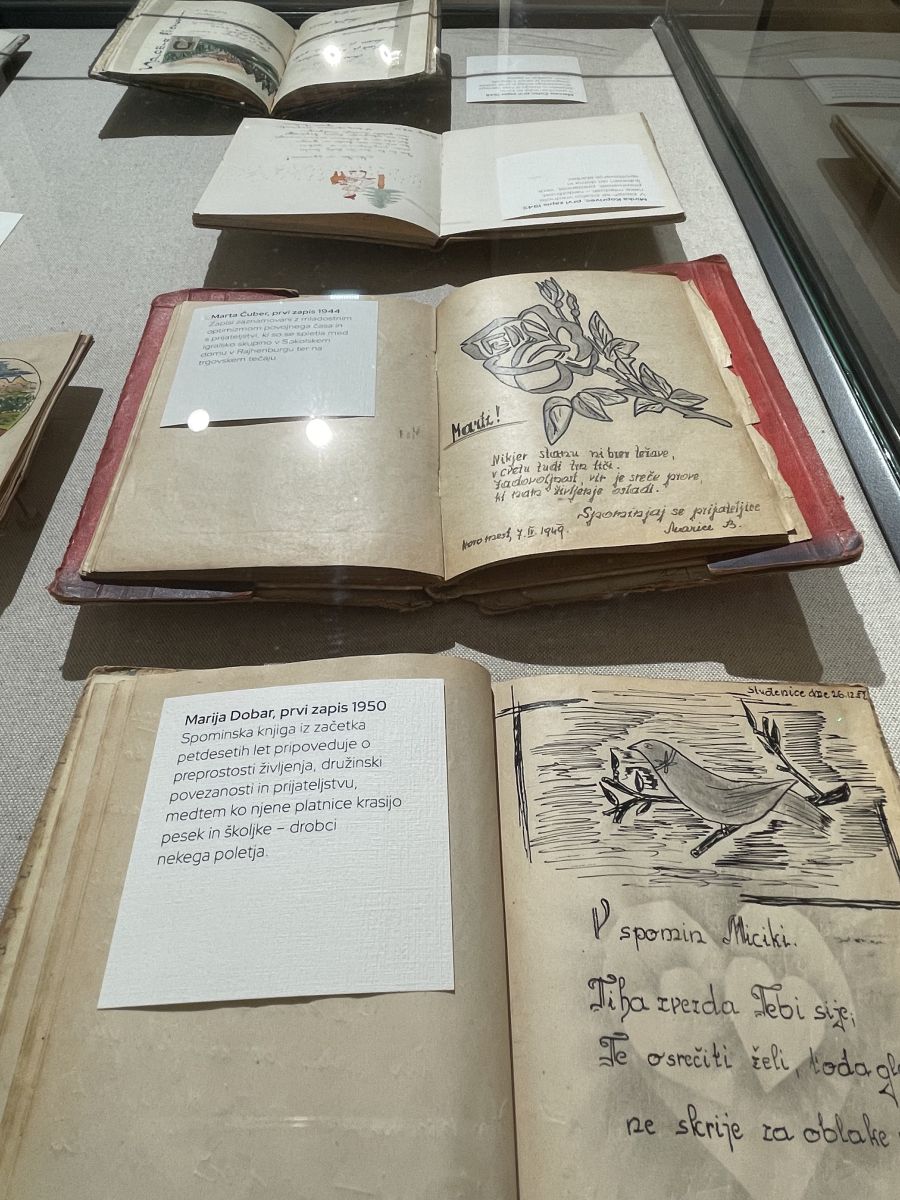
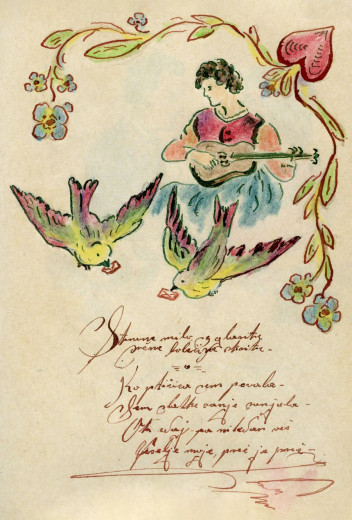 Remembrance books contained written verses and pieces of life advice, and their pages were adorned with drawings that could reveal even more about personal relationships than words themselves. Memory book,1949. Photo: Jan Simončič
Exhibition of memories
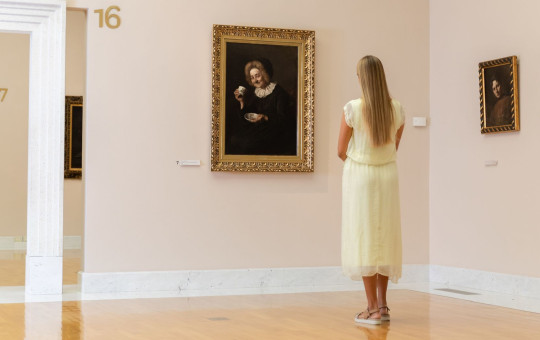
In early December 2025, the Slovene Ethnographic Museum opened the exhibition Memory Books. Prior to this, the museum issued a public call to which 57 individuals responded, lending a total of 132 memory books. Many of these books are lavishly illustrated, and some even contain artworks by renowned Slovenian artists. Designed to circulate among family members, relatives, classmates and teachers, these albums hold verses, advice and drawings that often speak more than words. Each album on display tells a story about relationships, communities and the era it reflects.
They preserve small, beautiful moments which people cherish and return to: "Everything passes like a silent river; we are left with only memories."
-
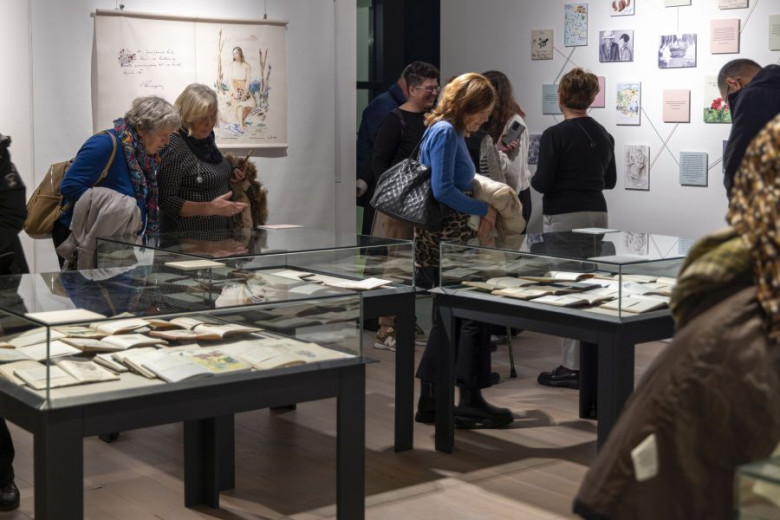 The earliest remembrance sheets in the exhibition date back to the Biedermeier and Romantic periods. Photo: Jan Simončić
-
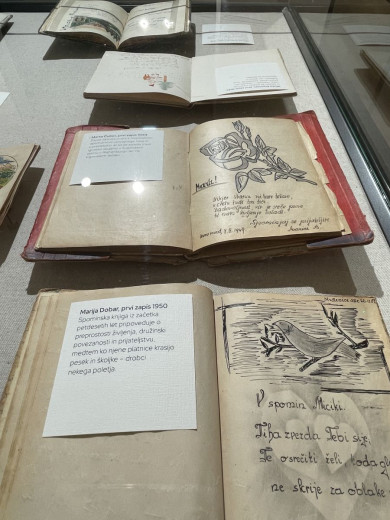 On display in the exhibition are 132 remembrance books, some of which belonged to well-known Slovenian artists. Photo: Jan Simončič
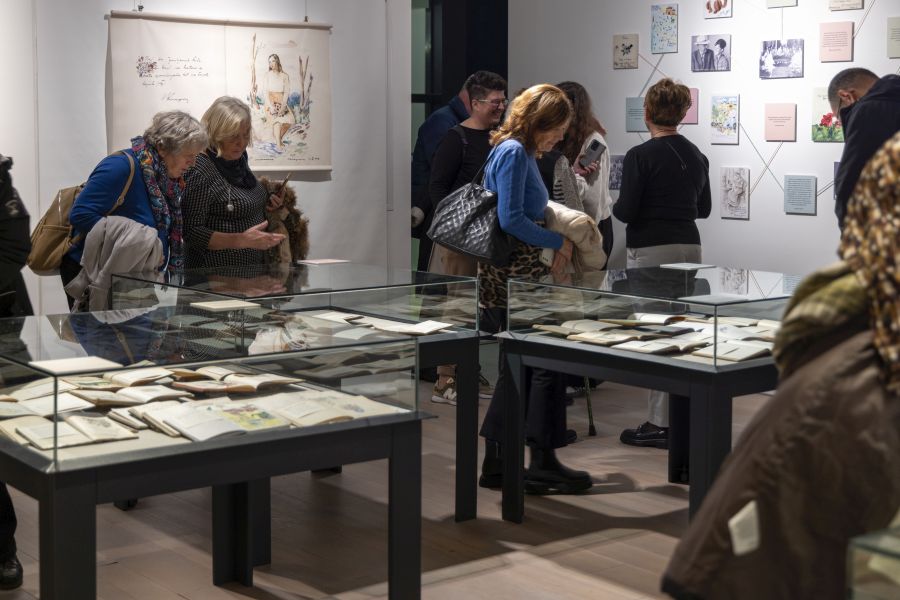
The exhibition is part of the accompanying programme of the permanent display Man and Time: From Monday to Eternity and meaningfully complements the narrative about our experience, perception and understanding of time.
Traces we leave behind
Memory books are among the quietest yet most enduring repositories of human heritage. They preserve not only a record of a particular moment but also the whole texture of the relationship between the writer and the keeper of the book. For this reason, such entries transcend mere sentimentality.
They serve as a bridge between the past and the future, between the individual and the community. In the end, each one asks the same question: what do we want to leave behind?
The answer is not found in perfectly constructed sentences, but in the sincerity that endures over time. This is why, in memory books, words are written not only to be read but to be passed on - as something quiet, precious and lasting, connecting generations long after the pages have stopped turning.
-
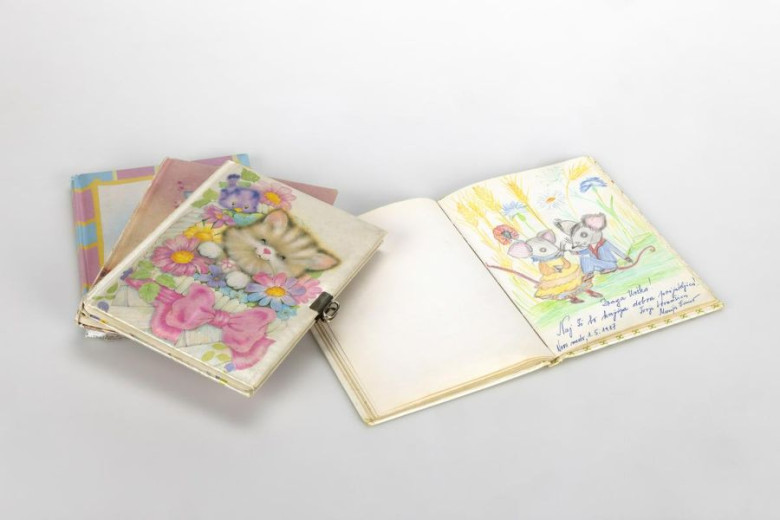 In contemporary Slovenia, memory books exist in three main forms: school albums, personalized notebooks, and digital records. Photo: Jan Simončič