Date: 18. March 2026
Time to read: 3 min
At the prestigious La Maestra competition in Paris, Slovenian conductor Mojca Lavrenčič achieved what many dream of: a triumph that opens the door to the world’s great stages. The road to that moment, however, was not paved with a red carpet, but with perseverance, hard work, faith in miracles and a deep love of music.
Around two weeks after winning first place and several special prizes among 225 conductors, the number of interview requests is beginning to ease. At the same time, her schedule for the coming year is rapidly filling up as she receives numerous invitations to collaborate.
For a conductor of the younger generation, this is not merely a victory. She compares it to a period of “blossoming” that will profoundly shape her future.
"A plant first needs time to put down roots, then to grow a trunk and develop branches. When it blossoms, it is beautiful, but it is also the most delicate period. If frost comes, the blossoms fall and there will be no fruit," reflects Mojca Lavrenčič.
-
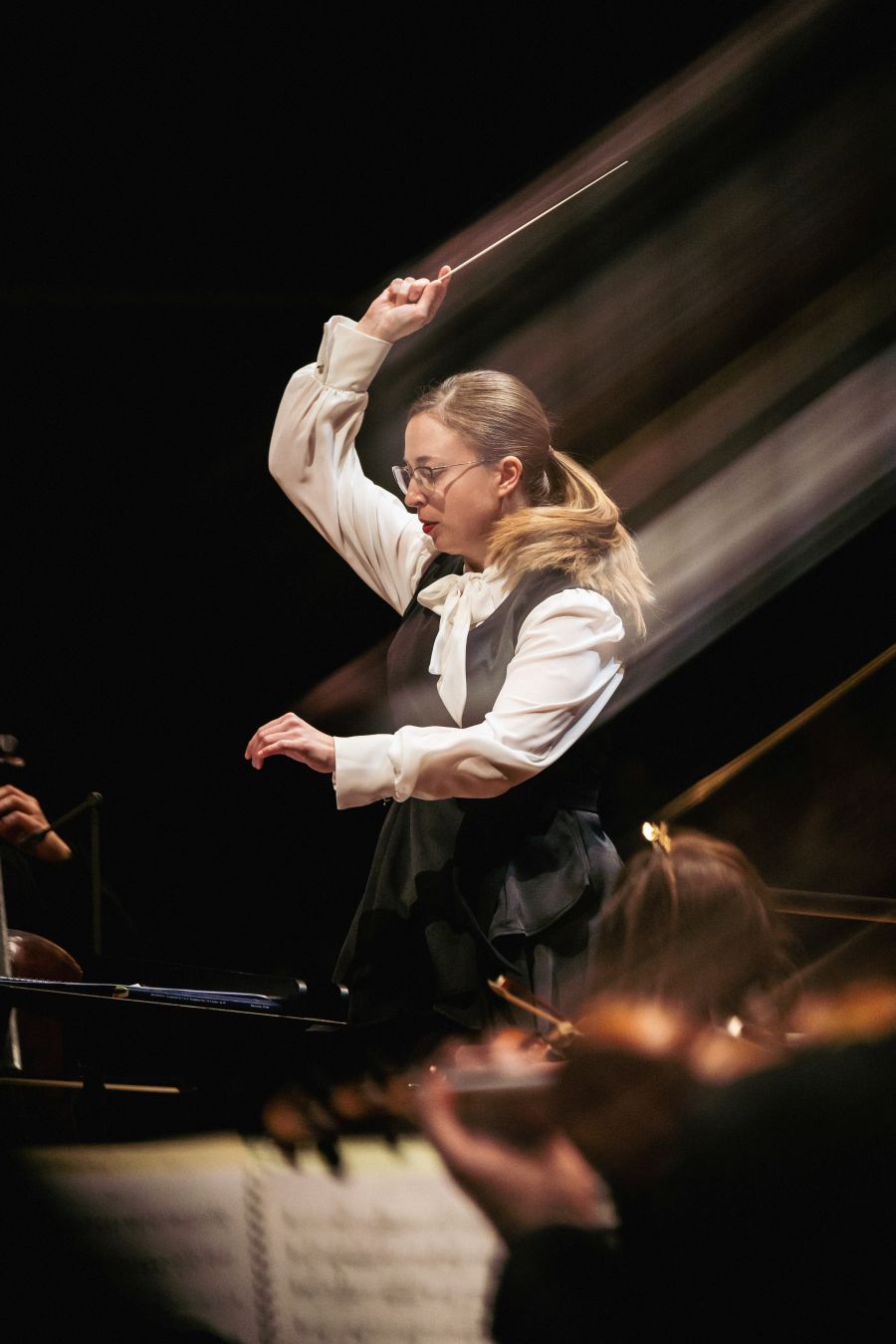
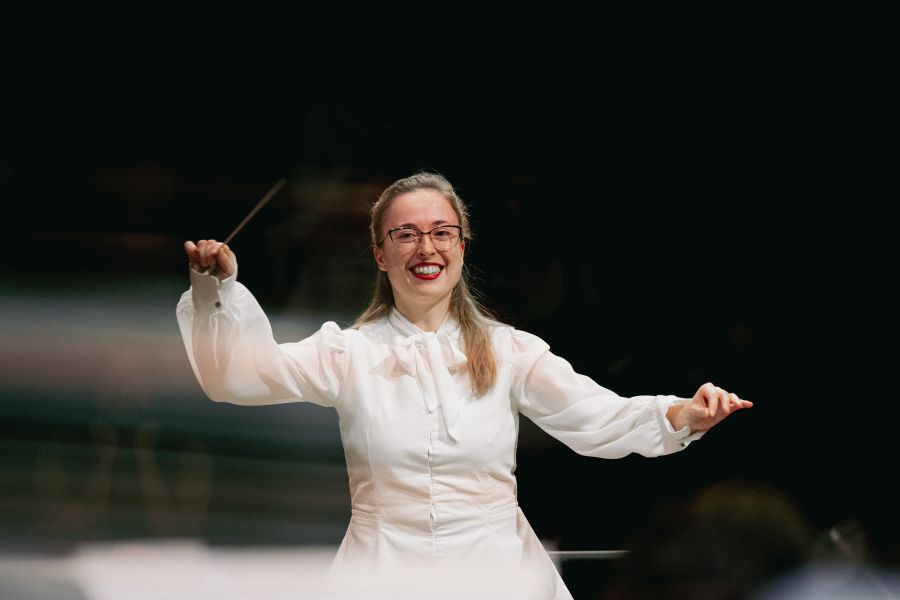
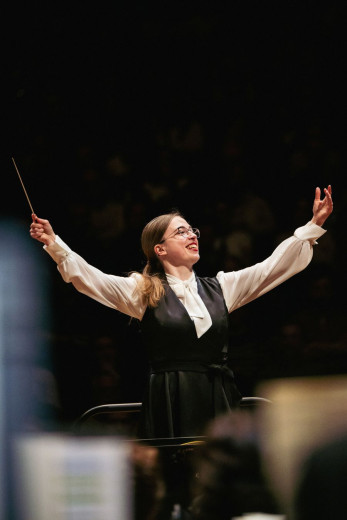 In this year’s final, four conductors competed, each required to present a work from the classical repertoire and a contemporary composition. Photo: Pauline Ballet
-
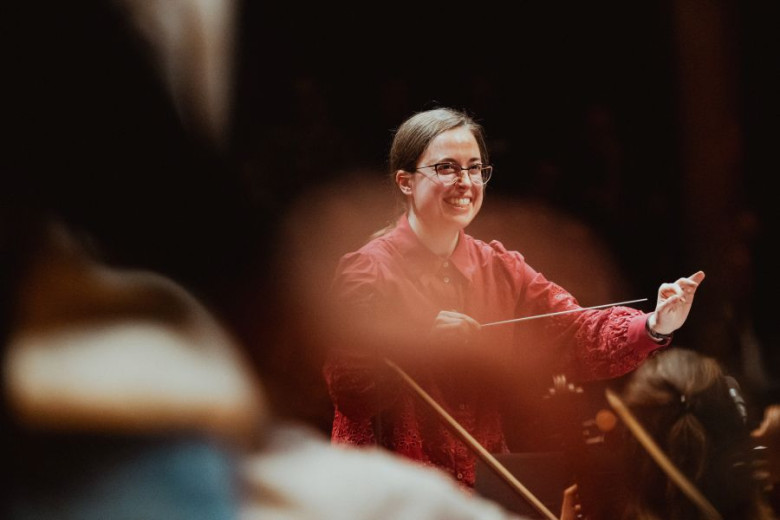 Mojca Lavrenčič studied at the Academy of Music in Ljubljana under conductors Marko Letonja and Simon Dvoršak. Photo: Pauline Ballet
-
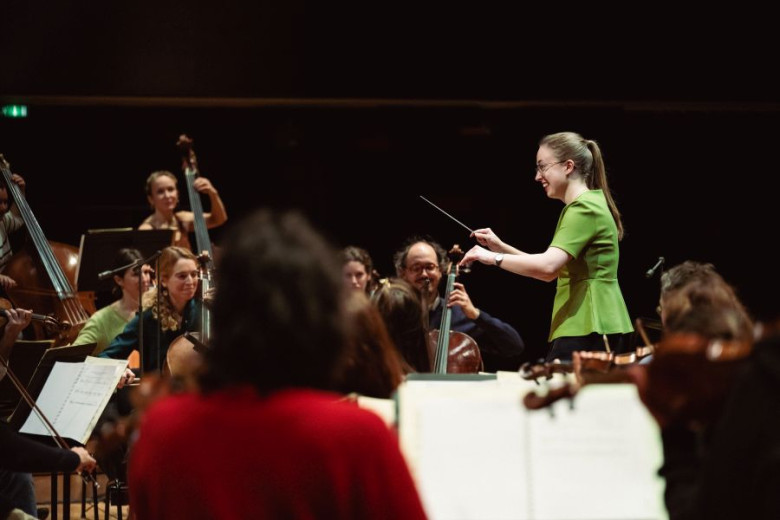 To continue her artistic development, she moved to Switzerland, where she studied at the Schola Cantorum Basiliensis. Photo: Pauline Ballet
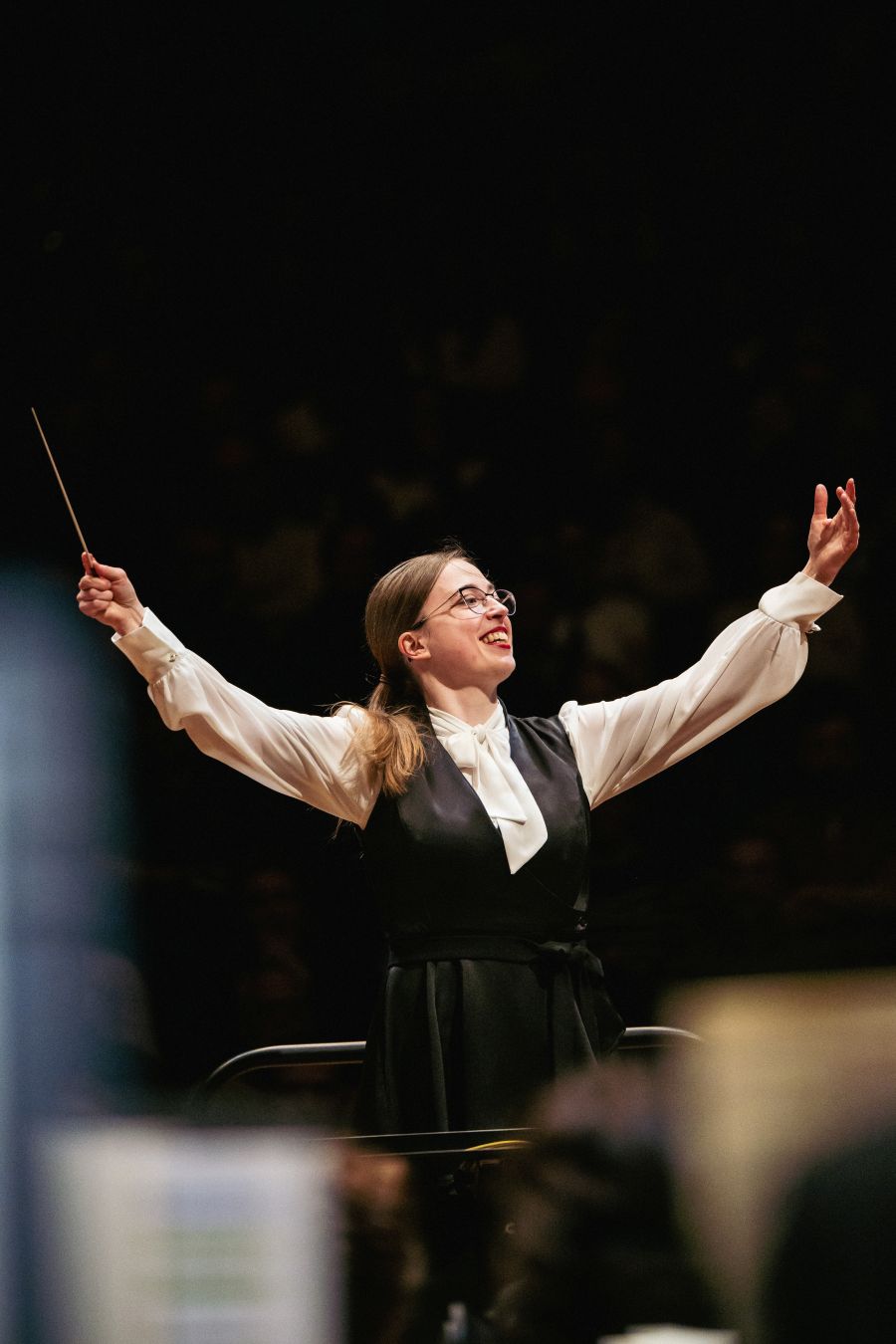
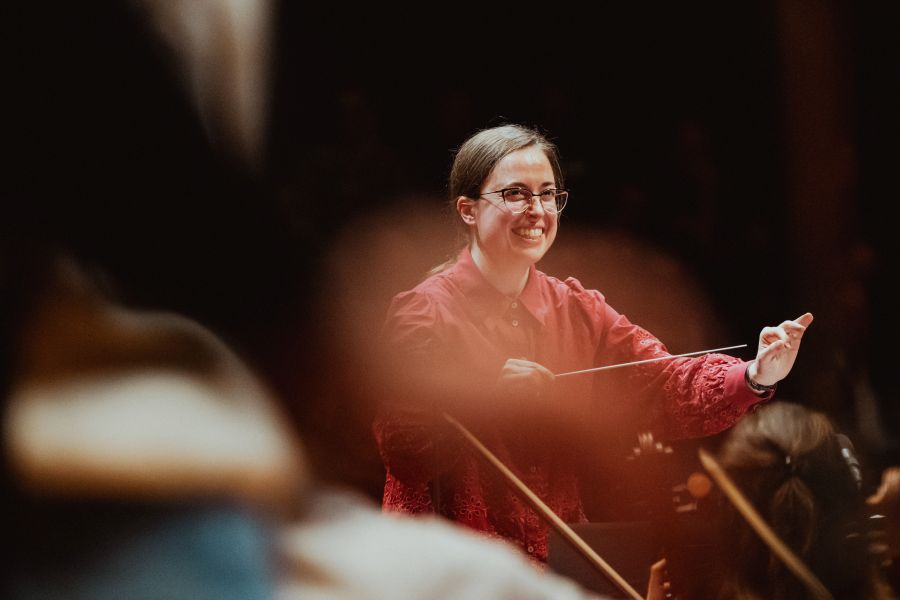
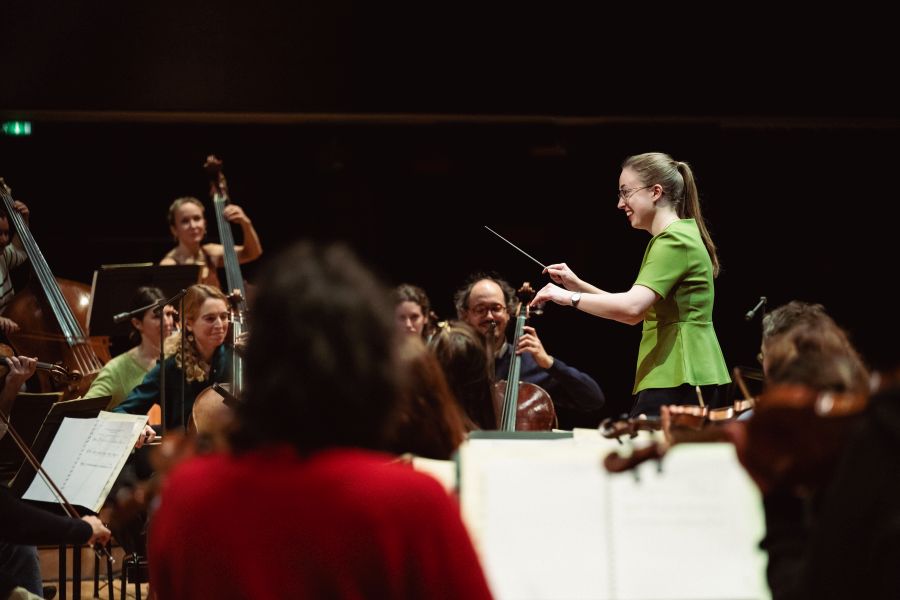
From waiting to triumph
For her, the path to Paris came as a surprise. Last October she learned that, among 225 applicants, she had been ranked 17th, while only the first 16 conductors were invited to the quarter-finals. Even being placed on the waiting list already felt like a great success. "At the time I asked myself: who would withdraw from such a competition? I really did not expect that I would get the opportunity to perform," she recalls. However, when one of the candidates encountered difficulties obtaining a visa, an opportunity opened up — and she seized it with both hands. She only learned that she would definitely have the chance to perform a day before arriving in Paris.
Without extensive advance preparation, with little sleep and under considerable pressure, Mojca Lavrenčič impressed from one performance to the next. "I prepared as I went along, from one performance to the next. When I finished the semi-final round, my mentor called and told me to start preparing for the final immediately, as he was convinced that I would be among the finalists. So, there I was in the dressing room, waiting for the semi-final results to be announced, studying the score for the final performance, although I was extremely tired and had no certainty that I would actually reach the final."
She also drew strength from her faith. "I had a small picture of Jesus the Good Shepherd with me and I said to him: if you send me to the final, then you will have to conduct, because I won’t be able to," she says with a smile. As she recalls, the energy she brought to the stage at that moment was unforgettable.
A part of her winning performance can be viewed via the link.
The conductor’s path
Until now, she has lived between two worlds. She works part-time as a church musician in Switzerland, while at the same time collaborating as a conductor on projects in Slovenia and abroad. Until now, she has not been able to support herself solely through conducting, which is why the victory in Paris marks a turning point.
Although she enjoys her work as a church musician, conducting at the highest level is what truly fulfils her. As she says, it gives her the feeling of being alive.
Discussions are currently under way with agents interested in representing her. "This is a major decision. I see it as choosing a life partner, because you entrust them with your life. You must trust them, and at the same time they must understand you well."
-
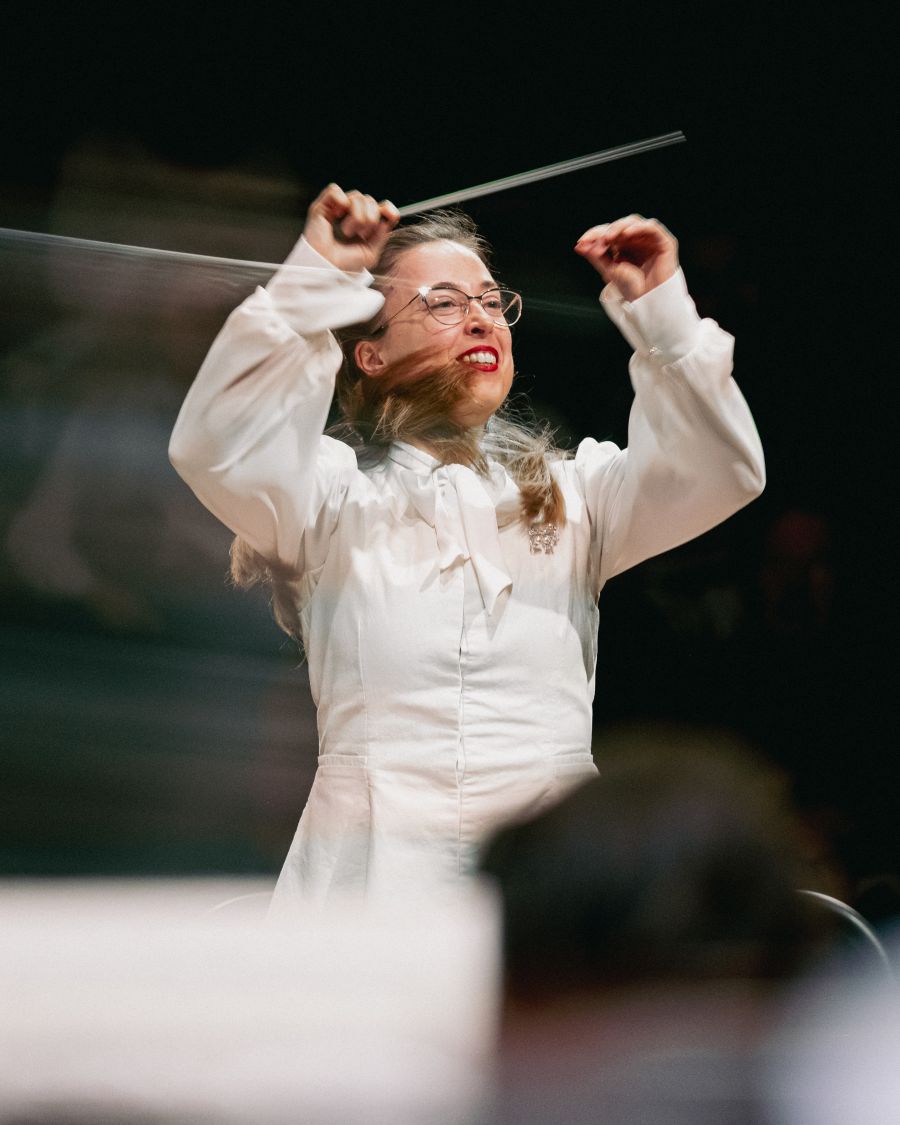
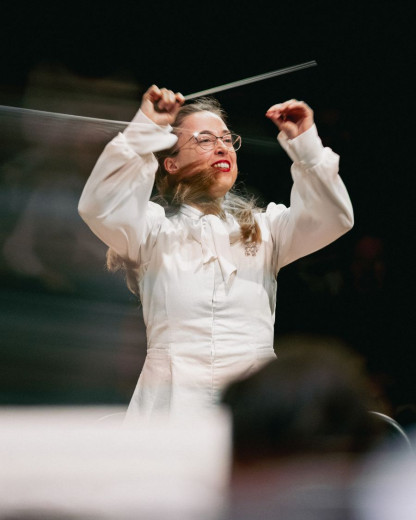 The prestigious Parisian win marks a major milestone for the young conductor and serves as her entry into the international elite of classical music. Photo: Pauline Ballet
Boldness opens doors
Despite her international success, Mojca Lavrenčič remains modest and says she does not like excessive attention. However, as a young conductor from a small country she was often overlooked, and the competition offered an opportunity to gain international recognition and visibility.
"Outside Slovenia you are nobody if you do not have a strong institution behind you or someone who can help open doors for you. The hardest part is getting the first opportunity; after that you prove yourself through your work."
And this is precisely the aim of the La Maestra competition: to give conductors the opportunity to prove themselves.
-
 Music has accompanied Mojca Lavrenčič since early childhood. Photo: Pauline Ballet
-
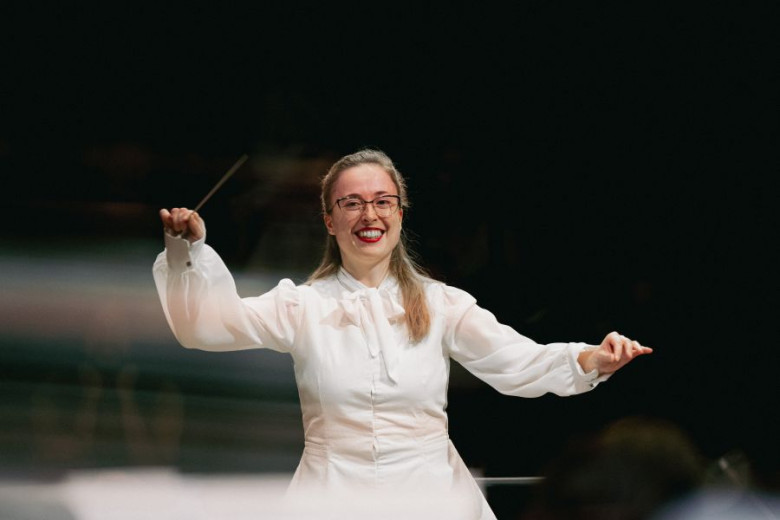 Mojca Lavrenčič sees conducting as a way to connect people and empower musicians. Photo: Pauline Ballet
Her first opportunity to conduct outside Slovenia came at the Teatro Massimo in Palermo, where, as she says, "someone was bold enough to entrust her with conducting the premiere of a ballet." That person was Jean-Sébastien Colau, the ballet director with whom she had had the opportunity to work several years earlier in Ljubljana — at the time as a pianist. She had made a very positive impression on him and, even though he had never seen her conduct, he had the courage to invite her. Mojca says that in life one must also be willing to take risks. Without that, we may miss many good things — or overlook artists with potential.
As she explains, she has always felt the need to go abroad and broaden her horizons, to learn and to gain a different perspective. And although she misses her family and friends — because she says she is "someone who needs hugs" — for now she sees her future abroad and looks forward to the challenges ahead.
Silence, books and courtyard concerts
Although music is her profession, Mojca Lavrenčič says she values silence above all in her free time. She notes that she could not imagine living in large cities such as Paris, which never truly fall silent. Her refuge lies in books — from spiritual literature to classics such as Dostoevsky. When her hands are not holding a conductor’s baton, they are often busy with handicrafts. She enjoys slow, precise work. "I especially enjoy making gifts for the children of friends and relatives."
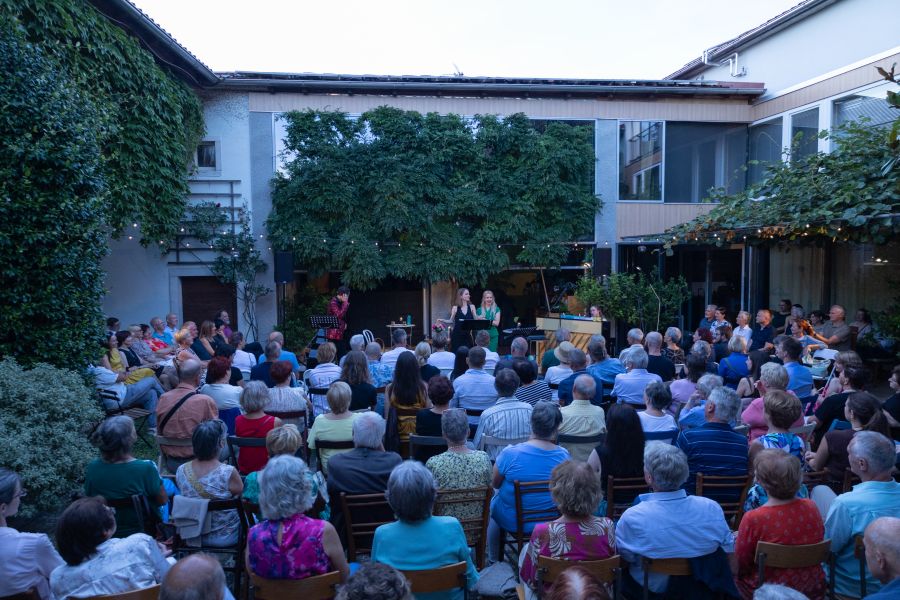
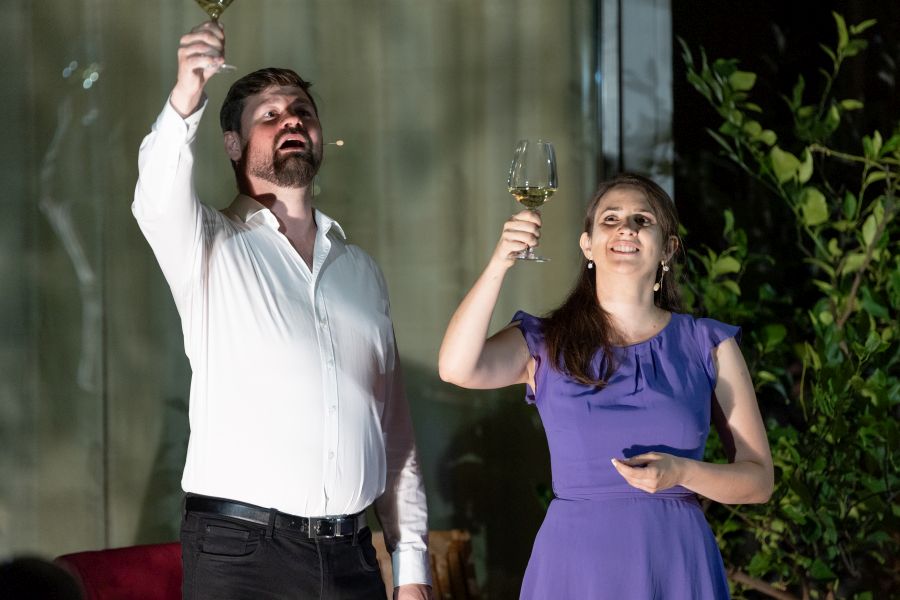
Courtyard concerts hold a special place in her heart — a tradition that emerged during the COVID period. It began with a concert organised with musician and singer friends in the enclosed courtyard of her home in Vipava. What started as a spontaneous event gradually grew into a tradition of concerts that combine art and wine while bringing the local community to life.
"This is my contribution to my home town. Vipava is charming, and it would be a shame not to make the most of it. People are also given the opportunity to listen to professional classical musicians right on their doorstep," she emphasises.
-
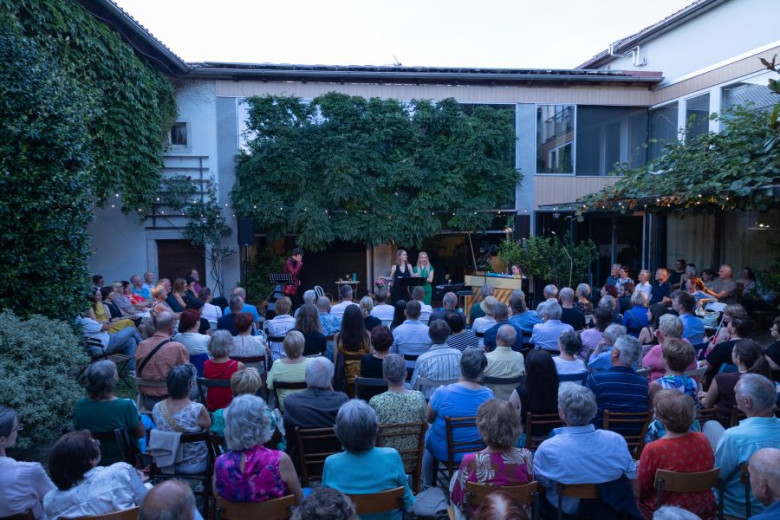 Last year marked the sixth season of the Courtyard concerts. Foto: Otton Zajec
-
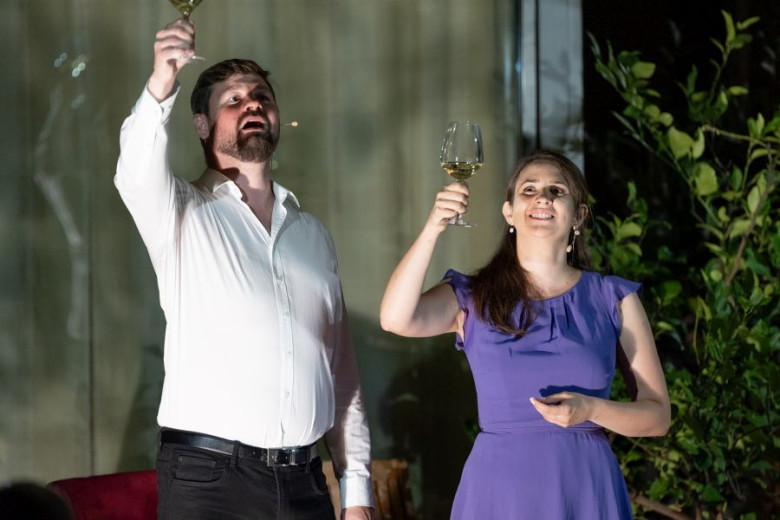 The Courtyard Concerts are filled to the last corner. It was the same last year during the “Courtyard Opera,” when Beti Bratina and Jure Počkaj performed. Photo: Otton Zajec
The future
Winning La Maestra has brought her not only recognition and new opportunities, but also a place in a two-year academy, where she and four other conductors will receive mentoring and support in developing their international careers. As she explains, there was no sense of rivalry among the conductors who took part in the competition; instead, the atmosphere was very friendly. She therefore hopes that these connections and friendships will continue in the long term. "You often think you are the only one facing a particular problem, until you speak about it and realise that three others are experiencing the same thing. And then everything immediately becomes easier, because you see that there is nothing wrong with you — it may simply be a process you have to go through."
What is the La Maestra competition?
The La Maestra International Competition is one of the most prestigious international competitions dedicated exclusively to women conductors. It takes place at the renowned Philharmonie de Paris in cooperation with the Paris Mozart Orchestra. Its aim is to empower women in a profession that is still predominantly male.
Mojca Lavrenčič impressed both the jury and the audience with her interpretation of the new work Au fil du geste by Diana Soh and the first movement of Beethoven’s Symphony No. 7. The evening reached its climax in the second part of the final, when she took the podium before the Orchestre de Paris to conduct Stravinsky’s ballet Petrushka and Ravel’s La Valse.