Date: 25. June 2026
Time to read: 2 min
On 25 June, Slovenia celebrates Statehood Day, commemorating the historic moment in 1991 when it became an independent and sovereign nation. Today, 35 years later, Slovenia proudly stands as a member of the international community, remembering the courage and unity that made this journey possible.
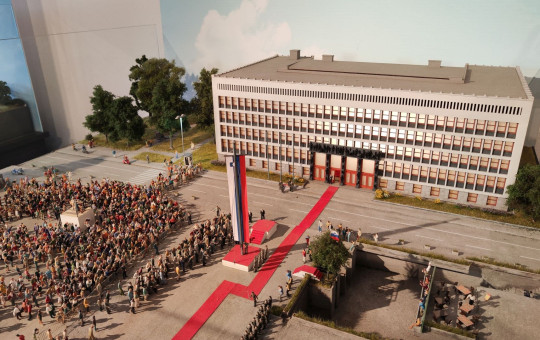
On this day in 1991, the Assembly of the Republic of Slovenia adopted the Basic Constitutional Charter on the Sovereignty and Independence of the Republic of Slovenia and the Declaration of Independence. With these acts, Slovenia formally became an independent state. Just a few days later, the Slovenian people successfully defended their decision during the Ten-Day War.
Slovenia’s path to independence had begun much earlier. A key milestone was the plebiscite held on 23 December 1990, when an overwhelming majority of voters expressed their support for an independent and sovereign Slovenia. This democratic decision paved the way for the process of gaining independence and establishing a state of its own.
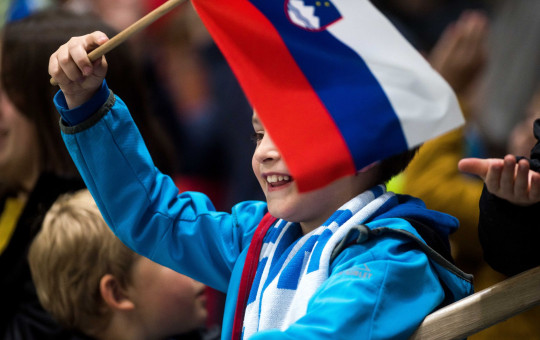
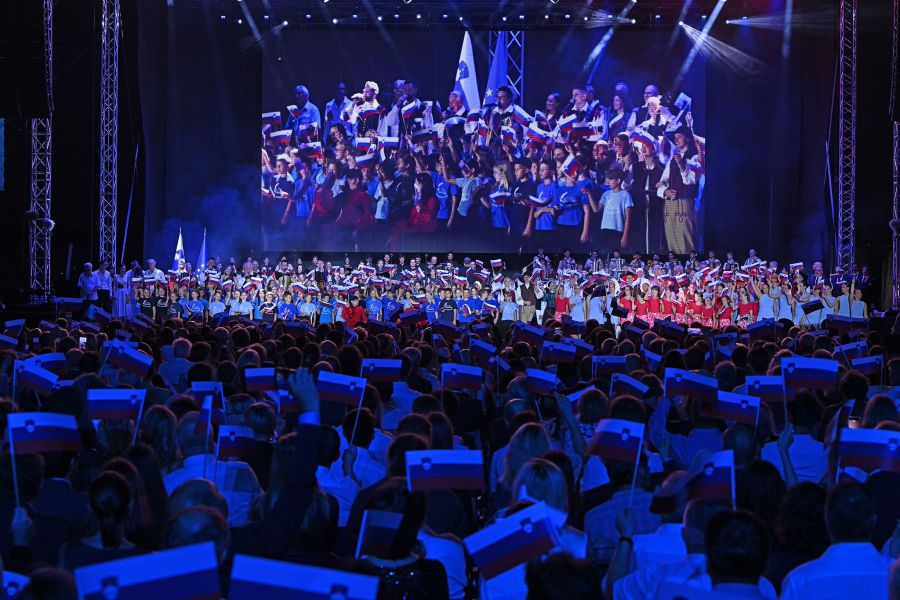
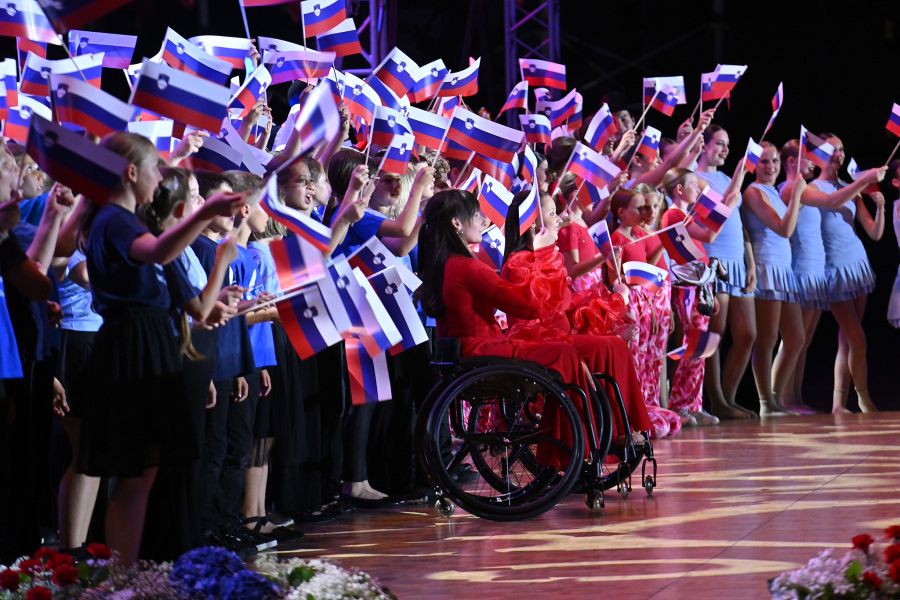
Today, Statehood Day is not only a remembrance of the historic events that profoundly shaped the country, but also a celebration of unity, responsibility and national pride. Ceremonies take place across Slovenia, while the central state celebration was held on the eve of the holiday at Republic Square in Ljubljana.
The celebration was conceived as a tribute to Slovenia, its history, democratic aspirations, and the people who helped shape its path and continue to do so today. Its message was clear: Slovenia is the shared home of all its citizens, and its future rests on solidarity, responsibility, respect and confidence in its own abilities.
The keynote speakers at the ceremony were the President of the Republic of Slovenia, Nataša Pirc Musar, and Prime Minister Janez Janša.
“Thirty-five years of independence is a relatively short period of time, yet we have achieved so much. Most importantly, we have placed Slovenia on the map of the world. Proudly. There is hardly an indicator by which we would not rank among the countries that still care deeply about human well-being, security and freedom, as well as about the nature that surrounds us – a nature that many admire and envy,” President Nataša Pirc Musar said in her address.
Speaking about the significance of independence, Prime Minister Janez Janša emphasised that the credit cannot belong solely to the generation that carried out the “most decisive and final act”. “We are therefore humble and grateful for all the efforts and sacrifices made throughout our long, often difficult and thankless history,” he said. “Independence does not belong to one political option, one generation or a handful of individuals. It belongs to all Slovenians and represents our shared civic heritage.”
-
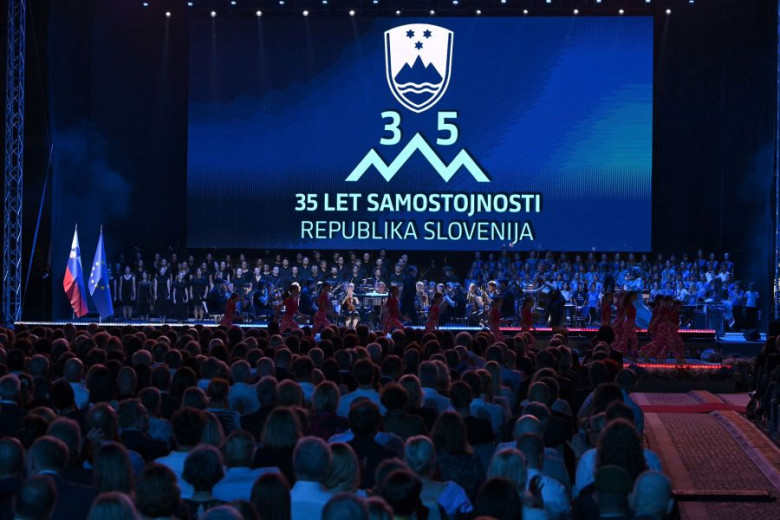 Statehood Day is a celebration of unity, responsibility and national pride. Photo: Žiga Živulovič in Marko Vavpotič/FA BOBO
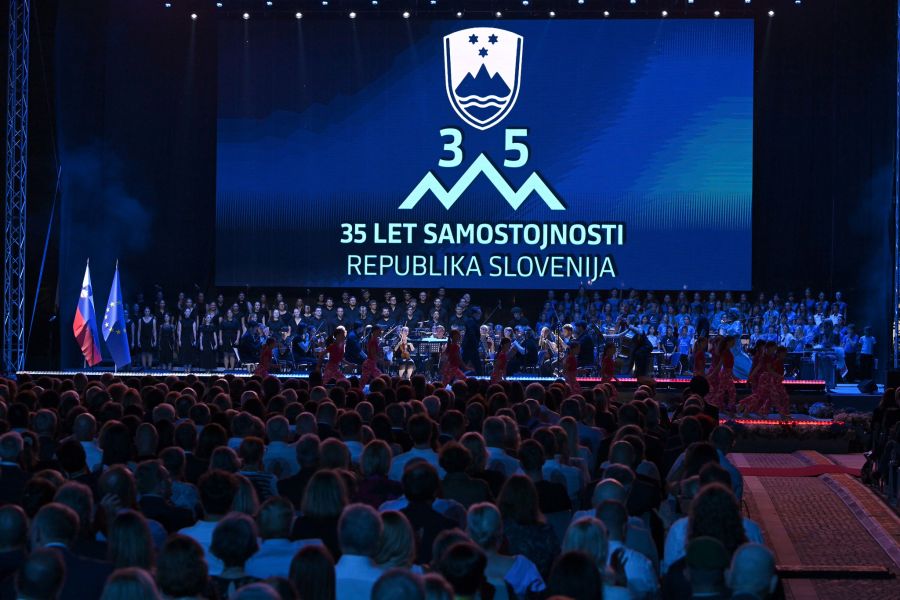
The venue at Republic Square was designed as a modern multi-stage setting, with special emphasis placed on an audiovisual presentation of key milestones in Slovenia’s democratisation and independence process – from the landmark Nova Revija publication to the proclamation of Slovenia’s independence. Through music, poetry, dance and storytelling, the cultural programme celebrated the homeland and its people. Renowned Slovenian artists from different generations performed, connecting historical memory with the creative energy of contemporary Slovenia.
-
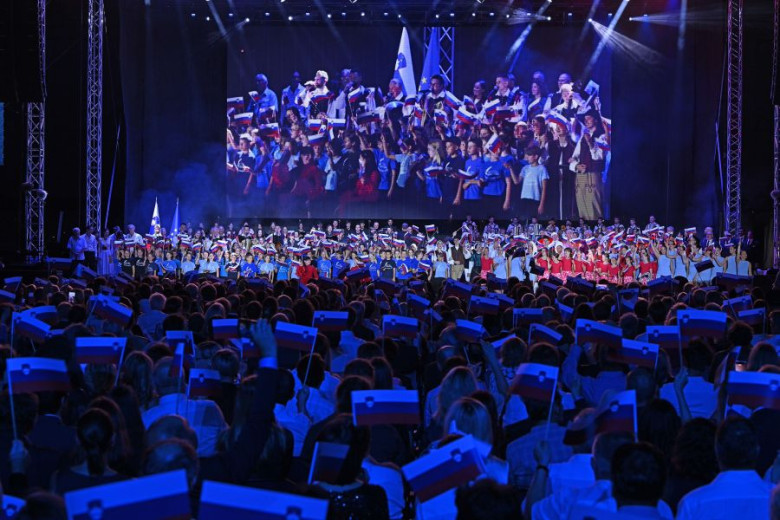 Over the past 35 years, Slovenia has grown into a modern, outward-looking and internationally connected country. Photo: Žiga Živulovič and Marko Vavpotič/FA BOBO
-
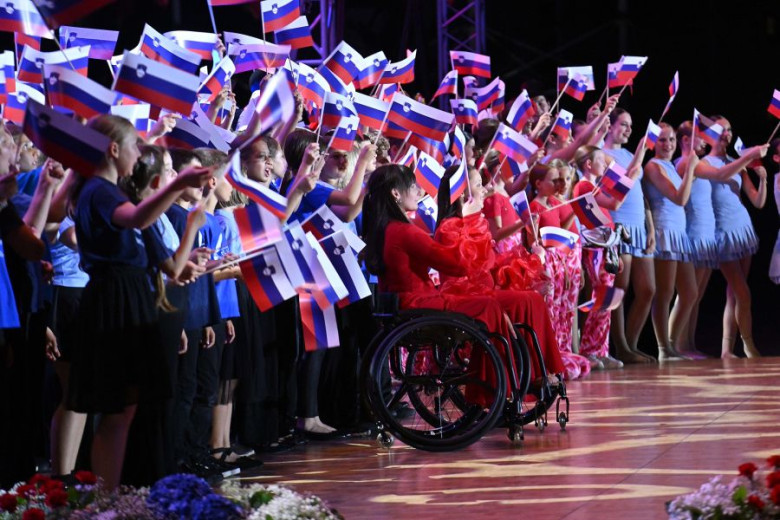 Ceremonies take place across Slovenia. Photo: Žiga Živulovič and Marko Vavpotič/FA BOBO
Slovenia Today
Over the past 35 years, Slovenia has grown into a modern, outward-looking and internationally connected country. It has become a member of the European Union, the euro area, the Schengen Area and the United Nations, while building a reputation for its exceptional natural diversity, high quality of life and commitment to sustainability.
As Slovenia marks 35 years of independence, Statehood Day remains both a celebration of a remarkable achievement and a reminder of the shared vision that made it possible. It is a day to honour the past, celebrate the present and look confidently towards the future.