Date: 9. January 2026
Time to read: 2 min
Kiosks are small structures that are often overlooked in a city, yet they play an important role. People buy newspapers, snacks and other small everyday items at kiosks, but they also serve as places where people stop, exchange a few words and make a quick purchase.
-
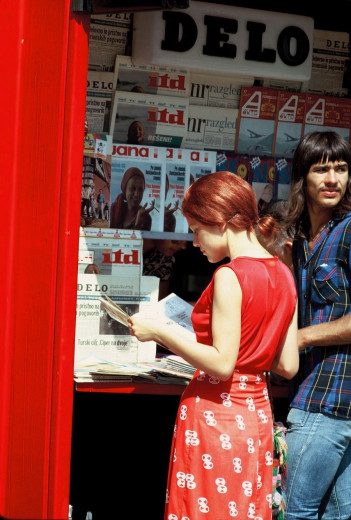 Over time, it became a symbol of daily city life. Photo: MAO archive
-
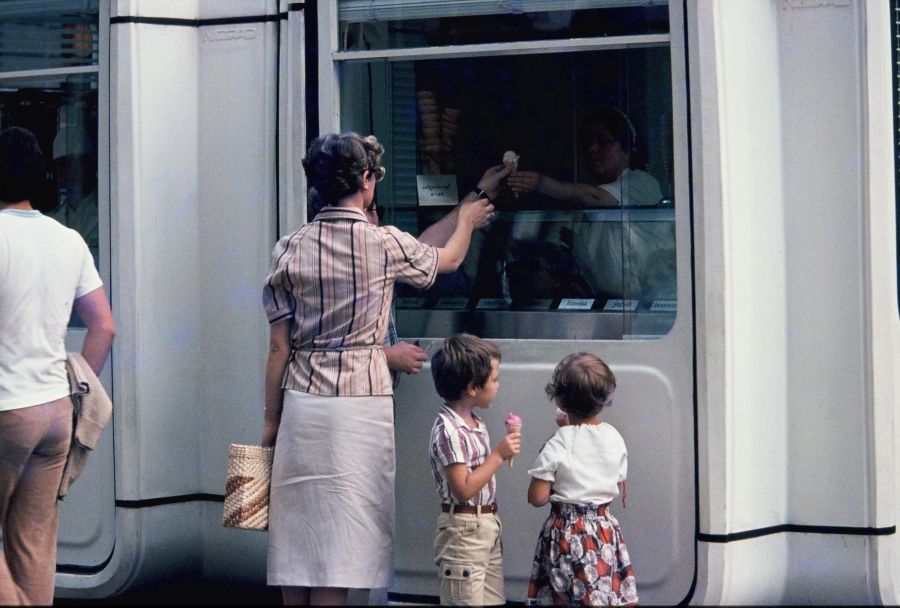
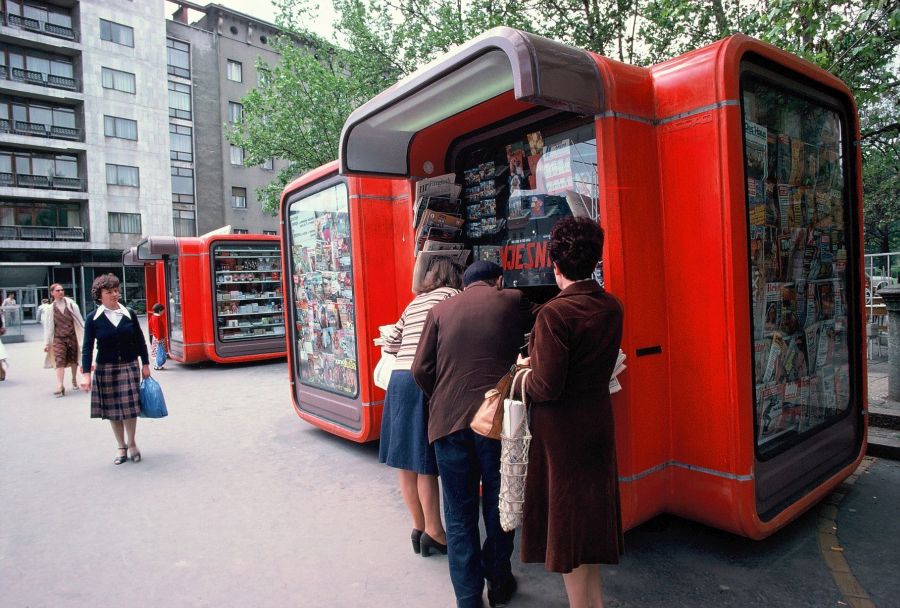
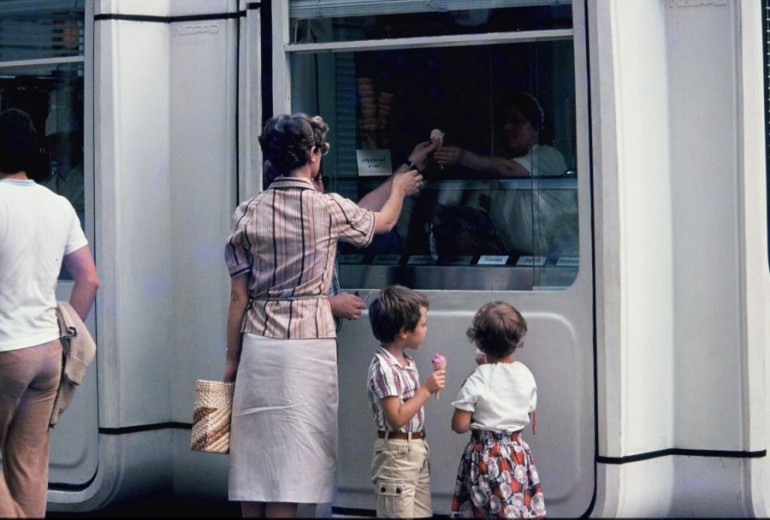 Such kiosks were popular places to buy newspapers, snacks, icecream, tobacco, tickets and have a chat. Photo: MAO archive
-
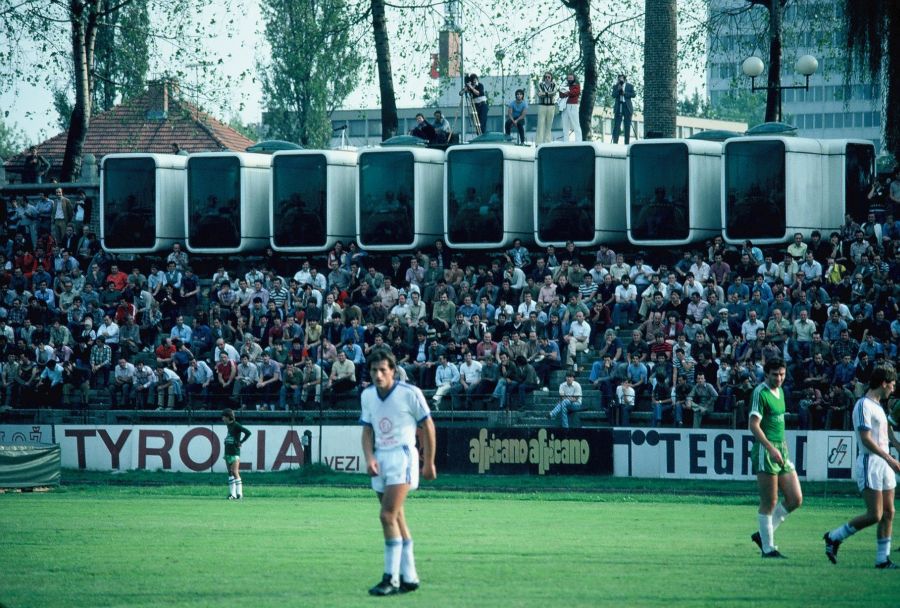
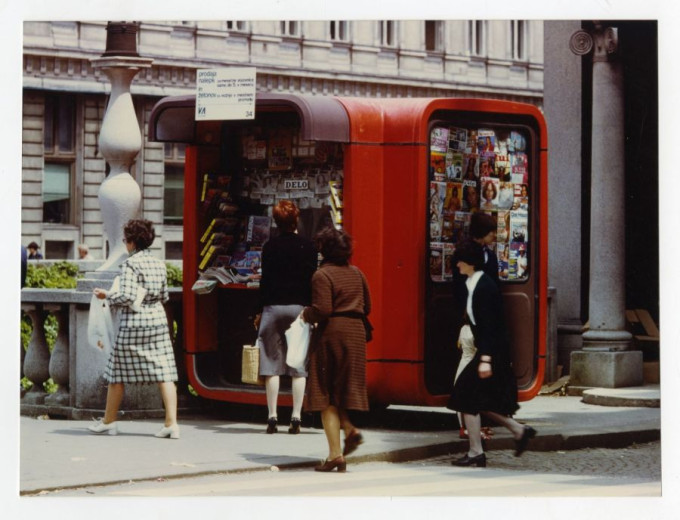 A large number of kiosks were exported abroad, including to Poland, Iraq, Kenya, New Zealand, Japan, the former Soviet republics, as well as the United States. Photo: MAO archive
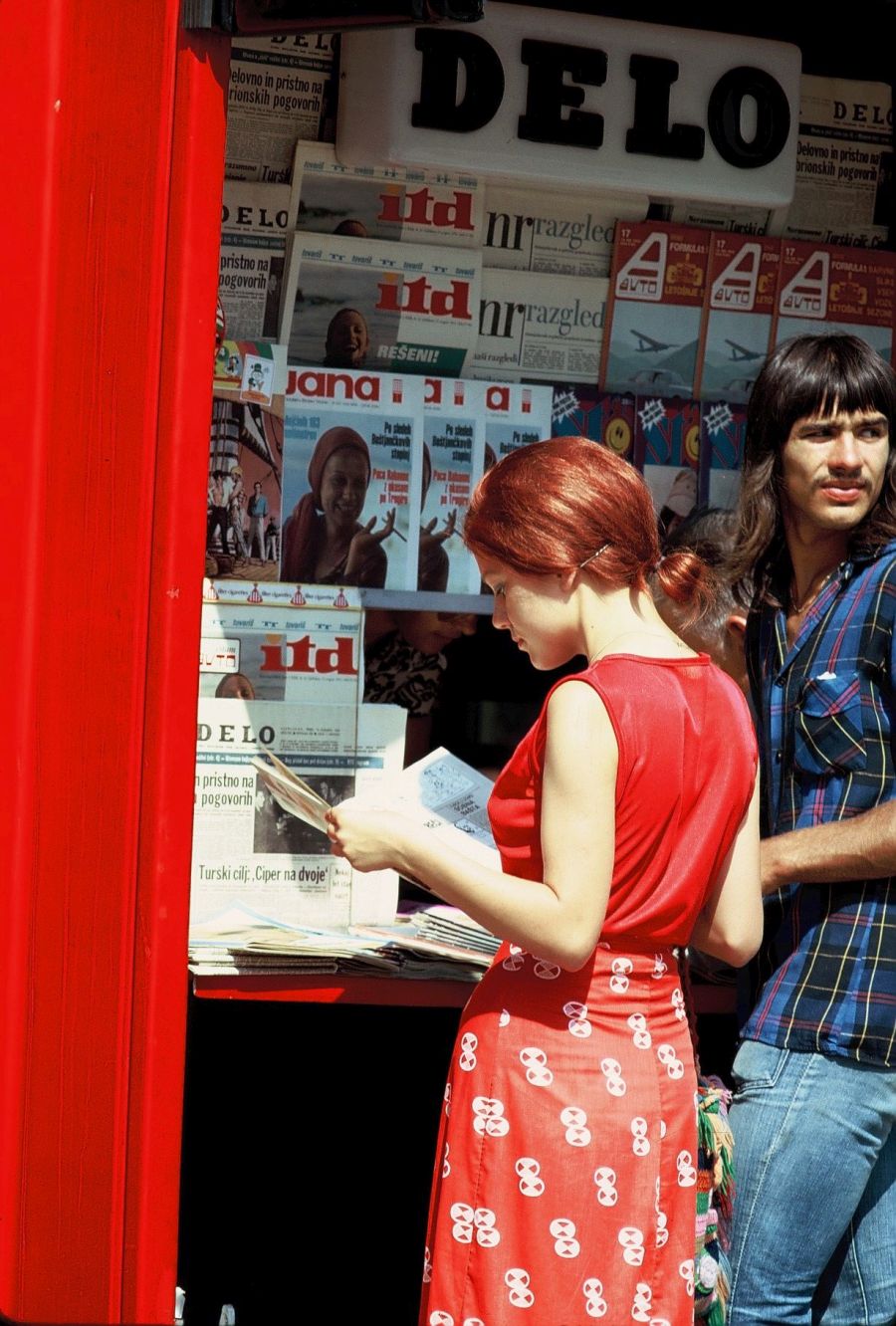
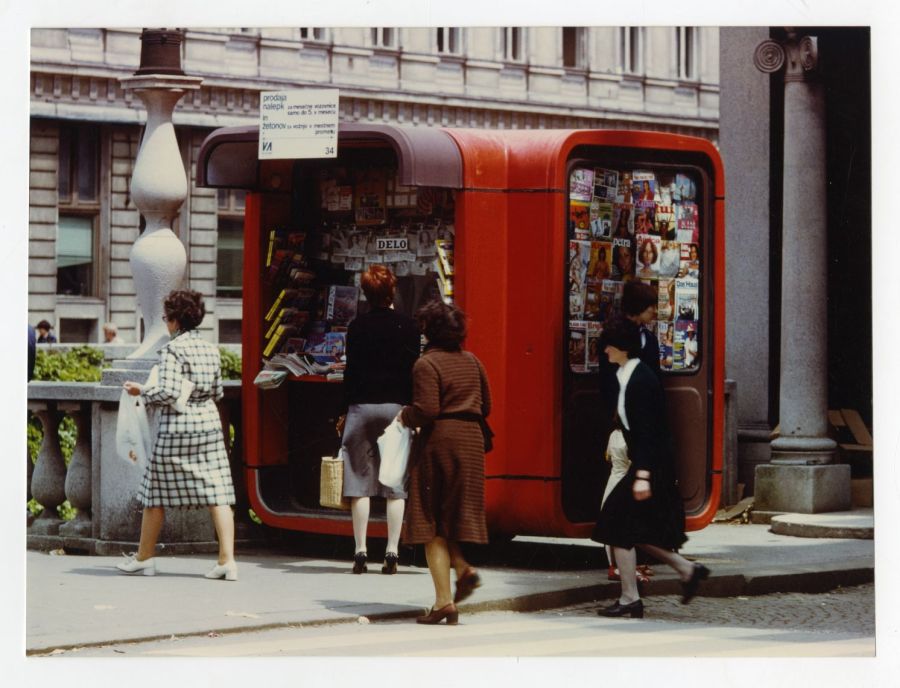
In Slovenia, the most well-known example is the K67 kiosk designed in 1966 by industrial designer and architect Saša J. Mächtig. K67 was not an ordinary kiosk but a thoughtfully designed system enabling quick installation and adaptation to different needs.
-
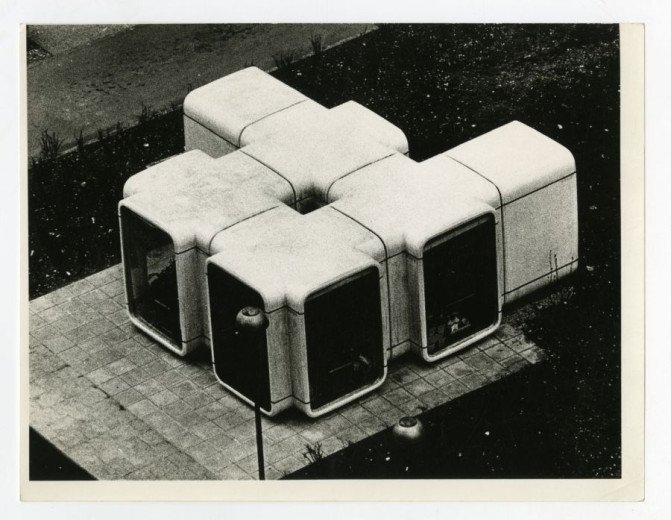
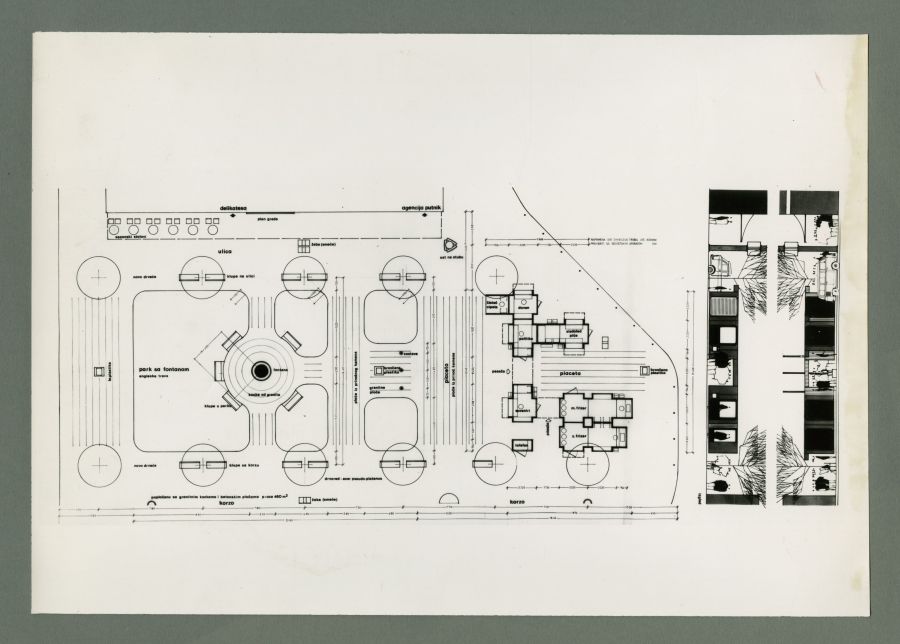
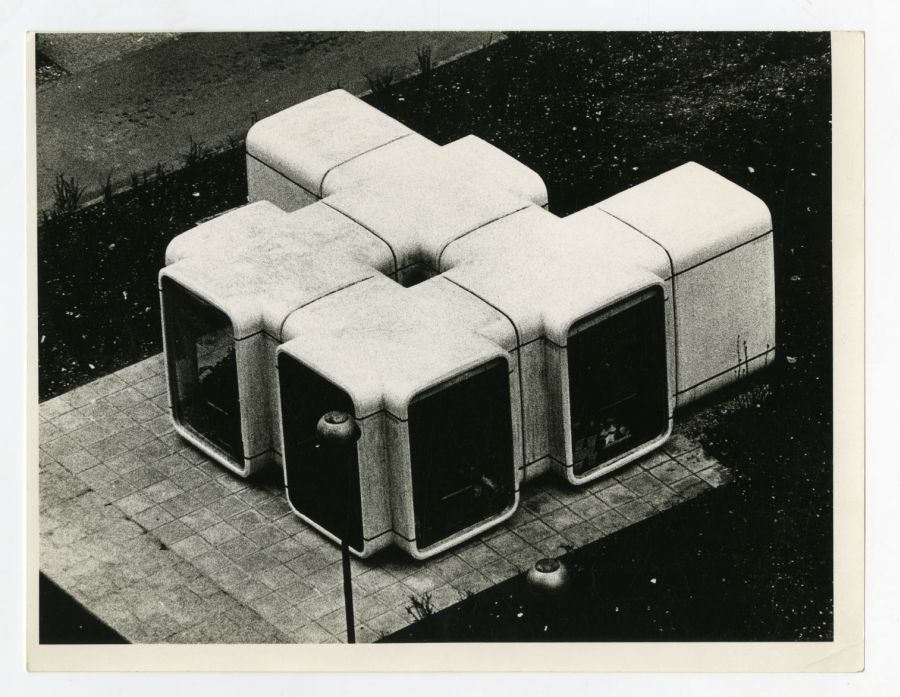
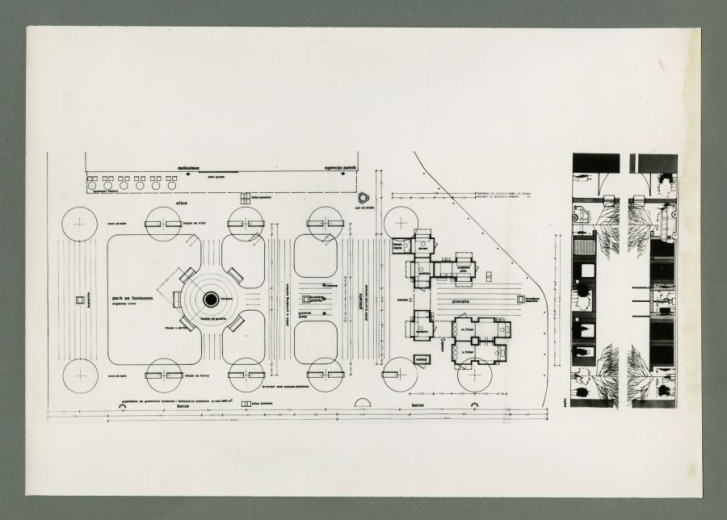 Model of future K67 Kiosk system by Saša J. Mächtig (PVC, 1966). The bisecting tubes showed potential a simple, multifunctional structure featuring a family of compatible modules, with unlimited combination possibilities (modularity was the hallmark of contemporary design in the 1960s). Photo: MAO archive
-
 The need for aesthetically pleasing, functional, industrially-produced facilities for street vending inspired Mächtig. He took initiative, some PVC pipes, and, with design and mass production possibilities of plastics in mind, set out to solve the problem. Photo: MAO archive
An important part of the world’s design heritage
K67 was created at a time when cities were rapidly expanding and needed simple solutions for daily services. It was made of durable materials: a reinforced polyester shell with added metal parts and glass surfaces. K67 was not intended to be just a single little house. It was designed as a module that could be joined with other units to make larger sale or service spaces.
This adaptability made K67 kiosks useful for various purposes: selling newspapers, food, flowers or tickets, or in some places serving as small official points.
K67 did not spread only across Slovenia. The units were exported to other countries and can therefore be found in several cities of former socialist countries and elsewhere.
That K67 is truly something special is also confirmed by the fact that the kiosk is part of the collection of the Museum of Modern Art (MoMA) in New York, where it is listed as a work from 1966.
The MoMa also included it in a major exhibition on architecture in the former Yugoslavia, held from 15 July 2018 to 13 January 2019.
With this exhibition, K67 gained recognition as an important part of the world’s design heritage, not merely as an object from the past.
-
 Production of the kiosk stopped in 1999, and by that time around 7,500 modules had been manufactured. Photo: MAO archive
-
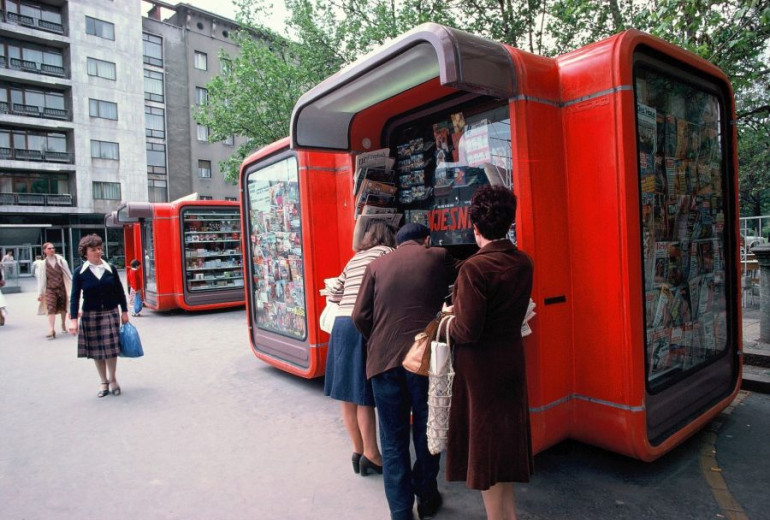 The K67 eventually became a ubiquitous sight on Yugoslavia's streets and an icon symbolizing the country after its demise. Photo: MAO archive
Culture on the street
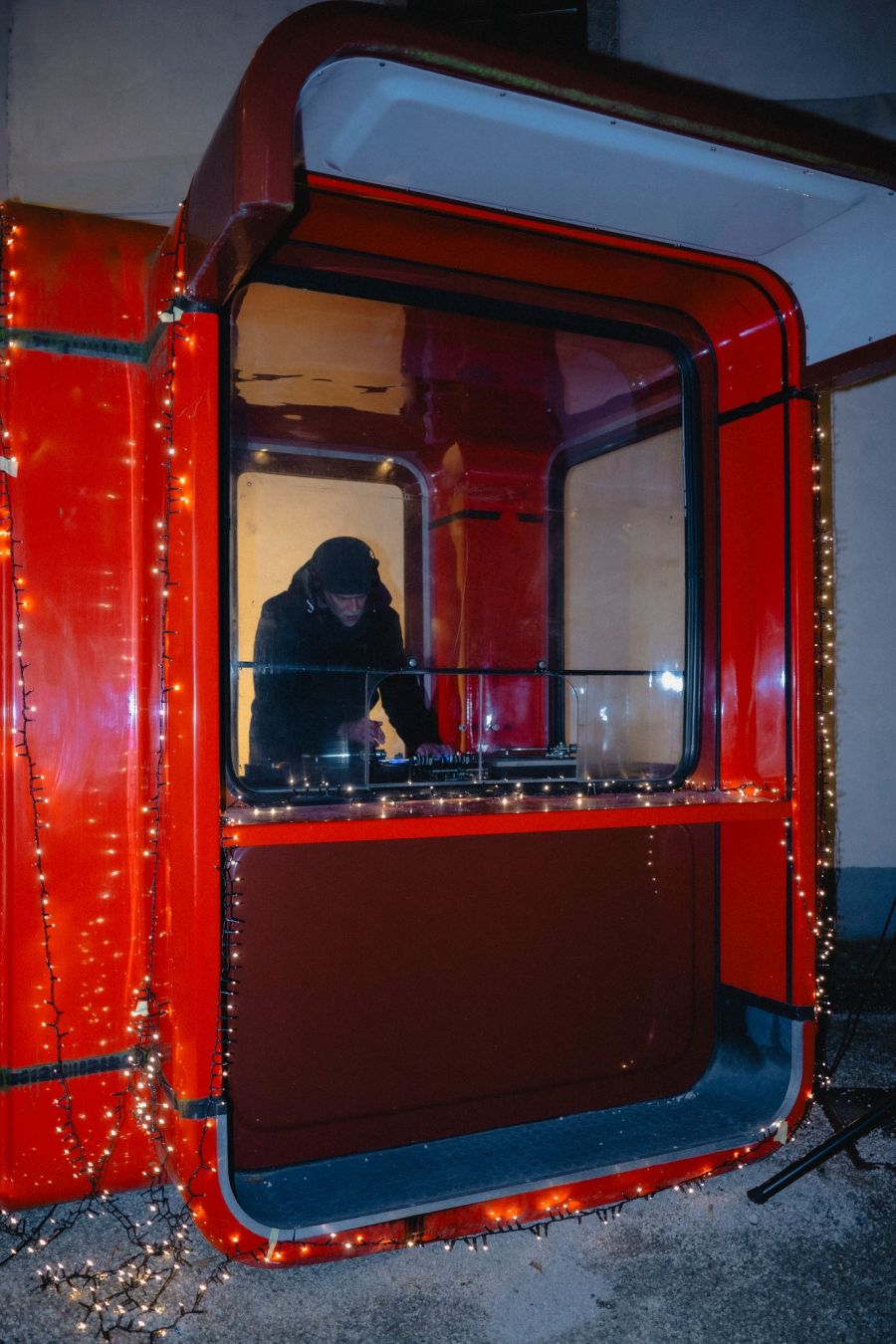
In front of the Delo building in Ljubljana stands a red kiosk, which has been given a new lease on life. It was renovated and modernised to now have proper heating and ventilation, with the input of its designer, Mächtig. Recently, the kiosk took on a new role.
Following the idea of Matija Jašarov, it became a space for small exhibitions, short talks, small concerts and for selling select items.
Jašarov described his idea as "microdoses of culture" – small but strong cultural content for passers-by.
The reopening of the kiosk was also tied in with the JUS Project, which is linked to the abbreviation for the Yugoslav standard ‘JUS’. This is an initiative aimed at reviving interest in Yugoslav and Slovenian design in a modern way, offering select items, graphics and products related to design heritage, including the K67 kiosk.
A good design never becomes obsolete. Today, the kiosk that was first designed for everyday urban needs is returning as a space for culture and socialising. It is still small, simple and recognisable and thus still useful.
-
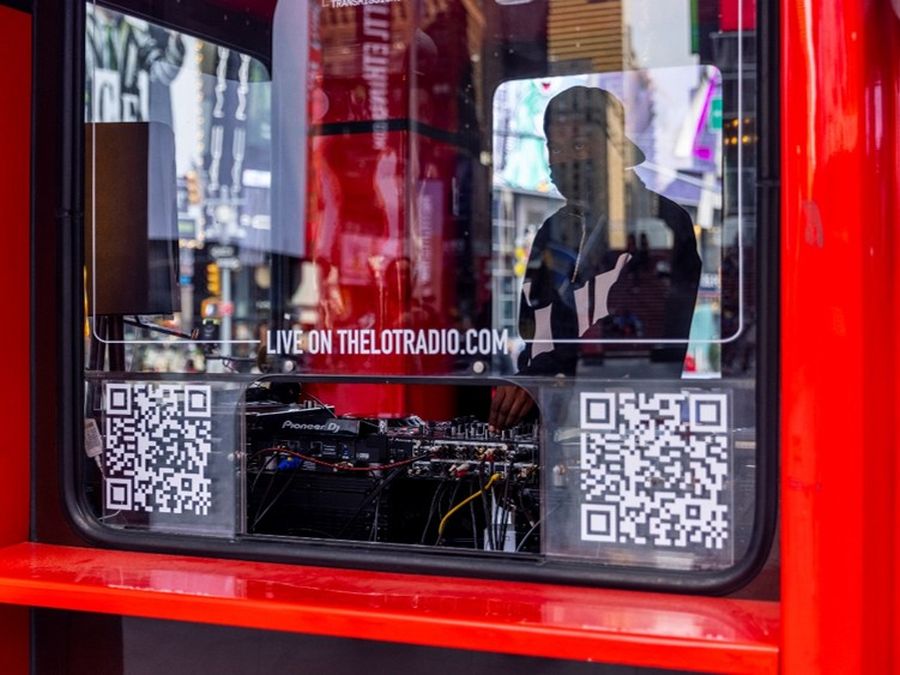
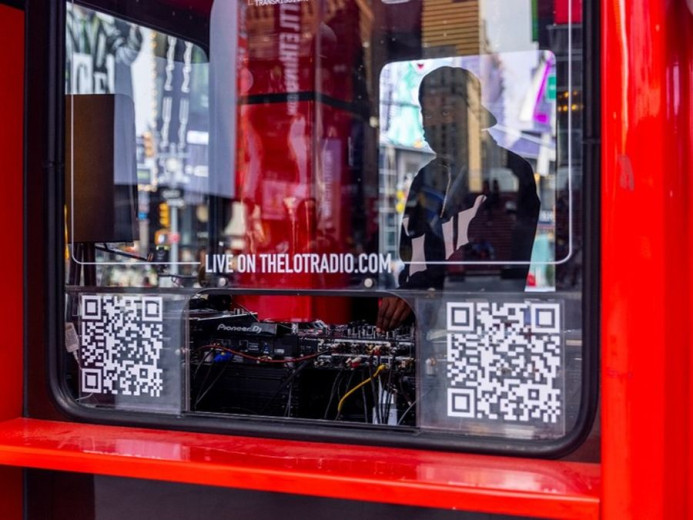 The kiosk was installed in Times Square as part of the Times Square Transmissions 2021 project and it was used as a DJ booth for playing music. Interested visitors had have the opportunity to see the interior of the kiosk as well, since a live stream was also organized during the music sessions. Photo: Saša J. Mächig archive
-
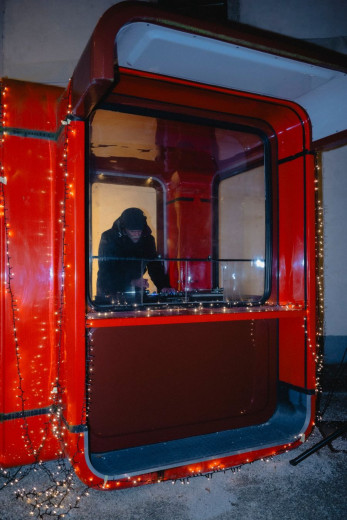 Do you want to see this special architectural feature for yourself? A K67 kiosk is now also on display in the courtyard of MAO (Museum of Architecture and Design) in Ljubljana. The iconic K67 kiosk is still standing in front of Ljubljana’s Delo tower purpose: as a micro - gallery and pop - up space for exhibitions, short talks and intimate concerts. Photo: MAO archive