Date: 16. October 2026
Time to read: 1 min
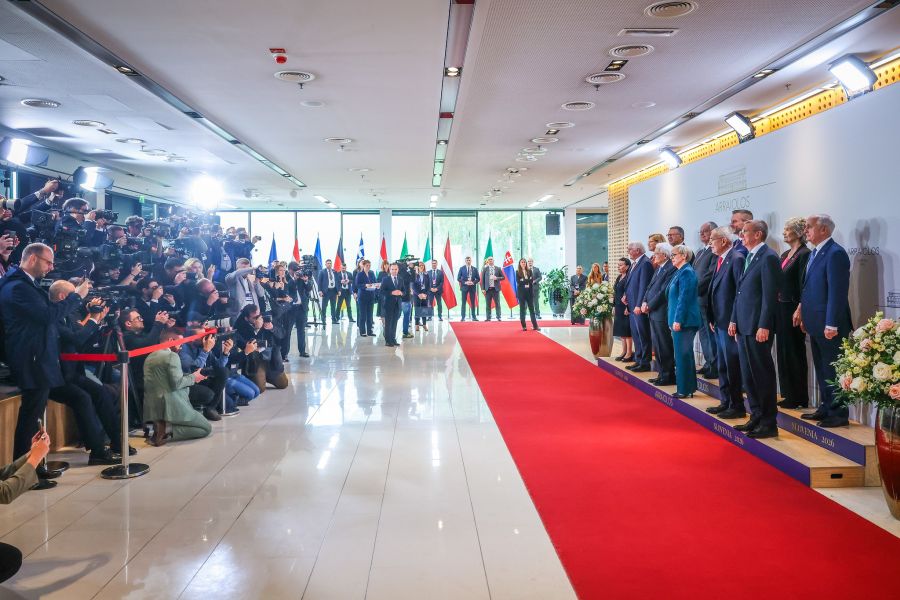
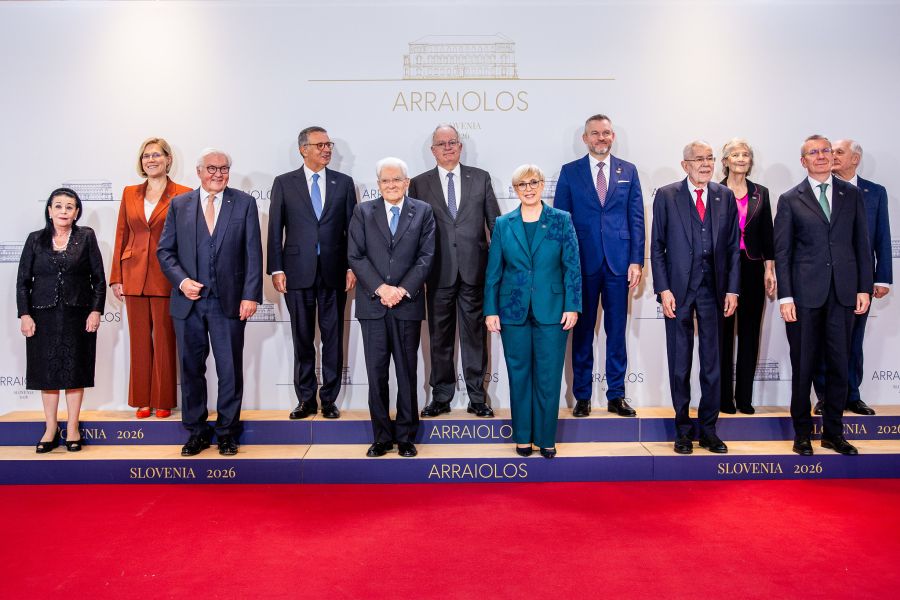
For the first time, Slovenian President Nataša Pirc Musar is hosting a meeting of the Arraiolos Group, an informal forum of European presidents with non-executive powers. Twelve European presidents are visiting Slovenia to discuss the future of Europe at a time of increasingly complex global challenges.
The Arraiolos Group meeting, which provides a forum for open and in-depth exchanges of views on current European and global issues and has done so for over two decades, is being held in Slovenia for the first time this year. The group was founded in 2003 on the initiative of the then Portuguese President Jorge Sampaio, with the first meeting taking place in the Portuguese town of Arraiolos, from which the group takes its name. Since then, hosting duties have rotated among the member states.
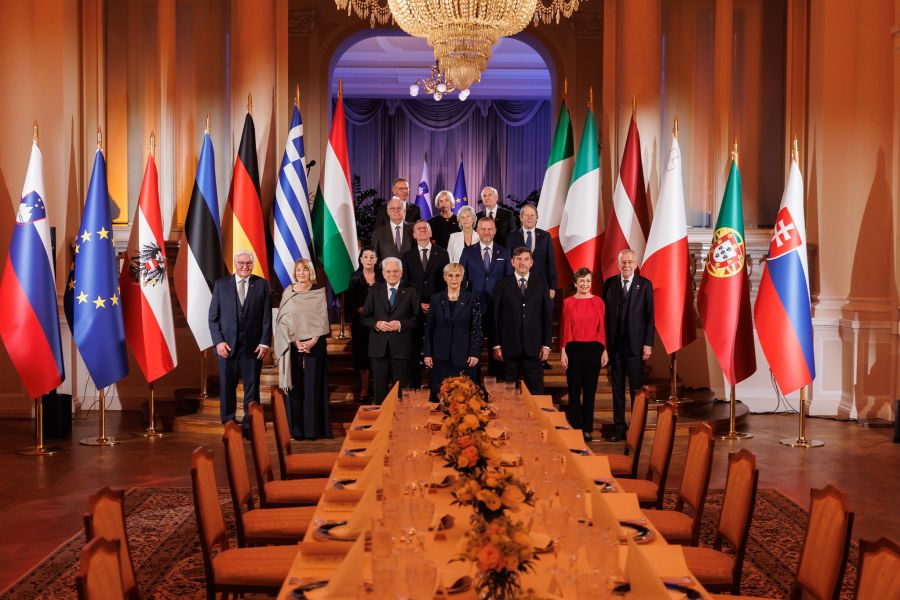
This year’s summit is being attended by the presidents of Austria, Estonia, Greece, Ireland, Italy, Latvia, Hungary, Malta, Germany, Poland, Portugal and Slovakia. Bulgaria, Finland and Croatia are also members of the group, but their presidents are unable to attend due to other commitments.
-
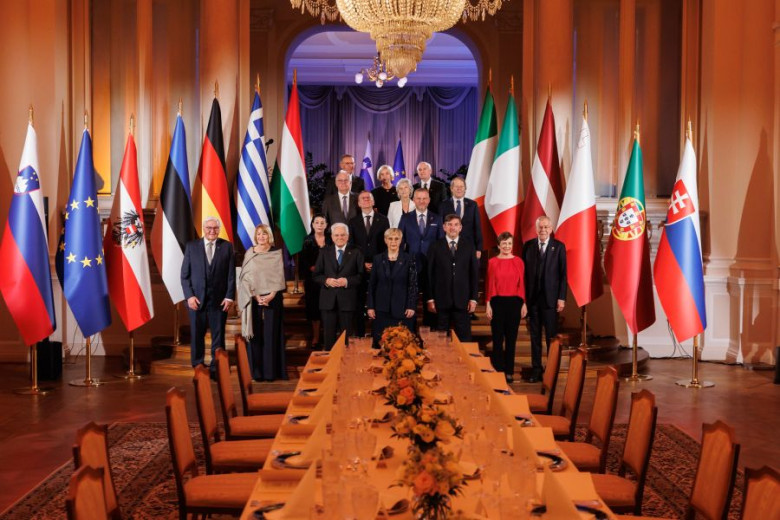 The Arraiolos meeting began with a ceremonial dinner in the Crystal Hall of the Presidential Palace in Ljubljana. Photo: Nebojša Tejić/STA
The future of Europe at the heart of discussions
The central theme of this year’s meeting is ‘The European Union in an Age of Multiple Crises: Between Retreat and Resilience’. The presidents are discussing how the European Union can maintain its role, political weight and fundamental values in the face of geopolitical upheaval, security challenges and economic uncertainty.
The discussions focus on the future of the European Union, its security and resilience, as well as its ability to adapt to a rapidly changing international environment.The discussions also address the need to uphold the principles on which the European Union is founded: democracy, human rights, the rule of law, solidarity, cooperation and the peaceful settlement of disputes.
“The question we are asking ourselves is: Europe, where are you, and where are you going? Although Europe, or the European Union, is today the world’s third-largest economic power, its economic strength is unfortunately not matched by its political weight. We will discuss what more can be done, what can be done differently, and how we can do better,” said Slovenian President Pirc Musar in a statement ahead of the meeting.
The future of multilateralism and the international order is also a key topic of discussion. The presidents are discussing the role of international organisations, particularly the United Nations, as well as ways to maintain an effective system of international cooperation at a time of rising global tensions. The meeting also addresses the less frequently discussed issue of human security. In private discussions, the presidents are discussing anxiety, feelings of uncertainty and the social consequences of contemporary crises that affect the lives of European citizens.
-
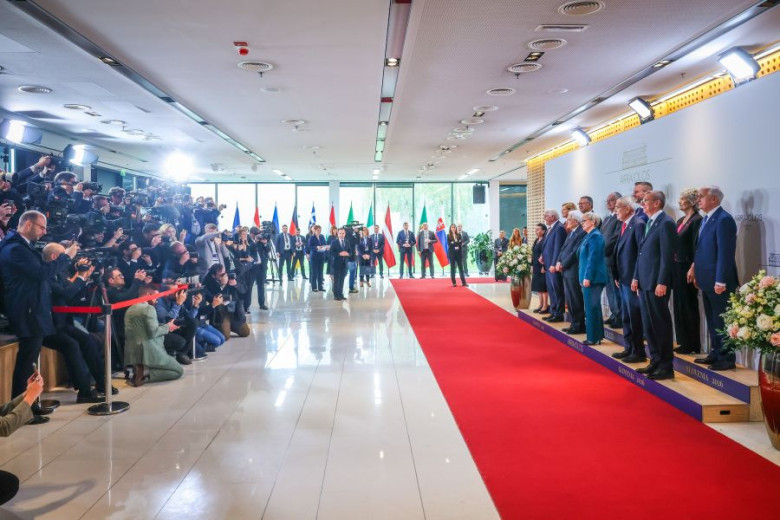 The second day of the Arraiolos Group meeting is being held at Brdo Estate. Photo: Daniel Novakovič/STA
-
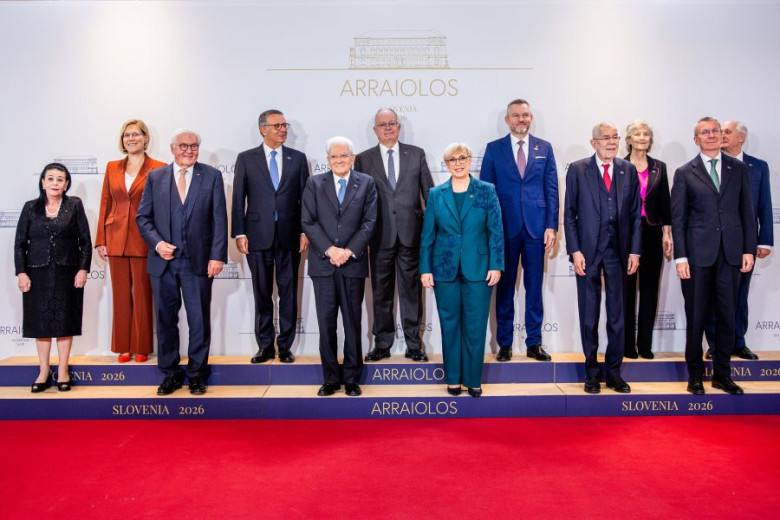 The future of Europe, as well as its role and position in the world, are at the forefront of discussions at the meeting, which Slovenia is hosting for the first time. Photo: Siniša Kanižaj/STA
-
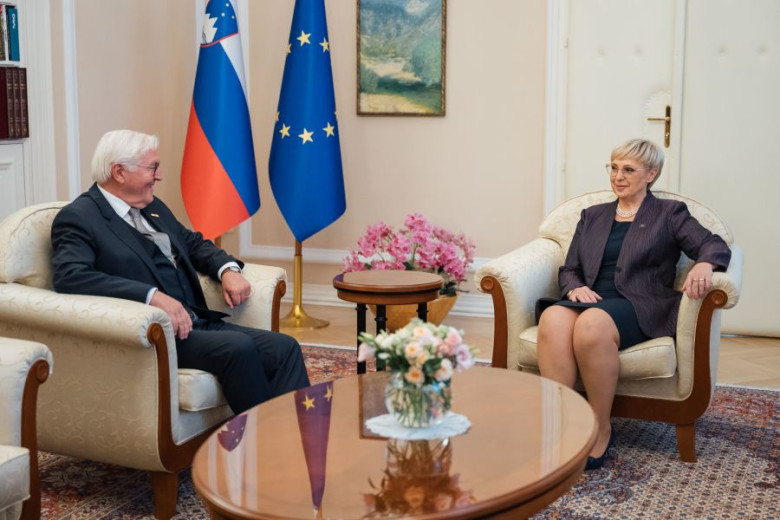 Bilateral meeting of Slovenian President Nataša Pirc Musar with German President Frank-Walter Steinmeier. Photo: Office of the President of the Republic of Slovenia
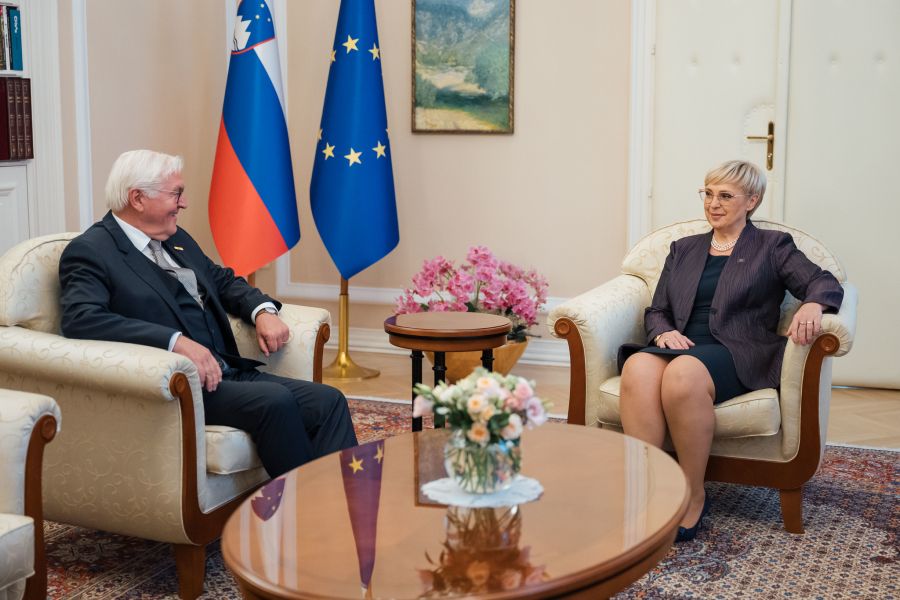
On the sidelines of the summit, the Slovenian President also held two bilateral meetings, one with German President Frank-Walter Steinmeier and the other with Irish President Catherine Connolly. The meetings were aimed at further strengthening political dialogue and cooperation between the respective countries.
Showcasing Slovenia
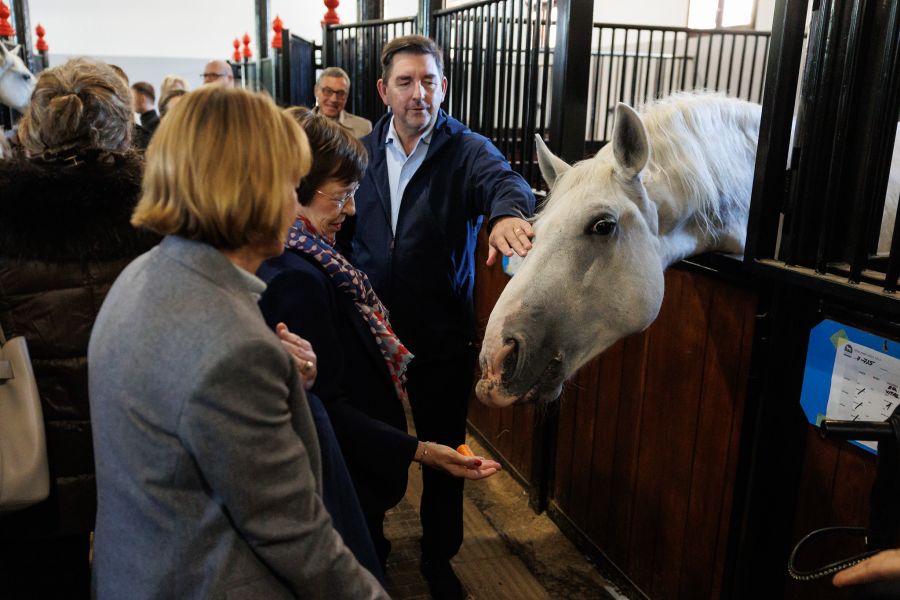
Alongside the summit, an accompanying programme is also taking place, hosted by the Slovenian President’s spouse, Dr Aleš Musar. Participants in the accompanying programme will visit the Lipica Stud Farm, one of Europe’s oldest stud farms and the birthplace of the Lipizzaner horse. The stud farm is an important part of Slovenia’s cultural heritage, while the traditions of Lipizzaner horse breeding are inscribed on UNESCO’s Representative List of the Intangible Cultural Heritage of Humanity. The accompanying programme also includes a visit to Vilenica Cave, the oldest show cave in Europe. The cave has been an important part of the Karst region’s heritage for centuries and is also closely linked to Slovenia’s cultural life through the Vilenica International Literary Festival.
-
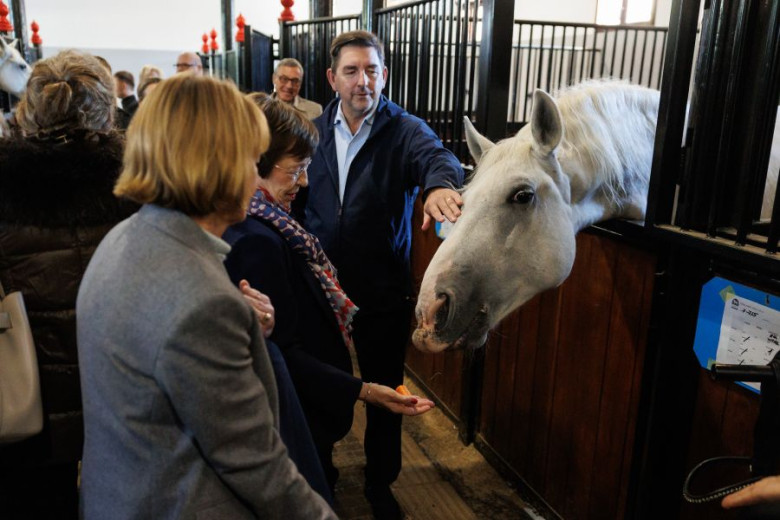 Participants in the accompanying programme hosted by Dr Aleš Musar, spouse of the President of Slovenia, visited the Lipica Stud Farm. Photo: Nebojša Tejić/STA