Date: 20. January 2026
Time to read: 2 min
Hrastovlje, a small village on the edge of the Karst Plateau above the Rižana Valley, has, for centuries, been associated with one of the most recognisable and enigmatic sacred buildings in Slovenia – the Holy Trinity Church. It is best known for its famous fresco, the Dance of Death.
The church stands in the heart of a characteristically Karst landscape marked by red soil, stone walls and vineyards. Its thick stone walls not only protect against the bora winds and summer heat, but also conceal an extraordinary wealth of paintings, symbols and stories that have survived for more than five centuries.
Hrastovlje is therefore not merely a Karst village, but an important intersection of nature, history and outstanding art.
-
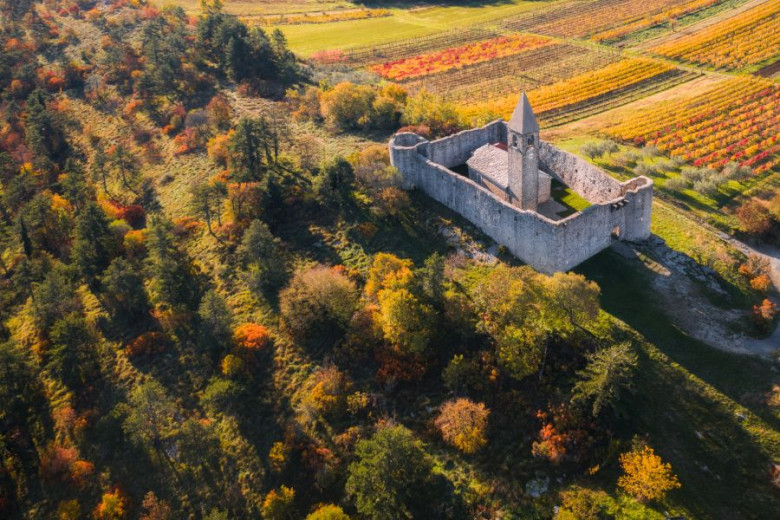 The Holy Trinity Church in Hrastovlje houses rare relics, including a bronze bell from 1469, a fragment of a saint's relic believed to protect against the plague, and a hand-decorated 15th-century liturgical chalice. Photo: Jaka Ivančič
-
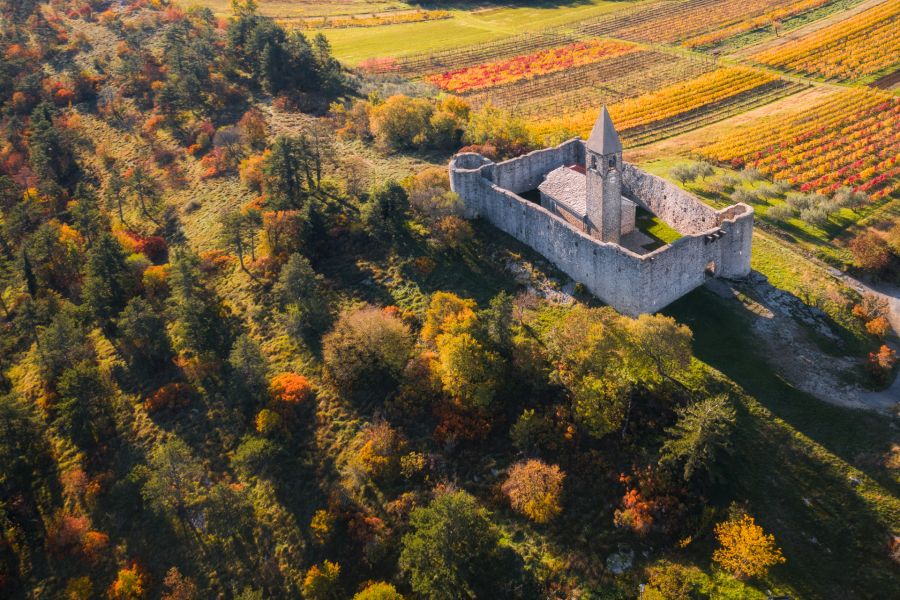
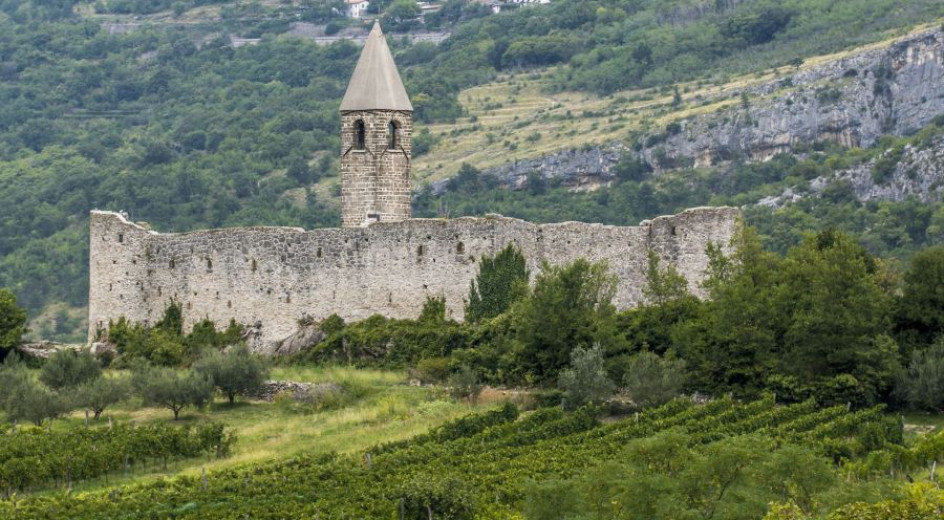 The church and its defensive walls are built directly on living rock and therefore have no deep foundations. The church is constructed mostly of stone, which is characteristic of the Karst region. Photo:Jaka Arbutina

The Bible of the poor
The Holy Trinity Church was built in 1475 on a hill above the village and is surrounded by defensive walls that once offered shelter to local inhabitants in times of danger. It is a three-aisled Renaissance church with a polygonal chancel and bell tower. Relatively small in size, it measures just under 12 metres in length and slightly over 6 metres in width.
The interior is divided by columns supporting barrel vaults, creating a strong sense of rhythm and clear spatial organisation. A distinctive feature of the church is its three apses: only the central apse is visible from the outside, while the two side apses are built into the wall.
The frescoes, which are the church's most remarkable adornment, were painted in 1490 by master John of Kastav, as confirmed by his preserved signature in the northern apse.
He was one of the most important painters of his time in the Istria and Karst regions. His work in Hrastovlje forms a comprehensive cycle combining scenes from the Old and New Testaments, images of saints, calendar motifs and symbolic representations of time.
-
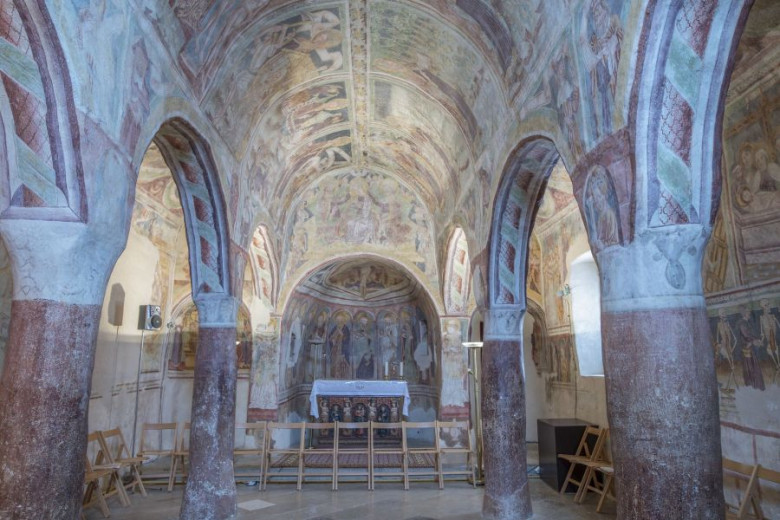 The fresco consists of three parts: the first, earthly realm is painted in ochre and comprises the ground and the background landscape; the second part represents the sky; the third depicts heaven, coloured green and separated at the bottom by a white line. Photo: Jaka Arbutina
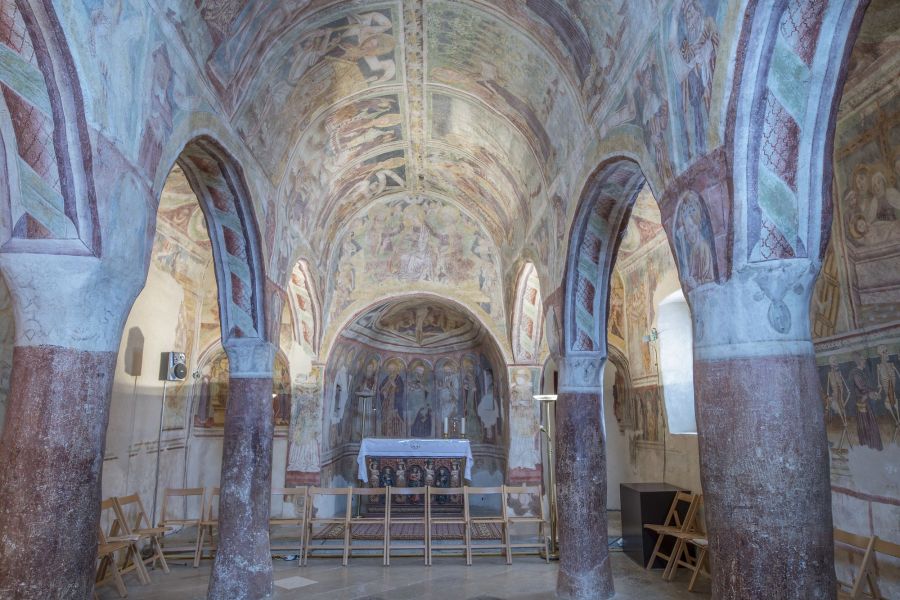
Among the central scenes are the Throne of Grace with the apostles, the Coronation of the Virgin and the Annunciation. The vaults depict scenes from the Creation of the World, based on graphic models by Netherlandish masters, revealing the region's connection to wider European artistic trends. Particularly engaging is the cycle of the months, which portrays agricultural tasks throughout the year and thus links the sacred with everyday life.
At the time the church was built, most of the population was illiterate. The frescoes therefore played a crucial role in conveying religious stories and moral teachings.
The Holy Trinity Church was quite literally "the Bible of the poor" - a place where people encountered biblical narratives through images, from the Creation of the World to Christ's Passion, Resurrection and Ascension.
The Dance of Death
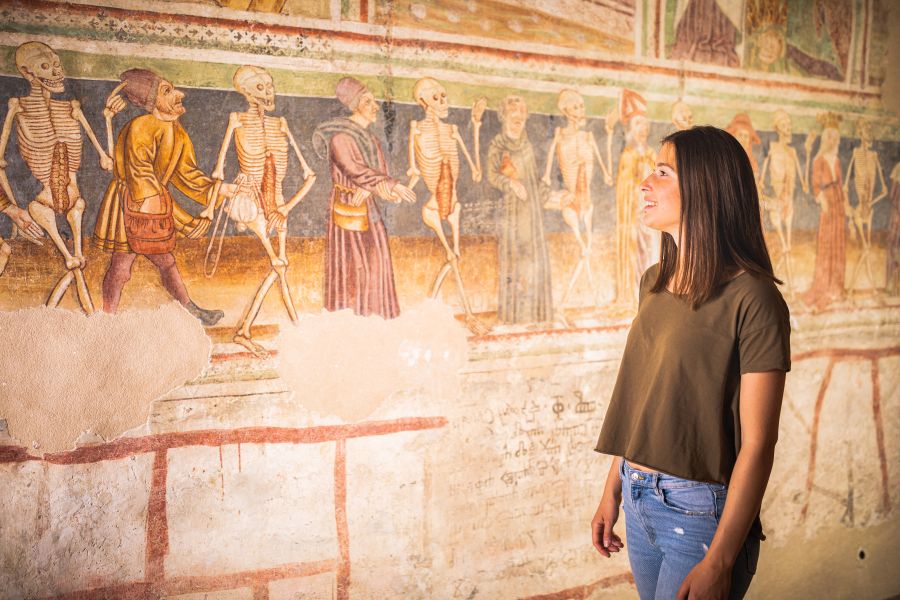
The most striking and, simultaneously, famous part of this painted world is the Dance of Death. This motif appeared in European art in the 15th century, most likely in response to plague epidemics, famine and war. In Hrastovlje, the Dance of Death is depicted as a long procession of people from all social classes – from church dignitaries and nobles to townspeople, peasants and children. All are led by Death, a skeletal figure who makes no distinctions and cannot be bribed.
The message of the fresco is clear: life is fleeting, social status means nothing in the face of death, and every person is part of the same cycle.
It is precisely this directness that makes the Dance of Death so powerful, even today. It is not merely a historical curiosity, but a universal message.
-
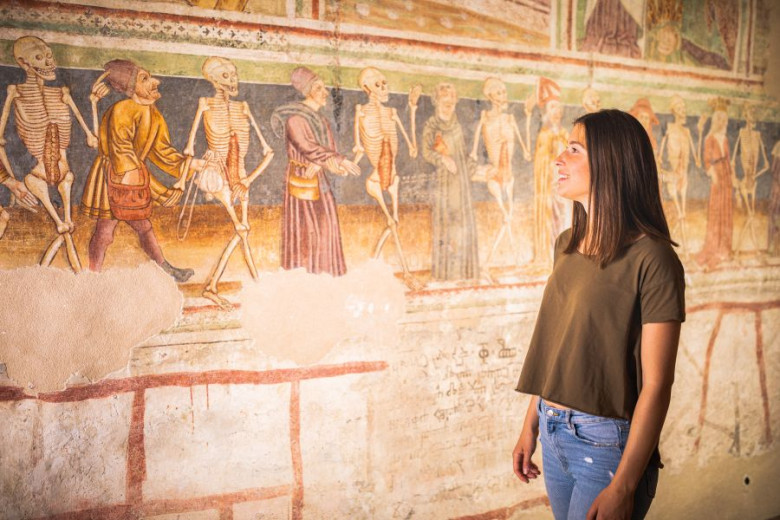 Beneath the Dance of Death, there is an inscription in Glagolitic, a Slavic script from the 9th century devised by Cyril and Methodius, who spread Christianity across the Balkan Peninsula. Photo: Jaka Ivančič
A monument of national importance
The Holy Trinity Church in Hrastovlje is far more than a typical tourist attraction. Its walls and frescoes tell stories from the past that once served as a means of teaching and understanding the world at a time when most people were illiterate. A visit to the church offers insight into both Renaissance architecture and 15th-century art.
The church is also designated a monument of national importance, as its architectural design and paintings reveal how people once expressed faith, fears and hopes.
It is a place where history comes alive, and where the frescoes still speak to everyone who crosses the threshold of this small yet extraordinary church.
-
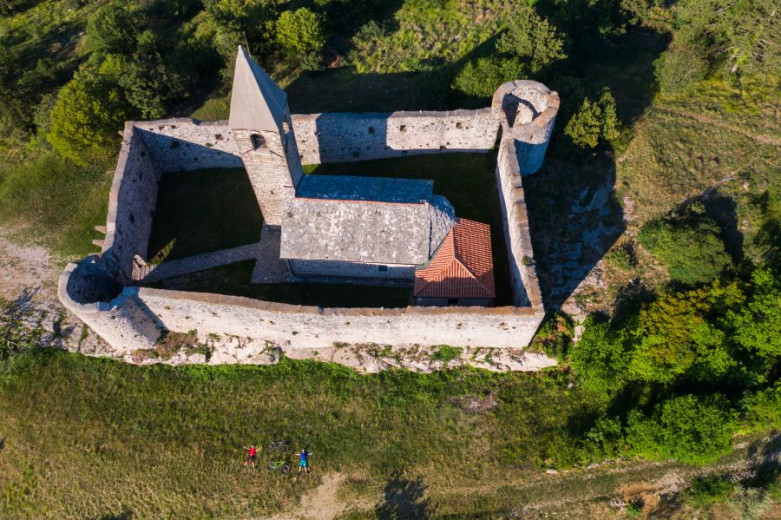 Such churches were only built in Slovenia during the Gothic period. Originally, the church is believed to have had no windows at all though several were added later. Photo: Jaka Ivančič